 en
en русский
 Español
 عربى
عربى
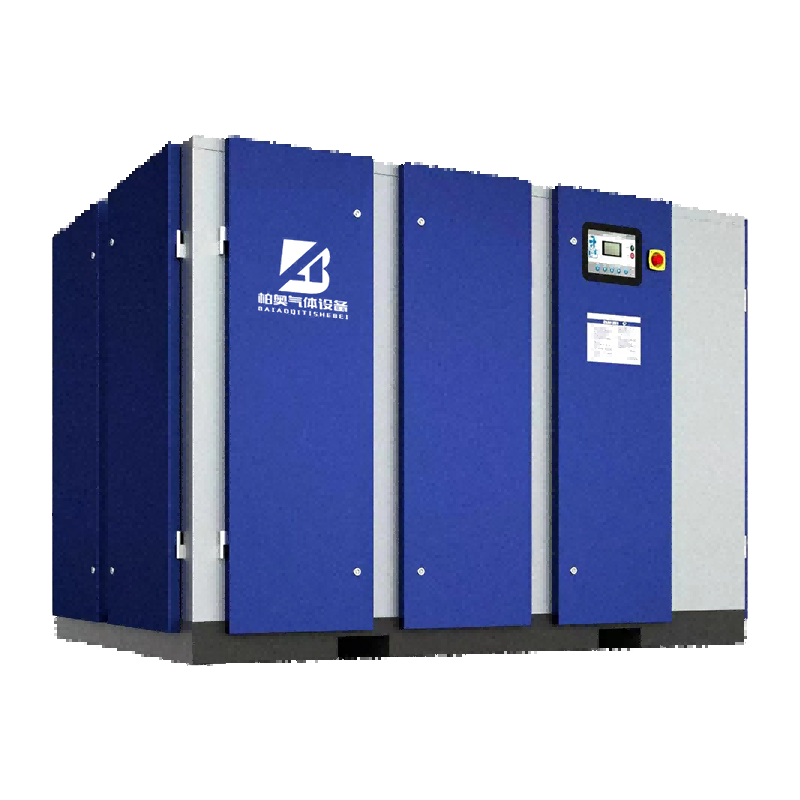
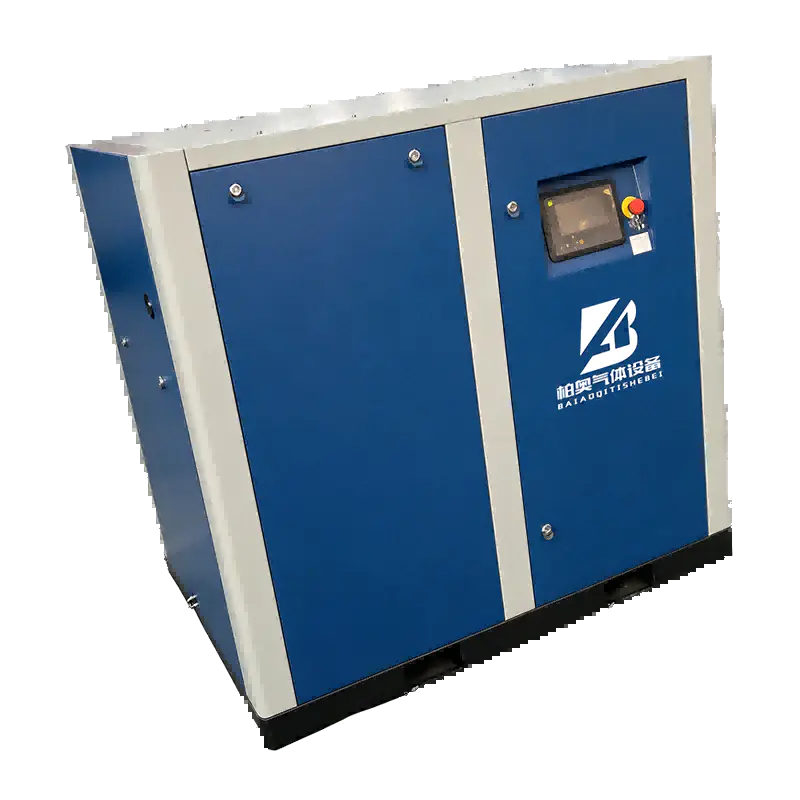
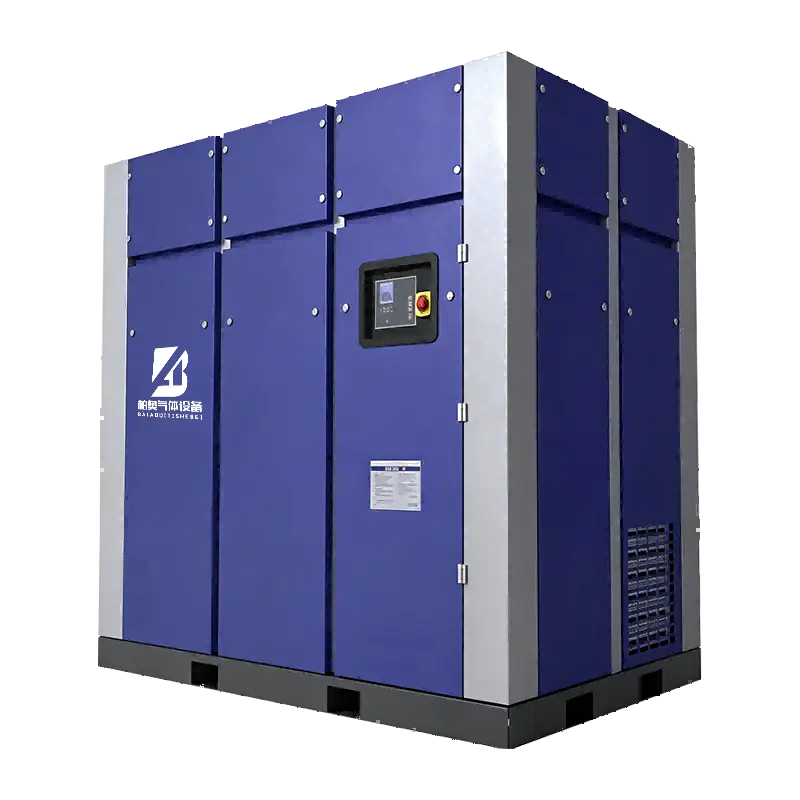
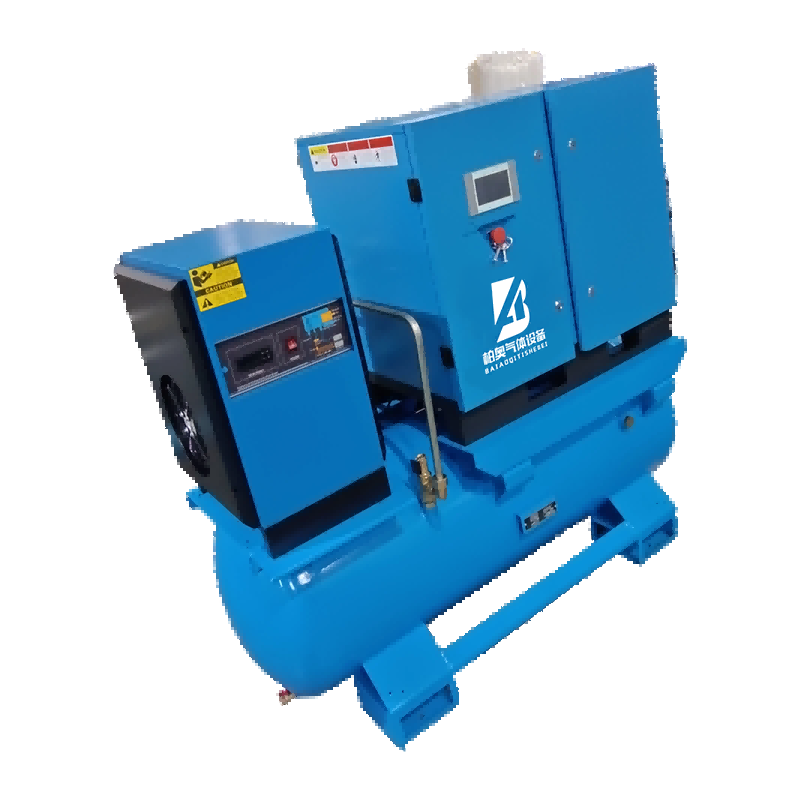
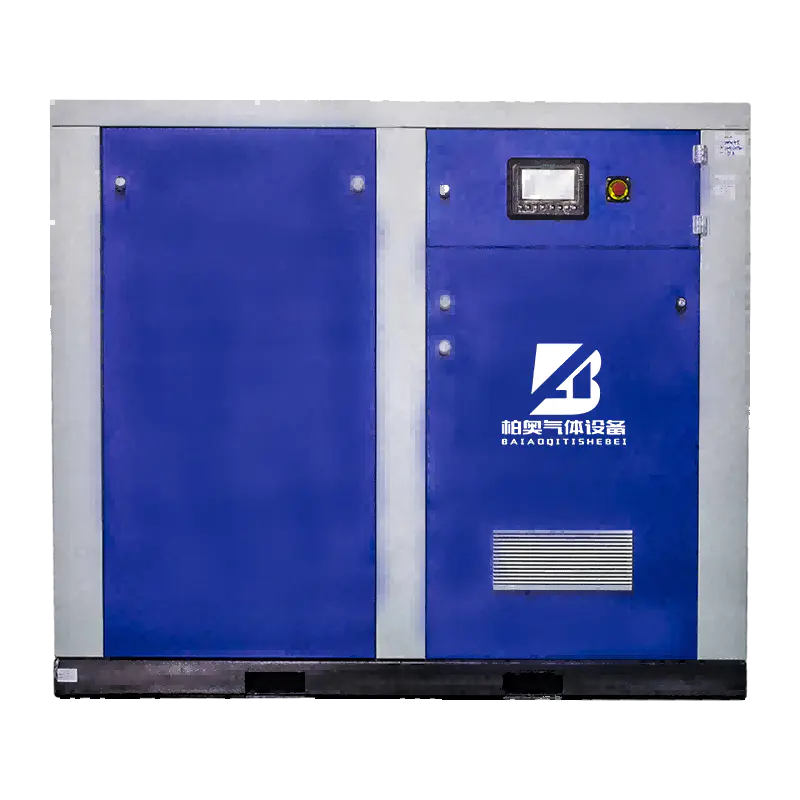
20–40 Bar Oil-Injected Rotary Screw Air Compressor with PM VSD and FSD Technology
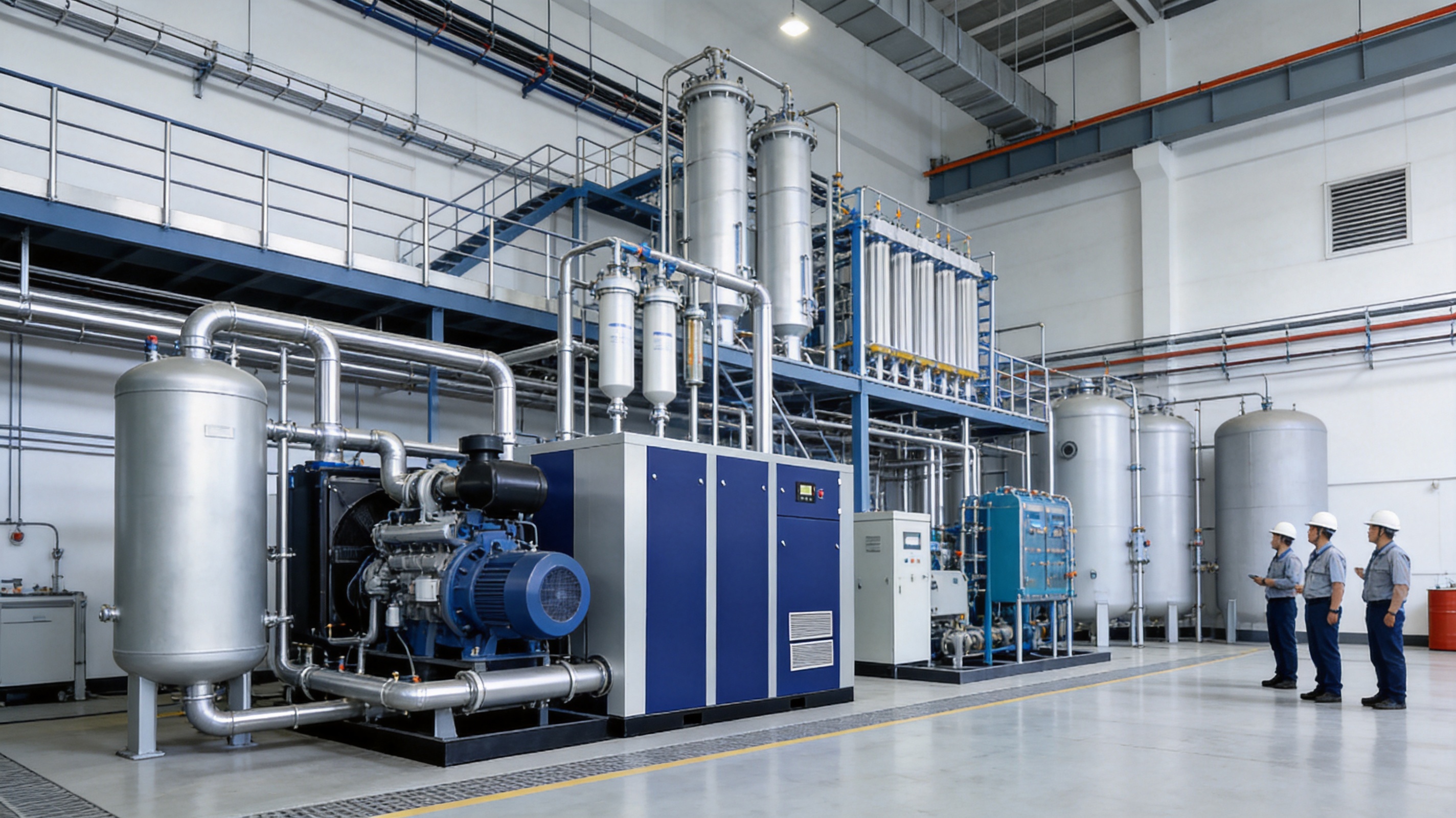
Reliable compressed air is essential in modern manufacturing, gas separation, gas purification, petrochemical processing, food production, textile manufacturing, automotive production, heat treatment, and electronics assembly. In these industries, the compressor is not simply an auxiliary machine. It is the first stage of a complete gas system, and its operating stability directly influences production continuity, product quality, energy consumption, and maintenance costs.
The 20–40 bar oil-injected rotary screw air compressor with Permanent Magnet Variable Speed Drive (PM VSD) and Fixed Speed Drive (FSD) configurations is designed for applications requiring dependable medium- to high-pressure compressed air. It combines the continuous operating characteristics of rotary screw compression with flexible drive options, allowing users to select a configuration that matches their pressure demand, load profile, and energy-management objectives.
Within the wider product range, working pressures are available from approximately 25 to 400 bar, with air capacities from 0.7 to 30 cubic meters per minute and motor powers from 7.5 to 185 kW. The 20–40 bar segment is particularly suitable for industrial processes that require more pressure than ordinary plant air systems but do not need the extreme pressures associated with specialized ultra-high-pressure equipment.
The equipment is manufactured and supplied by Zhejiang Baiao Gas Equipment Co., Ltd., a Chinese gas equipment manufacturer integrating research and development, engineering design, production, installation, commissioning, and after-sales service. The company’s experience in gas separation and purification systems provides an important foundation for compressor applications where air quality, pressure stability, and compatibility with downstream equipment are critical.
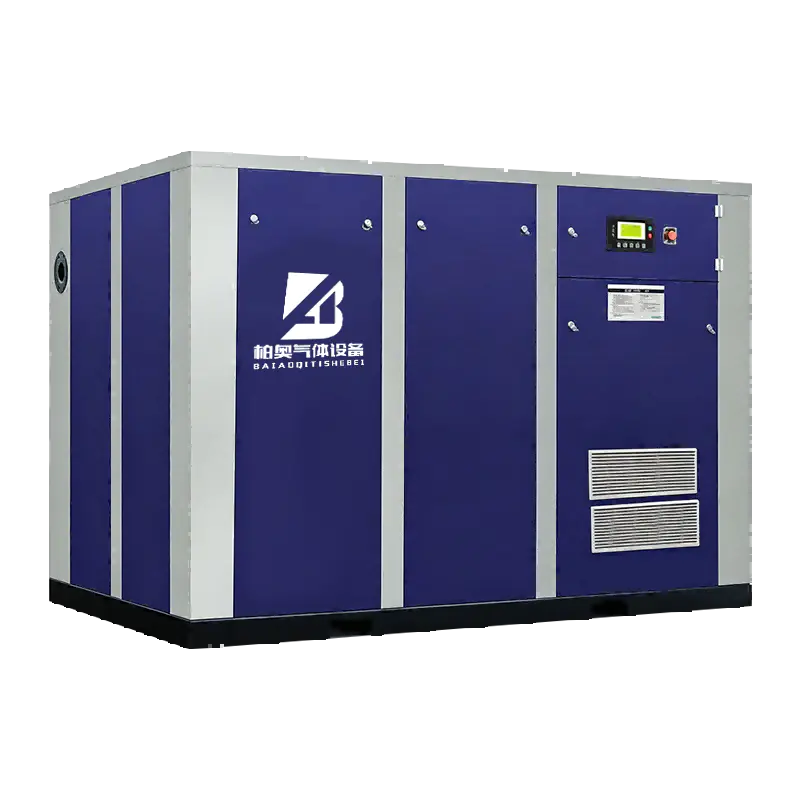
20-40bar Oil-Injected Rotary Screw Air Compressor (PM VSD/FSD)
Content
- 1 1. Product Overview
- 2 2. Why High-Pressure Rotary Screw Compression Matters
- 3 3. PM VSD Configuration and Energy Efficiency
- 4 4. FSD Configuration for Stable Full-Load Operation
- 5 5. Product Features and Operational Advantages
- 6 6. Oil Injection, Separation, and Air Quality
- 7 7. Advanced Manufacturing and Engineering Strengths
- 8 8. Advantages Compared with Competing Solutions
- 9 9. Application Areas
- 10 10. Selection Guidelines
- 11 11. Installation, Commissioning, and Operation
- 12 12. Maintenance and Lifecycle Management
- 13 13. Safety Considerations
- 14 14. Why Choose an Integrated Gas Equipment Manufacturer
- 15 15. Frequently Asked Questions
- 15.1 Q1: What does “20–40 bar” mean for this compressor?
- 15.2 Q2: Is this compressor suitable for PSA nitrogen generation?
- 15.3 Q3: What is the difference between PM VSD and FSD?
- 15.4 Q4: Can an oil-injected compressor provide oil-free air?
- 15.5 Q5: How is the correct air capacity selected?
- 15.6 Q6: Is a PM VSD compressor always more energy efficient than an FSD compressor?
- 15.7 Q7: Can the compressor be integrated with membrane nitrogen or oxygen equipment?
- 15.8 Q8: What information should be provided when requesting a quotation?
- 15.9 Q9: What maintenance is normally required?
- 15.10 Q10: Can the company provide more than the compressor?
- 16 16. Conclusion
- 17 References
- 18 Product: 20-40bar Oil-Injected Rotary Screw Air Compressor (PM VSD/FSD)
1. Product Overview
An oil-injected rotary screw compressor uses two intermeshing helical rotors to compress air continuously. As the rotors turn, air enters the compression chamber, becomes trapped between the rotor profiles and housing, and is progressively reduced in volume. Oil is injected into the compression chamber to provide sealing, cooling, and lubrication. The compressed air and oil mixture then passes through a separation system before the air leaves the compressor package.
Compared with intermittent compression technologies, rotary screw compression produces a steady air stream with limited pulsation. This continuous flow is valuable for gas purification units, nitrogen generators, oxygen generators, membrane systems, pneumatic production lines, and other processes in which pressure fluctuations can reduce system performance.
The 20–40 bar pressure range is commonly used for demanding industrial applications such as pressure swing adsorption feed systems, high-pressure instrument air, PET and packaging processes, pressure testing, metal and glass production, air separation support systems, and specialized pneumatic equipment. The exact operating pressure, flow rate, duty cycle, air quality, ambient conditions, and downstream filtration requirements must be confirmed before final equipment selection.
Core Product Parameters
| Item | Reference Range or Configuration | Application Significance |
|---|---|---|
| Product type | Oil-injected rotary screw air compressor | Continuous compressed-air production for industrial applications |
| Pressure focus | 20–40 bar class; wider product reference range approximately 25–400 bar | Suitable for medium- and high-pressure process air requirements |
| Air capacity | 0.7–30 m³/min, approximately 24.7–1059.4 cfm | Allows selection for small, medium, and larger industrial systems |
| Motor power | 7.5–185 kW, approximately 10–250 hp | Supports different flow and pressure combinations |
| Drive options | PM VSD or FSD | Enables energy optimization or straightforward constant-speed operation |
| Compression medium | Atmospheric air | Suitable for compressed-air and downstream gas-generation systems |
| Oil management | Oil injection, air-oil separation, filtration, and cooling | Supports lubrication, temperature control, and compressed-air quality |
The figures above are general reference values rather than a substitute for a final technical datasheet. Actual free air delivery depends on pressure, inlet temperature, altitude, cooling conditions, motor speed, configuration, and measurement standards. A complete quotation should therefore identify rated pressure, working pressure, minimum and maximum pressure, rated flow, motor power, voltage, frequency, cooling method, noise level, and air-quality class.
2. Why High-Pressure Rotary Screw Compression Matters
Many industrial plants use compressed air at approximately 7–10 bar for general pneumatic equipment. However, a number of processes need significantly higher pressure. Feeding a downstream process with insufficient pressure can cause unstable operation, incomplete regeneration, poor product purity, longer cycle times, or reduced production capacity. Increasing pressure with an unsuitable compressor may also create excessive heat, high specific energy consumption, and premature component wear.
A dedicated 20–40 bar compressor is designed around the mechanical and thermal requirements of higher-pressure operation. The compression element, motor, oil circuit, separator, cooler, valves, control system, and safety devices must all work together. Correct system design is especially important because compression power increases as the pressure ratio rises. A unit that is efficient at low pressure is not automatically efficient at 30 or 40 bar.
Rotary screw technology provides a practical solution where the process requires a stable and continuous air supply. The compressor can operate for extended periods without the repeated impact loads associated with some reciprocating systems. Its steady discharge flow also makes it easier to integrate with air receivers, dryers, filters, PSA systems, and other process equipment.
High-pressure air systems also benefit from appropriate storage and control. An air receiver can absorb short-term demand changes, reduce rapid loading and unloading, and provide a buffer during compressor transitions. When combined with PM VSD control, the receiver can help the compressor operate within an efficient speed range while maintaining the required pressure.
3. PM VSD Configuration and Energy Efficiency
PM VSD means Permanent Magnet Variable Speed Drive. In this configuration, the compressor motor is designed with permanent magnets and controlled by a variable-frequency drive. The motor speed changes according to the actual compressed-air demand. When demand is reduced, the compressor slows down; when demand increases, it accelerates within the permitted operating range.
This approach can reduce the energy losses associated with traditional fixed-speed compressors that repeatedly switch between load and unload states. A fixed-speed machine may continue operating at full motor speed even when the plant needs only a fraction of its rated air capacity. During low-demand periods, some of the input power is consumed without producing a proportional amount of useful compressed air. A properly selected PM VSD compressor can minimize this mismatch.
The permanent magnet motor can also provide high motor efficiency over a broad operating range. Because the rotor does not rely on induced current in a conventional squirrel-cage design, certain electrical losses can be reduced. The result is potentially lower specific power consumption, particularly in systems with fluctuating demand and extended partial-load operation.
Advantages of PM VSD Operation
One of the most important advantages is pressure control. The controller monitors system pressure and adjusts motor speed to maintain a stable set point. This can be useful for gas generation and purification systems, where pressure variation may influence adsorption cycles, membrane performance, valve timing, or product gas quality.
A second advantage is reduced starting stress. The variable-frequency drive can gradually increase motor speed rather than applying the full electrical and mechanical impact of a direct-on-line start. Soft starting may reduce current peaks, mechanical shock, and stress on the coupling and compression element.
A third advantage is improved adaptability. The same compressor package can respond to daytime and nighttime demand, seasonal production changes, multiple-shift operation, and process changes. This flexibility is valuable for factories that do not operate at a constant production rate.
A fourth advantage is the potential reduction in unloaded running time. Intelligent control can coordinate loading, unloading, speed regulation, and shutdown according to the pressure band and demand profile. Reduced unloaded operation can lower operating costs and limit unnecessary heat generation.
Energy savings depend on the actual installation. A PM VSD compressor is not automatically the most economical choice in every situation. If the plant operates continuously at a stable load close to the rated capacity, an FSD model may offer a competitive lifecycle cost. The correct choice should be based on a load profile, operating hours, electricity tariff, required pressure stability, and expected future demand.
4. FSD Configuration for Stable Full-Load Operation
FSD refers to Fixed Speed Drive. In this configuration, the motor operates at a constant speed, while capacity is managed through loading, unloading, inlet control, or related regulation methods. FSD compressors are often suitable for applications in which air demand remains relatively stable and the compressor can operate for long periods near its rated condition.
The main advantage of FSD is its straightforward operating principle. The system has fewer variable-speed control functions and can be familiar to maintenance teams that already operate conventional industrial compressors. In appropriate conditions, a fixed-speed machine can provide reliable continuous service with predictable performance.
FSD is also useful when a plant requires a dedicated base-load compressor. For example, a factory may have a consistent gas-generation demand throughout each production shift. An FSD unit can supply the base load, while a PM VSD compressor handles fluctuations. This combination can improve overall system efficiency and provide redundancy.
Another practical advantage is configuration flexibility. Customers can select PM VSD, FSD, or a combination of both based on the application. The final arrangement may include multiple compressors operating in sequence, with a master controller assigning base load and trim load functions. Such a system can be adapted as production capacity expands.
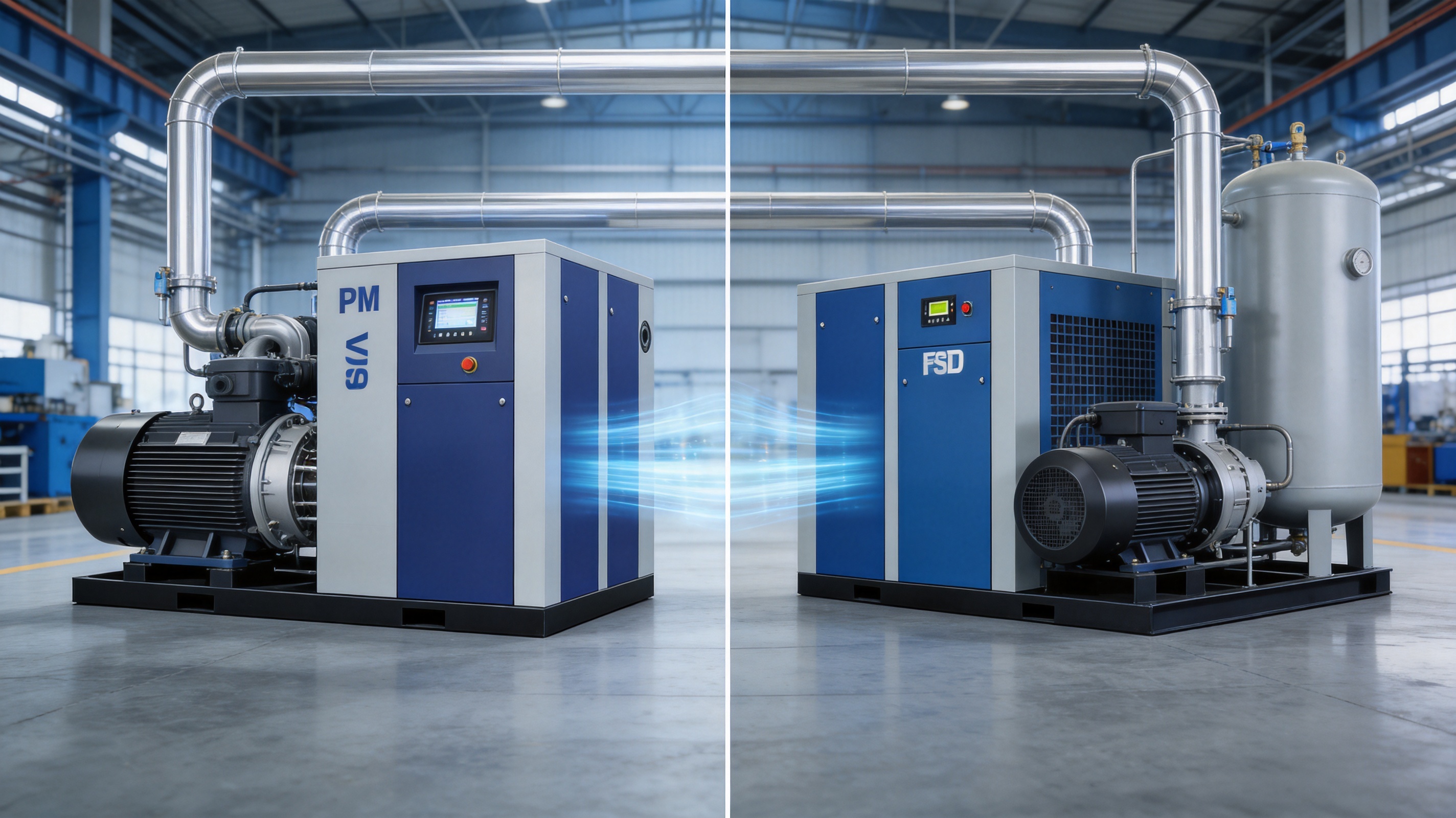
PM VSD and FSD Comparison
| Comparison Point | PM VSD | FSD |
|---|---|---|
| Motor speed | Automatically adjusted according to demand | Normally maintained at a constant operating speed |
| Best suited for | Variable or fluctuating air demand | Stable and continuous base-load demand |
| Pressure regulation | Fine adjustment through speed control | Managed through loading, unloading, and pressure settings |
| Energy performance | Potentially strong at partial load when correctly selected | Competitive at stable loads near rated capacity |
| Starting behavior | Controlled acceleration through the drive | Depends on the selected starting method |
| System complexity | Includes drive and electronic control functions | Generally simpler control architecture |
| Recommended role | Trim compressor or flexible main compressor | Base-load compressor or constant-demand unit |
The choice between PM VSD and FSD should not be based solely on the purchase price. Total cost of ownership includes electricity, maintenance, oil, filters, cooling, downtime, spare parts, installation, and expected service life. A technical evaluation should consider the complete compressed-air system rather than comparing two machines only by nameplate power.
5. Product Features and Operational Advantages
5.1 Wide Applicable Pressure Range
The product range is designed for pressure applications extending from medium pressure to very high pressure. This broad range enables the manufacturer to match compressor configuration with different industrial working conditions. For a 20–40 bar requirement, the selected compressor can be specified according to the required discharge pressure, air capacity, and operating pattern.
A wide pressure range is valuable for engineering companies and end users that operate several types of gas equipment. Instead of using a general-purpose low-pressure compressor with additional pressure-boosting equipment, customers can evaluate a compressor designed for the required pressure class from the beginning. This may simplify the air system and reduce the number of conversion stages.
Pressure range flexibility also supports future expansion. A plant may initially require a modest flow rate but later add more PSA vessels, purification capacity, or production lines. A modular compressor range allows the customer to select a suitable unit today while maintaining a clear path toward parallel installation or capacity expansion.
5.2 Stable Displacement and Pressure Performance
Continuous rotary screw compression provides a smooth discharge stream compared with highly pulsating compression methods. Stable flow is important when compressed air is delivered to adsorption equipment, membrane separation equipment, pneumatic control systems, and process tools.
The control system further supports stability by monitoring pressure and compressor operating conditions. In a PM VSD model, the controller can adjust the speed to respond to changes in air demand. In an FSD model, the loading and unloading sequence can maintain pressure within the configured control band.
Stable pressure may improve the operating consistency of the entire gas system. For example, a PSA nitrogen generator requires compressed air at a controlled pressure and flow for repeated adsorption and regeneration cycles. Pressure instability can influence valve operation and reduce the consistency of the product gas. A suitable compressor and correctly sized air receiver can help reduce these disturbances.
5.3 High Compression Efficiency
The compression process takes place inside a closed compression chamber formed by the rotors and housing. Oil injection helps seal the clearances between the rotating components, reducing internal leakage. It also absorbs compression heat and lubricates the bearings and other moving parts.
High efficiency depends on the complete system, including the air end, motor, drive, oil separator, inlet valve, cooling system, and control strategy. The compressor must be operated within its intended pressure and temperature range. Correct oil selection, regular filter replacement, clean coolers, and appropriate ventilation are essential for maintaining performance.
Compared with an incorrectly sized compressor, a properly selected rotary screw package can reduce wasted capacity and improve production reliability. Efficiency should be evaluated using specific power, normally expressed as the electrical power required to produce a defined volume of free air at a specified pressure.
5.4 Broad Adaptability
The compressor platform can be adapted to different industrial conditions through changes in motor power, drive type, control settings, cooling method, air treatment, receiver capacity, and system arrangement. This makes the product suitable for diverse users rather than one narrow application.
Baiao’s wider product portfolio includes air separation and purification equipment. As a result, the compressor can be considered as part of an integrated gas system rather than as an isolated machine. The engineering team can evaluate the relationship between compressed-air supply, pressure swing adsorption, membrane separation, gas purification, storage, and final use.
For customers with special environmental conditions, additional design factors may include high ambient temperature, dusty surroundings, high altitude, limited installation space, outdoor placement, voltage variation, and demanding duty cycles. These conditions should be identified during the inquiry stage so that the compressor package can be configured correctly.
5.5 Simple Operation and Maintenance
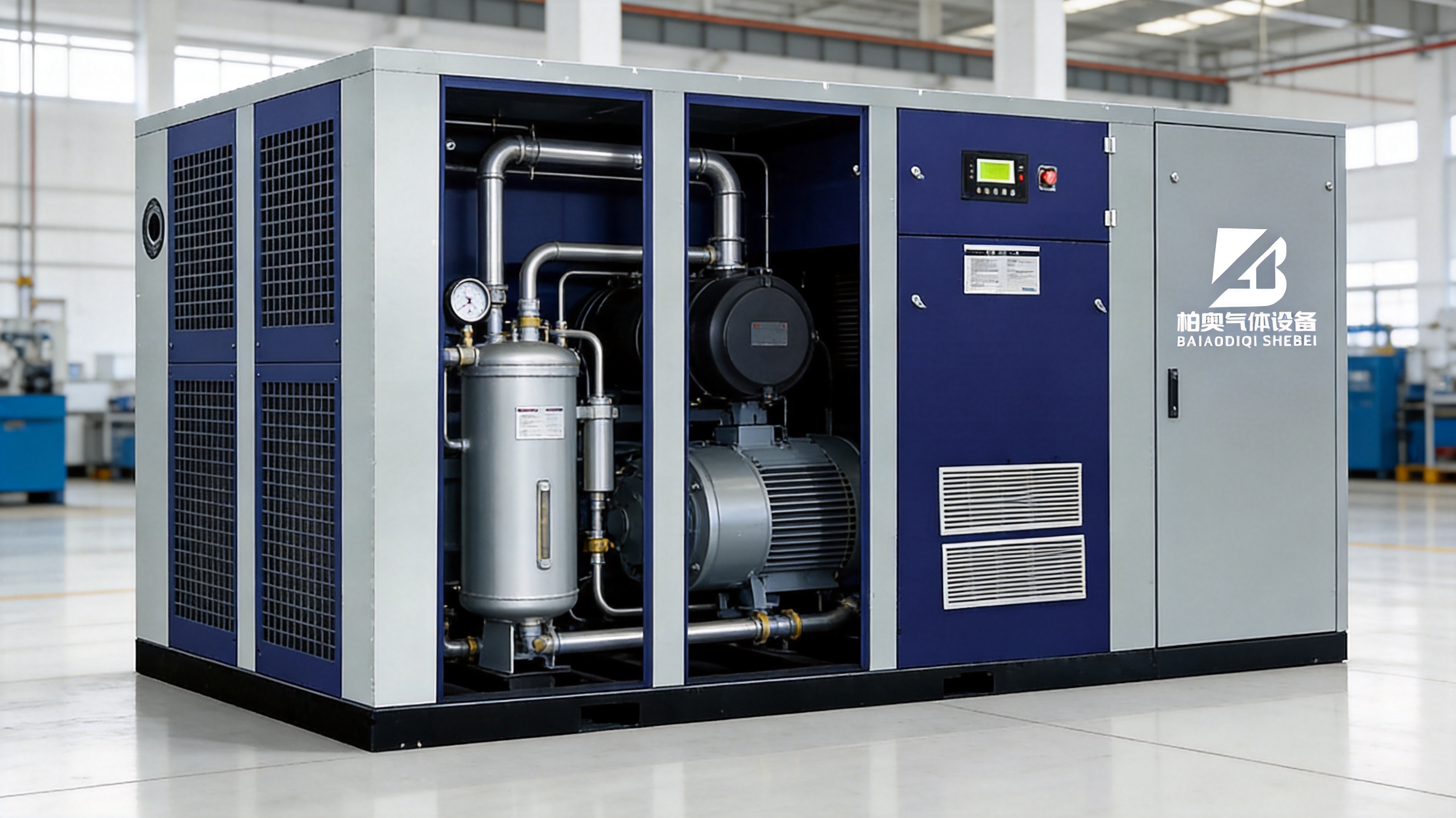
A packaged rotary screw compressor normally integrates the compression element, motor, oil circuit, air-oil separator, cooler, control cabinet, protective devices, and enclosure into a single system. This reduces installation complexity and allows operators to access key service points through planned maintenance panels.
Routine service generally includes oil inspection or replacement, oil filter replacement, air filter replacement, separator inspection, cooler cleaning, belt or coupling inspection where applicable, electrical inspection, drain maintenance, and checking for air or oil leaks. The exact service interval depends on oil type, operating temperature, ambient dust, load profile, and manufacturer instructions.
Simple maintenance does not mean maintenance can be neglected. High-pressure equipment must be serviced by trained personnel using appropriate isolation procedures. Before opening the package, electrical power must be isolated and internal pressure must be safely released. Maintenance records should include operating hours, pressure, temperature, oil condition, filter status, alarms, and corrective actions.
6. Oil Injection, Separation, and Air Quality
Oil injection is a central feature of this compressor type. The oil performs three main functions: sealing the compression chamber, removing heat, and lubricating the moving parts. These functions allow the compressor to operate continuously and efficiently at demanding pressure levels.
After compression, the air-oil mixture enters the separation system. The primary separation stage removes most of the oil from the compressed air stream. A separator element then captures fine oil aerosols, allowing recovered oil to return to the oil circuit while cleaner compressed air continues toward the outlet.
Oil-injected compression is not the same as oil-free compression. Downstream users that require very low oil content may need additional treatment equipment, such as coalescing filters, activated-carbon filters, refrigerated dryers, desiccant dryers, sterile filters, or other purification stages. The selection depends on the required air-quality class and the sensitivity of the application.
For gas separation systems, the air treatment design should consider not only oil but also water, particles, and hydrocarbons. Contaminants can damage valves, contaminate adsorbents, reduce membrane performance, or affect final gas purity. A complete system may therefore include an aftercooler, moisture separator, automatic drain, particulate filtration, oil-removal filtration, and drying equipment.
Users should identify the quality requirements of the final process before selecting the compressor. General plant air, instrument air, food-contact air, breathing air, and feed air for a gas-generation system may all require different treatment levels. The compressor manufacturer or system integrator should confirm the expected residual oil content and filtration arrangement.
7. Advanced Manufacturing and Engineering Strengths
Zhejiang Baiao Gas Equipment Co., Ltd. integrates product research and development, design, manufacturing, installation, and after-sales service. This integrated capability supports the development of compressor packages that can be matched with gas separation and purification systems.
The company operates a standardized workshop of approximately 3,000 square meters, supported by office and warehouse facilities. A dedicated production environment helps organize assembly, inspection, inventory, and delivery activities. It also provides space for equipment preparation and system integration before shipment.
7.1 Engineering-Led Product Development
Compressor performance is influenced by many interacting variables. Pressure, capacity, temperature, oil circulation, motor load, cooling, control logic, and downstream demand must be considered together. An engineering-led development process helps ensure that the product is evaluated as a complete package rather than as a collection of unrelated components.
The company’s experience with PSA nitrogen generators, PSA oxygen generators, membrane nitrogen and oxygen generators, nitrogen purification units, and ammonia decomposition hydrogen purification units gives it practical knowledge of gas-system requirements. This background is valuable when the compressor must provide stable feed air to separation or purification equipment.
Industrial conditions in China and overseas markets can vary considerably. Equipment may be exposed to high temperature, dust, long operating hours, fluctuating demand, or limited technical support at the installation site. Product development and configuration should therefore take into account maintainability, energy consumption, protection, accessibility, and service requirements.
7.2 Standardized Assembly and Quality Control
Standardized assembly procedures help reduce variation between units. Key stages can include incoming component inspection, air-end and motor installation, oil-piping assembly, electrical connection, controller setup, enclosure installation, leak inspection, safety-device verification, and functional testing.
Quality control should be applied to both mechanical and electrical systems. Mechanical checks may include fastener torque, pipe routing, sealing surfaces, oil-circuit cleanliness, cooler condition, and rotating-component alignment. Electrical checks may include insulation, grounding, terminal tightening, control-panel wiring, sensor operation, alarm functions, and emergency-stop performance.
For a high-pressure product, pressure integrity and safety checks are especially important. The completed package should be inspected according to applicable technical standards and project requirements. Testing may include pressure checks, operational checks, temperature monitoring, vibration observation, discharge-pressure verification, and confirmation of protective shutdown functions.
7.3 System Integration Capability
One of the company’s strengths is the ability to connect compressor supply with a broader gas equipment project. A customer may require not only an air compressor but also storage tanks, filters, dryers, PSA equipment, purification units, pipelines, control cabinets, installation, and commissioning.
System integration can simplify project communication. When one engineering team understands both the compressor and the gas-generation process, it can better coordinate pressure requirements, flow capacity, control signals, piping layout, startup sequence, and maintenance access.
Integration also helps prevent common design problems. For example, a compressor may be correctly rated on paper but poorly matched to the pressure drop of filters and dryers. A PSA unit may be correctly sized but supplied by a compressor with inadequate flow during regeneration. A system integrator can evaluate these relationships during the design stage.
7.4 Installation and After-Sales Support
Installation quality has a direct influence on compressor performance. The foundation must support the package, ventilation must remove heat, electrical power must match the motor and drive requirements, and piping must be designed to limit pressure drop and vibration. Commissioning should verify operating pressure, flow, temperature, rotation, alarm settings, unloading behavior, and communication with downstream equipment.
After-sales support may include installation guidance, commissioning assistance, operator training, maintenance recommendations, spare-parts planning, troubleshooting, and technical communication. For export projects, documentation should be prepared in a form suitable for the destination country and project requirements.
Baiao’s sales and service approach is supported by experience across more than 30 provinces and cities in China, as well as international markets. Its product portfolio and service structure are intended to support customers from initial selection through operation and future expansion.
8. Advantages Compared with Competing Solutions
8.1 Compared with Conventional Low-Pressure Compressors
A conventional low-pressure compressor may be attractive because of its lower initial price, but it is not necessarily suitable for 20–40 bar service. Operating a low-pressure unit beyond its intended range can increase heat, reduce efficiency, overload the motor, and shorten service life. A compressor designed for the required pressure class provides a more appropriate engineering basis.
The high-pressure rotary screw package also avoids unnecessary intermediate boosting in some applications. If a low-pressure compressor must be combined with a separate booster, the system may require additional motors, coolers, controls, valves, piping, and maintenance points. A correctly selected high-pressure compressor can make the arrangement more compact and easier to manage.
8.2 Compared with Reciprocating Compressors
Reciprocating compressors are capable of high pressure and remain useful in many applications. However, they generate pulsating flow and repeated reciprocating loads. They may require more attention to vibration, valve maintenance, cylinder lubrication, and pulsation control, depending on the design.
The rotary screw alternative offers continuous flow, fewer flow pulsations, and suitability for long periods of operation. It can be particularly advantageous where the process requires a steady air supply rather than short, intermittent bursts. The best choice still depends on pressure, flow, duty cycle, gas composition, and the required compression ratio.
8.3 Compared with Fixed-Speed-Only Packages
A fixed-speed-only compressor can be efficient at full load but may waste energy when demand changes substantially. The PM VSD option provides a way to match motor speed to actual demand. This can reduce unnecessary full-speed operation, stabilize pressure, and improve the flexibility of the compressed-air station.
At the same time, offering both PM VSD and FSD versions is an advantage over a single-configuration product line. Customers can select the drive technology that suits their load profile instead of paying for features that do not provide value in their specific application.
8.4 Compared with Stand-Alone Equipment Suppliers
A supplier that focuses only on compressors may not fully understand the operating requirements of PSA, membrane, or gas-purification systems. A manufacturer with experience in gas separation and purification can evaluate the compressor as part of the entire production process.
This integrated perspective can improve the selection of pressure, flow, storage, filtration, control, and redundancy. It may also simplify responsibility during installation and commissioning because the compressor and gas equipment are considered within one project framework.
9. Application Areas
9.1 PSA Nitrogen Generation
PSA nitrogen generators use compressed air as feed gas. Oxygen, water vapor, and other components are selectively adsorbed, while nitrogen passes through as the product gas. Stable feed pressure and adequate flow are essential for consistent adsorption and regeneration cycles.
The 20–40 bar compressor class may be selected for specialized high-pressure nitrogen applications, nitrogen boosting, or systems requiring pressure beyond conventional PSA feed conditions. The final design must verify the adsorbent, vessel rating, cycle pressure, product flow, and required nitrogen purity.
9.2 PSA Oxygen Generation
PSA oxygen systems also depend on reliable compressed-air supply. Hospitals, industrial furnaces, wastewater treatment systems, and other applications may use oxygen generated on site. Compressor stability helps maintain the required cycle conditions and supports predictable oxygen output.
Because oxygen systems can have strict cleanliness and safety requirements, oil separation, filtration, piping materials, and maintenance procedures must be selected carefully. The compressor should be integrated with suitable air treatment and oxygen-system safeguards.
9.3 Membrane Gas Separation
Membrane nitrogen and oxygen generators use differences in gas permeation rates to separate air components. Feed pressure is a major operating parameter because it influences membrane throughput and separation performance. A variable-speed compressor can help respond to changing demand while maintaining the pressure required by the membrane module.
9.4 Petrochemical and Chemical Processing
Petrochemical plants use compressed air for instrumentation, valve actuation, process support, nitrogen generation, and maintenance operations. Reliability, air dryness, oil control, and redundancy are important because interruptions can affect production and safety.
9.5 Textile, Automotive, and Electronics Manufacturing
Textile machinery, automotive production lines, SMT electronics equipment, and automated assembly systems often require stable compressed air. Pressure fluctuations may cause actuator errors, tool performance problems, or production defects. The PM VSD/FSD product family can be configured for the operating pattern of each factory.
9.6 Food Processing and Packaging
Food and packaging plants use compressed air for conveying, filling, sealing, cleaning, and automation. The required air quality depends on whether compressed air contacts the product or packaging. Appropriate filtration and drying must be specified together with the oil-injected compressor.
10. Selection Guidelines
The first selection parameter is required working pressure. Customers should distinguish between normal operating pressure, maximum operating pressure, and pressure at the compressor discharge. Pressure losses through filters, dryers, pipes, valves, and control equipment must be included.
The second parameter is free air delivery. The required flow should be based on actual consumption, peak demand, leakage, future expansion, regeneration requirements, and the operating efficiency of downstream equipment. Oversizing can lead to inefficient operation, while undersizing can cause pressure loss and production interruptions.
The third parameter is the load profile. Record compressed-air demand over a representative production period if possible. Identify minimum demand, average demand, peak demand, shift changes, weekends, seasonal variation, and startup requirements. This information helps determine whether PM VSD, FSD, or a combined compressor station is most suitable.
The fourth parameter is installation environment. Consider ambient temperature, altitude, dust, humidity, ventilation, indoor or outdoor installation, available floor space, electrical supply, drainage, noise restrictions, and access for maintenance.
The fifth parameter is required air quality. Determine acceptable particulate, water, and oil levels before selecting dryers and filters. The compressor should not be evaluated separately from the air treatment system.
The sixth parameter is redundancy. Critical production may require two or more compressors so that one unit can continue supplying air during maintenance or unexpected failure. A lead-lag control arrangement can distribute operating hours and improve availability.
Recommended Technical Information for Inquiry
| Information Required | Reason for Confirmation |
|---|---|
| Required discharge pressure | Determines compression configuration and component rating |
| Normal and peak air demand | Determines rated capacity and number of units |
| Operating hours per day | Supports lifecycle-cost and maintenance evaluation |
| Load fluctuation | Helps select PM VSD, FSD, or combined operation |
| Ambient temperature and altitude | Influences cooling, motor output, and air delivery |
| Air-quality requirement | Determines filtration and drying equipment |
| Electrical voltage and frequency | Ensures motor and drive compatibility |
| Installation conditions | Determines enclosure, ventilation, foundation, and service access |
| Downstream equipment | Ensures compatibility with PSA, membrane, purification, or process systems |
11. Installation, Commissioning, and Operation
The compressor should be installed on a stable foundation capable of supporting the package and resisting vibration. Adequate space must be left around service panels, filters, coolers, electrical cabinets, and oil-filling points. Ventilation should prevent hot discharge air from recirculating into the compressor inlet.
The electrical supply must match the motor and drive specifications. Protective devices, grounding, cable sizing, isolation, and emergency-stop functions should comply with the project’s electrical requirements. For PM VSD units, the variable-frequency drive should be installed and commissioned according to the relevant instructions.
Compressed-air piping should be sized to keep pressure drop within acceptable limits. Sharp bends, undersized valves, unnecessary restrictions, and poorly designed flexible connections can reduce the pressure available to the process. Piping should also be arranged to prevent condensed water from returning to the compressor or downstream equipment.
Before commissioning, technicians should confirm oil level, rotation direction, valve positions, filter installation, drain operation, sensor connections, pressure settings, and communication signals. The compressor should be started under controlled conditions and observed for abnormal noise, vibration, temperature rise, oil carryover, leaks, or alarms.
Operators should be trained to understand normal pressure, temperature, current, oil level, and alarm indications. A small change in operating data can provide an early warning of filter blockage, cooler fouling, oil degradation, leakage, or unusual demand. Preventive action is usually less costly than emergency repair.
12. Maintenance and Lifecycle Management
Preventive maintenance protects both performance and safety. The maintenance plan should be based on operating hours and actual site conditions. Dusty environments may require more frequent air-filter and cooler cleaning. High ambient temperatures may accelerate oil aging. Frequent load changes may increase stress on valves, drives, and control components.
Oil should be selected according to the compressor specification and operating environment. Mixing incompatible oils can affect viscosity, sealing, lubrication, separator performance, and service life. Oil samples or visual inspections may help identify contamination, oxidation, or abnormal wear.
Air and oil filters must be replaced before excessive pressure drop develops. A blocked air filter restricts inlet flow and can reduce capacity. A blocked oil filter may impair lubrication and cooling. A saturated separator can increase oil carryover and pressure loss.
Coolers must remain clean so that heat can be removed effectively. Excessive discharge temperature may result from dirty coolers, insufficient ventilation, low oil level, incorrect oil, high ambient temperature, or abnormal operating conditions. Temperature alarms should never be ignored.
Leak detection is another important part of lifecycle management. Compressed-air leakage can represent a significant hidden energy cost, especially in high-pressure systems. Regular inspection of pipe joints, hoses, valves, drains, and connections can reduce wasted capacity and improve system efficiency.
Spare-parts planning should include filters, separator elements, seals, sensors, valves, belts or coupling components where applicable, and recommended service materials. Maintaining critical spares can shorten downtime and support reliable production.
13. Safety Considerations
Compressed air at 20–40 bar contains substantial stored energy. The compressor, receiver, piping, and downstream equipment must be designed and operated according to applicable pressure-equipment requirements. Safety valves, pressure switches, temperature protection, emergency stops, and correct isolation procedures are essential.
Personnel should never remove covers, filters, separator elements, or pipe connections while the system is pressurized. Electrical isolation and mechanical pressure release must be verified before maintenance begins. Lockout and tagout procedures should be used where required by the site safety system.
Oil-injected compressors also require attention to hot surfaces and oil mist. Ventilation should be adequate, and spilled oil should be cleaned promptly. The compressor room should be kept free of combustible materials and should provide safe access for inspection and emergency response.
When the compressor supplies oxygen-generation or other gas-purification equipment, the complete system requires additional safety controls. Materials, cleanliness, gas mixing, ventilation, pressure relief, and operating procedures should be reviewed as a complete installation.
14. Why Choose an Integrated Gas Equipment Manufacturer
Selecting a compressor from an integrated gas equipment manufacturer can offer advantages beyond the machine itself. The supplier can consider the compressor in relation to gas purity, PSA cycle requirements, membrane pressure, purification stages, storage, piping, and control systems.
Zhejiang Baiao Gas Equipment Co., Ltd. serves industrial customers through a combination of technical development, standardized manufacturing, project installation, and after-sales service. Its product scope includes gas generators, industrial purification systems, PSA equipment, membrane separation equipment, nitrogen purification units, and hydrogen purification equipment.
This product breadth supports customized solutions. A customer can discuss not only pressure and flow but also the complete process objective: required gas purity, production capacity, operating schedule, installation environment, automation level, energy target, and expansion plan.
The company’s focus on technical improvement, quality control, energy efficiency, integrity, and service is aligned with the needs of industrial compressor users. Reliable equipment is important, but reliable technical communication, clear documentation, responsive service, and practical maintenance support are equally important over the life of the project.
15. Frequently Asked Questions
Q1: What does “20–40 bar” mean for this compressor?
It identifies the principal pressure class addressed by the product title. The exact rated pressure and operating point must be confirmed for each model. The wider product information indicates a reference working-pressure range from approximately 25 to 400 bar, so customers should request a model-specific technical datasheet for the required pressure.
Q2: Is this compressor suitable for PSA nitrogen generation?
It can be suitable for PSA nitrogen systems when the pressure, flow, air quality, duty cycle, and downstream equipment are correctly matched. The final selection should include air receivers, filtration, drying, automatic drains, and control requirements associated with the PSA process.
Q3: What is the difference between PM VSD and FSD?
PM VSD uses a permanent magnet motor and variable-speed drive to adjust compressor speed according to demand. FSD operates the motor at a fixed speed and normally regulates capacity through loading and unloading. PM VSD is generally advantageous when demand fluctuates, while FSD can be effective for stable base-load operation.
Q4: Can an oil-injected compressor provide oil-free air?
An oil-injected compressor does not inherently produce oil-free air. It uses oil for sealing, cooling, and lubrication. If the application requires very low oil content, suitable downstream oil-removal filtration and air treatment must be installed. The required air-quality level should be defined before ordering.
Q5: How is the correct air capacity selected?
Capacity should be based on normal demand, peak demand, pressure, leakage, future expansion, and the requirements of connected equipment. A load study is recommended where possible. The compressor should not be selected solely by motor power because actual free air delivery depends on pressure and operating conditions.
Q6: Is a PM VSD compressor always more energy efficient than an FSD compressor?
Not always. PM VSD can provide significant benefits at variable or partial loads, but FSD may be competitive when the compressor operates close to full load for long periods. Energy performance depends on the load profile, control settings, pressure, maintenance, and complete system design.
Q7: Can the compressor be integrated with membrane nitrogen or oxygen equipment?
Yes, the compressor can be considered as part of an integrated gas-separation system. The design must verify membrane feed pressure, flow, air quality, pressure drop, control signals, and storage requirements.
Q8: What information should be provided when requesting a quotation?
Customers should provide required pressure, normal and peak flow, operating hours, load fluctuations, voltage and frequency, ambient temperature, altitude, installation location, air-quality requirements, downstream equipment, automation expectations, and whether standby capacity is required.
Q9: What maintenance is normally required?
Typical maintenance includes oil inspection or replacement, air-filter and oil-filter replacement, separator inspection, cooler cleaning, leak checks, drain maintenance, electrical inspection, sensor verification, and review of alarms and operating data. Service intervals depend on site conditions and manufacturer recommendations.
Q10: Can the company provide more than the compressor?
The company’s product scope includes gas separation and purification equipment, PSA nitrogen and oxygen generators, membrane gas generators, nitrogen purification units, and ammonia decomposition hydrogen purification equipment. Customers can discuss complete or customized industrial gas solutions rather than purchasing a compressor as an isolated component.
16. Conclusion
The 20–40 bar oil-injected rotary screw air compressor with PM VSD and FSD options is designed for industrial users that require stable, dependable, and adaptable compressed air. Its continuous rotary compression, oil-assisted sealing and cooling, pressure-range flexibility, and available variable-speed configuration make it suitable for demanding process applications.
PM VSD technology can improve responsiveness and energy performance when air demand changes, while FSD technology can provide reliable base-load operation when demand is stable. Offering both configurations allows customers to select a solution based on actual operating conditions rather than adopting a one-size-fits-all design.
The product’s value is strengthened by the manufacturer’s experience in gas separation, purification, customized equipment, installation, and after-sales service. With research and development, standardized workshop production, system integration, and project support, Zhejiang Baiao Gas Equipment Co., Ltd. can help customers coordinate compressor performance with PSA, membrane, purification, and industrial process requirements.
Before purchase, users should confirm the exact pressure, flow, air quality, electrical supply, ambient conditions, load profile, storage volume, filtration, redundancy, and maintenance plan. When these factors are properly evaluated, the compressor can become a dependable foundation for efficient industrial gas production and stable process operation.
References
1. Compressed Air and Gas Institute. Compressed Air System Fundamentals and Performance Guidance.
2. International Organization for Standardization. ISO 1217, Displacement Compressors: Acceptance Tests.
3. International Organization for Standardization. ISO 8573, Compressed Air: Contaminants and Purity Classes.
4. International Organization for Standardization. ISO 11011, Compressed Air Energy Efficiency Assessment.
5. U.S. Department of Energy. Improving Compressed Air System Performance: A Sourcebook for Industry.
6. European Committee for Standardization. Industrial Compressor Safety and Pressure Equipment Guidance.
7. General engineering principles for rotary screw compressor operation, oil separation, variable-speed drive control, and industrial air treatment.
Product: 20-40bar Oil-Injected Rotary Screw Air Compressor (PM VSD/FSD)

- Tel: +86-15057127179
+86-13588382771 - Email: huang.yifan0215@gmail.com
- Address: Huanshan Township, Fuyang District, Hangzhou City, Zhejiang Province
Copyright © Zhejiang Baiao Gas Equipment Co., Ltd. All Rights Reserved.
Privacy
Gas Generator Plant Manufacturer, Industrial Purification Equipment Plant
