 en
en русский
 Español
 عربى
عربى
Low-Pressure Permanent Magnet VSD Oil-Injected Rotary Screw Air Compressors for Efficient Industrial Air Systems
Content
- 1 Introduction
- 2 1. Understanding the Low-Pressure Application
- 3 2. Product Configuration and Operating Principle
- 4 3. Permanent Magnet Motor and Variable Speed Technology
- 5 4. Cooling, Airflow, and Noise Management
- 6 5. Oil-Gas Separation and Compressed-Air Quality
- 7 6. Touchscreen Microcomputer Controller
- 8 7. Main Technical Range
- 9 8. Advantages Compared with Conventional Compressor Solutions
- 10 9. Manufacturing and Engineering Strengths
- 11 10. Application in Gas Separation and Purification Plants
- 12 11. Application Across Industrial Sectors
- 13 12. Installation and System Design Considerations
- 14 13. Maintenance and Life-Cycle Value
- 15 14. Selecting the Right Model
- 16 15. Company Capabilities and Market Support
- 17 16. Q&A
- 17.1 Q1: What pressure range is covered by this compressor series?
- 17.2 Q2: What airflow range is available?
- 17.3 Q3: What motor technology does the compressor use?
- 17.4 Q4: Why is variable speed control useful?
- 17.5 Q5: What is the purpose of the dual variable frequency design?
- 17.6 Q6: Is the compressor oil-free?
- 17.7 Q7: Can the compressed air be used directly in sensitive applications?
- 17.8 Q8: What cooling arrangement does the compressor use?
- 17.9 Q9: Does the compressor include a monitoring system?
- 17.10 Q10: Which industries may benefit from this product?
- 17.11 Q11: How should the compressor be compared with a conventional high-pressure compressor?
- 17.12 Q12: What information should be supplied when requesting a quotation?
- 18 Conclusion
- 19 References
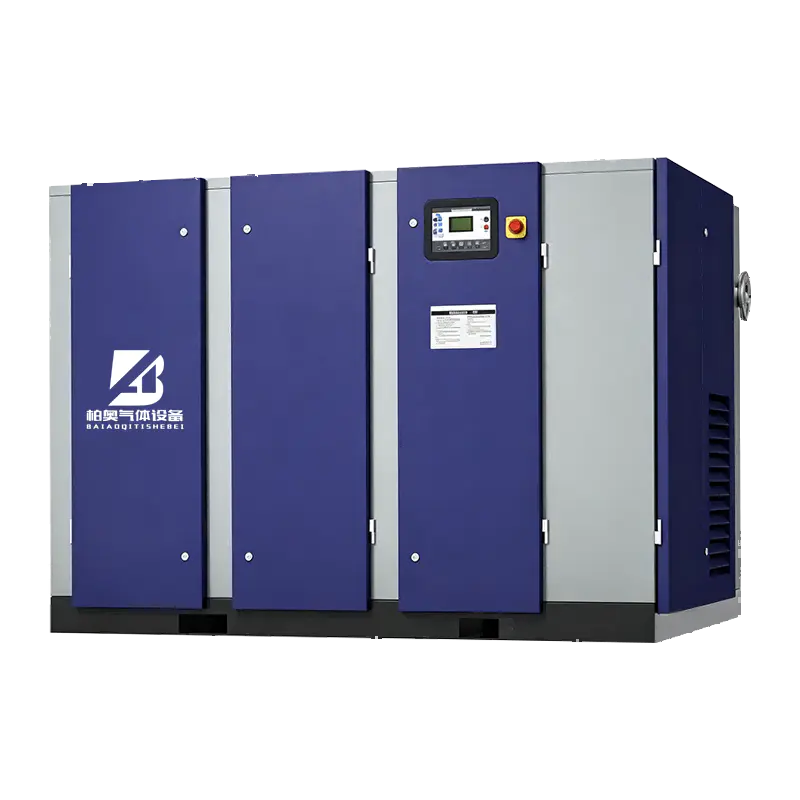
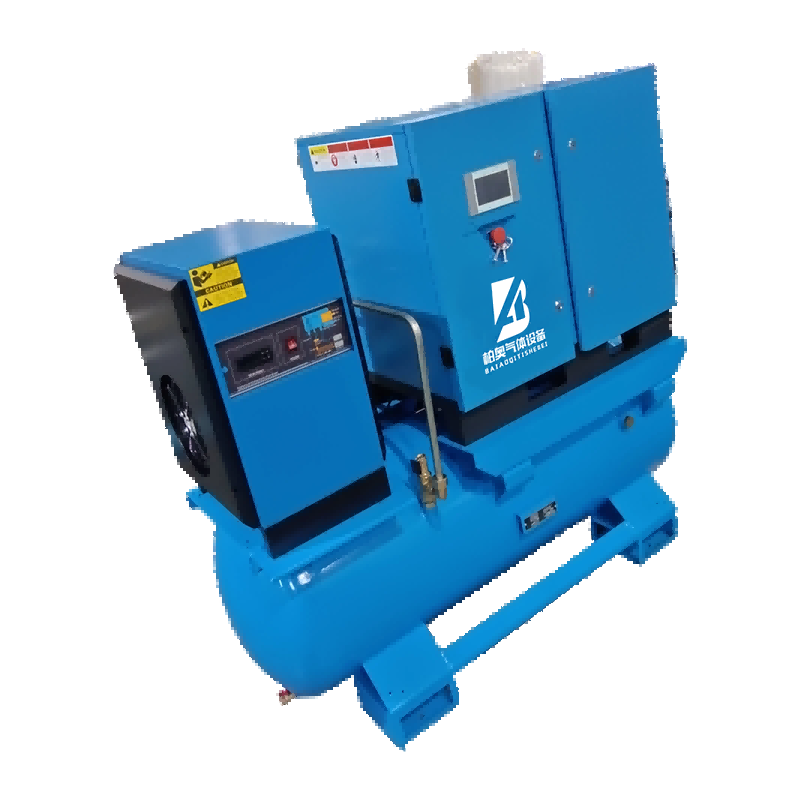
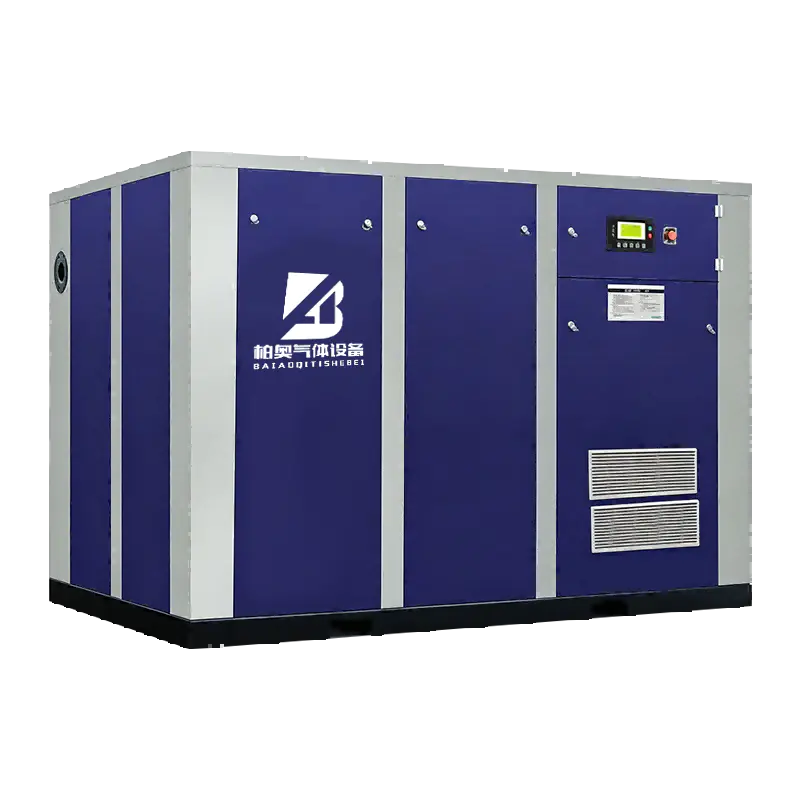
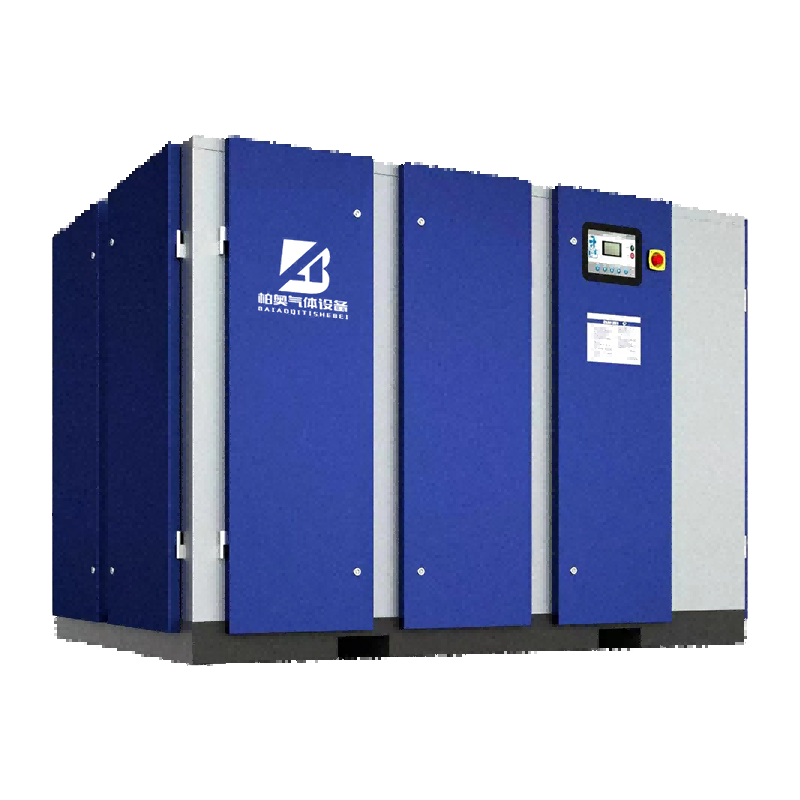
- 20 Product: Low-Pressure Permanent Magnet VSD Oil-Injected Rotary Screw Air Compressor
Introduction
Low-pressure compressed air is essential in many industrial processes, including pneumatic conveying, textile production, food processing, electronics manufacturing, packaging, material handling, wastewater treatment, and selected gas-generation applications. Although the required working pressure may be lower than that of conventional factory air systems, the demand for stable flow, low operating cost, dependable operation, and clean compressed air remains high. A compressor that produces more pressure than the process requires can waste substantial energy through unnecessary compression, throttling, and artificial pressure reduction.
The BHLV-Z Series low-pressure permanent magnet variable speed drive oil-injected rotary screw air compressor is designed for applications requiring a working pressure of approximately 2 to 5 bar, equivalent to 29.0 to 72.5 psig. Its design combines two-stage compression, a dedicated low-pressure air end, permanent magnet synchronous motor technology, variable frequency control, low-pressure oil-gas separation, and an integrated cooling and control system.
With an air capacity range of 1.8 to 75 cubic meters per minute, or approximately 63.6 to 2,648.6 cubic feet per minute, and a rated power range of 22 to 280 kW, the series is intended to serve both compact process installations and larger industrial air systems. The broad operating range enables users to select equipment according to actual demand rather than relying on a single fixed-size machine.
This article examines the product’s operating concept, technical configuration, energy-saving potential, manufacturing strengths, application value, maintenance considerations, and selection criteria. It also explains how a specialized gas equipment manufacturer can support the compressor with related air separation and purification equipment, creating a more complete industrial gas and compressed-air solution.
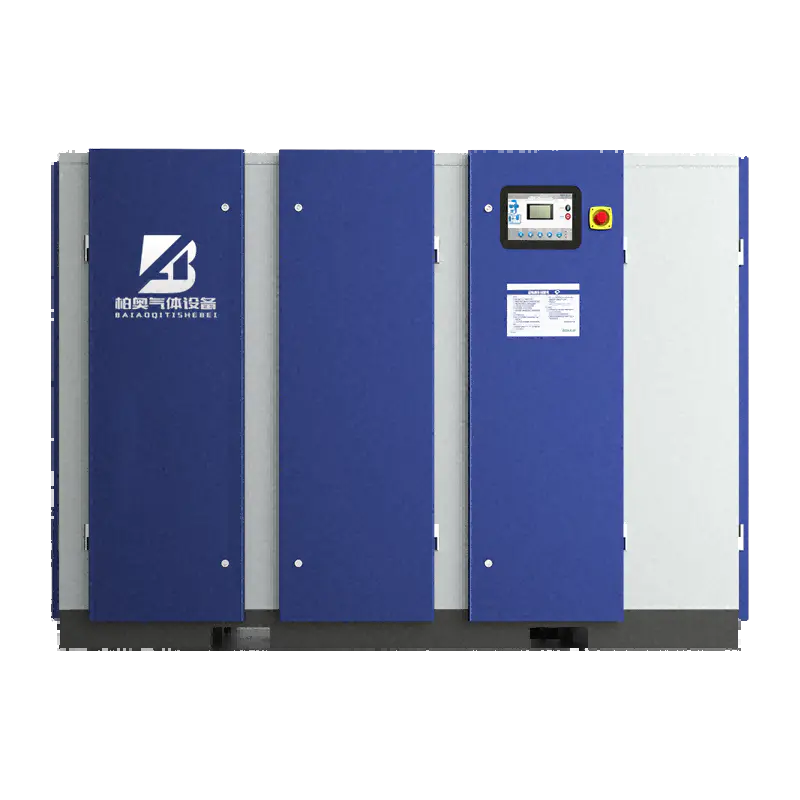
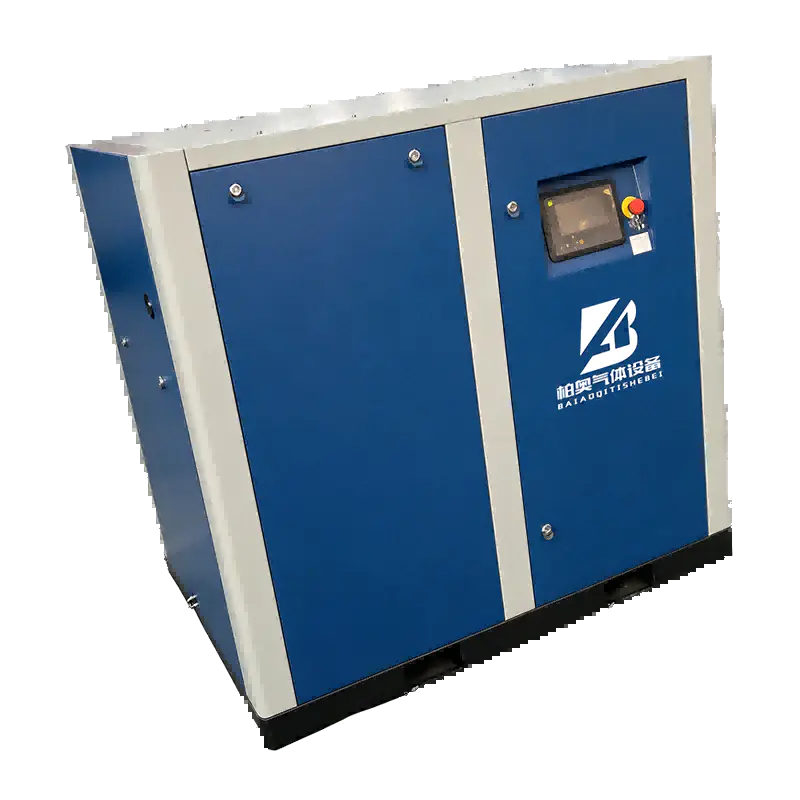
Low-Pressure Permanent Magnet VSD Oil-Injected Rotary Screw Air Compressor
1. Understanding the Low-Pressure Application
1.1 Why pressure matching matters
Compressed-air systems are often designed around traditional factory standards, even when individual processes require much lower pressure. A process may need a large volume of air at 2, 3, 4, or 5 bar, while a conventional compressor system operates at a substantially higher pressure. The excess pressure is then reduced by valves, regulators, or other control devices.
Such an arrangement can be inefficient because the compressor still consumes energy to produce the higher pressure. The energy used to create the unnecessary pressure is not recovered when the air is regulated downward. For high-volume applications operating continuously, this difference can produce significant operating costs.
A dedicated low-pressure compressor is designed around the actual process requirement. Its air end, compression stages, oil circulation, cooling system, motor, and control logic are selected for efficient operation in a lower pressure range. This allows the machine to focus on delivering the required air volume without repeatedly compressing air beyond the process need.
1.2 Typical low-pressure processes
Low-pressure compressed air is used in numerous applications. In textile plants, air may be required for spinning, weaving, air-jet looms, cleaning, and material transport. In food and beverage facilities, low-pressure air can support conveying, aeration, packaging, and process handling, subject to the required air-quality classification.
Industrial conveying systems may use low-pressure air to move powders, granules, or lightweight materials through pipelines. Wastewater treatment systems can require large air volumes for aeration, although the exact pressure depends on basin depth, diffuser design, and system resistance. Glass, ceramics, automotive, and general manufacturing operations may use low-pressure air for pneumatic transport, cleaning, cooling, or selected production tools.
Low-pressure air is also relevant to gas-generation plants. PSA nitrogen and oxygen generators, membrane gas systems, and purification units depend on compressed air with appropriate flow, pressure, temperature, and quality. In these installations, compressor selection affects the efficiency and reliability of the entire gas-generation system.
2. Product Configuration and Operating Principle
2.1 Two-stage compression
The BHLV-Z Series uses a specially designed two-stage compression system. In a two-stage arrangement, the total compression ratio is distributed between two compression stages rather than being completed by a single stage. This can improve the compression process at low working pressures and support more efficient operation when designed and controlled correctly.
The first stage raises the pressure from atmospheric conditions to an intermediate level. The second stage then increases the pressure to the required discharge range. Between stages, the air and oil conditions can be managed to support temperature control, sealing, lubrication, and compression stability.
For a low-pressure machine, two-stage compression is not simply a matter of adding another compression element. The air-end geometry, pressure ratio distribution, oil flow, internal clearances, cooling strategy, and control system must be coordinated. The result is a purpose-designed package rather than a standard high-pressure compressor operated at a reduced set point.
2.2 Dedicated low-pressure air end
The compressor is equipped with a low-pressure dedicated air end. The air end is the central compression component, and its geometry strongly influences flow, efficiency, noise, temperature, and service life. A dedicated design allows the compressor to operate within the pressure and flow range for which the compression elements are intended.
Compared with adapting a conventional compressor to a low-pressure application, a dedicated low-pressure air end can provide a more appropriate internal compression relationship. This is particularly important when the application requires high flow and extended operating hours. It also helps the system avoid depending on excessive discharge pressure as a method of controlling air delivery.
The air end works together with oil injection. Oil injection helps lubricate moving parts, remove heat generated during compression, provide sealing between the rotors, and support stable operation. The oil circuit must be carefully matched to the air end and the operating pressure range to maintain appropriate temperature and separation performance.
2.3 Oil-injected rotary screw operation
In an oil-injected rotary screw compressor, air enters the compression chamber and is compressed by rotating screw rotors. Oil is introduced into the compression chamber during this process. The mixture of compressed air and oil leaves the air end and enters the oil-gas separation system.
After separation, the compressed air continues toward the discharge outlet, while the recovered oil is returned to the oil circuit for reuse. The oil is cooled and filtered as required before being returned to the air end. This closed-loop arrangement allows the oil to perform several functions during compression while limiting oil carryover in the delivered air.
The design of the oil-gas separation system is especially important in low-pressure, high-flow applications. The compressor must maintain effective separation without creating excessive pressure loss. The BHLV-Z Series uses a low-pressure oil-gas separation system intended to support minimal oil content and efficient airflow.
3. Permanent Magnet Motor and Variable Speed Technology
3.1 IE5-efficiency permanent magnet synchronous motor
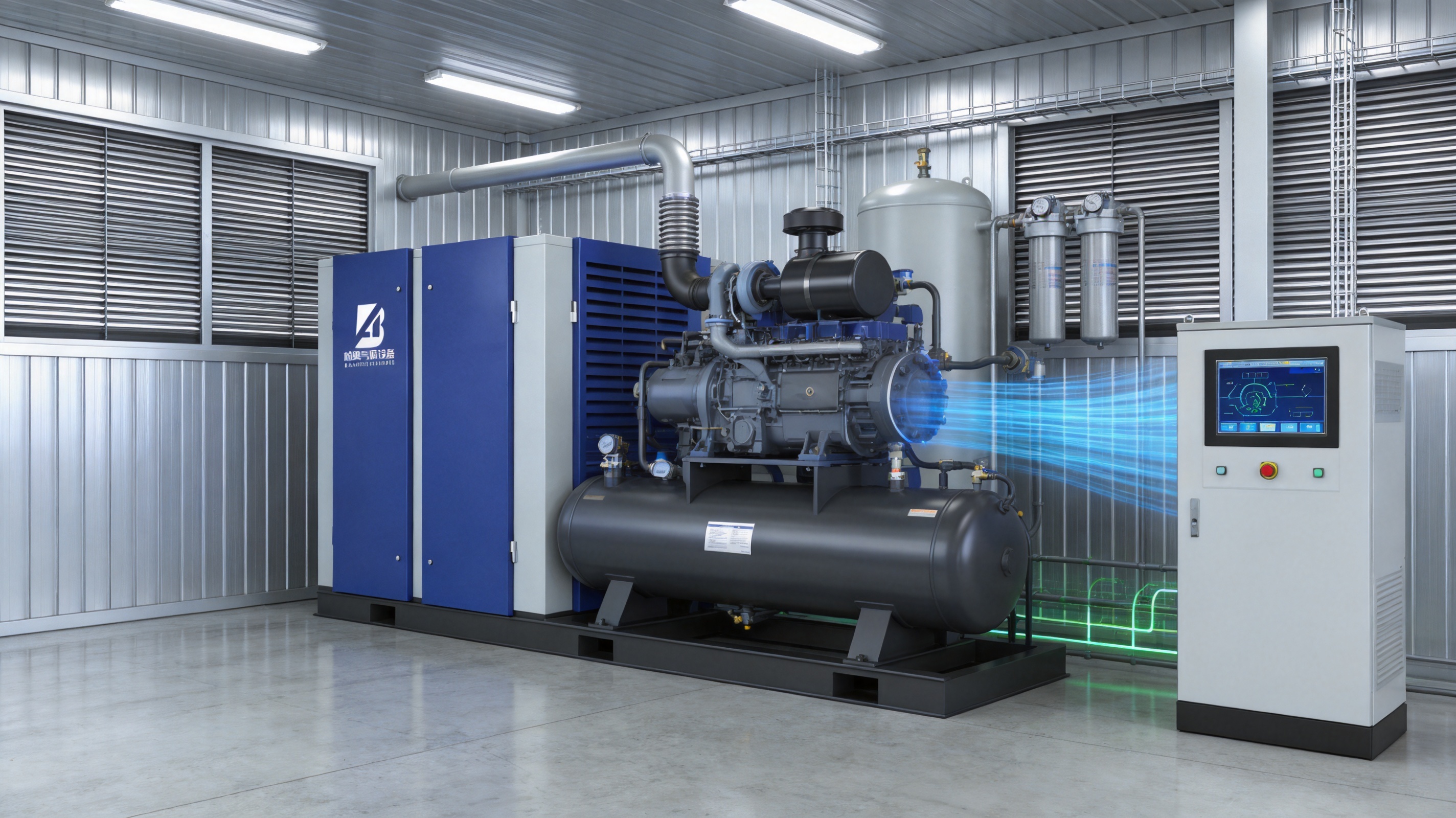
The BHLV-Z Series is equipped with an IE5-efficiency permanent magnet synchronous motor. Permanent magnet motors use magnetic material integrated into the rotor to produce the required magnetic field without relying on the same rotor excitation arrangement used by many conventional induction motors.
This configuration can reduce electrical losses and improve motor efficiency, particularly when the motor operates across a variable load range. The IE5 classification represents a high motor-efficiency level under applicable efficiency standards. Actual system performance depends on the complete compressor package, operating point, ambient conditions, control settings, and maintenance condition, but the motor provides a strong foundation for reducing energy consumption.
Permanent magnet motors can also offer high power density and stable torque characteristics. These qualities are useful in a compact compressor package where the motor, air end, cooling system, and separation equipment must be integrated within a practical footprint.
3.2 Variable speed drive control
A variable speed drive adjusts motor speed according to air demand. In a fixed-speed compressor, the machine may operate at a limited number of conditions, often switching between loaded and unloaded states. During unloading, the motor may continue consuming energy even though useful compressed air production is reduced.
Variable speed operation allows the compressor to respond more closely to changes in system demand. When demand decreases, the controller can reduce speed. When demand increases, the compressor can increase speed within its operating range. This can reduce unnecessary unloading and improve the relationship between power consumption and delivered airflow.
The benefits are particularly relevant to facilities with changing production schedules, multiple shifts, intermittent pneumatic demand, or processes that do not remain at a constant flow rate. Instead of selecting a compressor only for the maximum demand and operating it inefficiently during lower-demand periods, a variable speed compressor can adapt more effectively to actual requirements.
3.3 Dual variable frequency design
The product uses a dual variable frequency design for both the air end and the cooling fan. This means that variable frequency control is applied not only to the main compression drive but also to the fan system. The two systems can therefore respond more flexibly to operating conditions.
Fan power can become a meaningful part of total compressor energy consumption, especially when a fan is operated continuously at a fixed speed. A fan that runs faster than necessary may consume additional power and create avoidable noise. By adjusting fan speed according to cooling demand, the system can balance heat removal, energy use, and acoustic performance.
The dual variable frequency arrangement also supports more coordinated thermal management. During periods of low load or lower ambient temperature, the fan may not need to operate at maximum speed. During high-load conditions, the fan can increase airflow to help maintain appropriate oil and compressed-air temperatures.
4. Cooling, Airflow, and Noise Management
4.1 Enhanced cooler design
Compression generates heat, and effective heat removal is essential for efficiency, reliability, and oil service life. The BHLV-Z Series uses an enhanced cooler with a side-intake and top-exhaust configuration. This arrangement is intended to support organized airflow through the package and reduce the likelihood of hot air being drawn back into the cooling inlet.
A side intake allows cooling air to enter from the side of the enclosure, while the top exhaust directs heated air upward. In a suitable installation environment, this arrangement can help separate the hot discharge air from the cooler inlet air. Correct installation clearance and ventilation remain important because even a well-designed compressor can be affected by a poorly ventilated compressor room.
Cooler design must account for both the oil circuit and the compressed-air circuit. Excessive temperature can increase oil degradation, affect viscosity, reduce separation performance, and place additional stress on seals and bearings. A properly selected cooler helps the compressor maintain more stable operating conditions across the expected load range.
4.2 Hot and cold zone isolation
The package includes a hot and cold zone isolation system. Separating hot components or hot airflow from cooler components can improve thermal management within the enclosure. This approach may help reduce heat transfer to sensitive control components and improve the consistency of the air and oil cooling paths.
Thermal organization also contributes to easier service and inspection. When airflow routes, oil circuits, and electrical components are arranged logically, technicians can more readily identify the source of abnormal temperatures or operating conditions. A clear equipment layout is valuable for preventive maintenance and troubleshooting.
4.3 Quiet centrifugal fan configuration
The cooling system uses a quiet centrifugal fan configuration. Fan noise can affect the working environment, especially when compressors are installed near production lines, offices, laboratories, or occupied service areas. A quieter fan design can help reduce the acoustic impact of the compressor while maintaining the airflow required for heat rejection.
Noise performance is influenced by many factors, including fan speed, blade design, airflow resistance, enclosure panels, vibration isolation, installation foundation, and connected piping. The quiet centrifugal fan is therefore one part of a complete noise-control strategy. Correct installation, flexible connections, regular cleaning, and proper alignment also contribute to lower vibration and sound levels.
5. Oil-Gas Separation and Compressed-Air Quality
5.1 Importance of oil separation
Oil injection is beneficial inside the screw air end, but the delivered compressed air must contain only a controlled and minimal amount of oil for the intended application. Oil carryover can contaminate downstream filters, dryers, receivers, pneumatic equipment, process materials, and gas-generation systems.
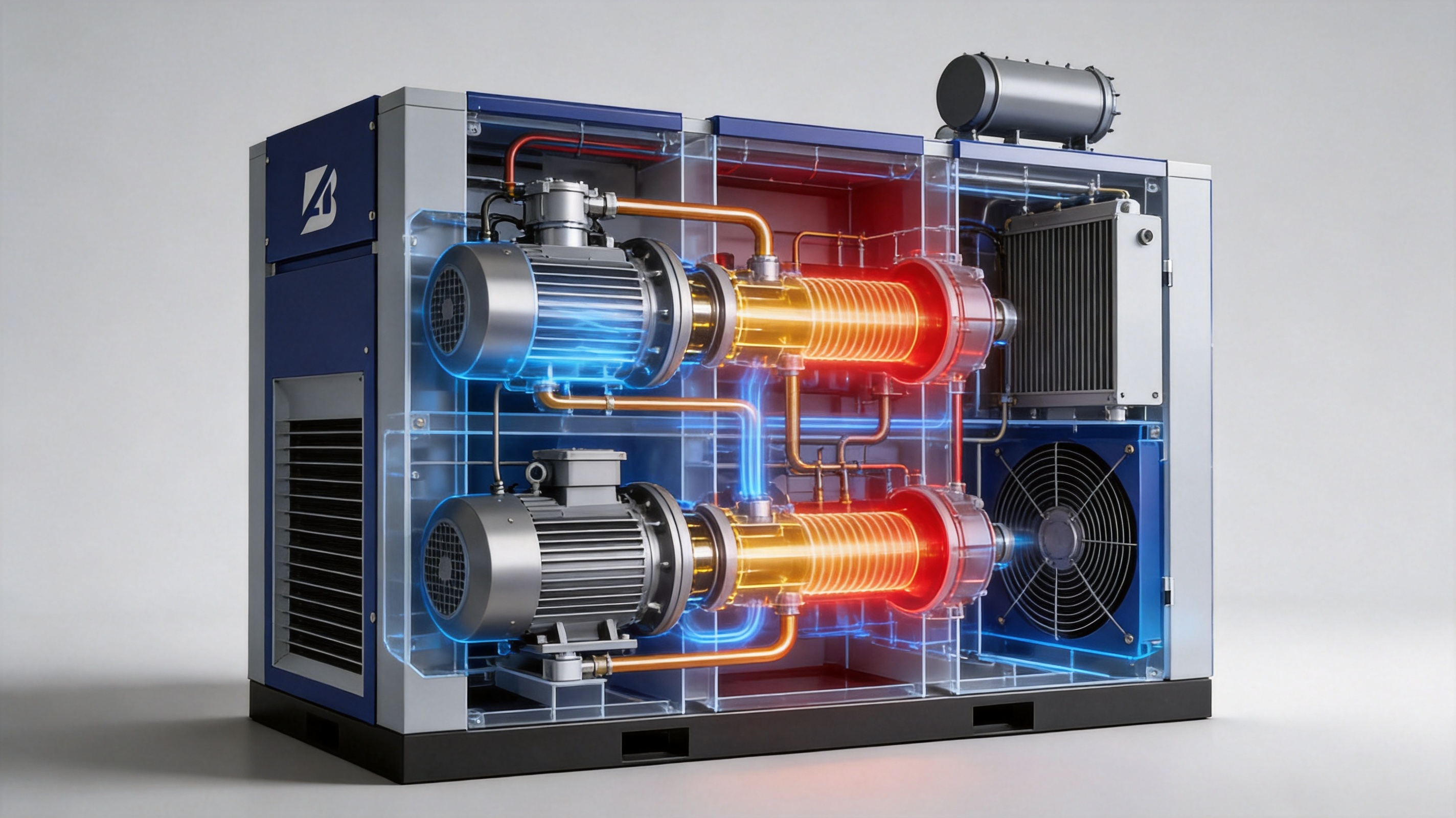
The BHLV-Z Series includes a low-pressure oil-gas separation system designed to reduce oil content in the outlet air. The separator removes oil droplets and mist from the compressed-air stream and returns recovered oil to the oil circuit. The effectiveness of this process depends on separator design, operating temperature, oil condition, pressure, flow, and maintenance.
Minimal oil content does not automatically mean that the air is suitable for every sensitive application. Users should define the required air-quality class and install appropriate downstream filtration, drying, and treatment equipment when necessary. Food, pharmaceutical, electronics, medical, and breathing-air applications require particularly careful evaluation and may require additional purification stages.
5.2 Relationship between compressor and purification equipment
Compressed-air quality is determined by the complete system, not by the compressor alone. Atmospheric air contains moisture, particles, hydrocarbons, and other contaminants. During compression, the concentration of some contaminants can increase, and water may condense as the air cools.
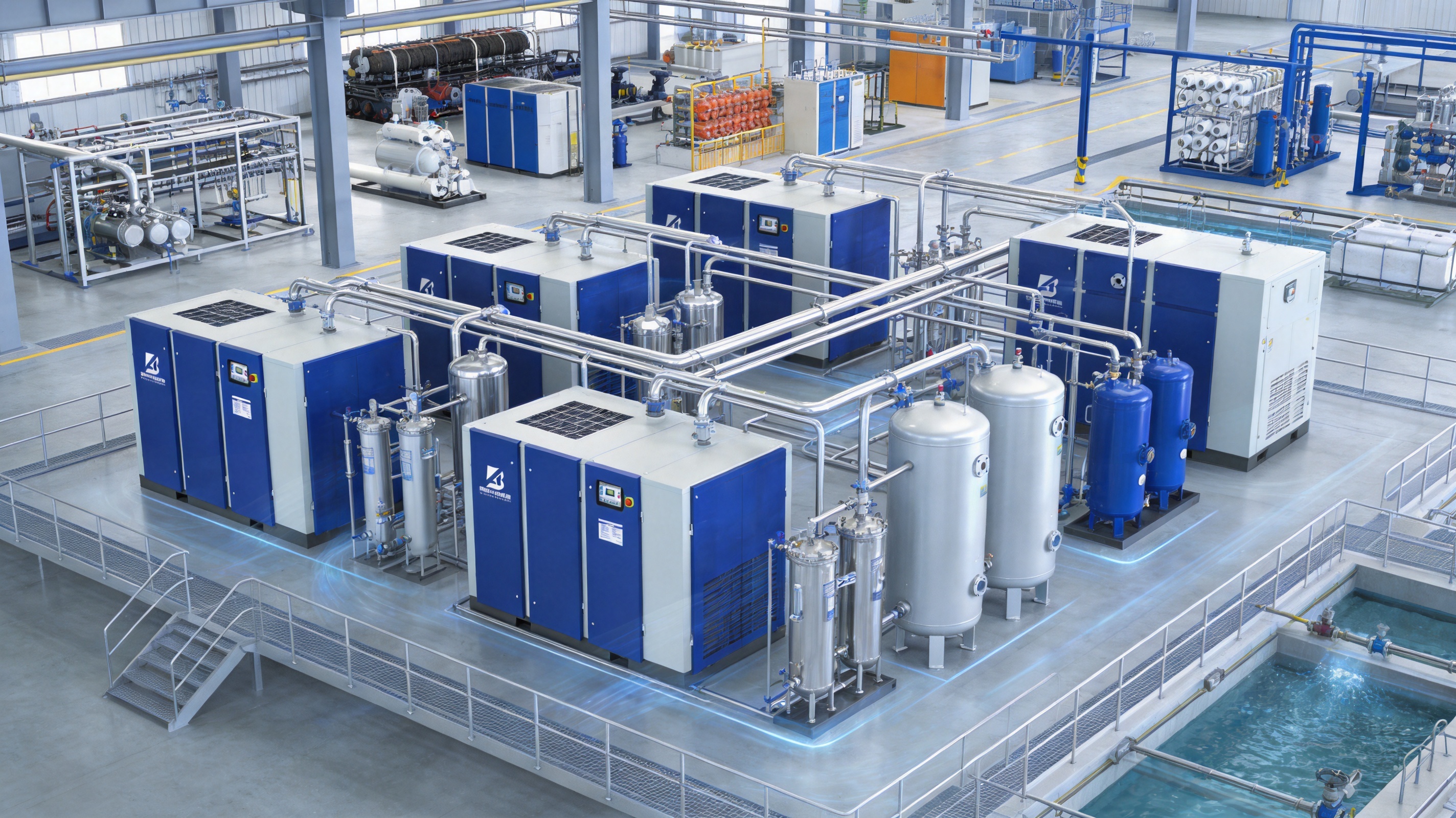
Depending on the process, the compressor may be followed by an air receiver, water separator, particulate filter, coalescing filter, activated carbon filter, refrigerated dryer, desiccant dryer, or other purification device. The correct configuration depends on the required pressure dew point, residual oil content, particle level, flow rate, ambient conditions, and process sensitivity.
A manufacturer with experience in gas separation and purification can help users consider the compressor and downstream equipment as one integrated system. This is useful for projects involving nitrogen generators, oxygen generators, membrane systems, purification units, and related industrial gas equipment.
6. Touchscreen Microcomputer Controller
6.1 Real-time operating information
The compressor is equipped with a user-friendly touchscreen microcomputer controller. A modern controller provides operators with real-time information about operating status and helps organize routine management tasks. Depending on the system configuration, displayed information may include discharge pressure, temperature, motor status, fan status, operating hours, alarms, maintenance reminders, and load conditions.
Clear information can reduce the time required to identify abnormal conditions. Instead of relying only on mechanical gauges or occasional manual inspection, operators can review the machine’s status through a centralized interface. This is especially useful in industrial facilities where equipment must be monitored alongside other production assets.
6.2 Control and protection functions
A compressor controller normally coordinates starting, stopping, loading, unloading, speed adjustment, fan control, temperature protection, pressure protection, and alarm handling. In a variable speed system, the controller also helps regulate the relationship between system demand and motor speed.
Protection functions are essential because operating conditions can change rapidly. Blocked coolers, high ambient temperatures, insufficient oil, abnormal pressure, electrical faults, or excessive motor temperature can affect compressor safety and service life. A controller can provide warnings or initiate protective actions when measured values exceed programmed limits.
6.3 Support for maintenance management
Maintenance reminders and operating-hour records help users plan service activities. Oil changes, filter replacement, separator inspection, cooler cleaning, electrical inspections, and belt or coupling checks should be performed according to the manufacturer’s recommendations and actual operating conditions.
Preventive maintenance is usually more economical than waiting for a failure. A controller that records operating information can support trend analysis and help maintenance personnel understand whether a change in temperature, pressure, or energy consumption indicates a developing problem.
7. Main Technical Range
The product is offered across a wide range of working pressures, airflow capacities, and motor powers. The principal published specifications are summarized below.
| Parameter | Product Range | Imperial Equivalent |
|---|---|---|
| Working pressure | 2 to 5 bar | 29.0 to 72.5 psig |
| Air capacity, FAD | 1.8 to 75 m³/min | 63.6 to 2,648.6 cfm |
| Motor power | 22 to 280 kW | 30.0 to 380.7 hp |
| Compression configuration | Two-stage rotary screw | Dedicated low-pressure design |
| Motor type | IE5 permanent magnet synchronous motor | High-efficiency variable speed drive system |
| Fan control | Variable frequency | Dual variable frequency design |
Final model selection should be based on actual free air delivery, pressure requirements, operating hours, ambient temperature, altitude, installation conditions, air quality, electrical supply, and future production plans. The highest airflow model is not automatically the most economical option. A correctly sized machine usually operates more efficiently and provides better control than an oversized system.
8. Advantages Compared with Conventional Compressor Solutions
8.1 Purpose-built low-pressure performance
The most important advantage is the product’s focus on low-pressure operation. A compressor specifically designed for 2 to 5 bar service can be better matched to processes that do not need high-pressure air. This can reduce the energy penalty associated with compressing air to a higher pressure and then reducing it through a regulator.
Conventional high-pressure compressors remain appropriate for many applications, particularly where high-pressure tools or processes are required. However, using one for a low-pressure, high-volume process may create an avoidable mismatch. The dedicated low-pressure air end and two-stage configuration address this mismatch at the source.
8.2 High-efficiency motor technology
The IE5 permanent magnet synchronous motor is a significant advantage over less efficient motor designs, particularly when the compressor operates for long periods. Reduced motor losses can contribute to lower electrical consumption, less heat generation, and improved overall package efficiency.
Because energy costs often represent the largest portion of a compressor’s life-cycle cost, motor efficiency can influence the total cost of ownership more strongly than the initial purchase price alone. Users evaluating competing products should compare expected energy consumption, maintenance requirements, operating range, and service support rather than considering only the nameplate power.
8.3 Better response to variable demand
The variable speed drive enables the compressor to respond to changes in demand. This is especially useful in plants with multiple production lines, changing shift patterns, seasonal production, or processes that alternate between high and low air consumption.
When combined with variable speed fan control, the package can adjust both compression and cooling output. This coordinated approach may reduce wasted power compared with systems in which the motor and fan operate at fixed speeds regardless of the actual load.
8.4 Reduced oil carryover potential
The low-pressure oil-gas separation system is designed to provide minimal oil content. Effective separation helps protect downstream equipment and supports the use of appropriate air treatment systems. It may also help reduce oil replenishment caused by excessive carryover.
Oil separation performance should always be verified under the actual application conditions. Separator elements must be replaced when required, and the recommended oil type and service intervals should be followed. Even a well-designed separator cannot perform properly if it is overloaded, damaged, installed incorrectly, or operated outside its intended conditions.
8.5 Integrated thermal and acoustic design
The quiet centrifugal fan, enhanced cooler, side-intake and top-exhaust airflow path, hot and cold zone isolation, and dual variable frequency control create a more complete thermal-management package. These features can support stable temperatures, reduced noise, and better energy utilization.
In comparison with a basic compressor package assembled from standard components, an integrated design can simplify system engineering. The main components are selected to work together rather than being treated as unrelated elements.
8.6 Broad capacity range
The 1.8 to 75 m³/min airflow range allows the series to address many different project sizes. Smaller models may serve individual process units, while larger models can provide air to centralized systems. This range is useful for companies that need to standardize equipment across several facilities or expand production in stages.
9. Manufacturing and Engineering Strengths
9.1 Integrated product development
Zhejiang Baiao Gas Equipment Co., Ltd. integrates research and development, design, production, installation, and after-sales service. This integrated structure can help reduce the gap between product design and field application. Engineers who understand installation and service conditions can provide practical feedback for future product improvement.
For industrial equipment, manufacturing quality is not limited to the machining of individual parts. It also includes system integration, control logic, piping layout, electrical assembly, testing, documentation, packaging, and commissioning support. An integrated organization can coordinate these activities more effectively than a supplier focused only on one component.
9.2 Standardized workshop resources
The company operates a 3,000-square-meter standardized workshop, a 500-square-meter office area, and a 500-square-meter warehouse. These facilities provide space for production, administration, component storage, assembly activities, inspection, and order preparation.
A dedicated warehouse can support better material organization and help protect components before assembly. Proper storage is important for electrical parts, seals, filters, oil-system components, control equipment, and other items that may be affected by dust, moisture, temperature, or handling conditions.
9.3 Engineering based on industrial conditions
The company’s products are developed using overseas technologies and optimized for industrial conditions in China. This approach combines established technical concepts with practical adaptation to local operating environments. Industrial conditions may include different ambient temperatures, dust levels, power supply characteristics, installation practices, production patterns, and maintenance capabilities.
Equipment intended for export also benefits from attention to international project requirements. Depending on the destination, this may include electrical standards, language requirements, documentation, shipping conditions, control interfaces, and local service expectations. Specific compliance requirements should be confirmed for each project before ordering.
9.4 Quality control and process discipline
The company emphasizes strict quality control, technical improvement, energy efficiency, and reliable service. For a compressor package, quality control should extend through multiple stages, including incoming component inspection, air-end and motor assembly, oil-circuit installation, electrical wiring, controller configuration, enclosure assembly, leak inspection, functional testing, and final packaging.
Process discipline is particularly important in oil-injected compressors. Incorrect piping, contaminated oil circuits, loose connections, unsuitable seals, or improperly installed separator components can affect performance and reliability. Careful assembly and inspection help reduce these risks before equipment reaches the customer.
9.5 Professional team and customer support
A professional team dedicated to product development, production, and customer service can support customers throughout the equipment life cycle. This includes initial technical communication, model selection, layout planning, installation guidance, commissioning, troubleshooting, spare-parts support, and maintenance advice.
After-sales capability is a practical differentiator among industrial equipment suppliers. A compressor is a long-term production asset, and the value of technical support becomes especially clear when a facility experiences changes in demand, unusual ambient conditions, or the need to integrate new downstream equipment.
10. Application in Gas Separation and Purification Plants
10.1 Supporting PSA nitrogen generators
Pressure swing adsorption nitrogen generators use compressed air as their feed gas. The compressed air passes through adsorption vessels containing a material that preferentially adsorbs oxygen and other components, allowing nitrogen to pass as the product gas. The exact operating pressure and flow depend on the generator design, product purity, recovery target, and cycle configuration.
A low-pressure compressor may be suitable for selected nitrogen-generation systems or related low-pressure process stages. The compressor must be matched carefully to the PSA unit because insufficient pressure or unstable flow can affect product capacity and purity. Air pretreatment, including filtration and drying, is also essential for protecting adsorbent materials.
10.2 Supporting oxygen-generation systems
PSA oxygen generators also require a dependable compressed-air source. Oxygen generation performance depends on feed-air quality, pressure stability, flow, cycle timing, adsorbent condition, and downstream storage. A compressor with variable speed control can help respond to changing oxygen demand when properly integrated with the generator and storage system.
Oxygen systems require special attention to cleanliness, material compatibility, ventilation, and safety. The compressor and purification equipment should be selected according to the complete oxygen application and applicable technical requirements.
10.3 Membrane gas systems
Membrane nitrogen and oxygen systems separate gases according to differences in permeation rates through membrane materials. Stable feed-air conditions are important for maintaining consistent separation performance. The compressor should therefore provide suitable pressure, temperature, flow, and air quality.
The BHLV-Z Series can be considered as part of a broader compressed-air and gas-separation project where the operating pressure falls within the low-pressure range. Engineering confirmation is required because membrane systems may have specific feed-pressure requirements that differ from one design to another.
Gas purification equipment, including nitrogen purification units and ammonia decomposition hydrogen purification systems, may require carefully conditioned gases. The compressor’s low oil content, cooling system, and compatibility with downstream filters can contribute to a more stable feed system when the operating conditions are appropriate.
Each purification process has its own safety and quality requirements. The complete system should be reviewed by qualified engineers, especially where flammable, oxidizing, toxic, or high-purity gases are involved.
11. Application Across Industrial Sectors
The company’s equipment serves industries including petrochemicals, textiles, food processing, automotive manufacturing, heat treatment, and SMT electronics. These sectors have different compressed-air requirements, but they share the need for reliable equipment, predictable operating costs, and suitable air quality.
In petrochemical operations, compressed air may support instrumentation, pneumatic valves, purging, conveying, and utility services. The appropriate compressor and purification configuration depends on area classification, process safety, pressure requirements, and the required continuity of operation.
Textile factories often consume large volumes of air and may operate for extended periods. Energy efficiency, stable flow, noise control, and convenient maintenance are therefore important. The variable speed drive can help accommodate changes in production demand, while the low-pressure configuration may be useful for processes that do not require traditional high-pressure factory air.
Food-processing facilities may use compressed air for conveying, packaging, cleaning, and process control. Air-contact applications require suitable filtration and treatment. The compressor can provide the compressed-air source, but the final air quality must be achieved through a properly designed system.
Automotive manufacturing plants use compressed air for assembly tools, painting support systems, pneumatic actuators, material handling, and automation. Some applications need higher pressure than the BHLV-Z Series range, while others may benefit from a dedicated low-pressure supply. Segmenting the air system according to actual requirements can improve overall energy efficiency.
Heat-treatment facilities may require compressed air for furnace controls, gas handling, pneumatic equipment, and protective atmospheres. Temperature, dust, and operating schedules should be considered when placing the compressor and designing ventilation.
SMT electronics manufacturing requires clean and stable utility air for automation, component handling, cleaning, and production equipment. Oil separation, filtration, drying, and monitoring should be selected according to the sensitivity of the process and the equipment supplier’s requirements.
12. Installation and System Design Considerations
12.1 Demand analysis
Before selecting a compressor, users should measure or estimate average flow, peak flow, minimum flow, working pressure, operating hours, and future expansion. A demand profile is more useful than a single maximum-flow figure because it shows how often the system operates at different loads.
Pressure loss throughout the distribution network should be included in the design. Pipe diameter, pipe length, bends, filters, dryers, valves, receivers, and point-of-use equipment all contribute resistance. The compressor should not be forced to operate at an unnecessarily high pressure simply to compensate for an inefficient distribution system.
12.2 Ventilation
The side-intake and top-exhaust design requires suitable room ventilation. The compressor should be installed where cooling air can enter freely and heated air can leave without recirculating. The installation should maintain the clearances specified in the technical documentation and should avoid locations exposed to excessive dust, corrosive vapors, water spray, or extreme temperatures.
In warm climates, room ventilation may need to be supplemented with mechanical extraction or other heat-management measures. The inlet air temperature directly affects compressor cooling performance and should be considered during project planning.
12.3 Electrical supply
The variable speed drive and permanent magnet motor require an appropriate electrical supply. Voltage, frequency, phase configuration, short-circuit capacity, grounding, cable sizing, protection devices, and electromagnetic compatibility should be verified before installation.
Electrical installation should be performed by qualified personnel. The control system, motor, fan drive, and auxiliary components must be connected according to the approved electrical drawings and local requirements.
12.4 Air receivers and downstream treatment
An air receiver can help stabilize pressure, manage short-term demand changes, reduce compressor cycling, and provide a buffer for downstream equipment. Receiver size should be determined according to system dynamics rather than selected arbitrarily.
Downstream filters and dryers should be sized for the full flow at the expected operating pressure and temperature. Undersized treatment equipment can create pressure loss and reduce air quality. Drainage systems should also be designed to remove condensed water reliably.
13. Maintenance and Life-Cycle Value
Regular maintenance is essential to preserve efficiency and reliability. The maintenance schedule should follow the manufacturer’s recommendations and should be adjusted for operating hours, ambient conditions, oil type, dust exposure, load profile, and air quality.
Common service activities include checking oil level and condition, replacing oil and oil filters, inspecting the air filter, checking the oil separator, cleaning the cooler, inspecting electrical connections, verifying fan operation, reviewing controller alarms, checking for leaks, and examining vibration or unusual noise.
Cooler cleanliness is especially important. Dust accumulation reduces heat transfer and increases operating temperature. A dirty cooler can cause higher energy consumption, accelerated oil aging, and protective shutdowns. Cleaning methods should be selected to avoid damaging fins, electrical components, seals, and sensors.
Air leaks in the distribution system can also increase compressor operating time. Periodic leak surveys and prompt repairs can reduce wasted energy. Because the compressor uses variable speed control, the system may respond to leaks by increasing output, making the problem less obvious to operators while increasing power consumption.
Life-cycle value includes energy use, maintenance, spare parts, downtime, installation, and technical support. A high-efficiency compressor may have a higher initial cost than a basic fixed-speed model, but the difference can be recovered through lower operating expenses when the equipment runs for long hours or under variable demand.
14. Selecting the Right Model
Model selection should begin with the required pressure. The BHLV-Z Series is designed for 2 to 5 bar operation, so it should be considered when the process requirement falls within this range. If a process requires substantially higher pressure, a different compressor configuration may be more appropriate.
The next factor is free air delivery. The required flow should be calculated at the compressor inlet reference conditions used by the supplier. Users should distinguish between actual volumetric flow, standard flow, and free air delivery to avoid comparing different measurement bases.
Operating schedule is also important. Continuous-duty applications place different demands on the compressor than intermittent applications. Ambient temperature, altitude, cooling-water availability, room ventilation, and dust conditions may affect the final selection.
Users should also consider whether the compressor will operate alone or in parallel with other units. Multiple compressors can provide redundancy and improved turndown, although the control strategy must be designed to prevent inefficient operation or unstable pressure regulation.
Finally, the selection should account for downstream air treatment, gas-generation equipment, receiver capacity, piping, installation space, electrical infrastructure, and maintenance access. A compressor should be evaluated as part of the complete system rather than as an isolated machine.
15. Company Capabilities and Market Support
Zhejiang Baiao Gas Equipment Co., Ltd. is located in Fuyang District, Hangzhou, Zhejiang Province, China. The company combines gas equipment research and development, engineering design, production, installation, and after-sales service. Its product portfolio includes PSA nitrogen generators, PSA oxygen generators, membrane nitrogen and oxygen generators, nitrogen purification units, and ammonia decomposition hydrogen purification systems.
This product range provides a useful foundation for integrated project development. Customers may require not only a compressor but also a complete gas-generation or purification system. A supplier familiar with separation, purification, pressure control, and gas-quality requirements can help coordinate the interfaces between the compressor and the process equipment.
The company reports that its sales network covers more than 30 provinces and cities in China, with products also exported to international markets. Its stated values emphasize cooperation, mutual development, integrity, responsibility, innovation, inclusiveness, professional value creation, and customer trust.
For overseas projects, customers should request technical documentation covering performance conditions, electrical requirements, installation instructions, spare parts, maintenance intervals, packaging, commissioning, warranty terms, and local service arrangements. Clear technical communication before purchase helps reduce misunderstandings during installation and operation.
16. Q&A
Q1: What pressure range is covered by this compressor series?
The published working pressure range is 2 to 5 bar, equivalent to approximately 29.0 to 72.5 psig. The exact model and operating point should be selected according to the required process pressure and system pressure losses.
Q2: What airflow range is available?
The published free air delivery range is 1.8 to 75 m³/min, equivalent to approximately 63.6 to 2,648.6 cfm. Actual performance depends on the selected model and operating conditions.
Q3: What motor technology does the compressor use?
The compressor uses an IE5-efficiency permanent magnet synchronous motor. This motor is designed to reduce electrical losses and support high efficiency across a variable speed operating range.
Q4: Why is variable speed control useful?
Variable speed control allows the compressor to adjust motor speed according to air demand. It can reduce unnecessary unloading and improve efficiency when demand changes during production shifts or process cycles.
Q5: What is the purpose of the dual variable frequency design?
The design applies variable frequency control to both the air-end drive and the cooling fan. This allows compression output and cooling airflow to respond more closely to operating conditions, potentially reducing energy use and noise.
Q6: Is the compressor oil-free?
No. It is an oil-injected rotary screw air compressor. Oil is used for lubrication, sealing, and cooling inside the compression system. The compressor includes a low-pressure oil-gas separation system designed to provide minimal oil content in the delivered air.
Q7: Can the compressed air be used directly in sensitive applications?
Not necessarily. The required air quality depends on the application. Food, pharmaceutical, electronics, medical, breathing-air, and oxygen-related applications may require additional filters, dryers, monitoring, and safety measures. The complete air-treatment system should be designed according to the required quality class.
Q8: What cooling arrangement does the compressor use?
The product uses an enhanced cooler with side intake and top exhaust. It also includes a quiet centrifugal fan, dual variable frequency fan control, and hot and cold zone isolation to support thermal management.
Q9: Does the compressor include a monitoring system?
Yes. It is equipped with a user-friendly touchscreen microcomputer controller for real-time monitoring of operating status. The controller can support operating information display, control functions, alarm handling, and maintenance management, depending on the configured system.
Q10: Which industries may benefit from this product?
Potential applications include textile production, food processing, conveying, gas-generation systems, petrochemicals, automotive manufacturing, heat treatment, SMT electronics, and other processes requiring high-volume low-pressure compressed air.
Q11: How should the compressor be compared with a conventional high-pressure compressor?
The comparison should consider required pressure, airflow, operating hours, energy consumption, maintenance, air quality, installation, and life-cycle cost. A dedicated low-pressure compressor may be more efficient when the process does not need high-pressure air.
Q12: What information should be supplied when requesting a quotation?
Users should provide required pressure, average and peak flow, operating hours, ambient temperature, altitude, power supply, installation location, required air quality, downstream equipment, operating schedule, and future expansion plans. This information helps the supplier recommend a suitable model and complete system configuration.
Conclusion
The low-pressure permanent magnet VSD oil-injected rotary screw air compressor is designed for industrial processes that require substantial airflow at moderate pressure. Its two-stage compression system, dedicated low-pressure air end, IE5 permanent magnet synchronous motor, dual variable frequency control, enhanced cooler, quiet centrifugal fan, hot and cold zone isolation, low-pressure oil-gas separation, and touchscreen controller form an integrated solution for efficient and reliable operation.
The product’s main advantage over a conventional high-pressure compressor is its alignment with the actual pressure requirement. By avoiding unnecessary compression, using a high-efficiency motor, and adjusting output according to demand, the system can support lower operating costs and improved process control. The variable speed fan and organized airflow path further contribute to thermal and acoustic performance.
Its value is strengthened by the manufacturer’s broader capabilities in gas separation and purification equipment. Through research and development, design, production, installation, and after-sales service, Zhejiang Baiao Gas Equipment Co., Ltd. can support projects involving compressors, nitrogen generators, oxygen generators, membrane systems, and purification equipment.
Successful application still depends on correct sizing, ventilation, air treatment, installation, commissioning, and maintenance. When these factors are addressed as part of a complete system, the BHLV-Z Series can provide a practical foundation for low-pressure compressed-air supply in industrial manufacturing and gas-generation environments.
References
1. International Electrotechnical Commission. Rotating Electrical Machines: Efficiency Classification of AC Motors.
2. International Organization for Standardization. Compressed Air—Contaminants and Purity Classes.
3. International Organization for Standardization. Compressed Air—Performance Measurement and Free Air Delivery Principles.
4. Compressed Air and Gas Institute. Rotary Screw Compressor Engineering and Application Practices.
5. Industrial Energy Efficiency Guidance. Variable Speed Drives and Compressed-Air System Optimization.
6. Manufacturer-provided technical information for the BHLV-Z Series low-pressure permanent magnet variable speed drive oil-injected rotary screw air compressor.
7. Manufacturer-provided company information for Zhejiang Baiao Gas Equipment Co., Ltd., including gas separation, purification, production, installation, and after-sales capabilities.
Product: Low-Pressure Permanent Magnet VSD Oil-Injected Rotary Screw Air Compressor

- Tel: +86-15057127179
+86-13588382771 - Email: huang.yifan0215@gmail.com
- Address: Huanshan Township, Fuyang District, Hangzhou City, Zhejiang Province
Copyright © Zhejiang Baiao Gas Equipment Co., Ltd. All Rights Reserved.
Privacy
Gas Generator Plant Manufacturer, Industrial Purification Equipment Plant
