 en
en русский
 Español
 عربى
عربى
Activated Carbon Filters for High-Purity Compressed Air Systems
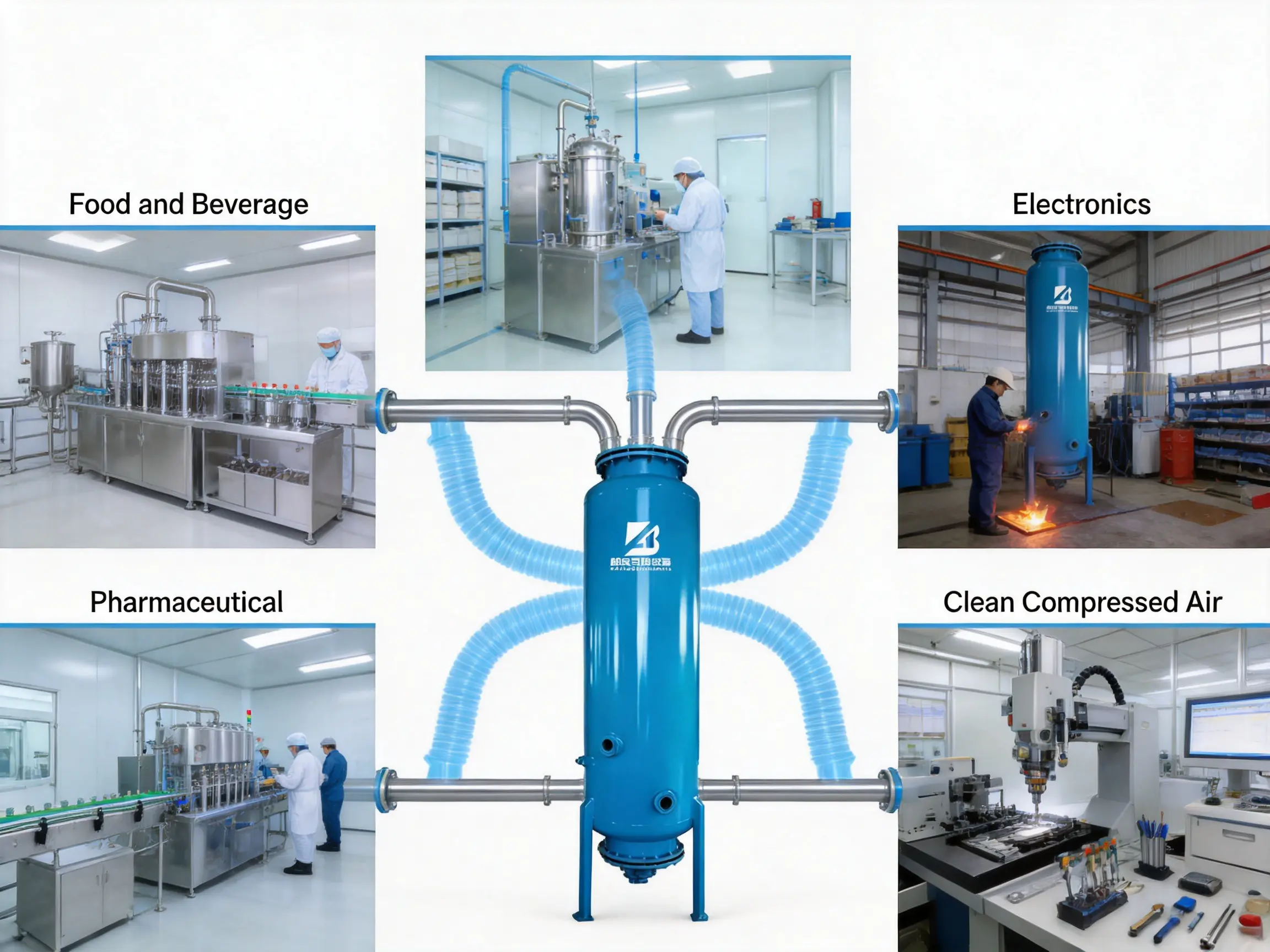
Compressed air is widely used as a process utility in food and beverage production, pharmaceutical manufacturing, electronics assembly, automotive plants, textile operations, heat-treatment facilities, and many other industrial environments. Although compressed air appears clean to the eye, it may contain oil aerosols, vaporized hydrocarbons, dust, odors, moisture, and particles introduced by the compressor, piping, storage vessels, or surrounding atmosphere. When this contamination reaches production equipment or comes into contact with a product, it can cause quality problems, equipment damage, unpleasant odors, regulatory concerns, and costly production interruptions.
An activated carbon filter is a specialized purification device designed to remove residual oil vapor, hydrocarbon traces, and odors from compressed air. The BPC Activated Carbon Filter uses activated carbon fiber as its primary filter material. This material provides strong adsorption performance and is intended for compressed-air purification systems requiring a higher level of air cleanliness than ordinary particulate or coalescing filters can provide.
The filter is particularly suitable for compressed air used in food, beverage, and pharmaceutical applications. It can also support purity-sensitive processes in electronics, packaging, chemical production, medical manufacturing, and precision assembly. With operating pressure options from 0.4 to 1.0 MPa as standard and higher-pressure configurations from 1.0 to 3.0 MPa available, the BPC series is designed to serve a broad range of industrial air-treatment requirements.
Manufactured by Zhejiang Baiao Gas Equipment Co., Ltd., the product forms part of a wider portfolio covering gas separation, gas purification, and industrial compressed-air solutions. The company integrates research and development, engineering design, fabrication, installation, and after-sales support. This integrated approach helps connect the filter design with the wider requirements of industrial gas systems rather than treating filtration as an isolated component.
Content
- 1 The Role of Activated Carbon Filtration in Compressed-Air Treatment
- 2 Product Overview
- 3 How the Activated Carbon Fiber Filter Works
- 4 Main Technical Specifications
- 5 Model Range and Capacity Selection
- 6 Advantages of Activated Carbon Fiber Technology
- 7 Comparison with Conventional Filtration Solutions
- 8 Applications in Food and Beverage Production
- 9 Applications in Pharmaceutical Manufacturing
- 10 Applications in Electronics and Precision Manufacturing
- 11 Applications in Automotive, Textile, and Heat Treatment Plants
- 12 Manufacturing Strengths and Engineering Capability
- 13 Advanced Manufacturing Process Considerations
- 14 System Design and Installation Guidance
- 15 Maintenance and Service-Life Management
- 16 Energy Efficiency and Total Operating Cost
- 17 Why Manufacturer Integration Matters
- 18 Procurement Checklist for Buyers
- 19 Quality and Reliability Benefits
- 20 Q&A
- 20.1 What is the primary purpose of the BPC Activated Carbon Filter?
- 20.2 Can the filter be installed directly after an air compressor?
- 20.3 What industries can use this product?
- 20.4 What is the standard operating pressure?
- 20.5 What is the maximum inlet air temperature?
- 20.6 What outlet oil content is specified?
- 20.7 What is the rated capacity range?
- 20.8 Does activated carbon filtration remove moisture?
- 20.9 How does the product compare with a particulate filter?
- 20.10 How should users decide between BPC models?
- 20.11 Is the BPC-30 dimensional information complete?
- 20.12 How often should the activated carbon element be replaced?
- 20.13 Can the filter be customized?
- 20.14 Why is the manufacturer’s wider product range important?
- 21 Conclusion
- 22 References
- 23 Product: BPC Activated Carbon Filter
The Role of Activated Carbon Filtration in Compressed-Air Treatment
A compressed-air system normally requires more than one filtration stage. The compressor may introduce lubricating oil, while atmospheric air entering the compressor may carry dust, aerosols, and gaseous contaminants. Cooling and compression can also change the physical form of these contaminants. Oil that initially exists as a liquid may become dispersed as a fine aerosol or vapor. Conventional filters are effective against many particles and liquid droplets, but they are not always sufficient for removing low-concentration hydrocarbon vapor and odor.
Activated carbon filtration addresses this final purification challenge through adsorption. In adsorption, contaminant molecules attach to the surface of a porous material. Activated carbon has a highly developed internal surface area, allowing it to retain a wide range of organic compounds. Activated carbon fiber can provide a compact and efficient adsorption medium, supporting the removal of residual oil and odor from an air stream.
The purpose of an activated carbon filter is therefore different from the purpose of a standard dust filter. A particulate filter captures solid particles. A coalescing filter removes liquid aerosols and fine droplets. An activated carbon filter is used to reduce gaseous oil residues, hydrocarbon traces, and unwanted odors after upstream separation stages have already removed bulk contaminants.
For this reason, the BPC filter should be installed as part of a correctly designed purification train. The manufacturer specifies that a Class C, Class T, Class A, or another suitable filter must be installed before the activated carbon unit. Upstream filtration is essential because it protects the carbon element from liquid oil, water, and particulate loading. Without suitable prefiltration, the adsorption material may become saturated prematurely, and the operating life of the filter may be reduced.
Product Overview
The BPC Activated Carbon Filter is a compressed-air purification vessel designed around an activated carbon fiber filter medium. Its main function is to remove residual oil and odors from compressed air after the air has passed through appropriate preliminary treatment. The product is available in multiple models, from the compact BPC-1 to the high-capacity BPC-200.
The series covers rated gas processing capacities from 1.2 to 220 Nm³/h. This range enables users to select a model for a small laboratory or packaging line, a medium production machine, or a larger centralized compressed-air network. The variety of connection diameters and vessel dimensions also supports practical integration with different plant layouts.
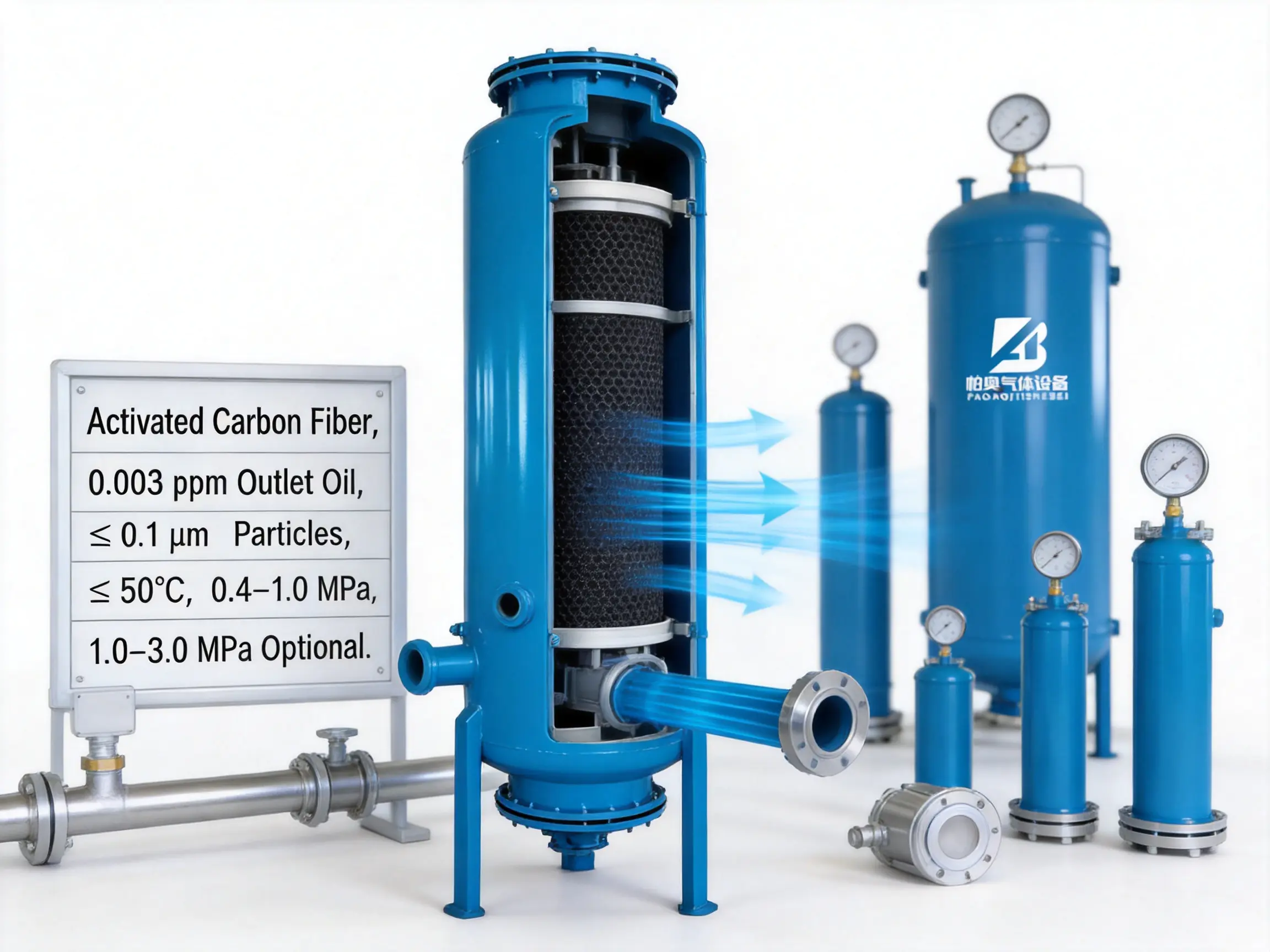
Under the stated technical conditions, the filter can achieve an outlet oil content of 0.003 ppm and an outlet particle size of no more than 0.1 micrometers. The permitted inlet air temperature is no higher than 50°C. Standard operating pressure is 0.4–1.0 MPa, while configurations for 1.0–3.0 MPa are available when required by the application.
These specifications make the BPC series suitable for applications where the compressed-air supply must be cleaner, more stable, and less likely to transfer oil-related contamination into the production process. The filter is not a substitute for drying or upstream liquid separation, but it can serve as an important polishing stage within a complete purification system.
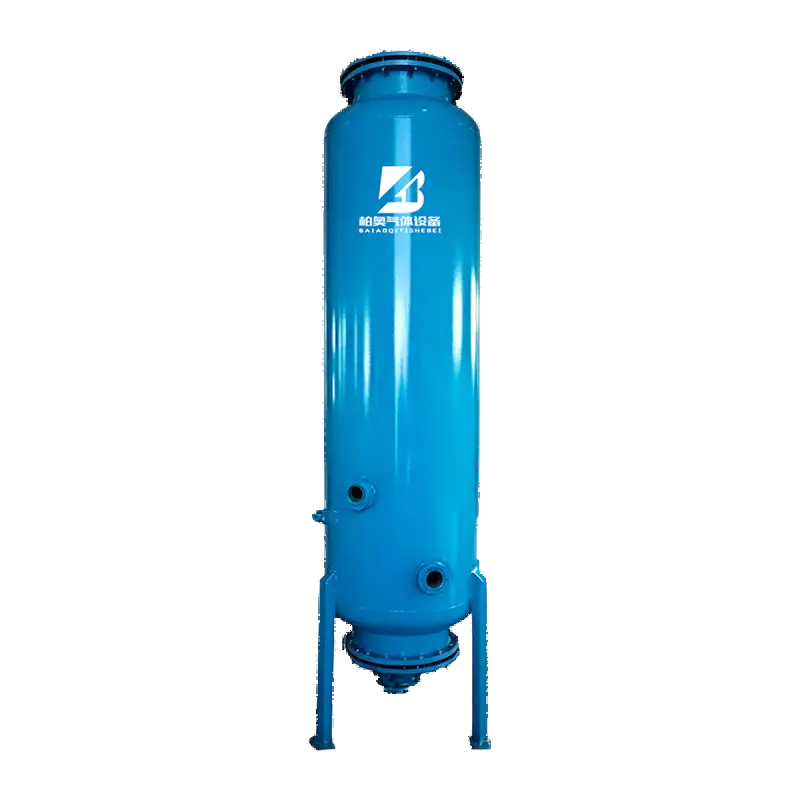
BPC Activated Carbon Filter
How the Activated Carbon Fiber Filter Works
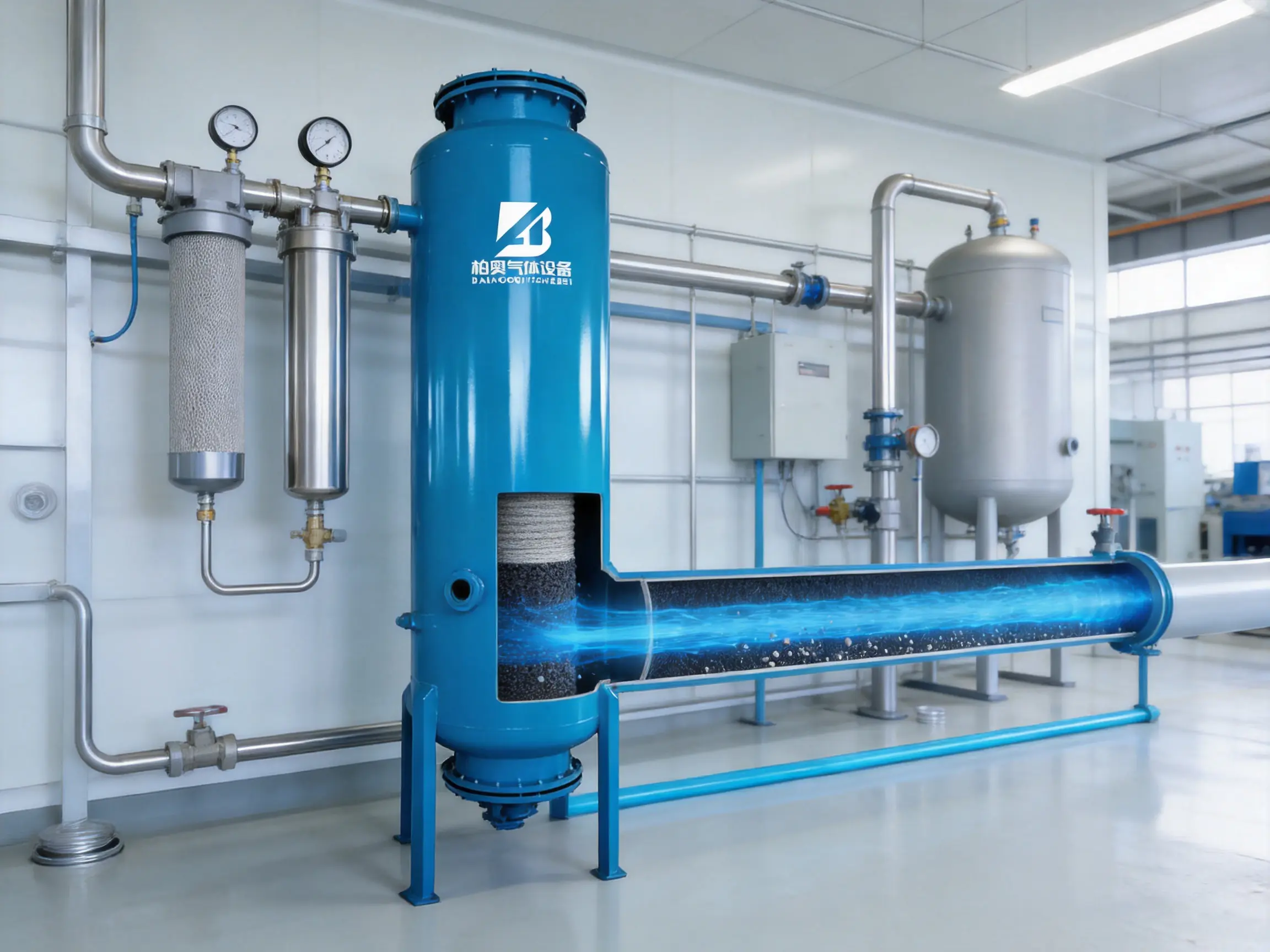
Compressed air enters the filter through the inlet connection and flows through the activated carbon fiber medium. As the air passes through the material, residual oil vapor, hydrocarbon molecules, and odor-producing compounds come into contact with the carbon surface. These contaminants are retained by adsorption, while the treated air continues toward the outlet.
The performance of the adsorption stage depends on several factors. These include the concentration and chemical composition of the contaminants, the temperature of the incoming air, the operating pressure, the flow rate, the contact time, and the condition of the upstream filters. Lower inlet temperatures generally support more effective adsorption because many vapor-phase contaminants are more readily retained at lower temperatures.
The specified inlet temperature limit of 50°C is therefore an important operating condition. If compressed air is hotter than the recommended limit, the adsorption capacity of the carbon medium may be affected. High temperature can increase the tendency of adsorbed molecules to leave the carbon surface, a process known as desorption. Maintaining the inlet temperature within the specified range helps support stable performance and predictable element life.
Flow rate is another critical factor. Every filter model has a rated gas processing capacity. Operating substantially above the rated capacity may reduce contact time and increase pressure drop, while also allowing contaminants to pass through before they can be effectively adsorbed. Selecting the correct model or using multiple filters in parallel helps maintain the required treatment performance.
Upstream filtration is equally important. Liquid oil and water can occupy the available adsorption surface and block the contact area between the carbon material and the air stream. Solid particles may also clog the filter structure. Installing suitable Class C, Class T, Class A, or equivalent filters before the BPC unit helps remove these loads and allows the activated carbon stage to focus on residual vapor and odor removal.
Main Technical Specifications
The BPC Activated Carbon Filter is designed for industrial compressed-air systems with the following principal performance specifications:
| Item | Specification |
|---|---|
| Filter medium | Activated carbon fiber |
| Standard operating pressure | 0.4–1.0 MPa |
| Optional high-pressure range | 1.0–3.0 MPa available |
| Maximum inlet air temperature | ≤50°C |
| Outlet oil content | 0.003 ppm |
| Outlet particle size | ≤0.1 μm |
| Required upstream treatment | Class C, Class T, Class A, or equivalent filtration |
| Application | Compressed-air purification and final oil-vapor and odor removal |
The outlet oil specification is especially important in processes where even a small quantity of oil vapor may affect the finished product. Food and beverage lines, pharmaceutical manufacturing, clean packaging, and direct-contact applications may require a higher degree of air cleanliness than general factory air tools.
The particle specification of no more than 0.1 micrometers indicates that the filter contributes to fine-particle control in addition to adsorption. Nevertheless, users should evaluate the complete system rather than relying on a single stage. The actual air quality delivered to the point of use depends on compressor type, upstream filtration, piping cleanliness, drainage, receiver condition, pressure, temperature, and maintenance practices.
Model Range and Capacity Selection
The BPC series includes a broad selection of models. The following table summarizes the available rated capacities, connection sizes, dimensions, and equipment weights provided for the product range.
| Model | Rated Gas Processing Capacity (Nm³/h) | Inlet and Outlet Diameter DN (mm) | Height H (mm) | Width W (mm) | Weight (kg) |
|---|---|---|---|---|---|
| BPC-1 | 1.2 | 25 | 210 | 480 | 20 |
| BPC-2 | 2.4 | 25 | 210 | 530 | 23 |
| BPC-3 | 3.6 | 32 | 240 | 615 | 28 |
| BPC-6 | 7.2 | 40 | 240 | 785 | 56 |
| BPC-12 | 13.2 | 50 | 285 | 780 | 62 |
| BPC-20 | 22 | 65 | 345 | 1150 | 86 |
| BPC-30 | 33 | 80 | 375 | 11 | 98 |
| BPC-40 | 44 | 100 | 430 | 1170 | 110 |
| BPC-60 | 66 | 125 | 460 | 1290 | 130 |
| C-80 | 88 | 150 | 520 | 1340 | 180 |
| BPC-100 | 110 | 150 | 595 | 1645 | 240 |
| BPC-150 | 165 | 200 | 725 | 1820 | 320 |
| BPC-200 | 220 | 250 | 760 | 2015 | 505 |
The listed dimensional value for the BPC-30 model should be confirmed with the supplier during technical review because the source specification records its width as 11 mm, which may require clarification before fabrication, layout planning, or shipment. Final installation drawings should always take precedence over preliminary product data.
Capacity selection should begin with the actual compressed-air demand rather than the compressor nameplate alone. Users should consider the average flow, peak flow, future expansion, pressure fluctuations, and whether multiple compressors can operate simultaneously. A filter selected only for average demand may become overloaded during production peaks. In many cases, selecting a model with reasonable reserve capacity or arranging several units in parallel provides a more reliable solution.
Connection diameter is also important. The filter should be installed without creating an unnecessary restriction in the main air header. Reducing the pipe size immediately before or after the filter may increase velocity and pressure loss. Piping should be designed with suitable valves, drains, bypass arrangements where appropriate, and access for element replacement and inspection.
Advantages of Activated Carbon Fiber Technology
Strong Adsorption Performance
The primary advantage of activated carbon fiber is its ability to adsorb residual oil vapor and odor-producing compounds. Compared with a simple mechanical screen, an adsorption medium can address contaminants that are too small or too chemically dispersed to be removed efficiently by conventional particle filtration alone.
This makes the BPC filter valuable as a final purification stage. When correctly protected by upstream filters, the activated carbon fiber can reduce the concentration of oil-related substances that remain after compression, cooling, and coalescing treatment.
Compact Treatment for High-Purity Applications
Activated carbon fiber can provide a high level of adsorption in a compact filter arrangement. This is advantageous where plant space is limited or where a purification unit must be installed close to a point of use. Compact dimensions can simplify integration into existing compressed-air systems, provided that sufficient clearance is left for maintenance and replacement.
Broad Industrial Applicability
The BPC series is suitable for food, beverage, and pharmaceutical compressed-air systems and can also support many other industrial applications. Its capacity range allows the same product family to be considered for small and large installations, reducing the need to combine unrelated filter designs across a facility.
Low Residual Oil Target
An outlet oil content of 0.003 ppm is a significant performance target for applications where oil contamination could affect product quality or process reliability. The filter can help users move from general-purpose compressed air toward a more controlled air supply suitable for sensitive processes.
Flexible Pressure Options
The standard pressure range of 0.4–1.0 MPa covers many factory compressed-air systems. For applications requiring higher operating pressure, configurations from 1.0–3.0 MPa are available. This flexibility helps the product serve different system designs without requiring a completely different purification concept.
Complete Product Family
The available models span rated processing capacities from 1.2 to 220 Nm³/h. This broad range is an advantage over suppliers that offer only a few fixed-size units. Users can select a closer capacity match, which may help control pressure loss, improve adsorption contact conditions, and avoid excessive oversizing.
Comparison with Conventional Filtration Solutions
It is important to compare an activated carbon filter with other technologies according to its intended function. A standard particulate filter is designed primarily to capture solid particles. It may be highly effective for dust but cannot be expected to remove all oil vapor or odors. A coalescing filter is designed to separate liquid aerosols and fine droplets, but its performance against gaseous hydrocarbons is limited. A refrigerated or desiccant dryer removes moisture, but drying alone does not eliminate oil vapor.
Activated carbon filtration complements rather than replaces these technologies. A well-designed system may include an aftercooler, moisture separator, automatic drain, particulate prefilter, coalescing filter, activated carbon filter, and final point-of-use filter. The exact arrangement depends on the compressor type, required air-quality class, application risk, and local standards.
Compared with low-cost carbon cartridges intended for light-duty use, an industrial vessel such as the BPC series offers a more systematic capacity range, defined pressure options, engineered pipe connections, and a structure intended for integration into plant air systems. Compared with an oversized general-purpose adsorption vessel, a correctly selected BPC model can provide a closer match to the required airflow.
Competitor comparisons should always be based on equivalent conditions. A quoted oil-removal value may depend on inlet oil concentration, temperature, pressure, flow rate, testing method, and upstream filtration. Buyers should request comparable technical data and confirm whether performance is measured at rated conditions. The BPC product’s stated 0.003 ppm outlet oil content should therefore be considered together with the complete operating envelope and installation requirements.
The strongest advantage of the BPC approach is not simply the use of carbon. It is the combination of activated carbon fiber, multiple capacity options, industrial pressure capability, and integration with a broader gas-equipment manufacturing and service organization.
Applications in Food and Beverage Production
Compressed air may be used for bottle blowing, filling, capping, conveying, pneumatic control, product transfer, tank agitation, packaging, and cleaning. In some operations, air may come into direct or indirect contact with the product or its packaging. Oil vapor and odor can create unacceptable taste, smell, or contamination risks.
The BPC Activated Carbon Filter can be installed after suitable particulate and coalescing filtration to provide a final adsorption stage. By reducing residual oil and odor, the filter helps support consistent product quality. It may be used on a centralized air header or on a dedicated line serving a sensitive production area.
Food and beverage manufacturers should evaluate the complete air system, including compressor lubricant selection, condensate management, pipe materials, hygienic design, filter monitoring, and replacement intervals. The filter is one part of a contamination-control strategy and should be selected according to the specific production risk.
Applications in Pharmaceutical Manufacturing
Pharmaceutical processes often use compressed air for instrument control, tablet and capsule production, packaging, fluid-bed processing, cleanroom equipment, and equipment actuation. Air purity may be critical because contamination can affect raw materials, intermediate products, packaging components, or finished medicines.
Activated carbon filtration is useful where oil vapor and odor must be minimized. It can be placed downstream of appropriately selected prefilters and dryers. In a validated pharmaceutical system, the filter arrangement, materials, installation, testing, maintenance, and replacement schedule should be documented and controlled.
Users should also confirm whether the treated air is in direct contact with the product, indirect contact with product-contact surfaces, or used only for general machinery operation. These distinctions influence the required filtration stages and the verification program.
Applications in Electronics and Precision Manufacturing
Electronics assembly, SMT production, optical manufacturing, and precision component processing can be sensitive to airborne oil, dust, and odors. Contamination may affect soldering, coating, bonding, cleaning, surface treatment, or the performance of pneumatic equipment.
A BPC filter can help provide cleaner compressed air for equipment such as pick-and-place machines, pneumatic valves, automated inspection systems, and controlled process tools. The filter’s low outlet oil target is especially relevant where oil deposits could interfere with fine components or sensitive surfaces.
Applications in Automotive, Textile, and Heat Treatment Plants
Automotive manufacturing uses compressed air for robotic tools, painting, assembly, testing, and pneumatic automation. Although not every application requires activated carbon filtration, paint shops, coating systems, and precision assembly areas may benefit from additional oil-vapor and odor control.
Textile manufacturing uses compressed air for spinning, weaving, conveying, cleaning, and instrumentation. Air quality can influence product cleanliness and machine reliability. Heat-treatment plants and metal-processing facilities may use air for furnace control, pneumatic valves, protective systems, and automation, where stable and clean air supports reliable operation.
Because these industries often operate continuously, a filter should be selected with consideration for duty cycle, maintenance access, standby capacity, and production continuity. Parallel arrangements or a properly designed bypass may be appropriate for critical lines, subject to the required air-quality controls.
Manufacturing Strengths and Engineering Capability
Zhejiang Baiao Gas Equipment Co., Ltd. is described as a gas equipment manufacturer located in Fuyang District, Hangzhou, China. Its operations combine research and development, engineering design, production, installation, and after-sales service. This integrated structure is important for industrial filtration because performance depends not only on the filter element but also on vessel design, pipe connections, system configuration, commissioning, and maintenance support.
The company operates a standardized workshop of approximately 3,000 square meters, an office area of approximately 500 square meters, and a warehouse of approximately 500 square meters. These facilities support product fabrication, engineering coordination, component management, finished-equipment storage, and customer service activities.
The company’s technical portfolio includes PSA nitrogen generators, PSA oxygen generators, membrane nitrogen and oxygen generators, nitrogen purification units, ammonia decomposition hydrogen purification units, gas separation systems, and gas purification equipment. This product breadth gives the manufacturer experience with gases, pressure vessels, adsorption processes, piping systems, control arrangements, and industrial commissioning.
Such experience is valuable when an activated carbon filter must be integrated into a complete gas-treatment plant. A supplier familiar with gas generation and purification can evaluate the relationship between compressor output, gas quality, pressure, temperature, flow demand, and downstream process requirements.
Research and Product Optimization
The company states that its products are developed using overseas technologies and optimized for industrial conditions in China. Product optimization may include adapting equipment to local operating environments, industrial duty cycles, customer requirements, available utilities, maintenance practices, and installation conditions.
For an activated carbon filter, practical optimization can involve the selection of carbon fiber material, flow distribution, vessel geometry, connection arrangement, pressure rating, access design, and compatibility with upstream and downstream filtration. These details influence the actual performance and serviceability of the finished equipment.
Fabrication and Quality Control
Industrial filters must be fabricated with attention to dimensional accuracy, pressure containment, connection quality, surface condition, sealing, and assembly consistency. Manufacturing controls should cover incoming material inspection, component preparation, welding or joining operations, vessel inspection, pressure-related checks, filter-element installation, final assembly, and documentation.
Strict quality control is particularly important for equipment used in food, beverage, pharmaceutical, and electronics environments. Even when the filter is not in direct product contact, poor construction or inadequate sealing can introduce contamination or create an unexpected bypass path.
Installation and After-Sales Support
A filter’s rated performance can be compromised by incorrect installation. The manufacturer’s ability to provide system guidance, installation assistance, commissioning support, replacement recommendations, and troubleshooting can therefore be a major advantage over suppliers that provide only a standalone cartridge.
Baiao’s stated business scope includes installation and after-sales service. This supports a project-oriented approach in which the customer can discuss the filter as part of a larger compressed-air or gas-purification system. For international customers, clear technical documentation, spare-part identification, operating instructions, and communication during commissioning are especially important.
Advanced Manufacturing Process Considerations
The manufacturing process for an industrial activated carbon filter should begin with technical review. Engineers need to confirm the gas composition, inlet pressure, operating temperature, required flow, oil concentration, humidity, connection size, installation orientation, and desired outlet quality. This review determines whether the selected model is appropriate and whether additional pretreatment is required.
Material selection follows the design review. The filter housing, connection components, seals, support structures, and activated carbon fiber must be compatible with compressed air and the intended industrial environment. Where the equipment is used in sensitive industries, surface finish, cleanability, material traceability, and sealing materials may require additional attention.
During fabrication, the housing must be assembled to maintain pressure integrity and a controlled internal flow path. Poor flow distribution can create channeling, in which part of the air stream moves through the filter with insufficient contact with the carbon medium. Proper internal support and sealing help ensure that the air passes through the intended treatment area rather than around it.
Final assembly should include inspection of the inlet and outlet connections, filter element seating, seals, fasteners, labeling, and overall dimensions. Where applicable, pressure and leakage checks should be performed according to the equipment design and relevant industrial procedures. Documentation should identify the model, capacity, pressure range, connection size, and recommended operating conditions.
Packaging and warehousing are also part of manufacturing quality. Activated carbon elements should be protected from contamination, moisture, impact, and improper storage conditions. The manufacturer’s warehouse capability supports organized handling of finished equipment and replacement components before shipment to the customer.
System Design and Installation Guidance
Install Adequate Prefiltration
The BPC filter should not be installed directly after a compressor without suitable upstream treatment. A Class C, Class T, Class A, or equivalent filter should be selected according to the contaminant load and the required purification sequence. Liquid water, bulk oil, and particles should be removed before the air reaches the activated carbon stage.
Control Temperature
The inlet air temperature should remain at or below 50°C. If the compressor discharge is too hot, an aftercooler and moisture separator may be necessary before filtration. Temperature control improves adsorption stability and helps protect downstream equipment.
Match Flow to Rated Capacity
The selected model should accommodate the required flow at the actual operating pressure. Users should not assume that nominal compressor capacity is identical to delivered free-air flow under all conditions. Flow measurement, compressor data, production schedules, and future expansion plans should be reviewed before final selection.
Provide Maintenance Access
Adequate space should be left around the filter for inspection, isolation, element replacement, and connection checks. The unit should be installed where operators can safely observe pressure indicators or other monitoring devices and can access upstream drains and valves.
Prevent Bypass and Recontamination
All connections should be sealed correctly, and the filter should be installed in the correct flow direction. Downstream piping should be clean and free from oil residue. If the filter is installed on an older air network, pipe contamination may continue to affect air quality even after a new purification unit is commissioned.
Consider Redundancy for Critical Operations
Processes that cannot tolerate an interruption may require parallel filter trains, standby capacity, or a controlled bypass arrangement. Any bypass must be carefully managed because untreated air may not meet the process requirement. Isolation and changeover procedures should be documented and periodically tested.
Maintenance and Service-Life Management
Activated carbon filters require planned maintenance even when the pressure drop appears normal. Adsorption capacity gradually decreases as the carbon medium retains contaminants. A filter may continue to pass air with acceptable flow while its ability to remove oil vapor and odor is becoming less effective.
Maintenance planning should include inspection of upstream filters, condensate drains, pressure readings, inlet temperature, flow conditions, and the condition of seals and connections. A sudden increase in pressure drop may indicate particulate loading, liquid carryover, element damage, or an installation problem.
Replacement intervals should be based on the actual contamination load, operating hours, air quality requirements, and monitoring results. In a sensitive application, relying only on a fixed calendar interval may be insufficient. Periodic outlet-air testing can provide a more reliable indication of filter performance.
Upstream filter replacement is particularly important. If a prefilter becomes saturated or a drain fails, liquid oil and water may reach the activated carbon unit. This can shorten carbon life and may cause rapid deterioration of outlet air quality. Preventive maintenance of the entire treatment train is therefore more effective than replacing the carbon element alone.
Operators should maintain records of installation date, operating pressure, average flow, maintenance actions, filter changes, pressure-drop observations, and air-quality test results. These records support troubleshooting, demonstrate process control, and help determine the appropriate replacement cycle for future operating periods.
Energy Efficiency and Total Operating Cost
Compressed air is one of the more energy-intensive industrial utilities. Every pressure drop requires the compressor to work harder or reduces the pressure available to downstream equipment. A correctly selected activated carbon filter can contribute to efficient operation by matching the model capacity to the actual flow and avoiding unnecessary restriction.
However, energy efficiency should not be evaluated by purchase price alone. A low-cost filter that requires frequent replacement, causes excessive pressure loss, or provides inconsistent oil-vapor removal may create a higher total cost over its operating life. The economic evaluation should include filter purchase, replacement elements, labor, compressed-air losses, downtime risk, product quality, and maintenance requirements.
The BPC range enables users to select from multiple capacities instead of automatically using a very large filter. Proper sizing may support balanced pressure loss and more predictable adsorption conditions. In larger systems, parallel installation can provide operational flexibility while allowing individual units to be isolated for service.
Energy efficiency also depends on upstream equipment. A clean compressor intake, effective aftercooler, reliable condensate drainage system, and well-maintained prefilters reduce the contaminant load placed on the activated carbon stage. The best results come from treating the air system as a connected process rather than judging one component in isolation.
Why Manufacturer Integration Matters
Industrial buyers increasingly prefer suppliers that can provide more than a standard catalog component. A filter may need to connect with a compressor package, gas generator, dryer, storage vessel, PSA system, membrane unit, or plant-wide control system. A manufacturer with experience across gas separation and purification can help coordinate these interfaces.
Zhejiang Baiao Gas Equipment Co., Ltd. provides equipment for industrial gas generation and purification and serves sectors including petrochemical production, textiles, food processing, automotive manufacturing, heat treatment, and SMT electronics. Its experience across these industries gives the company familiarity with different air-quality expectations, operating patterns, and installation environments.
The company reports a sales network covering more than 30 provinces and cities in China, with products also exported to international markets. This market experience can support communication about different project requirements, documentation practices, delivery arrangements, and service expectations.
The company’s stated values include technical improvement, quality control, integrity, energy efficiency, reliable service, cooperation, responsibility, innovation, and customer trust. These values are relevant to filtration projects because successful performance depends on accurate technical communication, correct sizing, consistent manufacturing, and long-term support.
Procurement Checklist for Buyers
Before ordering a BPC Activated Carbon Filter, buyers should prepare a technical data sheet covering the operating conditions. Important information includes the compressed-air flow rate, minimum and maximum pressure, inlet temperature, compressor type, lubricant type, oil concentration, moisture level, required outlet quality, installation location, and connection standard.
Buyers should confirm whether the system requires standard pressure operation or the optional 1.0–3.0 MPa configuration. They should also confirm the correct model, rated gas processing capacity, inlet and outlet diameter, physical dimensions, equipment weight, and maintenance clearance.
For a new plant, the filter should be included in the process-flow diagram and equipment layout from the beginning. For an existing plant, the buyer should inspect available space, pipe size, valve arrangement, floor loading, support requirements, and access for future replacement.
Documentation should include operating instructions, installation requirements, recommended upstream filters, maintenance guidance, spare-part information, and performance conditions. For regulated industries, additional material certificates, inspection documents, validation support, or test records may be required.
Buyers should also clarify the treatment objective. If the main concern is liquid oil, a coalescing stage may be more important. If the concern is water vapor, a dryer may be required. If the concern is oil vapor and odor after upstream treatment, an activated carbon filter is an appropriate solution. Defining the contamination problem clearly helps prevent incorrect equipment selection.
Quality and Reliability Benefits
Clean compressed air helps protect production equipment, reduce contamination-related rejects, and support consistent process conditions. In applications involving direct or indirect product contact, reliable air purification can also contribute to hygiene, odor control, and customer confidence.
The BPC filter’s adsorption function provides a practical method for reducing residual oil and odor after primary separation. Its range of models supports applications from low-flow equipment to centralized industrial systems. Pressure flexibility and a defined technical specification further improve its suitability for engineered projects.
Reliability depends on using the filter within its rated conditions. The air must be properly pretreated, temperature must remain controlled, and flow must remain within the selected model’s capacity. When these requirements are respected, the activated carbon stage can provide stable polishing performance as part of a complete purification system.
The manufacturer’s broader engineering capability adds another layer of reliability. Because the company works with gas separation and purification equipment, it can approach filtration from the perspective of total system performance. This can be particularly valuable for customers who need customized solutions rather than a generic replacement element.
Q&A
What is the primary purpose of the BPC Activated Carbon Filter?
Its primary purpose is to remove residual oil vapor, hydrocarbon-related contamination, and odors from compressed air through adsorption on activated carbon fiber. It is designed as a purification or polishing stage rather than as a replacement for all other filters.
Can the filter be installed directly after an air compressor?
No. The manufacturer specifies that a Class C, Class T, Class A, or another suitable filter should be installed before the activated carbon filter. Upstream treatment protects the carbon medium from liquid oil, water, and particles.
What industries can use this product?
The product is especially suitable for food, beverage, and pharmaceutical compressed-air systems. It can also be used in electronics, automotive manufacturing, textiles, heat treatment, packaging, chemical processing, and other industries requiring low-oil and low-odor compressed air.
What is the standard operating pressure?
The standard operating pressure range is 0.4–1.0 MPa. Configurations for 1.0–3.0 MPa are available for applications requiring higher pressure.
What is the maximum inlet air temperature?
The specified maximum inlet air temperature is 50°C. Maintaining the temperature at or below this level helps support adsorption performance and filter service life.
What outlet oil content is specified?
The stated outlet oil content is 0.003 ppm under the specified operating and installation conditions. Actual performance depends on upstream filtration, inlet contamination, flow, temperature, pressure, and maintenance.
What is the rated capacity range?
The listed BPC models cover rated gas processing capacities from 1.2 to 220 Nm³/h. The correct model should be selected according to actual operating flow, peak demand, pressure, and future expansion plans.
Does activated carbon filtration remove moisture?
Activated carbon filtration is not a substitute for a compressed-air dryer. Moisture should be removed with an aftercooler, moisture separator, refrigerated dryer, desiccant dryer, or another appropriate technology before the air reaches the carbon stage.
How does the product compare with a particulate filter?
A particulate filter primarily removes solid particles, while an activated carbon filter uses adsorption to reduce oil vapor and odors. The two technologies perform different functions and are often used together in a complete purification train.
How should users decide between BPC models?
Users should compare the required flow with the rated capacity, then confirm pressure, temperature, connection diameter, dimensions, installation space, and maintenance access. A reserve margin may be appropriate where demand fluctuates or future expansion is expected.
Is the BPC-30 dimensional information complete?
The supplied table lists the BPC-30 width as 11 mm. Because this value may require clarification, buyers should confirm the final dimensional drawing with the manufacturer before preparing the installation location or support structure.
How often should the activated carbon element be replaced?
There is no universal replacement interval because service life depends on inlet oil concentration, flow, temperature, operating hours, upstream filtration, and required outlet quality. Maintenance records and periodic outlet-air testing should be used to establish a suitable replacement schedule.
Can the filter be customized?
The company provides gas separation and purification equipment and offers customized solutions. Buyers should discuss pressure, capacity, connection standards, materials, dimensions, control requirements, and project-specific documentation during the engineering review.
Why is the manufacturer’s wider product range important?
The manufacturer also produces gas generators and purification systems. This broader capability can help customers coordinate the activated carbon filter with compressors, dryers, gas generators, PSA equipment, membrane systems, storage vessels, and plant piping.
Conclusion
The BPC Activated Carbon Filter is designed to address a specific and important compressed-air purification challenge: the removal of residual oil vapor and odors after primary filtration. Its activated carbon fiber medium provides strong adsorption performance, while the series’ pressure flexibility and capacity range support a wide variety of industrial installations.
With a stated outlet oil content of 0.003 ppm, an outlet particle size of no more than 0.1 micrometers, an inlet temperature limit of 50°C, and standard operating pressure from 0.4 to 1.0 MPa, the product is suitable for high-purity compressed-air applications when installed and operated correctly.
Its advantages over basic filtration solutions include targeted oil-vapor adsorption, odor reduction, multiple capacity options, higher-pressure availability, and compatibility with food, beverage, pharmaceutical, electronics, automotive, textile, and other industrial processes. The product should always be protected by appropriate upstream filtration and integrated into a complete air-treatment system.
Zhejiang Baiao Gas Equipment Co., Ltd. strengthens the product offering through integrated research, design, manufacturing, installation, and after-sales capabilities. Its experience in gas separation and purification equipment supports the engineering requirements associated with industrial filtration projects. A standardized production facility, broader product portfolio, quality-focused manufacturing approach, and service orientation provide a foundation for customized and reliable solutions.
For buyers seeking cleaner compressed air, the most effective approach is to evaluate the full system: contamination sources, compressor conditions, pretreatment, activated carbon capacity, installation design, monitoring, maintenance, and future production requirements. When these factors are addressed together, the BPC Activated Carbon Filter can serve as a dependable final purification stage for demanding industrial applications.
References
1. Product technical information for the BPC Activated Carbon Filter, including operating pressure, temperature, outlet oil content, particle size, capacity, dimensions, and equipment weight.
2. Industrial compressed-air treatment principles covering particulate filtration, coalescing filtration, adsorption, drying, condensate management, and point-of-use purification.
3. General engineering guidance for activated carbon adsorption in gas purification systems.
4. General compressed-air system design practices for flow sizing, pressure-drop management, installation, inspection, and preventive maintenance.
5. Food, beverage, pharmaceutical, electronics, automotive, textile, and heat-treatment industry requirements for clean and reliable compressed air.
Product: BPC Activated Carbon Filter

- Tel: +86-15057127179
+86-13588382771 - Email: huang.yifan0215@gmail.com
- Address: Huanshan Township, Fuyang District, Hangzhou City, Zhejiang Province
Copyright © Zhejiang Baiao Gas Equipment Co., Ltd. All Rights Reserved.
Privacy
Gas Generator Plant Manufacturer, Industrial Purification Equipment Plant
