 en
en русский
 Español
 عربى
عربى
Oil-Free Scroll Air Compressor: Clean, Efficient Compressed Air for Modern Industry
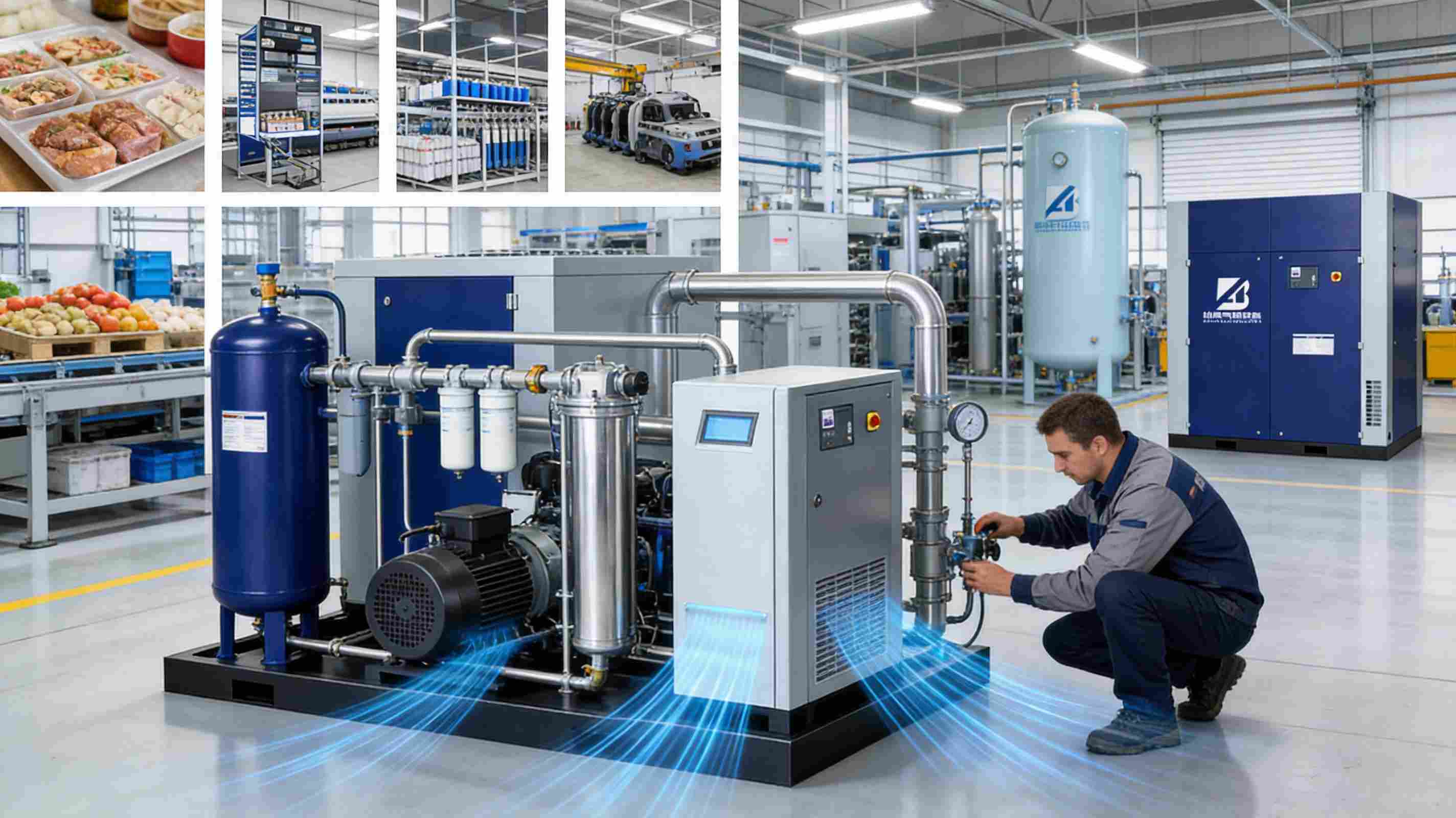
Oil-free compressed air is becoming increasingly important in industries where air quality, process reliability, and operating efficiency directly influence product quality. Food processing, electronics manufacturing, medical applications, textile production, automotive assembly, heat treatment, and gas purification systems all require compressed air that is clean, stable, and free from oil contamination. For these applications, an oil-free scroll air compressor provides a compact and dependable solution.
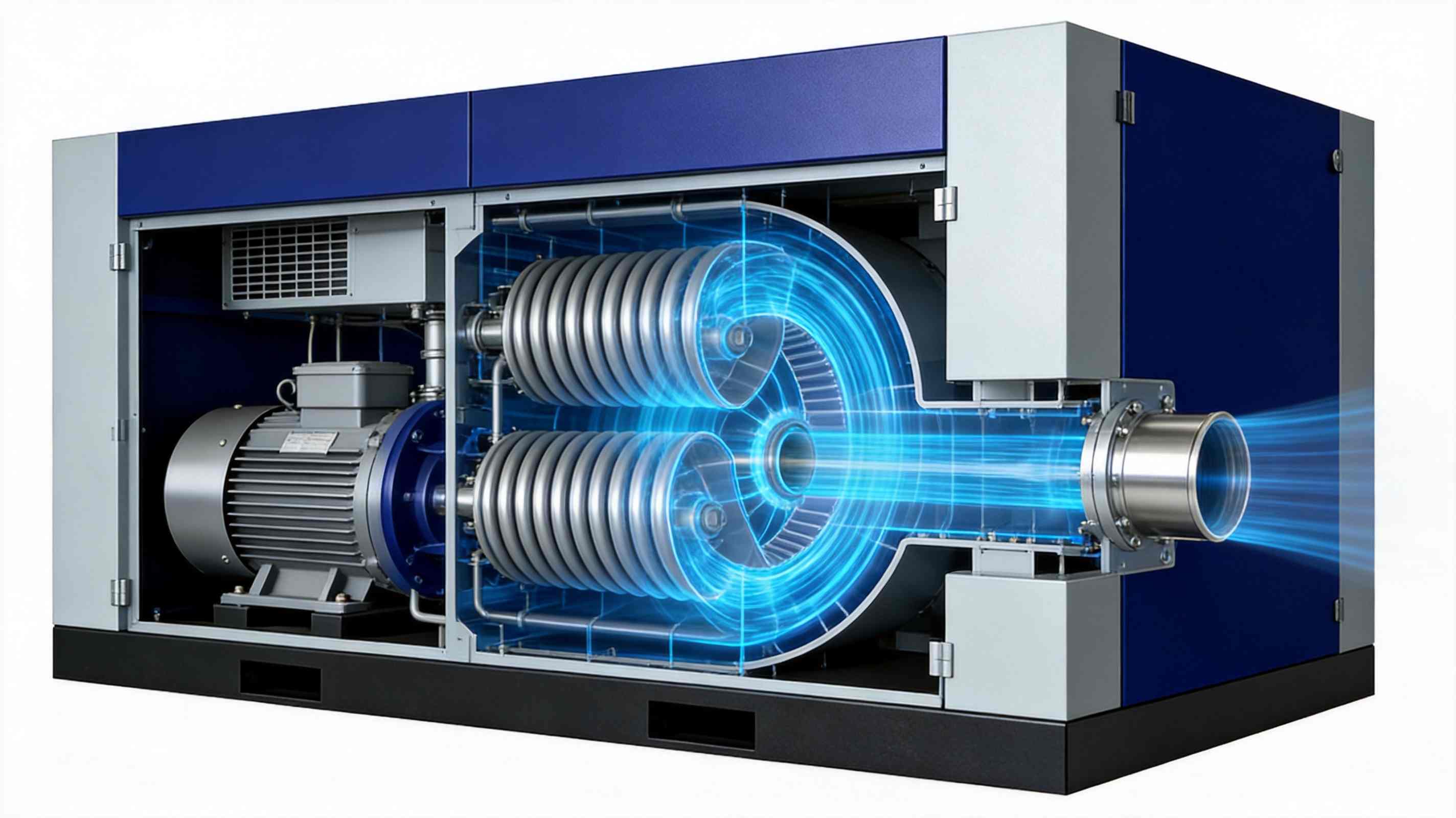
An oil-free scroll air compressor is a positive displacement compressor that uses two specially shaped scrolls to compress air. One scroll remains stationary while the other orbits around it without rotating on its own axis. This controlled movement creates a series of sealed compression pockets. As the orbiting scroll moves, the pockets become progressively smaller, increasing the pressure of the trapped air until it is discharged through the outlet.
Unlike oil-injected compressors, an oil-free scroll compressor does not use lubricating oil in the compression chamber. This design helps prevent oil from entering the compressed-air stream and supports applications that require high air purity. The product described in this article is certified to the ISO 8573-1 Class 0 oil-free standard, making it suitable for demanding applications where oil contamination must be avoided.
With a working pressure range of 8 to 10 bar, air capacity from 210 to 3,600 liters per minute, and motor power from 3 to 33 kilowatts, this compressor family is designed to serve a broad range of small and medium-sized industrial air requirements. It can be used as a standalone compressed-air source or integrated into a complete gas-generation and purification system.
Content
- 1 What Is an Oil-Free Scroll Air Compressor?
- 2 Working Principle of Scroll Compression
- 3 Key Performance Specifications
- 4 Advantages of Oil-Free Scroll Technology
- 5 Comparison with Other Compressor Technologies
- 6 Manufacturing Strengths and Quality-Focused Production
- 7 Application in Gas Separation and Purification Systems
- 8 Industrial Applications
- 9 System Design and Installation Considerations
- 10 Maintenance and Operating Best Practices
- 11 Energy Efficiency and Total Cost of Ownership
- 12 Why Manufacturer Support Matters
- 13 Customized Solutions for Different Industries
- 14 Safety and Compliance Considerations
- 15 Selection Guide for Buyers
- 16 Frequently Asked Questions
- 16.1 What does oil-free mean in an air compressor?
- 16.2 How does a scroll compressor compress air?
- 16.3 What pressure can this compressor provide?
- 16.4 What is the available air capacity?
- 16.5 What motor powers are available?
- 16.6 Is an oil-free scroll compressor suitable for food processing?
- 16.7 Can it supply air to a nitrogen generator?
- 16.8 Does oil-free equipment require no maintenance?
- 16.9 How is scroll technology different from rotary screw technology?
- 16.10 Can several scroll units operate together?
- 16.11 What should be considered when installing the compressor?
- 16.12 Why is manufacturer engineering support important?
- 17 Conclusion
- 18 References
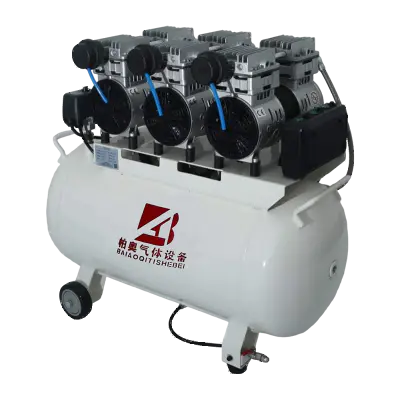
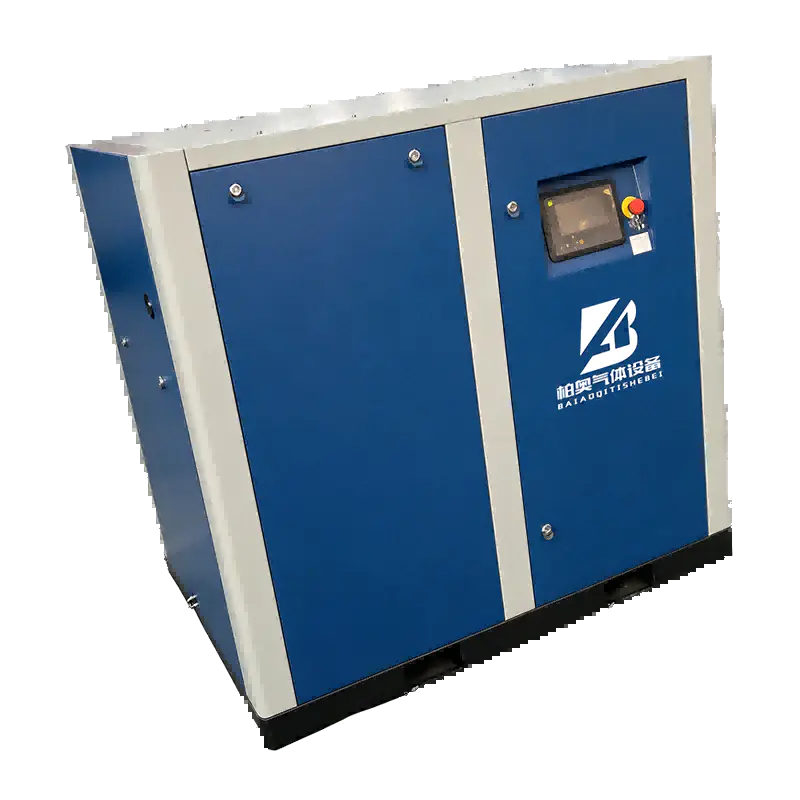
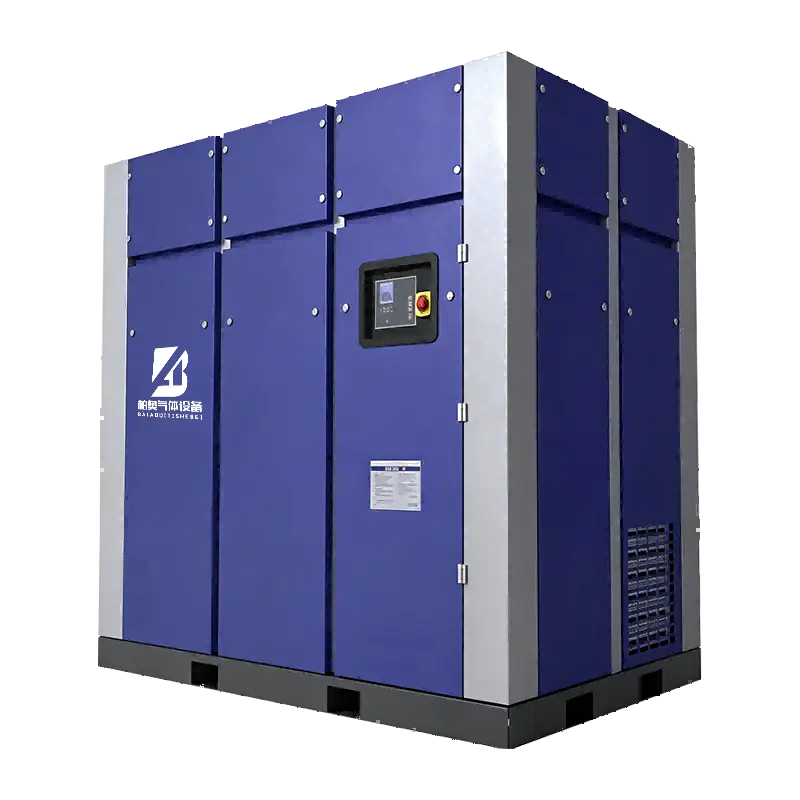
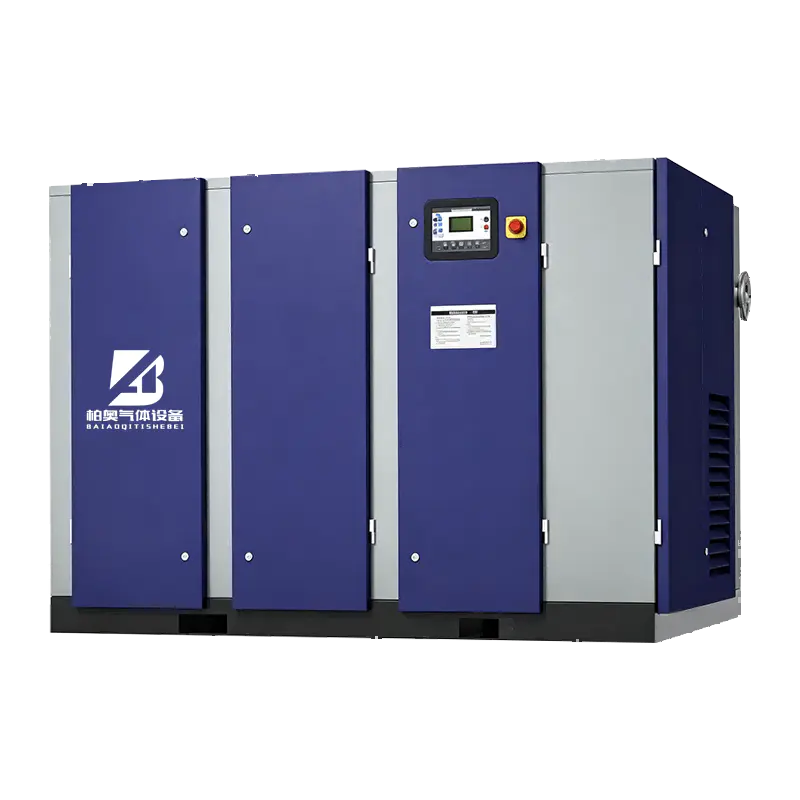
- 19 Product: Oil-Free Scroll Air Compressor
What Is an Oil-Free Scroll Air Compressor?
An oil-free scroll air compressor is a compact air-compression machine built around two involute scroll elements. The stationary scroll is fixed inside the compression chamber, while the orbiting scroll follows a controlled eccentric movement. The two scrolls form several crescent-shaped air pockets that move from the outer edge toward the center.
Air enters through the outer area of the scroll assembly. As the orbiting scroll moves, the trapped air is gradually compressed. The compressed air is then discharged from the central outlet. Because the compression process is continuous and the scroll elements move smoothly, the compressor can deliver a stable flow with relatively low pulsation.
The term “oil-free” refers specifically to the compression chamber and air-contacting components. No oil is injected into the compression process to lubricate, cool, or seal the compression pockets. This is an important distinction from oil-injected rotary screw compressors, in which oil is deliberately mixed with the air during compression and must later be removed through separators and filtration equipment.
Oil-free scroll technology is especially appropriate where the cost of contamination is high. Even a small quantity of oil can affect food products, damage sensitive electronic components, interfere with surface treatment, or reduce the performance of gas purification equipment. By eliminating oil from the compression chamber, the scroll design reduces the risk of process contamination at its source.
Working Principle of Scroll Compression
Orbiting and Stationary Scrolls
The central operating principle is the relative orbiting motion between two scrolls. The stationary scroll is secured in position, while the orbiting scroll travels along a circular orbit. It does not spin freely like a conventional rotating element. This carefully controlled movement maintains the geometry of the compression pockets and allows the compressor to build pressure progressively.
At the beginning of the cycle, atmospheric air enters the outermost part of the scroll assembly. The scroll wraps capture the air and form sealed pockets. As the orbiting scroll continues its movement, the pockets travel inward. Their volume becomes smaller, and the pressure of the air increases.
Several compression pockets operate at the same time. This creates a relatively smooth and continuous discharge rather than the pronounced pressure pulses associated with certain reciprocating compressors. The result is a stable compressed-air supply for pneumatic tools, control systems, gas generators, and industrial production equipment.
Sealed Compression Spaces
The scrolls create enclosed spaces without requiring oil injection for sealing. The precision of the scroll geometry, the controlled clearances, and the quality of the manufacturing process are essential to maintaining compression efficiency. Properly produced scroll components help reduce internal leakage and maintain consistent performance throughout the operating cycle.
Since the compression pockets become progressively smaller, the air is compressed in stages within a single continuous movement. This arrangement contributes to the compact size of the compressor and reduces the number of major moving parts compared with some other compressor technologies.
Continuous Air Delivery
Scroll compressors are known for delivering air with low pulsation. This characteristic can be useful in applications where pressure fluctuations may affect equipment performance. For example, pneumatic actuators, instrumentation, air separation units, and gas purification equipment can benefit from a more stable air supply.
When several scroll compressor modules operate together, the total output can be adjusted to match demand. This modular approach allows users to install a system that corresponds to their current requirements while retaining the possibility of capacity expansion in the future.
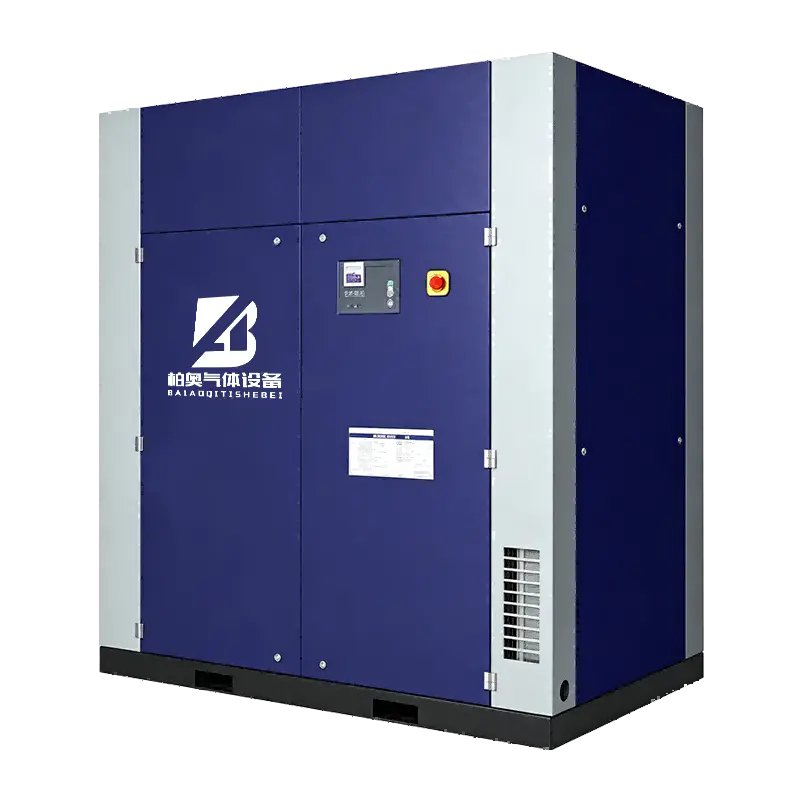
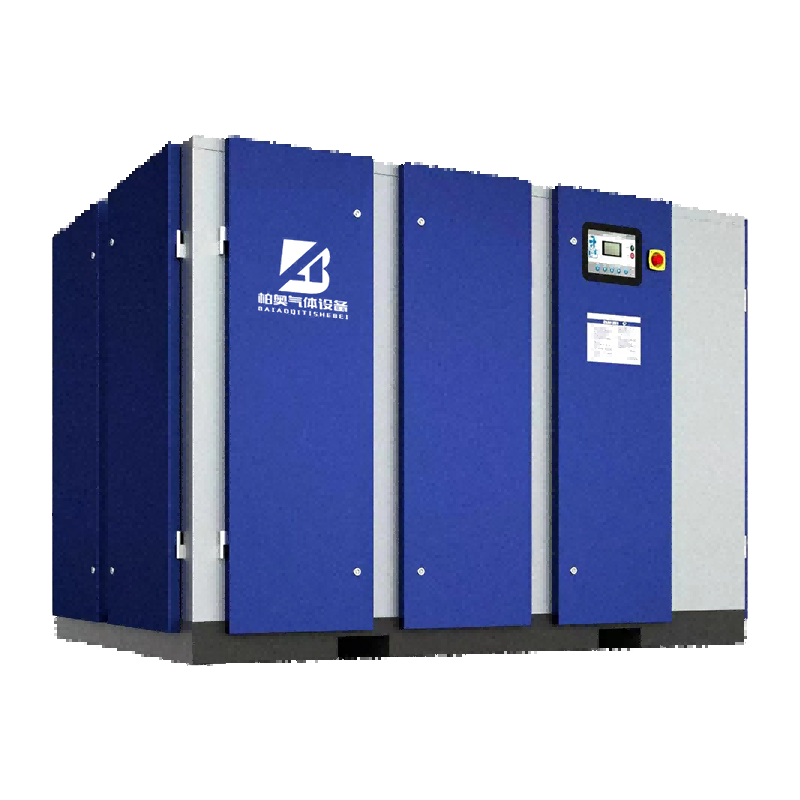
Oil-Free Scroll Air Compressor
Key Performance Specifications
The oil-free scroll air compressor is available across a practical range of industrial operating conditions. Its specification range allows the equipment to support light-duty pneumatic applications, production machinery, and air supply requirements associated with gas-generation systems.
| Specification | Metric Range | Imperial Range | Application Significance |
|---|---|---|---|
| Working Pressure | 8–10 bar | 116.0–145.0 psig | Suitable for many industrial pneumatic and gas-system applications |
| Air Capacity, FAD | 210–3,600 L/min | 7.4–127.1 cfm | Supports small and medium compressed-air demand |
| Motor Power | 3–33 kW | 4.1–44.9 hp | Provides multiple selection options for different load requirements |
| Air Quality | Oil-free | ISO 8573-1 Class 0 | Helps protect processes requiring compressed air without oil contamination |
The working pressure range of 8 to 10 bar covers a large number of industrial uses. Many pneumatic tools, valves, actuators, automation systems, and air preparation units operate effectively within this pressure range. The available air capacity range also gives users flexibility when selecting a model according to actual demand rather than choosing a compressor that is unnecessarily oversized.
Free air delivery, or FAD, is an important performance value because it expresses the amount of compressed air converted to an equivalent volume at reference atmospheric conditions. When comparing compressors, users should examine FAD together with pressure, inlet conditions, temperature, and measurement standards. A proper comparison helps prevent the selection of equipment that cannot meet peak demand or that consumes more energy than necessary.
The motor power range from 3 to 33 kilowatts indicates that the compressor family is intended for compact industrial systems rather than only laboratory use. It can support manufacturing areas, workshops, small gas-generation installations, packaging systems, and equipment that needs a clean and reliable source of compressed air.
Advantages of Oil-Free Scroll Technology
High Air Purity
The most important advantage is the absence of oil in the compression chamber. In an oil-injected compressor, separators, filters, drains, and maintenance procedures are required to remove oil from the compressed air. These systems can work effectively, but they introduce additional components and still require careful monitoring.
An oil-free scroll compressor reduces the contamination risk by avoiding the use of oil where the air is compressed. This makes it a strong choice for industries that cannot tolerate oil carryover. The ISO 8573-1 Class 0 certification provides an important quality reference for users evaluating air purity requirements.
Oil-free air can help protect products, equipment, and downstream processes. In food and beverage production, it can reduce the possibility of contact between oil contamination and products or packaging. In electronics manufacturing, it can help prevent residue on sensitive parts. In gas purification systems, clean feed air supports more reliable operation of filters, adsorbent beds, membranes, and other purification components.
Compact and Space-Efficient Construction
Scroll compressors generally use a compact compression assembly with relatively few major moving parts. This makes it possible to develop a small footprint compared with some traditional compressor systems of similar capacity. The compact design is beneficial in workshops, production lines, equipment rooms, and modular gas-generation plants where floor space is limited.
A smaller compressor can also simplify installation. Depending on the system configuration, the unit may be positioned close to the point of use, reducing the length of distribution piping. Shorter air lines can help reduce pressure losses and make it easier to maintain consistent pressure at the equipment inlet.
Low Vibration and Reduced Noise
The controlled orbiting motion of the scroll assembly produces smooth compression. Compared with reciprocating compressors, scroll compressors typically generate less pulsation and lower mechanical vibration. This can improve the working environment and reduce the transmission of vibration to nearby equipment.
Reduced noise is valuable in indoor production facilities, laboratories, workshops, and technical rooms located near offices or operating personnel. A quieter compressor can also support decentralized installation, allowing clean compressed air to be produced closer to the process rather than in a remote compressor room.
Reduced Maintenance Requirements
The oil-free scroll structure avoids oil changes in the compression chamber and eliminates the need to manage oil contamination caused by the compression process. This can simplify routine service and reduce the number of consumable items associated with oil separation.
Maintenance is still necessary. Air filters, cooling surfaces, electrical components, seals, control systems, and other wear-related parts must be inspected according to the operating environment. However, the absence of compression oil can make service planning more straightforward and reduce the risk of errors related to oil selection, oil aging, or separator performance.
Reliable Operation for Small and Medium Air Demand
Scroll compressors are well suited to applications that require clean air at moderate flow rates. Their operating principle provides continuous compression, while modular configurations can help adjust output to changing demand. This is particularly useful for factories with several independent production areas or for gas equipment that operates according to a variable production schedule.
When the compressor is correctly sized, its stable delivery can help maintain the pressure required by downstream equipment. Proper sizing also prevents the frequent cycling, excessive loading, or inefficient partial-load operation that can occur when a compressor is poorly matched to the demand profile.
Comparison with Other Compressor Technologies
Oil-Free Scroll versus Oil-Injected Rotary Screw
Oil-injected rotary screw compressors are widely used and can provide high flow rates for general industrial applications. They use oil for cooling, lubrication, and sealing inside the compression chamber. The discharged air therefore requires oil separation and filtration.
An oil-free scroll compressor has a different priority. It focuses on clean air, compact construction, and straightforward operation at small and medium flow rates. For facilities where air purity is more important than maximum volume, scroll technology can offer a more appropriate solution.
Oil-injected rotary screw equipment may be advantageous for large plants with substantial continuous air demand. Oil-free scroll equipment can be more attractive for localized applications, clean production environments, and systems where contamination control is a primary requirement.
Oil-Free Scroll versus Reciprocating Compressor
Reciprocating compressors use pistons moving within cylinders. They can achieve high pressure and are available in many sizes. However, their reciprocating motion may generate more vibration and pulsation. They may also require more attention to valves, piston rings, cylinder components, and lubrication systems, depending on the design.
The scroll compressor’s orbiting motion is smoother and produces a more continuous flow. This can make it a better choice for applications that value low vibration and consistent air delivery. The final selection should still consider pressure, capacity, duty cycle, ambient conditions, and maintenance resources.
Oil-Free Scroll versus Oil-Free Rotary Screw
Oil-free rotary screw compressors can deliver large volumes of air and are often used in major industrial installations. They may employ sophisticated multi-stage compression and cooling systems. For high-volume continuous production, an oil-free rotary screw may be the preferred technology.
Oil-free scroll compressors are often more suitable where the required capacity is lower, where installation space is limited, or where modular capacity is useful. Their compact construction and clean compression process can reduce system complexity for small and medium-sized users.
Oil-Free Scroll versus Centrifugal Compressor
Centrifugal compressors are dynamic machines designed for high flow rates. They are commonly used in large process facilities and central utility systems. Their performance depends strongly on flow conditions, operating range, and system design.
For a compact installation requiring several hundred to several thousand liters per minute, a scroll compressor is generally a more practical choice. It does not require the same scale of infrastructure and can provide dependable positive displacement compression at the specified working pressure.
Manufacturing Strengths and Quality-Focused Production
The performance of an oil-free scroll air compressor depends not only on its operating principle but also on the quality of its design, materials, machining, assembly, testing, and after-sales support. Zhejiang Baiao Gas Equipment Co., Ltd. integrates research and development, engineering design, production, installation, and after-sales service. This integrated structure supports communication between product development and field application.
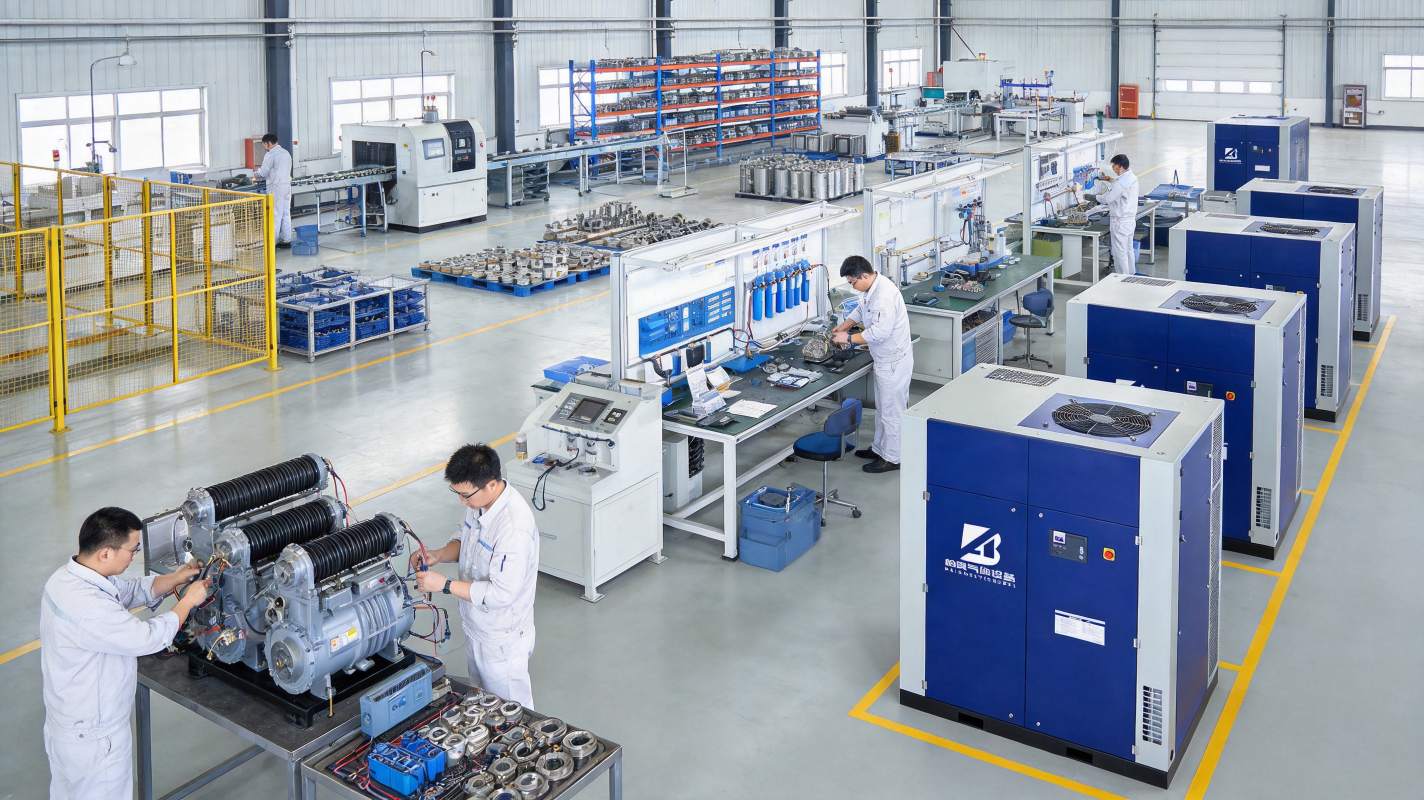
The company operates a standardized workshop of approximately 3,000 square meters, an office area of approximately 500 square meters, and a warehouse of approximately 500 square meters. These facilities provide space for production coordination, component management, equipment assembly, quality inspection, and order preparation.
A dedicated warehouse supports organized material handling. Proper storage is important for compressor production because mechanical and electrical components must be protected from moisture, dust, impact, and incorrect identification. Controlled inventory practices can also improve traceability and help ensure that the correct components are used during assembly.
Research and Development Integration
Research and development is important for oil-free compressor equipment because small changes in scroll geometry, clearance, sealing, cooling, motor control, and component materials can influence efficiency and durability. A manufacturer that combines development with production can evaluate practical manufacturing requirements during the design stage.
The company develops gas equipment and purification systems using overseas technologies that have been adapted and optimized for industrial conditions in China. This approach combines established technical concepts with practical knowledge of local operating environments, industrial demand, service expectations, and application requirements.
For customers, engineering integration can simplify the process of selecting and configuring a compressor. Instead of treating the compressor as an isolated product, the manufacturer can evaluate its relationship with air dryers, filters, storage tanks, nitrogen generators, oxygen generators, membrane systems, and purification units.
Standardized Workshop Operations
A standardized production workshop supports consistent assembly procedures. Compressor assembly requires attention to alignment, fastener control, sealing surfaces, electrical connections, cooling pathways, and protection of air-contacting components. Organized workstations and documented procedures help reduce variation between units.
Production quality also depends on cleanliness. Because the equipment is designed to provide oil-free air, manufacturing and assembly practices should prevent the introduction of unwanted contaminants into the compression system. Clean component handling, suitable packaging, and careful final inspection contribute to the reliability of the finished unit.
Standardized processes can also improve communication between production and service teams. When assembly records, inspection results, and component information are managed systematically, technical personnel can respond more effectively to commissioning questions and maintenance needs.
Inspection and Testing Approach
Quality control for an oil-free scroll compressor should include inspection of mechanical assembly, electrical safety, pressure performance, air delivery, operating sound, vibration, and control functions. Testing verifies that the completed machine performs according to the intended specification rather than relying only on individual component quality.
Pressure and flow testing are especially important because the scroll assembly must create the correct compression ratio while maintaining acceptable internal leakage. Electrical inspection helps confirm the correct operation of the motor, control cabinet, sensors, protection devices, and emergency functions.
Final testing also provides an opportunity to identify abnormal vibration, unusual noise, temperature rise, pressure instability, or control errors before shipment. This supports smoother installation at the customer’s facility and reduces the possibility of unexpected start-up problems.
Application in Gas Separation and Purification Systems
Oil-free scroll compressors can serve as reliable air sources for gas separation and purification equipment. Gas-generation systems often depend on clean and stable feed air. If the compressed air contains oil or excessive contamination, the performance and service life of downstream components may be affected.
PSA Nitrogen Generation
Pressure swing adsorption nitrogen generators use adsorbent materials to separate nitrogen from oxygen and other components in compressed air. The quality of the feed air is important because oil, water, and particulates can reduce adsorbent performance and increase maintenance requirements.
An oil-free compressor can provide a clean feed-air source for PSA nitrogen systems when properly combined with suitable air drying, filtration, storage, and control equipment. The compressor should be selected according to the nitrogen flow rate, purity target, operating pressure, regeneration requirements, and duty cycle of the PSA system.
PSA Oxygen Generation
PSA oxygen generators also rely on compressed air and adsorbent technology. Stable pressure and sufficient flow are essential to the adsorption and regeneration cycles. An oil-free air source helps reduce the risk of hydrocarbon contamination within the process-air path.
In oxygen-related systems, safety, ventilation, material compatibility, and cleanliness must be considered carefully. The compressor is one part of a complete engineered system, and the final installation should be designed according to the oxygen application, local requirements, and operating procedures.
Membrane Nitrogen and Oxygen Systems
Membrane gas separation systems use selective membranes to separate gases based on differences in permeability. Feed-air quality, pressure, temperature, and flow stability influence membrane performance. An oil-free scroll compressor can support compact membrane installations where the required capacity is within the compressor’s operating range.
Because membrane systems may be installed close to production equipment, compact compressor construction can help reduce the overall footprint. The system designer should also include appropriate pretreatment to remove water, dust, and other contaminants that may affect the membrane.
Hydrogen Purification and Ammonia Decomposition Systems
Ammonia decomposition systems can produce hydrogen-containing gas that requires further purification. The associated equipment may include purification units, control systems, storage, and gas-handling components. Clean instrument air can be useful for valves, actuators, control panels, and other auxiliary functions.
An oil-free scroll compressor can support these auxiliary requirements and may also be used in related gas equipment where compressed air quality is important. The exact role depends on the process design, gas purity requirements, pressure conditions, and safety controls.
Industrial Applications
Food and Beverage Processing
Compressed air is used in filling, packaging, conveying, pneumatic control, product handling, and cleaning operations. In applications where compressed air may contact products, packaging, or food-contact surfaces, oil-free technology can help reduce contamination risks.
Clean air is also valuable for pneumatic valves and instruments in hygienic production areas. The compressor should be installed with appropriate dryers, filters, condensate management, and sanitation practices to maintain the required air quality throughout the distribution system.
Textile Manufacturing
Textile equipment uses compressed air for yarn handling, weaving, spinning, fabric inspection, pneumatic controls, and automatic cleaning. Oil contamination can affect fibers, fabric appearance, dyeing performance, and finished-product quality.
An oil-free scroll compressor can provide a clean source of air for smaller textile lines, specialized machinery, and localized production equipment. Its relatively low vibration can also be useful in facilities where sensitive production machines operate close to the compressor.
Automotive Manufacturing
Automotive plants use compressed air for assembly tools, actuators, robotic systems, air blow-off, instrumentation, painting preparation, and component handling. While large automotive factories may use central high-capacity compressors, oil-free scroll units are useful for dedicated lines, clean assembly areas, laboratories, and smaller production stations.
The compressor can also support automotive engine supercharging applications and other scenarios involving small and medium-sized air compressors. Stable pressure and clean air help maintain repeatable operation for pneumatic tools and automated equipment.
SMT Electronics Manufacturing
Surface-mount technology production requires controlled manufacturing conditions. Compressed air may be used for pick-and-place equipment, soldering systems, pneumatic cylinders, component handling, and cleaning operations. Oil residues can be particularly undesirable around electronic components and circuit boards.
An oil-free scroll compressor can support clean-room-adjacent or electronics production applications when the entire air system is properly filtered, dried, and maintained. Low noise and compact size are additional benefits for facilities where equipment density is high.
Heat Treatment
Heat-treatment facilities use compressed air for automation, furnace controls, pneumatic valves, handling equipment, and instrumentation. Although the main process may not always require direct product contact with compressed air, clean and stable instrument air can improve control reliability.
The compressor should be selected for the required pressure, flow, ambient temperature, and duty cycle. In high-temperature environments, the equipment room should provide adequate ventilation and protect the compressor from excessive heat and dust.
General Gas Compression
Scroll compressors are used in general gas compression, air conditioning, refrigeration, and vacuum-related applications. Their compact positive displacement design makes them useful where a smooth and controlled compression process is required.
When compressing gases other than atmospheric air, compatibility must be evaluated carefully. Gas composition, flammability, toxicity, temperature, pressure, sealing materials, and applicable safety requirements can influence the suitability of the compressor. The standard oil-free air configuration should not automatically be assumed suitable for every gas.
System Design and Installation Considerations
Correct Capacity Selection
The compressor should be selected according to average demand, peak demand, operating pressure, duty cycle, and future expansion. Choosing a unit based only on nominal flow can result in insufficient capacity if pressure losses, filter loading, leaks, or peak consumption are overlooked.
Users should prepare a demand profile that identifies the normal flow rate, maximum flow rate, operating hours, intermittent loads, and pressure requirements of each application. For gas-generation systems, the compressor capacity should be calculated from the required product-gas flow, purity, recovery rate, regeneration cycle, and pretreatment requirements.
A system with multiple scroll modules may provide additional flexibility. Modules can be staged according to demand, and the system may continue operating at reduced capacity if one module is removed for service. This approach can improve redundancy and make future capacity expansion easier.
Air Treatment
Oil-free compression does not mean that the air contains no moisture or dust. Ambient air naturally contains water vapor, particulates, and other contaminants. Therefore, a complete compressed-air system may require inlet filters, aftercoolers, water separators, dryers, fine filters, sterile filters, or activated-carbon treatment, depending on the application.
The air-treatment arrangement should be designed according to the required pressure dew point, particulate level, microbial control, and process conditions. Filters must be sized correctly and replaced when their pressure drop reaches the specified limit.
Ventilation and Cooling
All compressors generate heat during operation. The equipment room should have sufficient ventilation to prevent excessive ambient temperature. Cooling conditions influence compressor performance, component life, and electrical reliability.
The installation should provide adequate clearance around the compressor for airflow, inspection, and service. The discharge of warm cooling air should not be directed back toward the inlet. In dusty or humid environments, additional protection and more frequent cleaning may be necessary.
Pipework and Storage
Compressed-air pipework should be designed to minimize pressure loss and prevent water accumulation. Correct pipe diameter, suitable materials, adequate drainage, and well-positioned isolation valves all contribute to system reliability.
An air receiver can help stabilize pressure, manage short-term demand peaks, reduce frequent compressor cycling, and provide a buffer during system transitions. The receiver size should be determined according to flow, pressure range, control method, and operating pattern.
Electrical and Control Integration
The compressor must be connected to an electrical supply that matches the motor and control requirements. Protective devices, grounding, cable sizing, and disconnect arrangements should follow applicable electrical standards and local regulations.
For integrated gas systems, the compressor may exchange signals with nitrogen generators, oxygen generators, purification units, dryers, pressure switches, and plant management systems. Reliable control integration can help coordinate start-up, shutdown, alarm handling, and capacity adjustment.
Maintenance and Operating Best Practices
Regular maintenance helps preserve air quality, flow performance, and operating efficiency. The service schedule should be based on running hours, environmental conditions, load profile, and manufacturer recommendations.
Daily and Routine Checks
Operators should monitor discharge pressure, air temperature, operating sound, vibration, current, and alarm status. Any sudden change in performance may indicate a blocked filter, inadequate ventilation, abnormal bearing condition, electrical issue, or downstream restriction.
The compressor area should be kept clean and dry. Dust accumulation on cooling surfaces can reduce heat transfer. Water leaks or condensation near electrical components should be corrected promptly.
Filter and Dryer Service
Air-treatment components should be inspected regularly. A blocked inlet filter can reduce capacity and increase energy consumption. A saturated dryer or overloaded downstream filter can increase pressure loss and compromise air quality.
Filter replacement should not be delayed simply because the compressor itself is oil-free. Dust and moisture remain important contaminants, and the performance of the complete compressed-air system depends on effective pretreatment and distribution.
Leak Management
Compressed-air leaks are a common source of energy waste. Leaks may occur at hoses, fittings, valves, couplings, drains, pressure regulators, and pipe joints. A regular leak survey can identify losses that are otherwise difficult to detect.
Reducing leaks lowers the required compressor output and can extend equipment life. It also improves pressure stability at points of use. In a modular scroll system, leak management can reduce the number of modules required during normal operation.
Service Documentation
Maintenance records should include operating hours, filter changes, inspections, alarms, repairs, and performance observations. Accurate records help identify trends and support preventive maintenance planning.
For industrial customers, documentation is also useful when evaluating energy use, air-quality compliance, production interruptions, and equipment replacement decisions. A manufacturer with installation and after-sales capabilities can assist customers in establishing an appropriate service routine.
Energy Efficiency and Total Cost of Ownership
Energy is often the largest operating cost associated with compressed air. The most efficient compressor is not necessarily the one with the lowest purchase price. Total cost of ownership includes energy consumption, maintenance, filters, downtime, installation, spare parts, and the cost of contamination or product loss.
Oil-free scroll equipment can contribute to cost control by reducing oil-related consumables and maintenance activities. Its compact design may also reduce installation requirements. However, energy performance still depends on proper sizing, pressure settings, air-treatment pressure drop, leakage control, and operating schedule.
Operating at a higher pressure than necessary increases energy consumption. Users should set the pressure as low as practical while still meeting the requirements of the connected equipment. Pressure regulators should be used appropriately, and unnecessary pressure losses should be removed from the distribution system.
Modular operation can also support efficiency. When demand varies, the control system can operate the required number of compressor modules rather than running all units continuously at full capacity. The benefits depend on the control strategy and the actual demand pattern.
A life-cycle evaluation should compare the cost of the oil-free scroll system with the cost of alternative technologies over the expected service period. For clean-air applications, the value of avoiding oil contamination should be included in the calculation. Preventing a single contamination event may offset a significant portion of the investment in higher-quality compressed-air equipment.
Why Manufacturer Support Matters
Compressed-air equipment is most effective when it is matched to the customer’s process. A manufacturer with experience in gas equipment can evaluate not only the compressor but also the complete relationship between the air source and downstream system.
Zhejiang Baiao Gas Equipment Co., Ltd. provides research and development, design, production, installation, and after-sales service. This broad capability can support customers that require customized solutions rather than standard equipment supplied without application guidance.
The company serves industries including petrochemical production, textile manufacturing, food processing, automotive manufacturing, heat treatment, and SMT electronics. Experience across these sectors can help the engineering team understand different requirements for air purity, pressure stability, operating schedules, environmental conditions, and integration with process equipment.
The company’s sales network covers more than 30 provinces and cities in China, and its products are also exported to international markets. This market experience supports communication with customers operating under different site conditions, procurement procedures, technical specifications, and service expectations.
After-sales support is especially important for industrial compressors because installation quality and operating practices influence long-term performance. Technical assistance may include model selection, system configuration, installation coordination, commissioning guidance, maintenance planning, and troubleshooting support.
Customized Solutions for Different Industries
Every compressed-air installation has different requirements. A workshop may need a small compressor for pneumatic tools, while a gas-generation plant may require a stable air source for a PSA or membrane system. A food-processing facility may prioritize oil-free air and hygienic installation, while an electronics factory may emphasize cleanliness, low noise, and pressure stability.
Customization may involve selecting the appropriate motor power, configuring multiple compressor modules, matching the air receiver, specifying dryers and filters, adapting the control system, or integrating the compressor with a complete gas purification unit.
The correct configuration should be based on measurable technical information. Important data includes required flow, operating pressure, air-quality class, ambient temperature, altitude, installation location, available electrical supply, operating hours, and future capacity needs.
Customized engineering also helps avoid excessive capacity. Oversized equipment may have a higher purchase cost and may operate inefficiently at low demand. Undersized equipment may fail to maintain pressure and may run continuously under heavy load. A balanced design provides reliable performance while supporting reasonable energy consumption.
Safety and Compliance Considerations
Compressed air stores significant energy and must be treated as a pressurized utility. Installation and operation should comply with applicable local regulations and recognized safety practices. Pressure vessels, valves, electrical equipment, and relief devices should be selected and maintained appropriately.
Operators should never use compressed air for unsafe cleaning practices, direct skin contact, or applications that have not been evaluated. Noise, flying debris, hose movement, and unexpected equipment start-up can create hazards.
Oil-free air quality is an important part of process safety, but it does not replace other safety controls. In oxygen, hydrogen, ammonia, or other specialized gas systems, the complete installation must be reviewed for gas-specific hazards, ignition sources, ventilation, materials, pressure protection, and emergency procedures.
Training is also essential. Operators should understand the compressor controls, alarm indications, isolation procedures, filter replacement requirements, and emergency shutdown functions. Clear operating instructions can reduce downtime and improve personnel safety.
Selection Guide for Buyers
Before purchasing an oil-free scroll air compressor, users should define the application and collect accurate operating information. The following questions can help guide the selection process.
Required Pressure
What pressure is required at the point of use? Is the stated pressure the compressor discharge pressure or the pressure available after filters, dryers, valves, and pipework? The compressor should have sufficient capacity at the actual operating pressure rather than only at a lower reference condition.
Required Flow
What is the normal flow, peak flow, and future flow requirement? If the system includes a PSA generator, membrane unit, or purification process, the compressor must support the process cycle as well as the final gas output.
Required Air Quality
Does the application require ISO 8573-1 Class 0 oil-free air? Are there additional requirements for humidity, particles, microorganisms, or hydrocarbons? The compressor and air-treatment system should be selected as one coordinated package.
Operating Environment
Will the compressor operate in a clean indoor room, a dusty workshop, a humid area, or a high-temperature production zone? Environmental conditions affect ventilation, filtration, maintenance intervals, and enclosure requirements.
Duty Cycle
Will the compressor operate continuously, intermittently, or according to a variable production schedule? A modular arrangement may be advantageous when demand changes significantly during the day or between production shifts.
Service and Spare Parts
What level of local technical support is available? Are replacement filters, service components, and troubleshooting assistance accessible? Manufacturer support should be considered before purchase because service response can influence total production reliability.
Frequently Asked Questions
What does oil-free mean in an air compressor?
Oil-free means that oil is not used in the compression chamber or intentionally mixed with the compressed air during compression. The scroll compressor described here is certified to the ISO 8573-1 Class 0 oil-free standard. It may still require separate lubricants in isolated mechanical components, depending on the equipment design, but these materials are not introduced into the compressed-air stream.
How does a scroll compressor compress air?
It uses an orbiting scroll and a stationary scroll. Their relative movement creates sealed pockets of air. These pockets move inward and become smaller, progressively increasing air pressure before the compressed air exits through the central discharge port.
What pressure can this compressor provide?
The stated working pressure range is 8 to 10 bar, equivalent to approximately 116.0 to 145.0 psig. The correct model should be selected according to the pressure required by the application and the pressure losses in the air-treatment and distribution system.
What is the available air capacity?
The air capacity range is 210 to 3,600 liters per minute, or approximately 7.4 to 127.1 cubic feet per minute. Actual performance should be evaluated at the required working pressure and under the site’s ambient conditions.
What motor powers are available?
The available power range is 3 to 33 kilowatts, equivalent to approximately 4.1 to 44.9 horsepower. This range allows users to select equipment for different small and medium-sized industrial air requirements.
Is an oil-free scroll compressor suitable for food processing?
It can be suitable for food-processing applications that require clean compressed air, provided that the complete system is properly designed. Dryers, filters, drains, hygienic installation practices, and regular maintenance are still necessary. The specific air-quality requirement should be confirmed before installation.
Can it supply air to a nitrogen generator?
Yes, an oil-free scroll compressor can be used as a feed-air source for PSA or membrane nitrogen-generation systems when its pressure and capacity match the generator requirements. Pretreatment for moisture and particles remains important for protecting downstream components.
Does oil-free equipment require no maintenance?
No. Oil-free compression reduces oil-related maintenance, but the compressor still requires inspection and service. Filters, cooling surfaces, electrical components, controls, seals, and other parts must be maintained according to operating conditions and manufacturer recommendations.
How is scroll technology different from rotary screw technology?
A scroll compressor uses two scroll elements and orbiting motion, while a rotary screw compressor uses two helical rotors. Scroll technology is commonly advantageous for compact, clean, low-vibration applications at small and medium flow rates. Rotary screw technology is often selected for larger, continuous industrial air demand.
Can several scroll units operate together?
Multiple compressor modules can be configured to provide higher total capacity, redundancy, or improved response to changing demand. The system should be designed with suitable controls, air storage, pipework, and protection devices.
What should be considered when installing the compressor?
Users should consider ventilation, ambient temperature, dust and humidity, electrical supply, pipe diameter, air storage, drainage, service clearance, vibration control, and integration with dryers, filters, and downstream process equipment.
Why is manufacturer engineering support important?
Engineering support helps ensure that the compressor is correctly matched to the process. A manufacturer that also designs and installs gas separation and purification equipment can evaluate the compressor as part of a complete system rather than as an isolated machine.
Conclusion
An oil-free scroll air compressor combines clean compression, compact construction, stable air delivery, low vibration, and practical capacity options for small and medium-sized industrial applications. Its orbiting and stationary scrolls create continuous compression pockets without introducing oil into the compressed-air stream.
With working pressures of 8 to 10 bar, air capacities from 210 to 3,600 liters per minute, and power options from 3 to 33 kilowatts, the product can support a broad range of applications. These include air conditioning, refrigeration, general gas compression, automotive engine supercharging, vacuum-related equipment, pneumatic systems, gas generators, and purification units.
The ISO 8573-1 Class 0 oil-free certification is a significant advantage for users that require clean compressed air. Compared with oil-injected compressors, the oil-free scroll design can reduce contamination risks and simplify oil-related maintenance. Compared with larger compressor technologies, it can offer a compact and flexible solution for localized or moderate air demand.
Zhejiang Baiao Gas Equipment Co., Ltd. strengthens the product offering through integrated research and development, design, manufacturing, installation, and after-sales service. Its standardized workshop, warehouse facilities, professional technical team, experience in gas separation and purification equipment, and service coverage across domestic and international markets provide a foundation for customized industrial solutions.
For the best result, buyers should evaluate the complete system rather than the compressor alone. Correct sizing, air treatment, ventilation, storage, leak control, electrical integration, and preventive maintenance all influence performance. When these factors are properly managed, an oil-free scroll air compressor can provide a dependable source of clean compressed air for modern manufacturing and gas-processing operations.
References
ISO 8573-1, Compressed Air—Contaminants and Purity Classes.
Compressed Air and Gas Institute, Compressed Air System Design and Application Principles.
International Organization for Standardization, Guidance on Compressed-Air Quality Classification.
Compressed Air Best Practices, Energy Management and Leak-Reduction Principles for Industrial Air Systems.
General engineering principles for positive displacement compressors, air treatment, pressure vessels, and industrial pneumatic systems.
Manufacturer-provided technical data for oil-free scroll air compressors, including working pressure, free air delivery, motor power, and ISO 8573-1 Class 0 oil-free certification.
Product: Oil-Free Scroll Air Compressor

- Tel: +86-15057127179
+86-13588382771 - Email: huang.yifan0215@gmail.com
- Address: Huanshan Township, Fuyang District, Hangzhou City, Zhejiang Province
Copyright © Zhejiang Baiao Gas Equipment Co., Ltd. All Rights Reserved.
Privacy
Gas Generator Plant Manufacturer, Industrial Purification Equipment Plant
