 en
en русский
 Español
 عربى
عربى
Activated Carbon Filters for High-Purity Compressed Air Systems
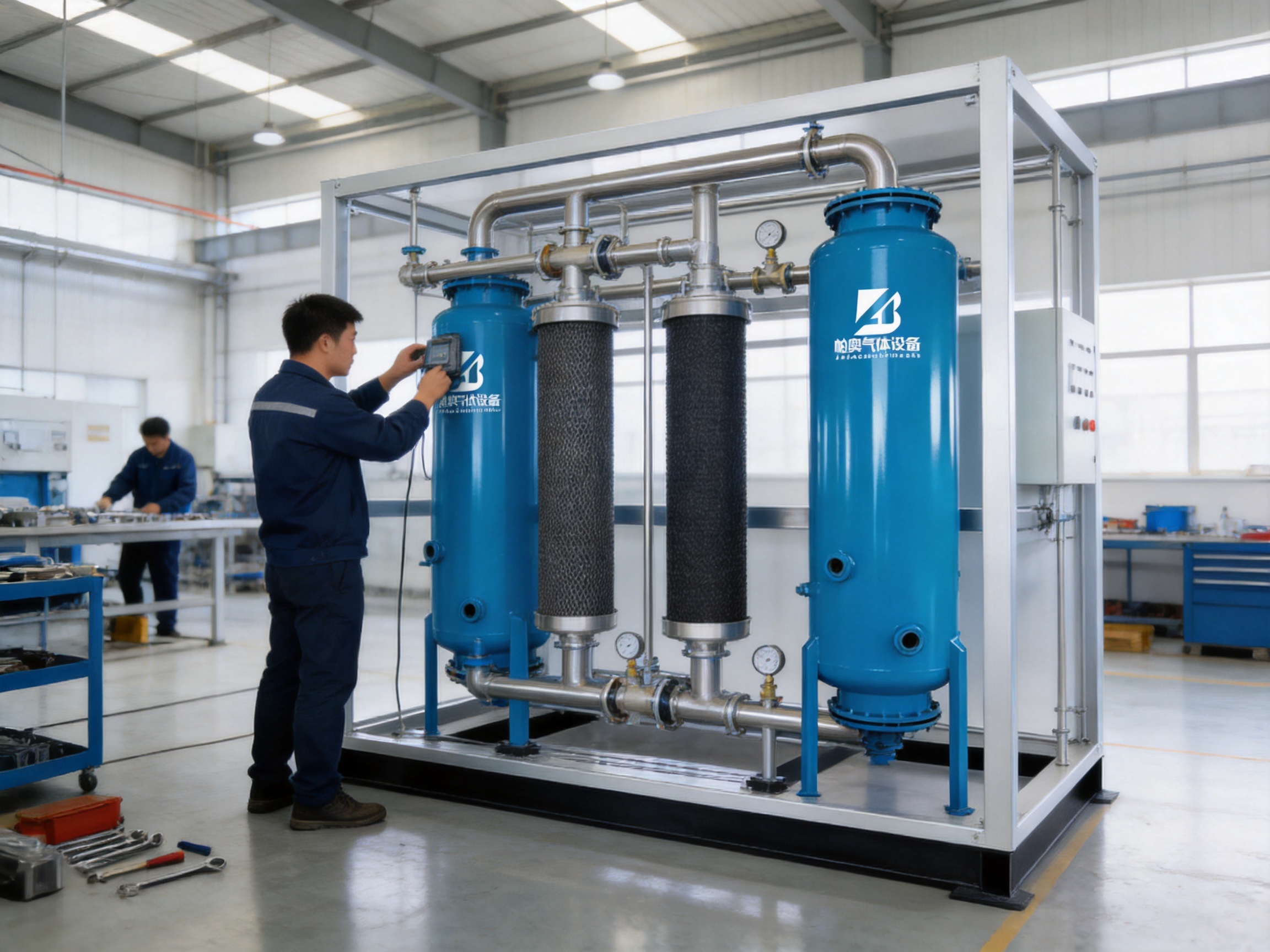
Compressed air is widely used as a process medium, power source, transport medium, and protective gas in modern industry. However, air discharged from an industrial compressor is not automatically suitable for direct use in sensitive production environments. Even after compression, it may contain residual oil vapor, hydrocarbon traces, odors, and fine particles. If these contaminants enter a production line, they can affect product quality, shorten equipment life, create unpleasant odors, and increase the risk of nonconforming products.
The BPC Activated Carbon Filter is designed to provide a final purification stage for compressed air systems that require low oil content, reduced odor, and fine particle filtration. It uses activated carbon fiber as the main filter medium. This material provides strong adsorption performance, enabling the filter to capture residual oil and odor-related contaminants that may remain after upstream filtration.
The equipment is suitable for compressed air purification systems used in food processing, beverage production, pharmaceutical manufacturing, and other applications in which air cleanliness is an important part of process control. The filter can be incorporated into a broader treatment system containing Class C, Class T, Class A, or other upstream filters. This staged arrangement allows each filtration component to perform a specific task and helps protect the activated carbon element from excessive contamination.
Manufactured by Zhejiang Baiao Gas Equipment Co., Ltd., the BPC series combines a practical adsorption-based purification principle with a broad range of processing capacities. The manufacturer’s experience in gas separation, gas purification, equipment design, fabrication, installation, and after-sales service supports the product’s application in both standard and customized compressed air systems.
Content
- 1 Why Compressed Air Purification Requires More Than Particle Filtration
- 2 Working Principle of the BPC Activated Carbon Filter
- 3 Principal Technical Specifications
- 4 Model Range and Capacity Selection
- 5 Advantages Compared with Basic and Competing Filter Approaches
- 6 Applications in Food, Beverage, and Pharmaceutical Production
- 7 Recommended System Configuration
- 8 Manufacturing Strengths and Engineering Capabilities
- 9 How the Product Supports Energy-Conscious Operation
- 10 Operating and Maintenance Recommendations
- 11 Project Selection Guidance
- 12 Frequently Asked Questions
- 12.1 What does the BPC Activated Carbon Filter remove?
- 12.2 Can the filter be installed directly after the compressor?
- 12.3 What is the standard operating pressure?
- 12.4 What is the maximum inlet air temperature?
- 12.5 Which industries can use this product?
- 12.6 How do I choose the correct model?
- 12.7 Why is upstream filtration important?
- 12.8 Does the filter remove all compressed air contaminants?
- 12.9 How often should the activated carbon element be replaced?
- 12.10 Can the product be used in a customized purification system?
- 12.11 What should be confirmed before purchase?
- 13 Conclusion
- 14 References
- 15 Product: BPC Activated Carbon Filter
Why Compressed Air Purification Requires More Than Particle Filtration
Industrial compressors draw in atmospheric air that contains dust, moisture, oil-related substances, and airborne organic compounds. During compression, the concentration of these contaminants can increase. Lubricated compressors may also introduce oil aerosols or oil vapor into the compressed air stream. Downstream receivers, pipes, valves, and process equipment can then distribute the contaminants throughout the plant.
A conventional particulate filter is primarily intended to remove solid particles and, depending on its design, liquid aerosols. It may not be sufficient for removing gaseous oil vapor or odors. A coalescing filter can remove very fine liquid droplets, but adsorption is generally required when the objective is to reduce vapor-phase contaminants and odor-causing compounds.
The BPC Activated Carbon Filter addresses this specific purification requirement. Its activated carbon fiber medium provides a large active surface for adsorption. As compressed air passes through the filter, residual oil vapor and odor molecules interact with the carbon surface and are retained. The result is a cleaner and more neutral compressed air stream for downstream use.
This type of filtration is especially useful when compressed air comes into contact with food, beverages, pharmaceutical ingredients, packaging surfaces, or sensitive manufacturing equipment. It can also be valuable in applications where product odor, taste, surface contamination, or process cleanliness must be controlled.
Working Principle of the BPC Activated Carbon Filter
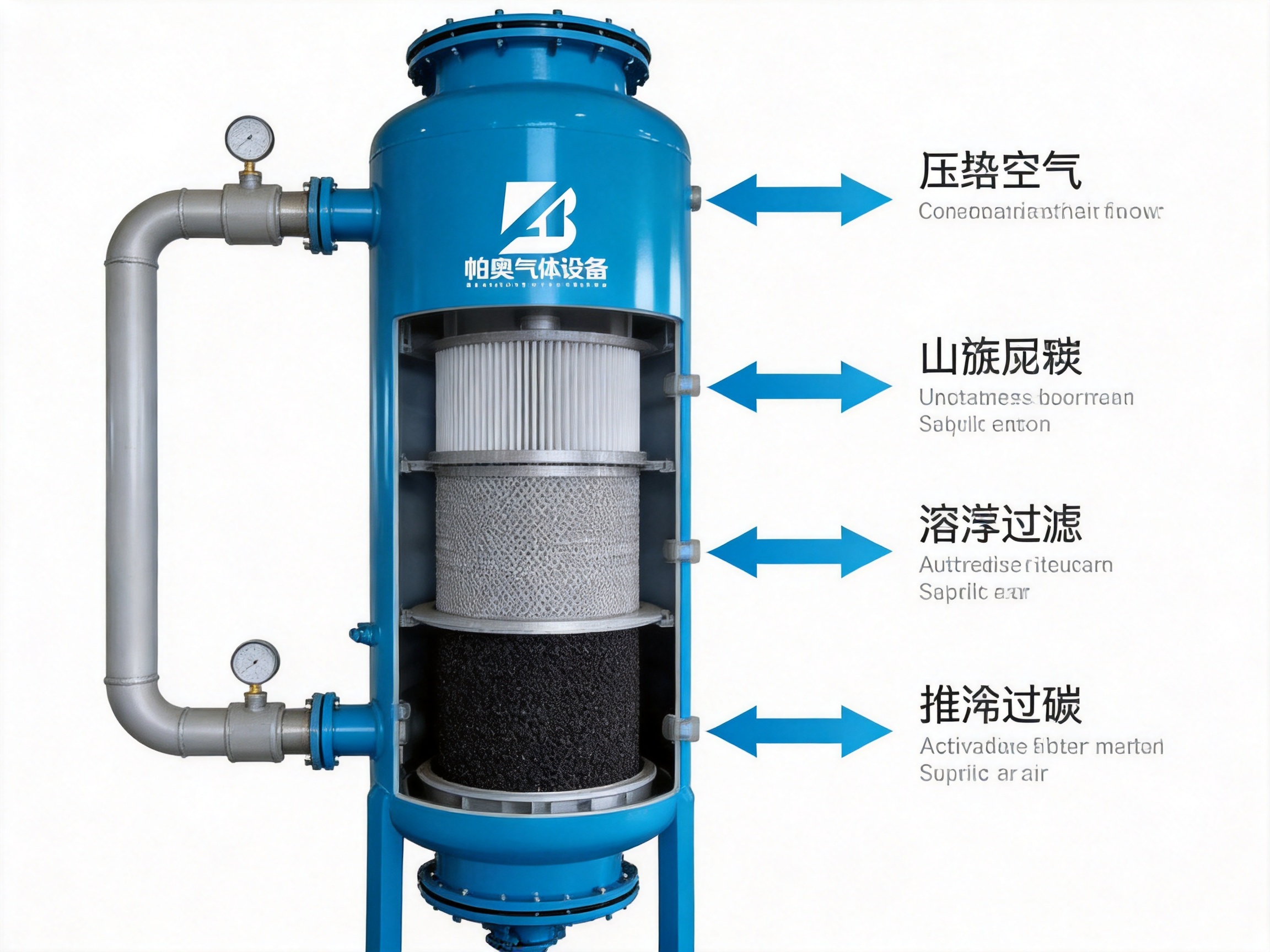
The core operating principle is adsorption. Adsorption is a surface-based process in which molecules from a gas adhere to the surface of a solid material. Activated carbon is widely used for this purpose because it has a porous structure and a high internal surface area.
In the BPC filter, activated carbon fiber serves as the filter material. When compressed air enters the housing, the airflow is distributed through the carbon medium. Oil vapor, hydrocarbon residues, and odor-related molecules come into contact with the activated carbon surface. The carbon retains these substances while allowing the purified air to continue toward the outlet.
The effectiveness of the process depends on several factors, including inlet concentration, gas temperature, operating pressure, airflow rate, contact time, and the condition of upstream filters. The BPC design is therefore intended to operate as part of a complete compressed air treatment system rather than as an isolated device exposed directly to heavily contaminated compressor discharge.
Upstream filtration is important for two reasons. First, a Class C, Class T, Class A, or comparable filter can remove larger particles, liquid water, oil droplets, and other loads before the air reaches the activated carbon stage. Second, pre-filtration helps prevent premature saturation or blockage of the carbon medium. Properly arranged stages can improve the stability, service life, and purification performance of the complete system.
The final outlet performance specified for the product includes an oil content of 0.003 ppm and an outlet particle size of no more than 0.1 micrometers under appropriate operating conditions. These values indicate the filter’s intended role as a high-purity polishing stage rather than a basic dust filter.
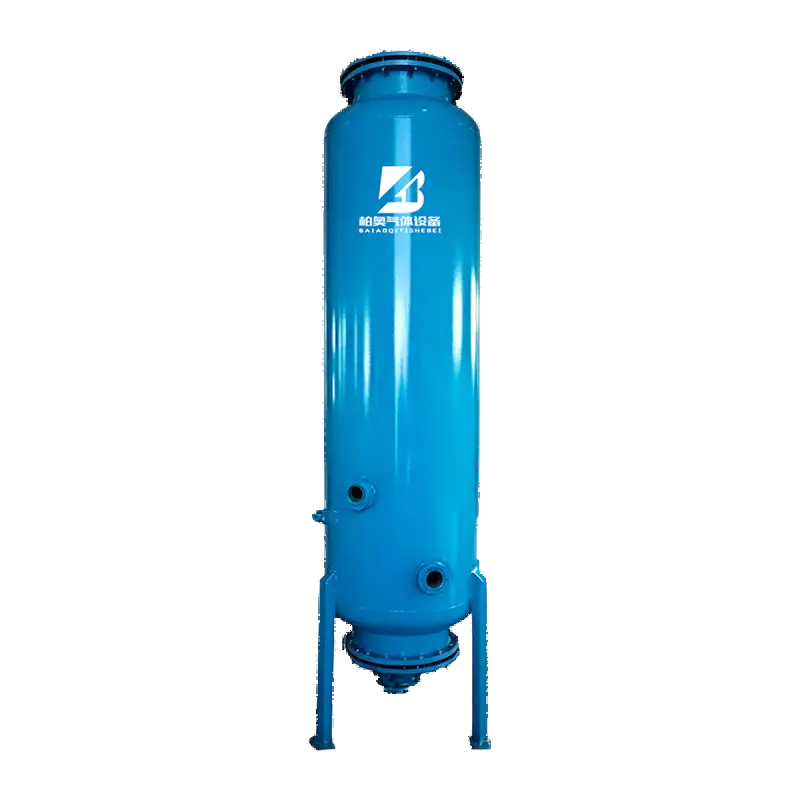
BPC Activated Carbon Filter
Principal Technical Specifications
The standard operating pressure range of the BPC Activated Carbon Filter is 0.4 to 1.0 MPa. Models suitable for higher pressure applications from 1.0 to 3.0 MPa are also available. This range allows the product to be considered for many plant compressed air networks, provided that the selected model and system configuration match the actual operating conditions.
The inlet air temperature should not exceed 50°C. Temperature control is important because adsorption performance can be affected by elevated gas temperature. In addition, high-temperature compressed air may increase the volatility of oil compounds and reduce the efficiency of adsorption. A suitable aftercooler or upstream treatment stage may therefore be necessary when compressor discharge temperatures are high.
The specified outlet oil content is 0.003 ppm. This low value supports applications in which oil carryover must be minimized. The specified outlet particle size is no more than 0.1 micrometers, providing an additional level of protection for downstream instruments, valves, process equipment, and production areas.
| Technical item | Specification |
| Filter medium | Activated carbon fiber |
| Standard operating pressure | 0.4–1.0 MPa |
| Optional operating pressure | 1.0–3.0 MPa |
| Maximum inlet air temperature | 50°C |
| Outlet oil content | 0.003 ppm |
| Outlet particle size | ≤0.1 μm |
| Recommended system arrangement | Installation after Class C, Class T, Class A, or comparable filters |
These specifications should be evaluated together rather than separately. For example, a plant may have sufficient nominal capacity but still experience poor performance if the inlet temperature is too high, if oil aerosols are not removed upstream, or if the actual flow rate exceeds the selected model’s rated capacity. Correct sizing and proper system sequencing are essential for achieving the expected result.
Model Range and Capacity Selection
The BPC series includes compact models for low-flow applications and larger models for industrial compressed air networks. Rated gas processing capacities range from 1.2 Nm³/h to 220 Nm³/h. This broad range allows users to select equipment according to the actual air demand instead of using one oversized or undersized filter for every application.
A smaller filter can be appropriate for laboratory air, small packaging machines, pilot production systems, or localized clean-air points. Medium models can serve individual production lines, workshops, and process areas. Larger units can be installed in centralized compressed air systems or used in parallel arrangements when total demand is greater than the capacity of a single unit.
| Model | Rated gas processing capacity (Nm³/h) | Inlet and outlet diameter DN (mm) | Height H (mm) | Width W (mm) | Equipment weight (kg) |
| BPC-1 | 1.2 | 25 | 210 | 480 | 20 |
| BPC-2 | 2.4 | 25 | 210 | 530 | 23 |
| BPC-3 | 3.6 | 32 | 240 | 615 | 28 |
| BPC-6 | 7.2 | 40 | 240 | 785 | 56 |
| BPC-12 | 13.2 | 50 | 285 | 780 | 62 |
| BPC-20 | 22 | 65 | 345 | 1150 | 86 |
| BPC-30 | 33 | 80 | 375 | 11 | 98 |
| BPC-40 | 44 | 100 | 430 | 1170 | 110 |
| BPC-60 | 66 | 125 | 460 | 1290 | 130 |
| C-80 | 88 | 150 | 520 | 1340 | 180 |
| BPC-100 | 110 | 150 | 595 | 1645 | 240 |
| BPC-150 | 165 | 200 | 725 | 1820 | 320 |
| BPC-200 | 220 | 250 | 760 | 2015 | 505 |
The dimensions and weights shown above should be confirmed with the manufacturer during quotation and engineering review, particularly for the BPC-30 model, whose source specification lists a width of 11 mm. Final installation drawings, connection details, shipping dimensions, and maintenance clearances should always be checked before equipment placement.
Rated capacity is not the only factor in model selection. Engineers should also consider the compressor’s actual free air delivery, peak demand, operating pressure, duty cycle, future expansion, pressure drop, and the possibility of simultaneous use by several production lines. Selecting a unit with reasonable capacity margin can help prevent excessive velocity through the carbon medium and maintain more stable adsorption performance.
Advantages Compared with Basic and Competing Filter Approaches
Adsorption capability for residual oil and odors
One of the main advantages of the BPC Activated Carbon Filter is its focus on contaminants that ordinary mechanical filters may not remove effectively. Particle filters are designed to capture solids. Coalescing filters are designed mainly for liquid aerosols. Activated carbon filtration adds a different mechanism by targeting residual oil vapor and odor-causing compounds.
This distinction is important in food, beverage, and pharmaceutical environments. Even a small amount of odor or hydrocarbon carryover can affect a product or its packaging. A carbon adsorption stage can therefore provide a useful additional barrier after conventional filtration.
Activated carbon fiber filter medium
Activated carbon fiber provides a specialized adsorption surface in a fibrous form. Compared with a simple bed of untreated material, an engineered carbon fiber medium can support direct gas-medium contact within a compact filter structure. Its design is intended to combine adsorption performance with practical airflow treatment in a packaged industrial housing.
The use of activated carbon fiber also differentiates the product from filter systems that rely only on mesh screens, particulate media, or standard coalescing elements. The result is a purification solution aimed at air quality rather than merely particle retention.
Broad capacity range
Many compressed air treatment projects involve different flow requirements from one customer to another. A small workshop, a food packaging machine, and a centralized manufacturing plant do not need the same filter size. The BPC range covers capacities from 1.2 Nm³/h to 220 Nm³/h, giving system designers more options for matching the equipment to the application.
A broad model range can reduce the need for unnecessarily large housings in small systems. It can also make plant expansion easier because additional capacity may be added through a larger model or a parallel configuration. This flexibility is particularly useful for equipment distributors, engineering contractors, and manufacturers that serve several industries.
Compatibility with staged purification systems
The BPC unit is intended to be installed after Class C, Class T, Class A, or comparable filters. This makes it compatible with a modular purification strategy. Rather than requiring one filter to perform every function, the system assigns particle removal, water separation, oil aerosol removal, and vapor adsorption to suitable stages.
Staged treatment can offer better maintainability than an all-in-one approach. Each filter can be monitored and serviced according to its own loading condition. The activated carbon element is protected from high levels of liquid oil and solid contamination, while upstream filters perform the heavier separation work.
Support for sensitive industries
The product is specifically suitable for compressed air purification systems in food, beverage, and pharmaceutical industries. These sectors often require attention to oil carryover, odor, hygiene, process consistency, and contamination control. The BPC filter can serve as part of the air treatment arrangement for pneumatic actuators, packaging machines, filling systems, conveying applications, instrument air, and other process points.
Actual system compliance depends on the complete installation, validation method, maintenance program, and applicable industry requirements. Nevertheless, a dedicated activated carbon stage provides an important technical function when low residual oil and odor are design priorities.
Potentially efficient system footprint
The models use vertical dimensions and connection sizes suited to industrial installation. A properly sized vertical filter can be integrated into a compressed air line without requiring a large horizontal footprint. This may help users make better use of plant space, especially in utility rooms and production areas where compressors, dryers, receivers, and pipelines are already installed.
Compactness should not be considered separately from service access. Adequate space must remain around the housing for inspection, element replacement, connection work, and safe operation. The best installation combines a practical footprint with sufficient maintenance clearance.
Applications in Food, Beverage, and Pharmaceutical Production
Food processing
Compressed air may be used for conveying ingredients, operating pneumatic valves, actuating packaging machinery, cleaning containers, and controlling process equipment. When air comes near food or food-contact surfaces, residual oil and odor must be carefully controlled. An activated carbon filter can reduce the risk that oil vapor or unwanted odor will enter the process air stream.
For food applications, the filter should be positioned after appropriate liquid and particle removal stages. The complete system should also be designed to prevent water accumulation, microbial growth, and recontamination downstream. Drainage, piping cleanliness, air storage conditions, and maintenance practices all contribute to final air quality.
Beverage production
Beverage plants often use compressed air in bottling, canning, filling, labeling, and packaging operations. Air may also be used for tank instrumentation, product transfer assistance, or pneumatic control. Odor control is particularly important because beverages can be sensitive to foreign smells and tastes.
The BPC filter can be used as a polishing stage after a suitable dryer and upstream filtration package. In a well-designed system, the carbon stage helps reduce vapor-phase oil and odor compounds while the preceding filters remove bulk liquid and particulate contamination.
Pharmaceutical manufacturing
Pharmaceutical facilities may require compressed air for process controls, equipment actuation, packaging, clean utility systems, and selected manufacturing operations. Air quality requirements vary according to the process and the point of use. An activated carbon filter can support the reduction of hydrocarbon residues and odors where such contaminants are unacceptable.
Pharmaceutical users should integrate the filter into a documented qualification and maintenance program. Installation materials, seals, pressure ratings, cleaning methods, sampling locations, and replacement intervals should be selected according to the site’s quality system and applicable regulations.
Other industrial uses
Although the product is well suited to food, beverage, and pharmaceutical air purification, activated carbon filtration may also be useful in electronics assembly, precision manufacturing, packaging, laboratories, paint-related processes, and general industrial instrument air. Any application involving odor-sensitive products or contamination-sensitive equipment may benefit from a final adsorption stage.
Baiao’s broader experience in gas separation and purification equipment also supports applications in industries such as petrochemicals, textiles, automotive manufacturing, heat treatment, and SMT electronics. The specific use of the BPC filter should be confirmed through an application review that considers gas composition, pressure, temperature, flow, and required outlet quality.
Recommended System Configuration
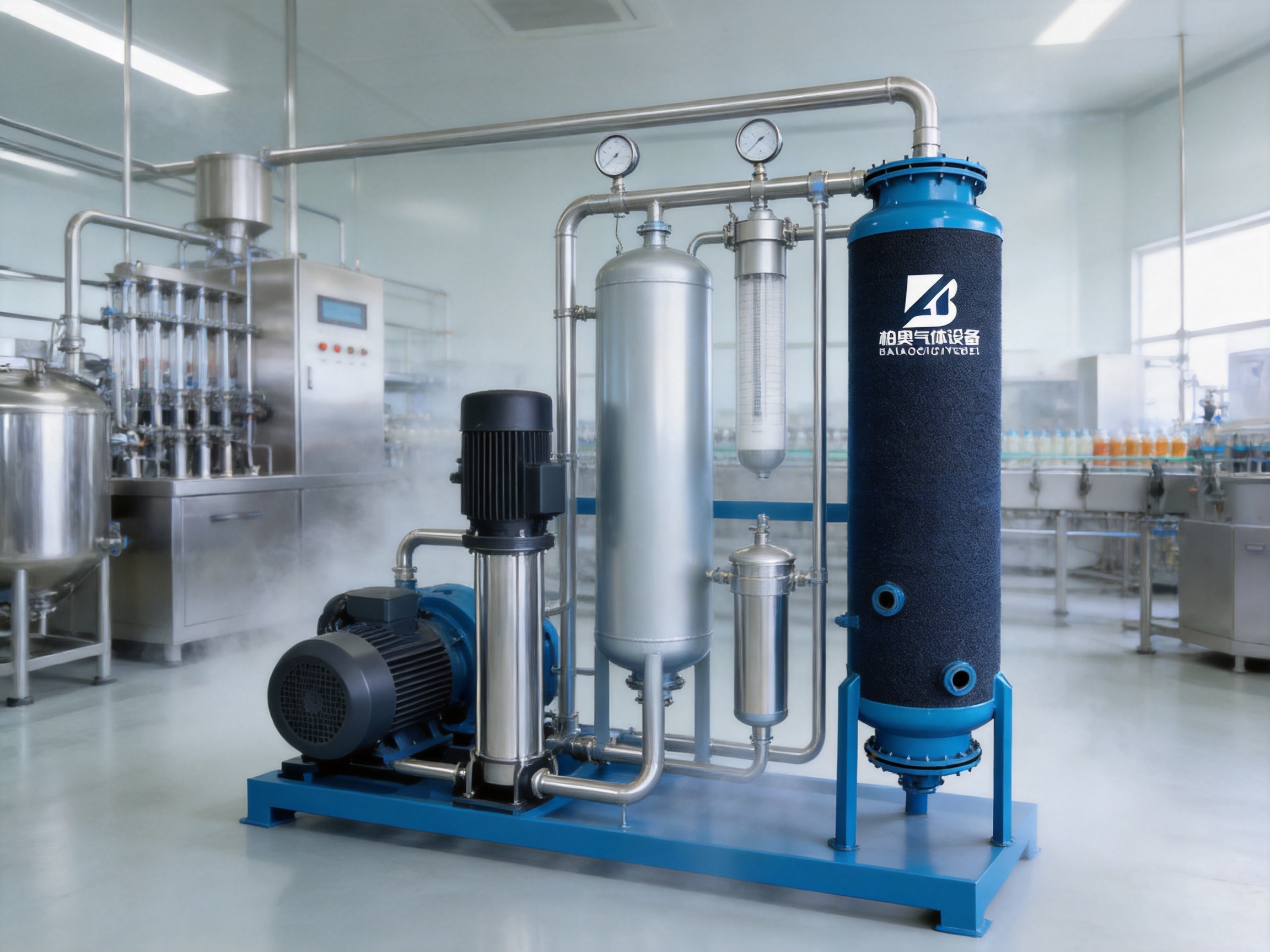
A typical compressed air purification system may include an air compressor, aftercooler, receiver, dryer, water separator, coalescing filters, activated carbon filter, and point-of-use filters. The exact arrangement depends on the compressor type, lubricant, air demand, ambient conditions, and process requirements.
A practical sequence may begin with cooling and bulk condensate removal. Next, a suitable particulate or coalescing filter can remove solid particles and liquid aerosols. The activated carbon filter is then installed downstream to adsorb residual oil vapor and odors. A final point-of-use filter may be used where the application requires additional local protection.
The BPC filter should not be used as a substitute for upstream condensate management. Liquid water and oil should be removed before the activated carbon element whenever possible. Excessive liquid loading can reduce adsorption efficiency, increase pressure drop, and shorten element life.
Pressure gauges or differential pressure indicators can help operators monitor filter condition. Isolation valves and bypass arrangements may support maintenance, although any bypass must be controlled carefully in sensitive applications. Where continuous production is essential, duplicate filter trains may be considered so that one unit can remain in service while the other is inspected.
Airflow and pressure considerations
The selected model should be based on actual operating flow under the relevant pressure conditions. Nominal compressor capacity alone may not represent the maximum air demand at the filter inlet. Peak demand, receiver charging cycles, pneumatic surges, and future production increases should be considered.
Oversizing can increase equipment cost and installation space, while undersizing may cause high velocity, increased pressure drop, and reduced contact time. A balanced design provides adequate capacity without making the filter unnecessarily large.
Temperature management
The inlet air temperature must remain at or below 50°C according to the stated specification. If the compressor produces hotter air, an aftercooler or other heat management equipment should be used before the activated carbon stage. Temperature sensors can be installed where process control requires verification.
Moisture control
Water vapor and liquid water can influence the performance of compressed air treatment equipment. A suitable dryer should be selected according to the required pressure dew point and ambient conditions. Drains, separators, and receivers should be maintained so that accumulated condensate does not carry over into the carbon filter.
Maintenance access
The installation should include enough space to remove and replace the filter element or service the housing. Operators should have access to pressure indicators, valves, drains, and connection points. Clear labeling of airflow direction and maintenance status can reduce operating errors.
Manufacturing Strengths and Engineering Capabilities
Zhejiang Baiao Gas Equipment Co., Ltd. is located in Fuyang District, Hangzhou, Zhejiang Province, China. The company integrates research and development, engineering design, production, installation, and after-sales service. This integrated structure is valuable for gas purification equipment because performance depends not only on the filter medium but also on housing design, flow distribution, pressure rating, connections, testing, installation, and maintenance support.
The company operates a 3,000-square-meter standardized workshop, a 500-square-meter office area, and a 500-square-meter warehouse. These facilities provide a foundation for coordinating production, technical management, component storage, finished equipment handling, and customer service.
A standardized workshop can support repeatable fabrication and assembly procedures. For pressure-related equipment, repeatability is important because dimensional accuracy, welding quality, surface treatment, connection alignment, and inspection practices all affect reliability. The manufacturing process should be managed so that each filter housing is built consistently according to the approved design and project requirements.
The company’s technical scope includes PSA nitrogen generators, PSA oxygen generators, membrane nitrogen and oxygen generators, QH and QC series nitrogen purification units, ammonia decomposition hydrogen purification units, and other gas separation and purification equipment. This broader portfolio gives the manufacturer experience with gas flow, adsorption, separation, pressure control, purification stages, and industrial utility integration.
Product development and adaptation
Baiao develops and optimizes equipment using overseas technologies adapted to industrial conditions in China. For customers, this indicates an engineering approach that combines established separation principles with practical adaptation to local operating environments, component availability, plant layouts, and service requirements.
Activated carbon filtration is not independent of the rest of a gas system. A manufacturer that understands gas generators and purification plants can evaluate how the BPC filter interacts with compressors, dryers, receivers, pipelines, nitrogen systems, oxygen systems, and point-of-use equipment. This system-level perspective can be useful when customers need more than a standalone housing.
Quality management focus
The company identifies strict quality control, technical improvement, energy efficiency, integrity, and reliable service as important operating principles. For industrial filtration equipment, quality management may include design review, material verification, fabrication inspection, dimensional checks, pressure-related testing, leak checks, functional verification, packaging control, and documentation.
Specific inspection records and certification packages should be agreed during the purchasing process. Customers with regulated applications should define their requirements in advance, including material traceability, pressure vessel documentation, factory acceptance testing, surface finish, seals, spare parts, and validation support.
Installation and after-sales support
Gas purification performance is influenced by installation quality. Incorrect flow direction, poor drainage, inadequate pre-filtration, excessive vibration, improper support, or insufficient maintenance access can reduce the value of a high-quality filter. Because Baiao provides installation and after-sales service, customers may obtain support beyond the initial equipment supply.
Service can include application consultation, model selection, system layout, installation guidance, commissioning assistance, troubleshooting, and replacement planning. The exact scope should be confirmed according to the project contract and site requirements.
How the Product Supports Energy-Conscious Operation
Compressed air is one of the more energy-intensive utilities in an industrial plant. Any component that creates unnecessary pressure drop can increase compressor energy consumption. For this reason, filter selection should balance purification performance with flow capacity and service condition.
The BPC series provides multiple capacity options, allowing the designer to avoid selecting an unnecessarily restrictive filter for a given air demand. Correct sizing, clean upstream filtration, and timely maintenance can help maintain stable airflow and reduce avoidable pressure losses.
Energy efficiency also depends on the complete compressed air system. Leaks, excessive pressure settings, poorly maintained dryers, blocked filters, and inappropriate end-use practices can consume more energy than the filter itself. The activated carbon filter should therefore be included in a plant-wide compressed air management program.
When the carbon medium becomes saturated or the filter becomes excessively loaded, purification performance and pressure behavior may deteriorate. A planned inspection and replacement program helps maintain performance. Operators should monitor operating conditions rather than relying only on a fixed calendar interval.
Operating and Maintenance Recommendations
The BPC filter should be operated within the stated pressure and temperature limits. The inlet should be protected from excessive liquid water, bulk oil, and large solid particles. Upstream filters should be inspected regularly, and automatic or manual drains should be checked to ensure that condensate is removed effectively.
Operators should record inlet pressure, outlet pressure, flow demand, temperature, and any available differential pressure readings. Changes in these values can indicate upstream problems, element loading, abnormal compressor carryover, or a shift in plant demand.
Odor checks, oil measurements, or laboratory analysis may be appropriate for critical applications. Monitoring requirements should be established according to the product risk and quality system. A filter that appears physically clean may still require replacement if its adsorption capacity has been consumed.
Replacement elements and service parts should be stored in clean, dry conditions. During maintenance, the system should be depressurized and isolated according to the plant’s safety procedures. New elements should be installed with correct sealing and orientation. After service, the housing should be checked for leaks before the treated air is returned to production.
The replacement interval depends on inlet contamination, air volume, temperature, operating pressure, upstream filtration, duty cycle, and the required outlet quality. There is no single interval that applies to every installation. A condition-based program is generally more reliable than replacing every element at the same time regardless of actual loading.
Project Selection Guidance
Before ordering a BPC Activated Carbon Filter, the user should prepare basic operating information. This should include compressor type, compressor lubricant, actual and peak flow, normal operating pressure, maximum pressure, inlet temperature, air quality requirement, upstream equipment, installation location, and available electrical or monitoring requirements.
The customer should also identify whether the air will contact food, beverages, pharmaceutical materials, packaging, instruments, or other sensitive products. The required documentation and validation level may vary significantly among these applications.
For centralized systems, engineers should consider whether one large filter or several parallel filters provide the better balance of redundancy, serviceability, and cost. For localized applications, a smaller point-of-use unit may reduce the amount of air requiring high-purity treatment. In both cases, the selected configuration should maintain the required airflow during normal and peak operating conditions.
Connection diameter, dimensions, weight, lifting access, foundation or support requirements, and maintenance clearance should be reviewed before installation. The equipment weight shown in the model table should be considered during transport and mounting design.
Frequently Asked Questions
What does the BPC Activated Carbon Filter remove?
The filter is designed to adsorb residual oil and odors in compressed air. Its stated outlet performance also includes an oil content of 0.003 ppm and an outlet particle size of no more than 0.1 micrometers when operated under suitable conditions and within a properly designed system.
Can the filter be installed directly after the compressor?
It should normally be installed after suitable upstream treatment. Class C, Class T, Class A, or comparable filters should be installed before it to remove larger particles, liquid aerosols, and other contaminants. The exact arrangement depends on the compressor and the required air quality.
What is the standard operating pressure?
The standard operating pressure range is 0.4–1.0 MPa. Models for 1.0–3.0 MPa are available. The required pressure rating should be confirmed when placing an order.
What is the maximum inlet air temperature?
The inlet air temperature should be no higher than 50°C. An aftercooler or other heat management equipment may be required if compressor discharge air exceeds this limit.
Which industries can use this product?
The product is suitable for compressed air purification systems in food, beverage, and pharmaceutical industries. It may also be used in other industrial applications that require reduced oil vapor, odor control, or cleaner compressed air.
How do I choose the correct model?
Model selection should be based on actual compressed air flow, peak demand, operating pressure, temperature, connection size, installation space, and required air quality. The rated capacities range from 1.2 Nm³/h to 220 Nm³/h. A technical review is recommended before final selection.
Why is upstream filtration important?
Upstream filtration protects the activated carbon medium from liquid oil, water, and solid particles. This helps preserve adsorption capacity, control pressure drop, and extend service life. The carbon stage is intended to polish the air rather than handle the entire contaminant load alone.
Does the filter remove all compressed air contaminants?
No single filter removes every type of contaminant under all conditions. The BPC unit is mainly intended for residual oil and odors, with fine particle filtration performance as specified. Moisture, bulk liquids, large particles, and other contaminants require appropriate upstream or downstream equipment.
How often should the activated carbon element be replaced?
The replacement interval depends on inlet contamination, temperature, flow, pressure, duty cycle, and upstream filtration. Operators should use operating records, differential pressure, outlet quality checks, and manufacturer guidance to establish a suitable maintenance interval.
Can the product be used in a customized purification system?
Yes. The filter can be incorporated into a broader compressed air or industrial gas purification system. Zhejiang Baiao Gas Equipment Co., Ltd. provides research and development, design, production, installation, and after-sales service, supporting projects that require integrated or customized equipment solutions.
What should be confirmed before purchase?
Users should confirm capacity, pressure rating, inlet temperature, connection diameter, dimensions, weight, filter sequence, material requirements, documentation, spare parts, installation conditions, and maintenance access. Dimensions and any unusual entries in a technical schedule should be verified against the final manufacturer drawing.
Conclusion
The BPC Activated Carbon Filter provides a dedicated adsorption stage for compressed air systems that require reduced residual oil and odor. Its activated carbon fiber medium distinguishes it from basic particulate filters and supports the treatment of contaminants that may remain after mechanical separation and coalescing filtration.
With operating pressure options from 0.4–1.0 MPa and 1.0–3.0 MPa, inlet temperature suitability up to 50°C, an outlet oil content specification of 0.003 ppm, and rated capacities from 1.2 Nm³/h to 220 Nm³/h, the series can serve a wide range of industrial requirements. Its compatibility with Class C, Class T, Class A, and other upstream filters makes it suitable for staged compressed air purification.
The product is particularly relevant to food, beverage, pharmaceutical, packaging, and other contamination-sensitive applications. Its performance depends on correct model selection, proper upstream treatment, temperature control, moisture management, and regular maintenance.
Zhejiang Baiao Gas Equipment Co., Ltd. strengthens the product offering through integrated engineering capabilities, a standardized manufacturing workshop, gas separation expertise, installation services, and after-sales support. For customers seeking more than a standalone filter, this combination can provide a practical foundation for complete compressed air and industrial gas purification projects.
References
1. Product technical information for the BPC Activated Carbon Filter, including operating conditions, filtration performance, model capacities, dimensions, and weights.
2. Manufacturer profile and corporate information for Zhejiang Baiao Gas Equipment Co., Ltd., including manufacturing facilities, product scope, engineering capabilities, and service activities.
3. General principles of activated carbon adsorption in compressed air and industrial gas purification systems.
4. General engineering practices for compressor aftercooling, condensate separation, coalescing filtration, adsorption filtration, and point-of-use compressed air treatment.
5. General maintenance principles for industrial filter housings, adsorption media, pressure systems, and compressed air quality control.
Product: BPC Activated Carbon Filter

- Tel: +86-15057127179
+86-13588382771 - Email: huang.yifan0215@gmail.com
- Address: Huanshan Township, Fuyang District, Hangzhou City, Zhejiang Province
Copyright © Zhejiang Baiao Gas Equipment Co., Ltd. All Rights Reserved.
Privacy
Gas Generator Plant Manufacturer, Industrial Purification Equipment Plant
