 en
en русский
 Español
 عربى
عربى
Electric Portable Air Compressors for Reliable Industrial Air Supply
Industrial production depends on a stable supply of compressed air. In many factories, construction projects, maintenance operations, and mobile processing facilities, compressed air powers pneumatic tools, actuators, control systems, cleaning equipment, material handling devices, and specialized process machinery. When the air source is unstable, oversized, difficult to move, or expensive to maintain, the entire operation can suffer from reduced productivity and higher operating costs.
The electric portable air compressor is designed to address these challenges by combining the efficiency of electric drive technology with the mobility and flexibility normally associated with portable equipment. With a working pressure range of approximately 8 to 24 bar, an air capacity of 5 to 30 m³/min, and a motor power range of 30 to 250 kW, this product family can serve a broad selection of industrial applications. It is suitable for users who require dependable compressed air but do not want to install a large permanent compressor station for every operating location.
Unlike simple workshop compressors intended for intermittent use, this industrial portable compressor is designed around continuous-duty operating requirements. Its rotary screw configuration, compact structure, high automation, and adaptable performance allow it to support production environments where compressed air quality, pressure stability, and equipment availability are important. The product can also be configured with different displacement and pressure combinations so that the compressor matches the actual requirements of a project rather than forcing the customer to accept a one-size-fits-all solution.
This article explains the design advantages, performance characteristics, manufacturing strengths, application value, operation requirements, and selection considerations associated with the electric portable air compressor. It also describes why the equipment can offer practical advantages over less flexible alternatives, including fixed compressors with limited mobility, low-duty reciprocating units, and portable machines that are not designed for demanding industrial conditions.
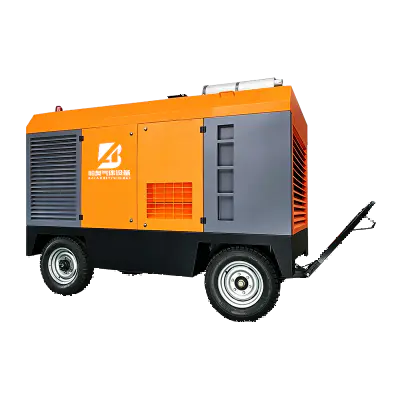
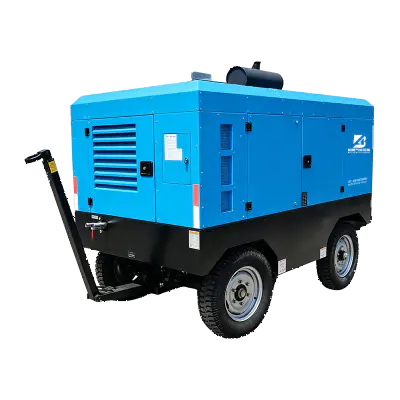
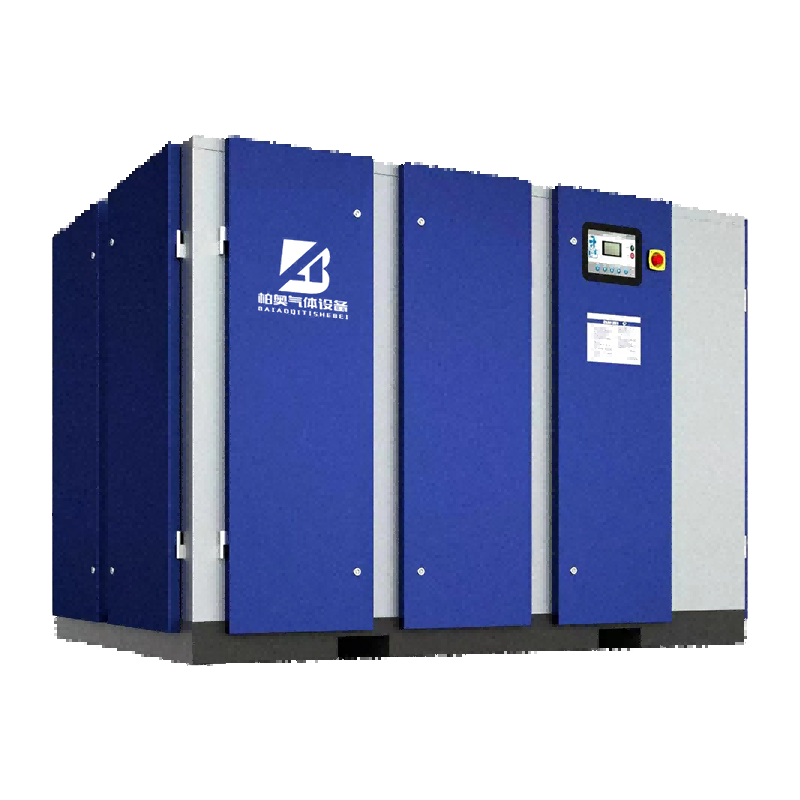
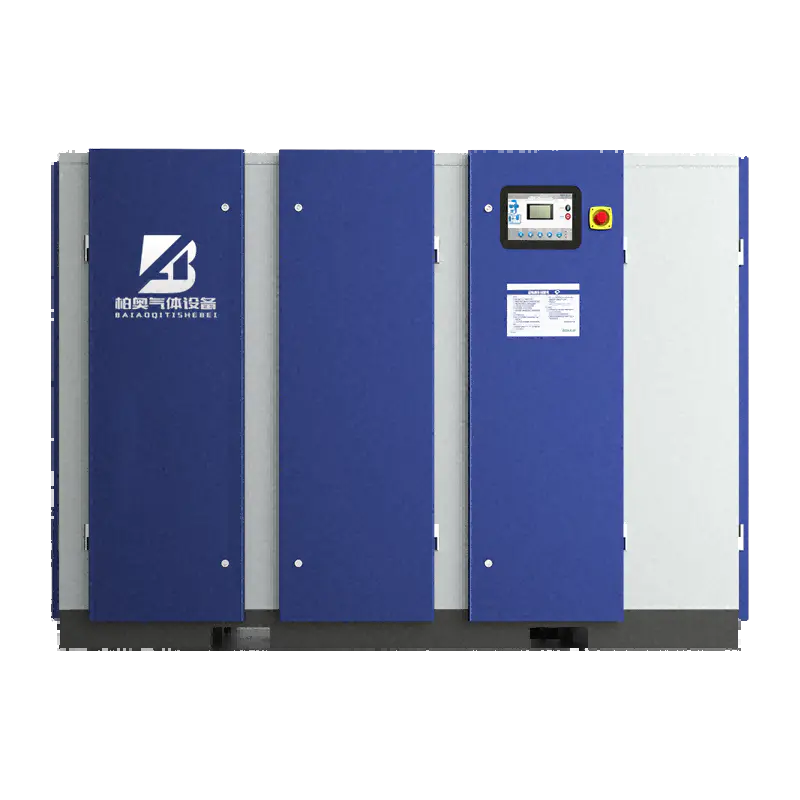
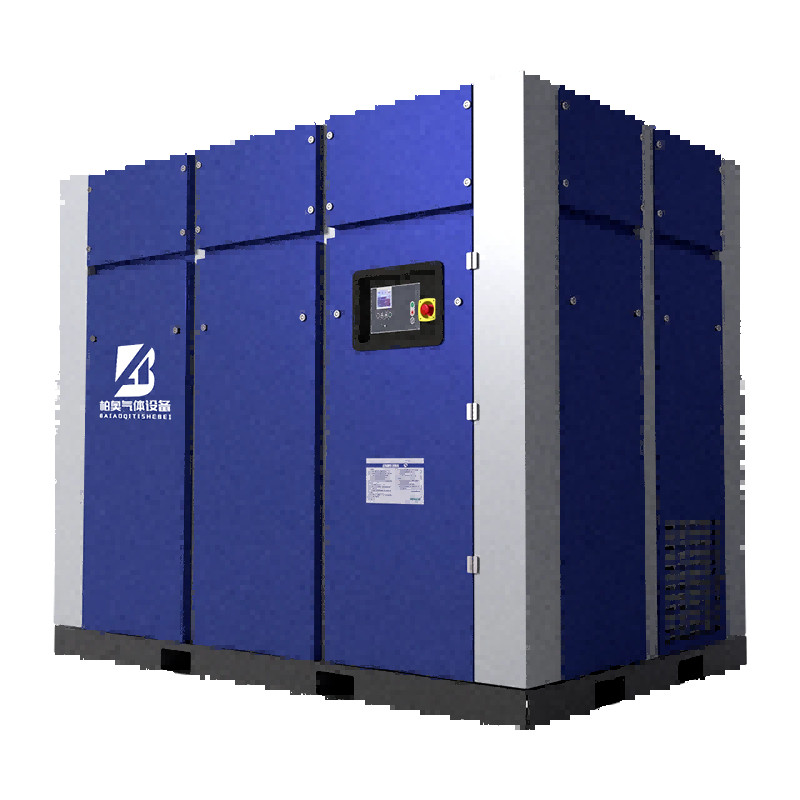
Electric Portable Air Compressor (8-18 Bar)
Content
- 1 Product Overview and Operating Range
- 2 Rotary Screw Technology for Continuous Industrial Service
- 3 Key Advantages Over Conventional Alternatives
- 4 Manufacturing Capabilities and Quality Strengths
- 5 Energy and Operating Efficiency Considerations
- 6 Applications Across Industrial Sectors
- 7 Installation and System Integration
- 8 Maintenance Practices for Long-Term Reliability
- 9 How to Select the Correct Model
- 10 Advantages of a Customized Product Series
- 11 Why Manufacturer Support Matters
- 12 Safety and Responsible Operation
- 13 Environmental and Practical Benefits of Electric Operation
- 14 Comparison with Other Compressor Types
- 15 Frequently Asked Questions
- 15.1 What pressure range is available?
- 15.2 What air capacity can the compressor provide?
- 15.3 What motor power options are available?
- 15.4 Is this compressor suitable for continuous operation?
- 15.5 Does the compressor require a special foundation?
- 15.6 How does the product compare with a reciprocating compressor?
- 15.7 Can the compressor be customized?
- 15.8 Can it be used with PSA nitrogen or oxygen equipment?
- 15.9 What industries can use this product?
- 15.10 What maintenance does the compressor require?
- 15.11 Is an air dryer required?
- 15.12 What information should be provided when requesting a quotation?
- 16 Conclusion
- 17 References
- 18 Product: Electric Portable Air Compressor (8-18 Bar)
Product Overview and Operating Range
The electric portable air compressor is an industrial compressed-air system built for mobility, reliable operation, and flexible deployment. The main product category is a portable rotary screw air compressor, with power options extending from 30 kW to 250 kW. Depending on the selected configuration, the unit can provide an air delivery rate from 5 m³/min to 30 m³/min and a working pressure from 8 bar to 24 bar.
These operating parameters make the compressor suitable for applications requiring considerably more air than a small workshop machine can deliver. At the same time, its portable design avoids the permanent installation requirements associated with a large central compressor room. Users can move the equipment between production lines, construction areas, maintenance zones, and temporary facilities as demand changes.
The stated air capacity is expressed as free air delivery, or FAD. This provides a practical basis for comparing the usable output of different compressor models. Since actual performance depends on pressure, ambient conditions, cooling arrangements, altitude, and system configuration, the final model should always be selected according to the operating point required by the customer.
Parameter |
Metric Range |
Approximate Imperial Range |
Selection Significance |
Working Pressure |
8–24 bar |
116.0–348.1 psig |
Determines the pressure available for tools, process equipment, and pneumatic systems |
Air Capacity, FAD |
5–30 m³/min |
176.6–1,059.4 cfm |
Indicates the volume of free air delivered by the selected model |
Motor Power |
30–250 kW |
40.2–335.3 hp |
Supports different combinations of pressure, capacity, and operating duty |
Compressor Type |
Electric rotary screw |
Industrial portable configuration |
Provides continuous-duty suitability and smooth compressed-air production |
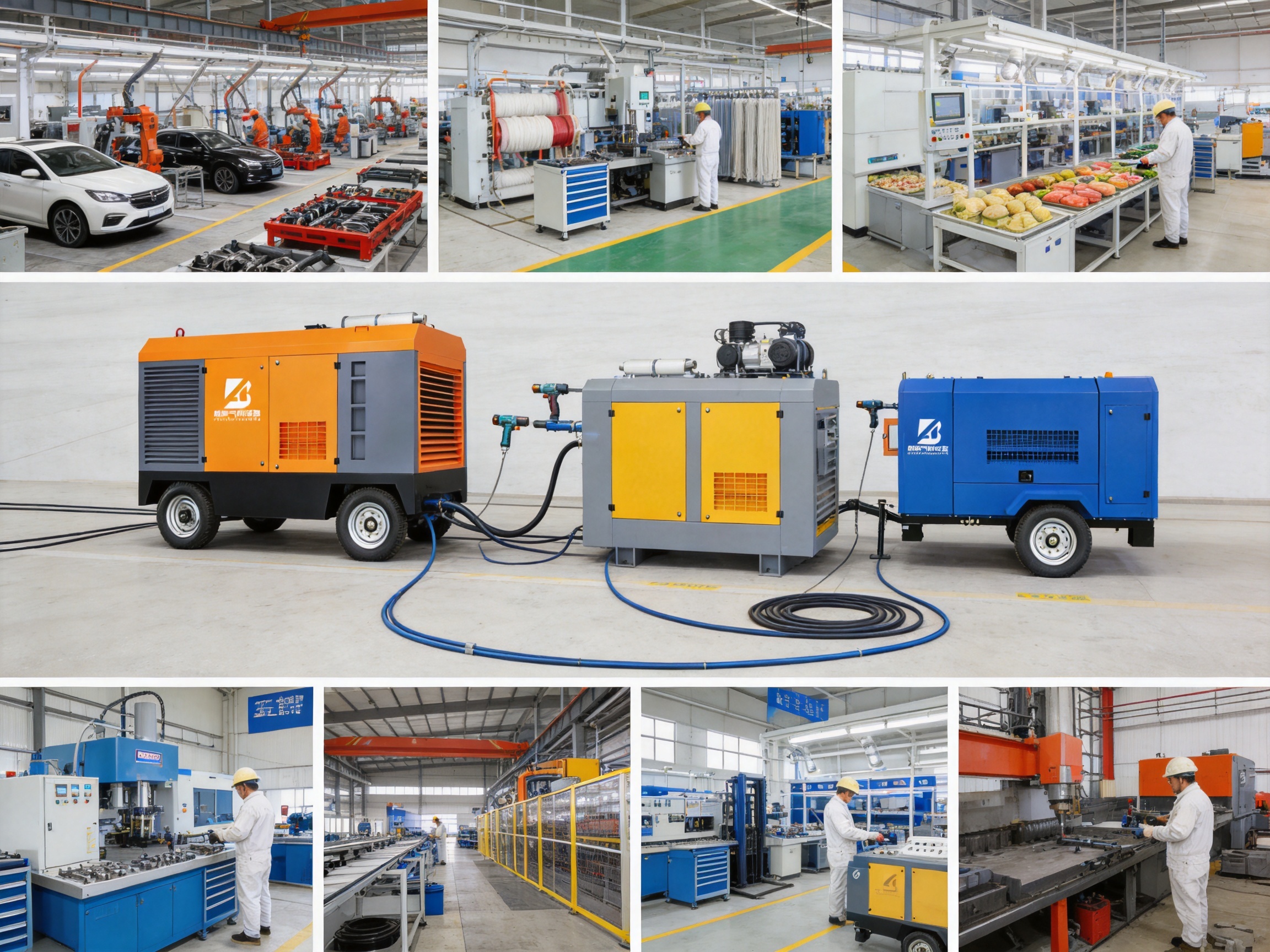
The product range is not limited to a single fixed model. Each basic model can be developed into a series with different displacement and discharge-pressure combinations according to user requirements. This is important for industrial buyers because pressure and flow requirements vary widely. A textile plant may need stable air for process control and pneumatic devices, while an automotive manufacturing line may require a higher volume of clean air for assembly tools. A construction or maintenance project may prioritize mobility and a compact footprint.
Rotary Screw Technology for Continuous Industrial Service
The core of the compressor is a rotary screw air-end. In a rotary screw machine, air is compressed through the progressive reduction of volume between rotating screw elements. This operating principle produces a relatively steady flow of compressed air and avoids the strong pulsations commonly associated with reciprocating compressors.
For industrial users, a continuous and stable air stream can be valuable in several ways. Pneumatic tools can operate more consistently, control systems experience fewer pressure fluctuations, and production equipment is less likely to be affected by repeated changes in air availability. A stable flow also simplifies the design of downstream air receivers, filters, dryers, and distribution piping.
Rotary screw compressors are particularly suitable for applications that require extended operating periods. Their design does not rely on a large number of reciprocating components moving back and forth at high frequency. As a result, the machine can operate smoothly at high speed while maintaining a compact structure. The absence of substantial unbalanced inertial forces also supports the portable design.
The compressor’s operating concept is based on forced gas transmission. Within the normal operating range, volumetric flow is less dependent on discharge pressure than it would be in some other compression arrangements. This characteristic gives the equipment a broad operating adaptability. The compressor can be selected for different pressure requirements while retaining useful efficiency across a wide speed range, provided that the machine is operated within its rated conditions.
Rotary screw technology also supports the product’s industrial positioning. A small reciprocating compressor may be affordable for occasional workshop use, but it may not be the best choice for a high-demand production environment. Reciprocating units can produce more vibration and pulsation, occupy more space for a comparable industrial duty, and require attention to wear components such as piston rings, valves, and connecting mechanisms. The portable rotary screw design offers a more suitable alternative where stable, long-duration service is required.
Key Advantages Over Conventional Alternatives
High Reliability and Long Service Potential
One of the principal advantages of the compressor is its simplified mechanical structure. The product is described as having few components and no wearing parts in the primary compression mechanism. This reduces the number of elements that may require frequent replacement and supports dependable operation over a long service period.
The stated overhaul interval can reach approximately 40,000 to 80,000 hours, depending on model, operating conditions, maintenance practices, and the quality of air and electrical supply. This figure should be understood as a design and service reference rather than a guarantee for every installation. Proper lubrication, filtration, cooling, inspection, and operating discipline remain essential for achieving a long service life.
Compared with a low-cost compressor designed primarily for occasional operation, the industrial rotary screw configuration can provide a stronger foundation for continuous service. Reduced mechanical wear may also lower the frequency of major maintenance interventions. For an operation that cannot easily stop production, avoiding unexpected shutdowns can be more valuable than the initial purchase price alone.
Convenient Operation and Maintenance
The product is designed with a high degree of automation. This allows operators to start, monitor, and manage the compressor without requiring long-term specialist training. Automated controls can simplify routine operation and make it easier to integrate the compressor into an industrial workflow.
Operational convenience is especially important when the unit is deployed at multiple locations. A portable machine may be used by different teams, moved between production areas, or installed temporarily for a project. Clear control functions and automated operating logic reduce the possibility of incorrect adjustment by inexperienced personnel.
Automation does not eliminate the need for maintenance. Operators must still follow the recommended schedule for checking filters, lubrication systems, electrical components, safety devices, cooling surfaces, and connections. However, automation can reduce the complexity of daily operation and provide a more repeatable user experience than a manually controlled machine.
Smooth High-Speed Operation Without a Permanent Foundation
The compressor has a favorable power balance because it does not generate significant unbalanced inertial forces during normal operation. This supports smooth running at high speed and helps reduce the need for a special foundation. For portable applications, this is a major practical advantage.
A fixed compressor station may require reinforced floors, vibration isolation, dedicated utility connections, ventilation arrangements, and permanent piping. These requirements increase installation time and reduce flexibility. By contrast, a portable compressor can be positioned where it is needed, connected to the appropriate electrical supply and air piping, and placed into service with less structural preparation.
The absence of a substantial foundation requirement does not mean that the equipment can be placed without planning. The installation surface should be stable, level, adequately ventilated, and suitable for the equipment’s weight. Access for maintenance and safe routing of electrical cables and compressed-air lines should also be provided. Nevertheless, the simplified installation arrangement can significantly reduce project preparation compared with a permanent compressor room.
Small Volume, Light Weight, and Compact Footprint
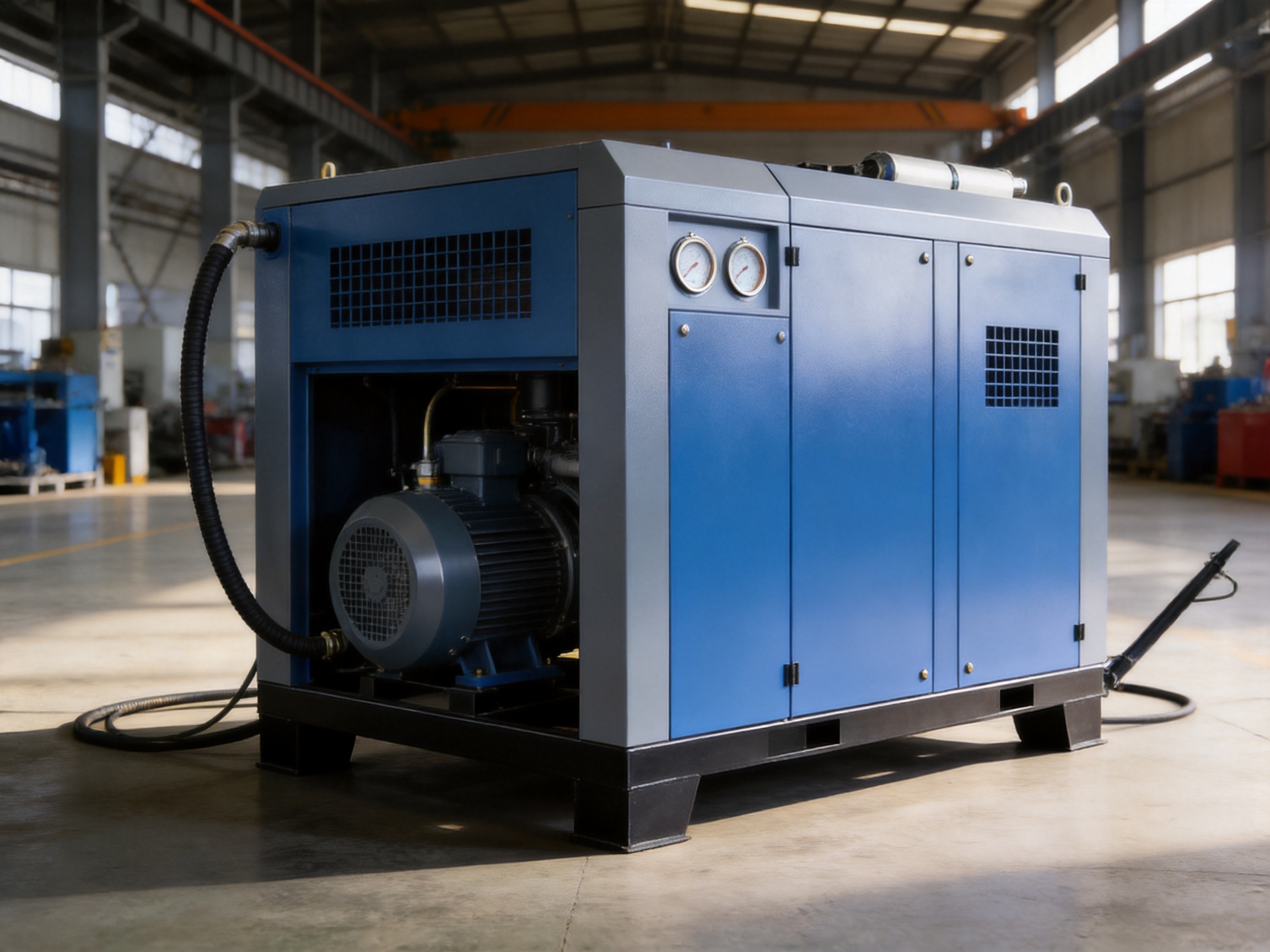
Mobility is more than the ability to move a machine from one location to another. A truly useful portable compressor must combine a manageable footprint with sufficient industrial capacity. The product’s compact structure and balanced design make it suitable for locations where available floor space is limited.
A smaller footprint can be helpful in temporary production facilities, maintenance workshops, construction compounds, equipment rooms, and process areas with restricted access. It can also reduce the amount of auxiliary infrastructure needed around the compressor. A compact unit leaves more room for air receivers, dryers, filters, electrical panels, or other production equipment.
The portable format can also improve asset utilization. Instead of installing a separate compressor for every area, an organization may transfer one suitably configured machine between different work zones when demand changes. This can help reduce underused equipment and provide a more flexible response to seasonal or project-based requirements.
Strong Adaptability Across Pressure and Flow Requirements
The compressor is available across a broad range of operating pressures and air capacities. The 8–24 bar pressure range allows the product family to support ordinary industrial compressed-air applications as well as higher-pressure duties that exceed the capability of many general-purpose workshop machines.
The 5–30 m³/min capacity range also allows users to select a machine according to actual demand. Correct sizing is important. A compressor that is too small may run continuously at maximum load and fail to maintain pressure. A compressor that is too large may operate inefficiently at low utilization and create unnecessary capital and energy costs.
The ability to configure each basic model for different displacement and discharge-pressure combinations is an advantage over standardized products with limited options. Industrial users can communicate their required air flow, pressure, duty cycle, ambient conditions, power supply, and mobility needs so that the equipment can be matched more closely to the application.
Manufacturing Capabilities and Quality Strengths
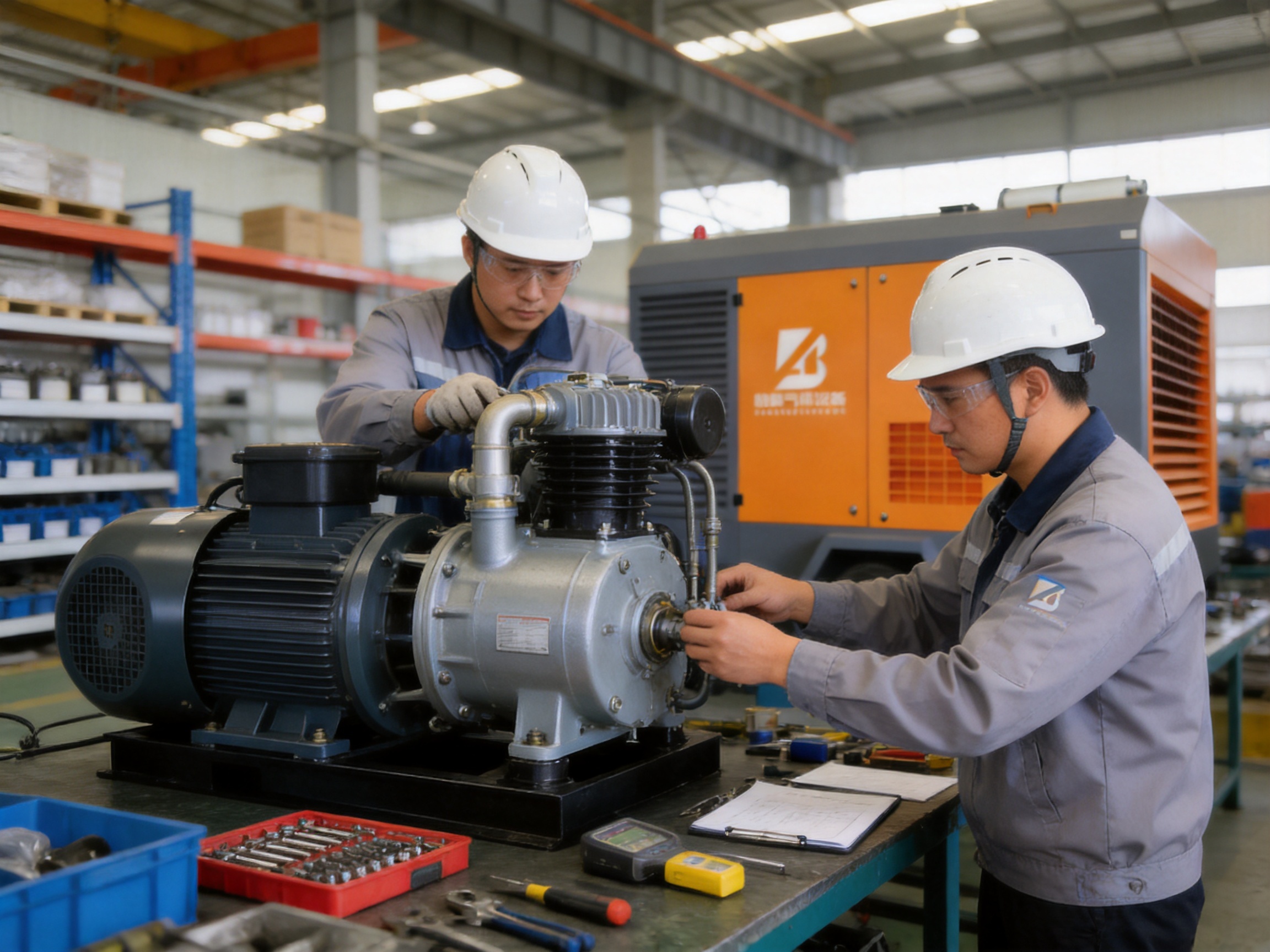
The equipment is manufactured by Zhejiang Baiao Gas Equipment Co., Ltd., a gas equipment manufacturer based in Fuyang District, Hangzhou, Zhejiang Province, China. The company integrates research and development, engineering design, production, installation, and after-sales service. This integrated structure is important for industrial equipment because performance depends not only on the compressor itself but also on correct system design, installation, commissioning, and ongoing support.
The company operates a standardized workshop of approximately 3,000 square meters, an office area of approximately 500 square meters, and a warehouse of approximately 500 square meters. These facilities provide separate space for manufacturing operations, engineering coordination, component management, finished equipment handling, and customer service activities.
A standardized workshop supports process organization. Industrial equipment assembly requires clear production routes, appropriate tools, controlled component storage, electrical and mechanical inspection, and orderly final testing. A dedicated warehouse can help protect parts and finished products from unnecessary handling while improving the traceability of materials used during production.
The company’s technical scope includes gas separation and purification equipment as well as industrial compressed-air equipment. Its product portfolio includes PSA nitrogen generators, PSA oxygen generators, membrane nitrogen and oxygen generators, nitrogen purification units, and ammonia decomposition hydrogen purification units. This wider gas-equipment background can be beneficial when an electric portable compressor is used as part of a complete gas-generation or purification system.
For example, a PSA nitrogen generator requires a reliable compressed-air source with suitable flow, pressure, and stability. A compressor supplier that understands both compressed-air production and gas purification can better evaluate the relationship between the compressor and the downstream system. The same principle applies to oxygen generation, membrane separation, and nitrogen purification applications, where air quality, pressure stability, and operating continuity are important.
Research and Development Integration
Research and development is integrated into the company’s business structure rather than treated as a separate activity disconnected from production. This enables feedback from installation, commissioning, and customer operation to influence future designs. A product intended for industrial use must be adapted to real operating conditions, including variable ambient temperatures, different electrical standards, dust exposure, long working hours, and space limitations.
The company develops equipment using overseas technologies and optimizes it for industrial conditions in China. The practical value of this approach lies in combining established technical concepts with local engineering adaptation. Technology must be converted into a product that can be manufactured consistently, serviced effectively, and configured for the customer’s actual operating environment.
For the electric portable compressor, development priorities include compactness, mechanical balance, reliability, automation, and the ability to provide different pressure and displacement combinations. These priorities correspond directly to the requirements of mobile industrial air supply.
Design and Production Coordination
Design and production coordination can reduce the gap between a theoretical design and a practical product. A compressor may perform well on paper but still create difficulties if its components are hard to assemble, inspect, service, or replace. Production-oriented engineering encourages attention to access panels, component arrangement, piping routes, wiring organization, cooling airflow, and transport considerations.
For a portable machine, these factors are especially significant. The compressor must be compact without making maintenance unnecessarily difficult. It must be light and balanced enough for movement while still containing the pressure vessels, air-end, motor, control system, cooling components, and protective structure required for industrial operation.
The company’s integrated production approach allows engineering personnel to consider the entire equipment lifecycle. This includes initial manufacturing, factory inspection, shipment, installation, commissioning, operator training, routine maintenance, and after-sales service. Such coordination can improve the consistency of the customer experience.
Quality Control and Service Orientation
Strict quality control is identified as one of the company’s operating commitments. In industrial compressor manufacturing, quality control should include incoming component inspection, dimensional verification, assembly checks, electrical testing, pressure-related inspection, control-system verification, and final operational testing.
Quality is not limited to the performance of the air-end. The motor, coupling or drive arrangement, control panel, pressure sensors, valves, filters, cooling system, safety devices, frame, and enclosure all influence reliability. A defect in any one of these areas can affect the complete machine. An organized inspection process therefore helps ensure that the final compressor operates as an integrated system.
After-sales service is another important strength. Portable compressors may operate at customer locations far from the manufacturer’s primary facility. Technical support, installation guidance, troubleshooting, spare-parts coordination, and maintenance advice can directly influence uptime. A manufacturer that provides installation and after-sales service is better positioned to support the product after delivery than a supplier focused only on equipment shipment.
Energy and Operating Efficiency Considerations
Electric drive technology offers practical advantages for facilities with access to a reliable electrical supply. Compared with diesel-driven portable compressors, electric units can avoid on-site fuel storage, engine exhaust, fuel handling, and routine engine maintenance. They can also be more suitable for enclosed production areas where exhaust emissions are undesirable or restricted.
Energy efficiency depends on the complete operating system rather than on the motor alone. The selected pressure, air demand profile, inlet conditions, control strategy, leakage rate, cooling arrangement, and maintenance condition all affect energy consumption. Users should therefore choose the compressor based on actual demand and avoid operating at a pressure higher than necessary.
The product’s forced gas transmission principle supports useful efficiency across a wide speed range. This gives the machine adaptability when operating requirements vary. Even so, customers should provide accurate information about average flow, peak flow, working pressure, operating hours, and future expansion. Proper sizing remains one of the most effective ways to reduce compressed-air energy costs.
Air leakage is another major operating concern. A high-capacity compressor may be required to compensate for leaking hoses, fittings, valves, or distribution lines. Before increasing compressor capacity, users should inspect and repair the air network. The portable compressor can provide the required supply, but system efficiency depends on the condition of all downstream equipment.
Maintenance also affects energy use. Blocked filters, dirty coolers, degraded lubricant, poor ventilation, and incorrect pressure settings can force the compressor to work harder. A planned maintenance program helps protect performance and supports the long service potential of the equipment.
Applications Across Industrial Sectors
Petrochemical and Process Industries
Petrochemical facilities often use compressed air for pneumatic instrumentation, valve actuation, maintenance tools, cleaning, and supporting process systems. A portable electric compressor can provide supplementary air during maintenance, expansion, commissioning, or temporary operation.
In these environments, the equipment must be selected with attention to electrical safety, ambient conditions, ventilation, air quality, and site regulations. The pressure and flow should correspond to the connected tools or process equipment. Where compressed air is used for instrumentation or sensitive processes, suitable filtration and drying equipment may also be required.
Textile Manufacturing
Textile plants use compressed air in automation, pneumatic controls, yarn processing, weaving, spinning, cleaning, and material handling. Stable air pressure can help maintain consistent machine operation and reduce interruptions caused by pressure fluctuations.
The electric portable format can be valuable during production-line changes, equipment relocation, plant expansion, or maintenance. A unit can support a temporary production area without requiring a permanent compressor-room expansion. Its compact footprint is also helpful in facilities where floor space is occupied by looms, spinning equipment, storage, and material-handling systems.
Food Processing
Food-processing plants use compressed air for packaging machines, pneumatic actuators, filling systems, conveyors, cleaning operations, and control equipment. In applications where compressed air may contact products or packaging, air treatment requirements must be assessed carefully. The compressor itself should be paired with appropriate filters, dryers, separators, and hygienic distribution components.
Electric operation can be advantageous in indoor food-processing facilities because it avoids combustion exhaust at the point of use. The compressor should still be installed in a clean, ventilated location and maintained according to a documented schedule.
Automotive Manufacturing
Automotive factories use compressed air for assembly tools, robotic systems, paint-related equipment, clamping devices, inspection equipment, and production-line automation. Different sections of a plant may have different pressure and flow demands, especially during installation or line modification.
A portable compressor can supply air during commissioning, emergency support, maintenance, or temporary expansion. Its available power range allows users to choose a capacity appropriate for a small assembly zone or a larger industrial requirement. Stable rotary screw output can also support tools and equipment that require more consistent air than a pulsating compressor can provide.
Heat Treatment
Heat-treatment operations may use compressed air for pneumatic controls, burners, material-handling systems, instrumentation, and maintenance. The operating environment may include elevated temperatures, dust, and extended production schedules. The compressor should therefore be installed with appropriate ventilation and protection from excessive ambient heat.
Reliable air delivery can help maintain the operation of automated valves and control systems. During furnace maintenance or plant modifications, the portable form allows compressed-air capability to be moved closer to the work area, subject to safety and installation requirements.
SMT Electronics and Precision Manufacturing
Surface-mount technology and electronics manufacturing use compressed air in pick-and-place equipment, pneumatic actuators, assembly systems, cleaning processes, and factory automation. These applications may place greater emphasis on air cleanliness, pressure stability, moisture control, and low interruption rates.
The electric portable compressor can support temporary lines, equipment testing, factory expansion, or maintenance work. When used in sensitive electronics applications, the compressor should be integrated with the appropriate air-treatment system and installed in a way that prevents contamination from the surrounding environment.
Construction and Field Maintenance
Construction and maintenance projects often change location as work progresses. A fixed compressor may be impractical when air demand shifts between buildings, floors, workshops, or outdoor work zones. A portable electric unit can be positioned closer to the point of use, reducing the length of temporary air hoses and helping maintain useful pressure at pneumatic tools.
Site planners should verify that the project has adequate electrical capacity and suitable protection for the compressor. The machine should be kept away from standing water, excessive dust, unstable ground, and locations where cables or air hoses may create safety hazards.
Installation and System Integration
Correct installation is essential to achieve reliable compressor performance. Before delivery, users should confirm the available electrical voltage, frequency, phase arrangement, protection devices, cable capacity, and grounding provisions. The selected power supply must be compatible with the motor and control system specified for the compressor.
The installation area should have sufficient ventilation to remove heat generated during compression and motor operation. Restricted airflow can raise operating temperature, reduce efficiency, and shorten the service life of lubricants and components. The area should also provide enough space around access panels so that technicians can perform inspections and maintenance safely.
The compressor should be placed on a stable and level surface. Although the machine is designed to operate without a large permanent foundation, the supporting surface must still be capable of carrying the equipment and limiting movement. The unit should not be placed where vibration from other machinery, flooding, corrosive chemicals, or excessive dust may interfere with operation.
Compressed-air piping should be designed to minimize pressure loss. Sharp bends, undersized hoses, restrictive fittings, and unnecessary length can reduce the pressure available at the point of use. An air receiver may be used to help manage demand fluctuations, while filters and dryers can improve air quality where required.
For gas-generation systems, the compressor should be evaluated as part of the complete process. PSA and membrane equipment require a suitable air supply with adequate pressure, flow, and cleanliness. A compressor that appears adequate based only on its rated capacity may not perform properly if the downstream system requires a specific pressure stability or air-treatment condition.
Maintenance Practices for Long-Term Reliability
The compressor’s limited number of primary wearing components can reduce maintenance burden, but routine inspection remains necessary. A preventive maintenance plan should be adapted to operating hours, ambient conditions, load profile, and manufacturer recommendations.
Operators should regularly inspect the inlet filter and replace or clean it as appropriate. A restricted inlet can reduce performance and increase the energy required to produce the same output. Filters should be inspected more frequently in dusty environments, including construction sites and workshops with significant airborne particles.
Cooling surfaces should be kept clean and unobstructed. Dust accumulation on coolers can limit heat transfer and cause excessive operating temperatures. Adequate ventilation around the compressor is equally important. The operating area should not allow hot discharge air to circulate back into the intake or cooling path.
Lubrication should be checked according to the specified service procedure. The correct lubricant type, cleanliness, and replacement interval are essential for rotary screw equipment. Mixing incompatible lubricants or extending service intervals without technical justification may damage the air-end and reduce service life.
Electrical connections, control panels, sensors, and protection devices should be inspected by qualified personnel. Loose terminals, damaged cables, moisture, or incorrect settings can affect safety and reliability. Any abnormal noise, vibration, temperature, pressure behavior, or repeated alarm should be investigated promptly rather than ignored.
Air hoses and piping should also be inspected. Leaks can create a continuous and unnecessary load on the compressor. Repairing leaks may reduce energy consumption and improve pressure stability more effectively than simply increasing the compressor’s output setting.
How to Select the Correct Model
Model selection should begin with a clear description of the application. The user should identify all connected equipment, the required operating pressure, the average air consumption, the peak air demand, the expected operating hours, and whether several devices will operate simultaneously.
The working pressure should be selected carefully. If the process requires 8 bar, operating the entire system at a substantially higher pressure may waste energy. If the application requires 20 bar or more, a lower-pressure machine may fail to meet the demand even if its air capacity appears adequate. Pressure and flow must therefore be considered together.
Air demand should include both normal and peak conditions. A machine selected only for average demand may struggle when several pneumatic tools start at the same time. On the other hand, excessive oversizing can lead to inefficient operation. An air receiver, staged operation, or a second compressor may be appropriate for installations with large variations in demand.
Electrical infrastructure is another selection factor. A 30 kW compressor and a 250 kW compressor have very different requirements for incoming power, cables, switchgear, protection, and installation space. Customers should confirm that the intended location can support the chosen model before placing an order.
Mobility requirements should also be defined. Some users may need to move the compressor frequently, while others may only need a compact unit that can be relocated during plant expansion. Access width, floor loading, lifting arrangements, transport methods, and connection points should be considered during the planning stage.
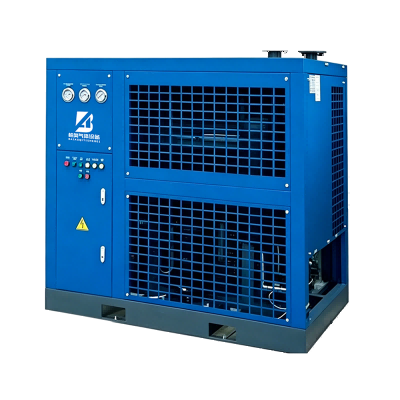
Air quality requirements must be communicated clearly. General pneumatic tools, instrumentation, food processing, pharmaceutical operations, electronics manufacturing, and gas-generation systems may require different levels of filtration and drying. The compressor should be specified together with compatible downstream air-treatment equipment.
Advantages of a Customized Product Series
A configurable product series provides advantages for both manufacturers and customers. Customers can request a pressure and capacity combination that more closely matches their process. This may help avoid the inefficiencies associated with selecting a standard unit that is too large or too small.
Customization can also support different industry conditions. A compressor for a clean indoor factory may require a different enclosure or protection arrangement from a machine intended for a dusty maintenance area. Electrical standards, ambient temperatures, site altitude, transport arrangements, and control requirements may vary from one project to another.
For the manufacturer, a modular product platform can improve engineering efficiency and component consistency. Common design elements may be used across several models while the air capacity, pressure rating, motor power, or auxiliary equipment is adjusted according to the application. This can support a balance between customization and repeatable production.
The available power range from 30 kW to 250 kW gives the product family broad coverage. A customer may begin with a smaller unit for a limited production area and later select a larger model when capacity needs increase. The manufacturer can use the same general technical approach across different sizes while adapting the final configuration to the project.
Why Manufacturer Support Matters
Industrial compressor performance depends on more than nameplate specifications. Installation errors, incorrect pipe sizing, poor ventilation, unsuitable air treatment, and inadequate maintenance can prevent a technically capable compressor from delivering reliable service. Manufacturer support helps reduce these risks.
Because the company combines design, production, installation, and after-sales service, it can assist customers through multiple stages of the project. Technical discussions can begin with application analysis and model selection. They can continue through equipment configuration, delivery preparation, installation guidance, commissioning, operator instruction, and maintenance support.
The company’s experience with gas separation and purification systems is also relevant for customers requiring a complete industrial gas solution. A compressor may be supplied as an independent air source or integrated with nitrogen, oxygen, or purification equipment. Understanding the interaction among these systems can improve the overall design.
The company serves industries including petrochemical, textile, food processing, automotive manufacturing, heat treatment, and SMT electronics. Its sales network covers more than 30 provinces and cities in China, and its products are also exported to international markets. This breadth of application experience can help the manufacturer understand different operating environments and customer expectations.
Customer trust in industrial equipment is built through consistent performance, responsive communication, transparent technical information, and dependable service. The company identifies integrity, responsibility, innovation, inclusiveness, professional value creation, cooperation, and mutual development as important corporate values. These principles are relevant to long-term equipment projects because a compressor may remain in service for many years after its initial purchase.
Safety and Responsible Operation
Compressed air contains stored energy and must be treated as a potentially hazardous utility. Operators should never direct compressed air toward people, use it to clean clothing or skin, or modify pressure-relief devices. Hoses, fittings, receivers, and piping should be rated for the intended pressure and inspected regularly.
Electrical safety is equally important. Installation and service should be performed by qualified personnel using appropriate lockout and isolation procedures. The compressor should be correctly grounded, protected against electrical faults, and isolated before maintenance begins.
Portable deployment requires additional attention to transport and positioning. The unit should be secured during movement, placed on suitable ground, and protected from collision with vehicles or other equipment. Cables and air hoses should be routed to avoid trip hazards and mechanical damage.
Noise, heat, ventilation, and access should be considered when positioning the compressor. Even a compact machine can generate significant heat during operation. Adequate airflow and safe clearance help protect both the equipment and personnel.
Environmental and Practical Benefits of Electric Operation
Electric portable compressors can support cleaner working environments in comparison with combustion-engine alternatives. They do not produce local engine exhaust during operation, which can be beneficial in enclosed buildings, workshops, factories, and urban construction locations where emissions are restricted.
Electric operation may also simplify routine logistics. There is no need to store diesel fuel at the point of use, and operators do not need to manage engine oil, fuel filters, exhaust systems, or engine warm-up procedures. Maintenance can be concentrated on the compressor, motor, air-treatment equipment, and electrical system.
The environmental performance of an electric compressor depends partly on the source of electricity and the efficiency of the complete compressed-air system. Users can improve overall performance by selecting an appropriate operating pressure, controlling leaks, maintaining filters, and shutting down the compressor when it is not required.
Portability itself can contribute to resource efficiency. A machine that can be relocated and reused across several operating areas may reduce the need to purchase multiple underutilized units. This is especially useful for contractors, maintenance teams, seasonal production, and factories undergoing staged expansion.
Comparison with Other Compressor Types
Small reciprocating compressors are often suitable for intermittent workshop tasks, light maintenance, and low-volume air demand. However, they may be less appropriate for continuous industrial operation because of pulsating flow, higher vibration, and a greater number of moving wear components. The rotary screw design is better aligned with extended-duty requirements and higher flow rates.
Fixed rotary screw compressors can provide excellent industrial performance, but they are normally installed as part of a permanent compressor station. Moving them may require lifting equipment, piping modifications, and significant downtime. The portable electric configuration offers similar rotary compression principles while giving users more flexibility in equipment placement.
Diesel portable compressors are useful where electrical power is unavailable or unreliable. However, they require fuel, generate exhaust, and include engine-related maintenance requirements. Where a suitable electrical supply exists, an electric compressor may be more convenient for indoor or semi-indoor operation.
Very large centralized compressor systems can be efficient when a facility has a stable, high-volume demand. Yet centralization may create a single point of failure and may not be economical for temporary production areas or geographically separated work zones. A portable compressor can provide supplementary capacity, backup air, or a dedicated local supply.
The important advantage is not that one compressor type is universally superior. The advantage of this electric portable product is that it occupies a valuable position between small-duty machines and permanent high-capacity systems. It combines industrial output, mobility, smooth operation, automation, and configurable pressure and flow options.
Frequently Asked Questions
What pressure range is available?
The product family is available for working pressures from approximately 8 to 24 bar, equivalent to about 116.0 to 348.1 psig. The exact pressure depends on the selected model and configuration.
What air capacity can the compressor provide?
The stated free air delivery range is approximately 5 to 30 m³/min, or about 176.6 to 1,059.4 cfm. Actual output should be confirmed for the required pressure, ambient conditions, and operating point.
What motor power options are available?
Motor power options range from 30 kW to 250 kW, corresponding to approximately 40.2 to 335.3 horsepower. The correct power level depends on the required pressure, displacement, duty cycle, and electrical supply.
Is this compressor suitable for continuous operation?
The electric rotary screw design is intended for industrial service and is well suited to extended operating periods when correctly selected, installed, and maintained. Users should follow the manufacturer’s operating limits and service recommendations.
Does the compressor require a special foundation?
The balanced design and low unbalanced inertial forces mean that a substantial permanent foundation is generally not required. The compressor must still be placed on a stable, level, load-bearing surface with sufficient ventilation and maintenance clearance.
How does the product compare with a reciprocating compressor?
The rotary screw configuration generally provides smoother air delivery, lower pulsation, and better suitability for continuous industrial operation. It also has fewer primary compression components that require wear-related maintenance.
Can the compressor be customized?
Yes. Each basic model can be converted into a series of products with different displacement and discharge-pressure combinations according to user requirements. Customers should provide detailed information about pressure, flow, operating hours, environment, electrical supply, and air quality.
Can it be used with PSA nitrogen or oxygen equipment?
The compressor can serve as a compressed-air source for gas-generation and purification systems when its pressure, flow, cleanliness, and stability meet the requirements of the downstream equipment. A complete technical evaluation is recommended before integration.
What industries can use this product?
Potential applications include petrochemical, textile, food processing, automotive manufacturing, heat treatment, SMT electronics, construction, field maintenance, industrial assembly, and temporary production facilities.
What maintenance does the compressor require?
Routine maintenance may include inspection or replacement of inlet filters, lubricant checks and changes, cooling-system cleaning, electrical inspection, safety-device verification, leak detection, and review of operating alarms. The actual schedule should follow the model-specific service documentation.
Is an air dryer required?
The need for an air dryer depends on the application and the required air quality. General tools may tolerate more moisture than instrumentation, electronics, food processing, or gas-generation systems. The compressor should be paired with suitable filtration and drying equipment where necessary.
What information should be provided when requesting a quotation?
Customers should provide the required working pressure, average and peak air consumption, operating hours, electrical voltage and frequency, installation environment, mobility requirements, air-quality expectations, altitude, ambient temperature, and any downstream equipment to be connected.
Conclusion
The electric portable air compressor provides a practical solution for users who need industrial compressed air without the limitations of a permanently installed compressor station. Its rotary screw configuration supports smooth and stable air delivery, while the compact and balanced structure makes the equipment easier to deploy in changing locations.
With working pressures from 8 to 24 bar, free air delivery from 5 to 30 m³/min, and motor power from 30 to 250 kW, the product family can address a broad range of industrial requirements. Its high degree of automation simplifies operation, its limited number of primary wearing components supports reliability, and its adaptable pressure and displacement combinations allow closer matching to customer applications.
The manufacturer strengthens the product offering through integrated research and development, engineering design, standardized manufacturing facilities, installation capability, quality control, and after-sales service. Its wider experience in gas separation and purification equipment is particularly useful for customers seeking a complete compressed-air and industrial-gas solution.
Compared with small reciprocating machines, the portable rotary screw compressor is better suited to continuous industrial duty. Compared with fixed compressor stations, it offers greater mobility and easier redeployment. Compared with diesel-powered portable units, electric operation can reduce local emissions and simplify fuel-related maintenance where suitable electrical power is available.
The best results depend on correct model selection, professional installation, appropriate air treatment, preventive maintenance, and responsible operation. When these factors are managed properly, the electric portable air compressor can provide a dependable, flexible, and efficient source of compressed air for modern industrial production.
References
Compressed Air and Gas Institute. Compressed Air Systems: Fundamentals and Industrial Practices.
International Organization for Standardization. ISO 1217, Displacement Compressors: Acceptance Tests.
International Organization for Standardization. ISO 8573, Compressed Air: Contaminants and Purity Classes.
U.S. Department of Energy. Improving Compressed Air System Performance: A Sourcebook for Industry.
European Committee for Standardization. Industrial Compressor Safety and Performance Guidance.
Manufacturer-provided technical information for electric portable rotary screw air compressors, including pressure, free air delivery, power range, product features, and configuration options.
Product: Electric Portable Air Compressor (8-18 Bar)

- Tel: +86-15057127179
+86-13588382771 - Email: huang.yifan0215@gmail.com
- Address: Huanshan Township, Fuyang District, Hangzhou City, Zhejiang Province
Copyright © Zhejiang Baiao Gas Equipment Co., Ltd. All Rights Reserved.
Privacy
Gas Generator Plant Manufacturer, Industrial Purification Equipment Plant
