 en
en русский
 Español
 عربى
عربى
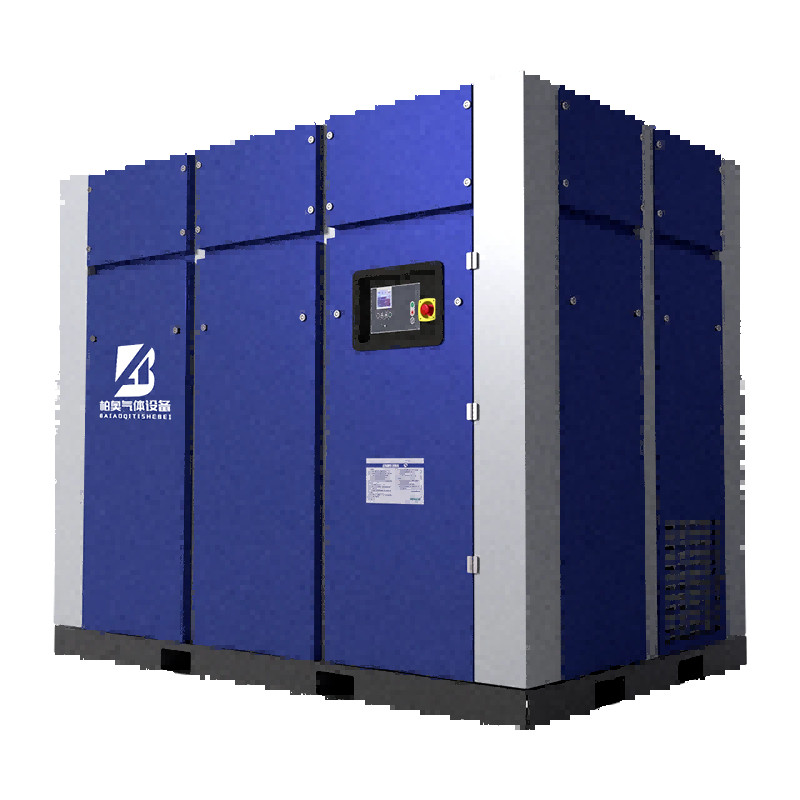
All-in-One Oil-Injected Rotary Screw Air Compressor for Efficient Industrial Air Supply
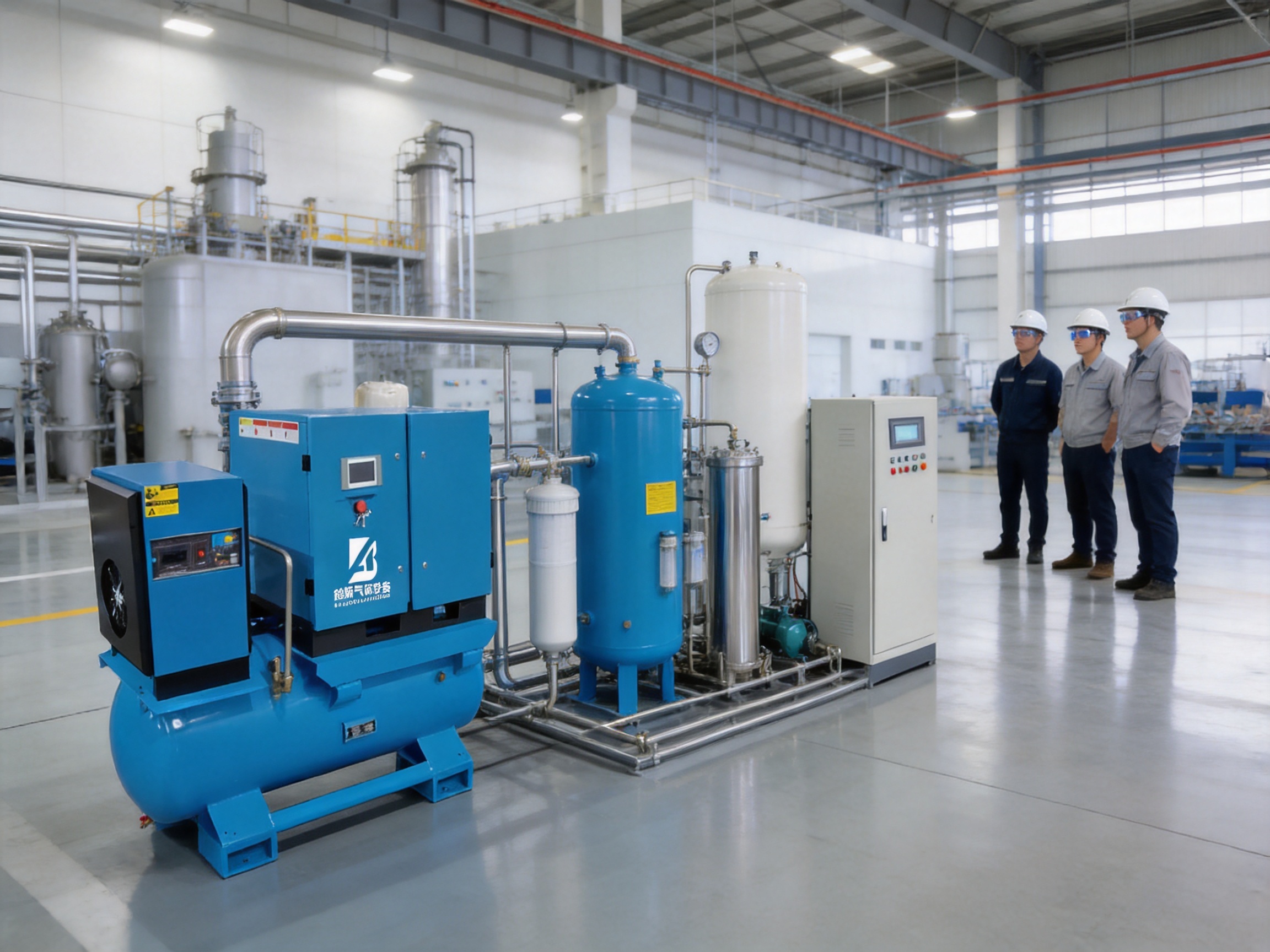
Reliable compressed air is a foundation of modern industrial production. It powers pneumatic tools, controls automation systems, operates valves and actuators, supports packaging lines, assists material handling, and supplies process air for gas separation and purification equipment. When compressed air quality, pressure stability, or availability is inadequate, production efficiency can decline quickly. Energy consumption can also rise because the compressor must operate longer, cycle more frequently, or compensate for unstable demand.
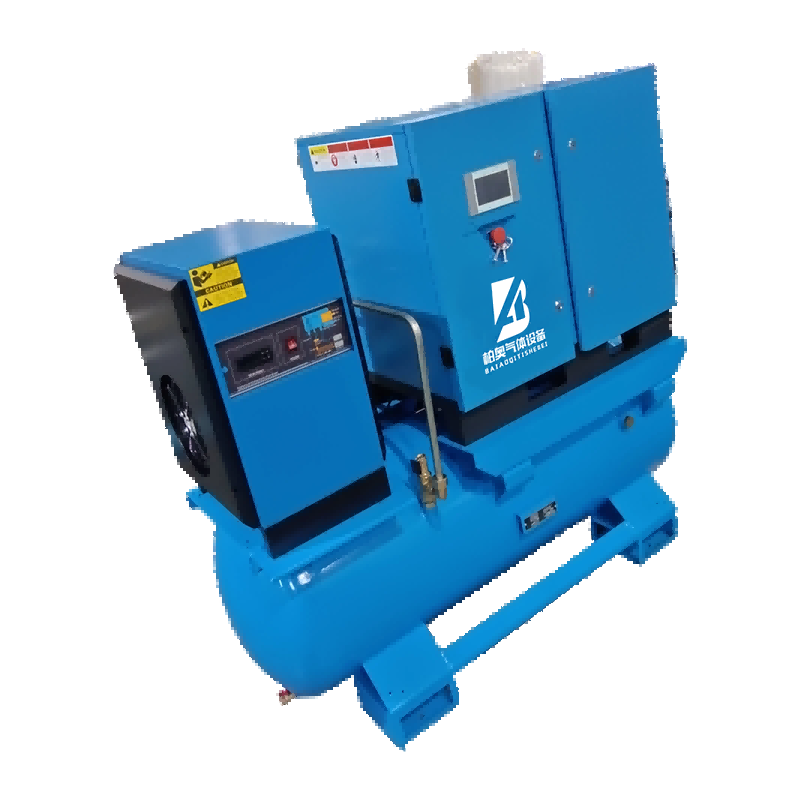
The All-in-One Oil-Injected Rotary Screw Air Compressor with VSD/FSD technology is designed to address these practical requirements in a compact and integrated configuration. Combining the compressor, air treatment components, control functions, and a 420-liter air receiver tank in one coordinated system, the unit simplifies installation and reduces the amount of auxiliary equipment required at the installation site. Users generally need to connect the power supply and gas piping before commissioning the equipment.
This product is suitable for factories, workshops, gas equipment plants, processing facilities, and other industrial environments that require dependable compressed air within a working pressure range of 8 to 16 bar. With air capacity from 0.2 to 3.8 cubic meters per minute and motor power from 5.5 to 22 kilowatts, the series covers a broad range of smaller and medium-duty compressed-air applications.
The product is manufactured by Zhejiang Baiao Gas Equipment Co., Ltd., a Chinese gas equipment manufacturer focused on gas separation, purification, and compressed-air technologies. The company integrates research and development, engineering design, production, installation, and after-sales service. Its manufacturing capabilities and experience in industrial gas systems help support the development of compressors intended for practical plant environments rather than isolated laboratory use.
All-in-One Oil-Injected Rotary Screw Air Compressor (VSD/FSD)
Content
- 1 1. Product Overview
- 2 2. Main Technical Specifications
- 3 3. How the All-in-One Design Simplifies Installation
- 4 4. Variable-Speed Operation and Energy Management
- 5 5. The Role of the 420-Liter Air Receiver
- 6 6. Low-Noise Operation for Modern Workshops
- 7 7. Advantages Compared with Conventional Standalone Solutions
- 8 8. Manufacturing and Engineering Strengths
- 9 9. Quality Control and Production Discipline
- 10 10. Application Areas
- 11 11. Use with Gas Separation and Purification Equipment
- 12 12. Maintenance and Operating Recommendations
- 13 13. Choosing Between VSD and FSD
- 14 14. Installation Considerations
- 15 15. Why Supplier Experience Matters
- 16 16. Total Cost of Ownership
- 17 17. Frequently Asked Questions
- 17.1 What is an oil-injected rotary screw air compressor?
- 17.2 What does “All-in-One” mean in this product?
- 17.3 What are the pressure and capacity ranges?
- 17.4 What is the difference between VSD and FSD?
- 17.5 Which version is better for a factory with changing production schedules?
- 17.6 Can the compressor supply a PSA nitrogen generator?
- 17.7 Can it be used for oxygen-generation equipment?
- 17.8 Does oil-injected compression provide oil-free air?
- 17.9 What is the purpose of the 420-liter receiver?
- 17.10 Is the equipment suitable for indoor installation?
- 17.11 How can operating noise be reduced?
- 17.12 What industries can use this compressor?
- 17.13 What maintenance is required?
- 17.14 Does the integrated design eliminate installation work?
- 17.15 How should the correct model be selected?
- 18 18. Conclusion
- 19 References
- 20 Product: All-in-One Oil-Injected Rotary Screw Air Compressor (VSD/FSD)
1. Product Overview
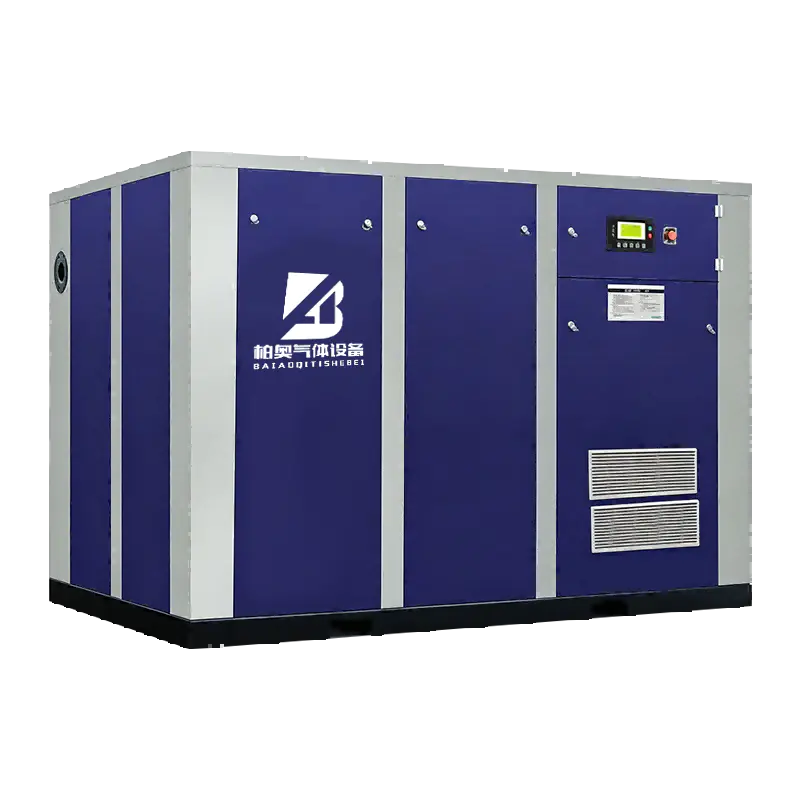
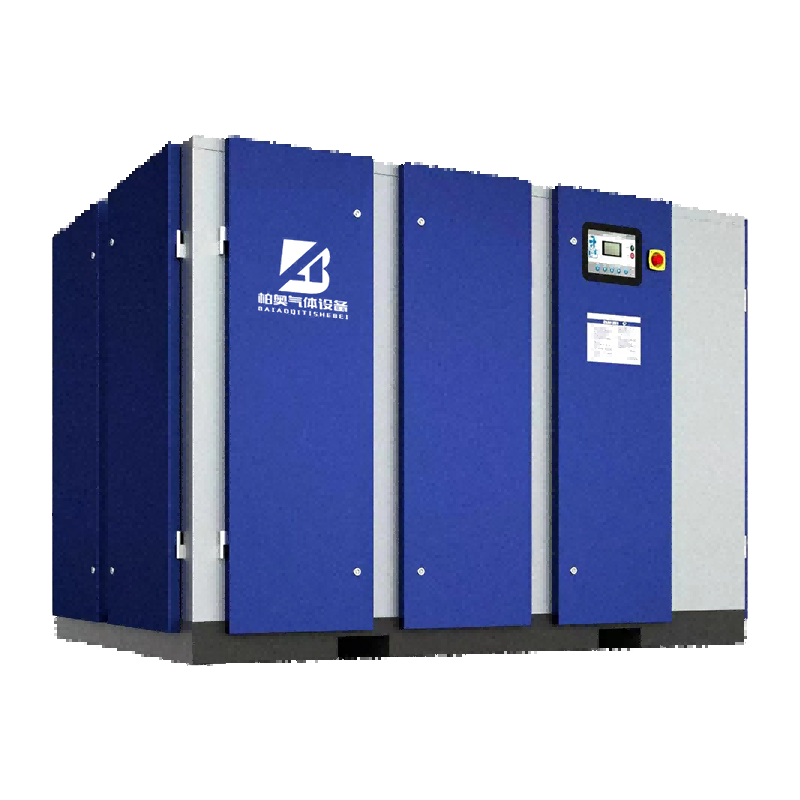
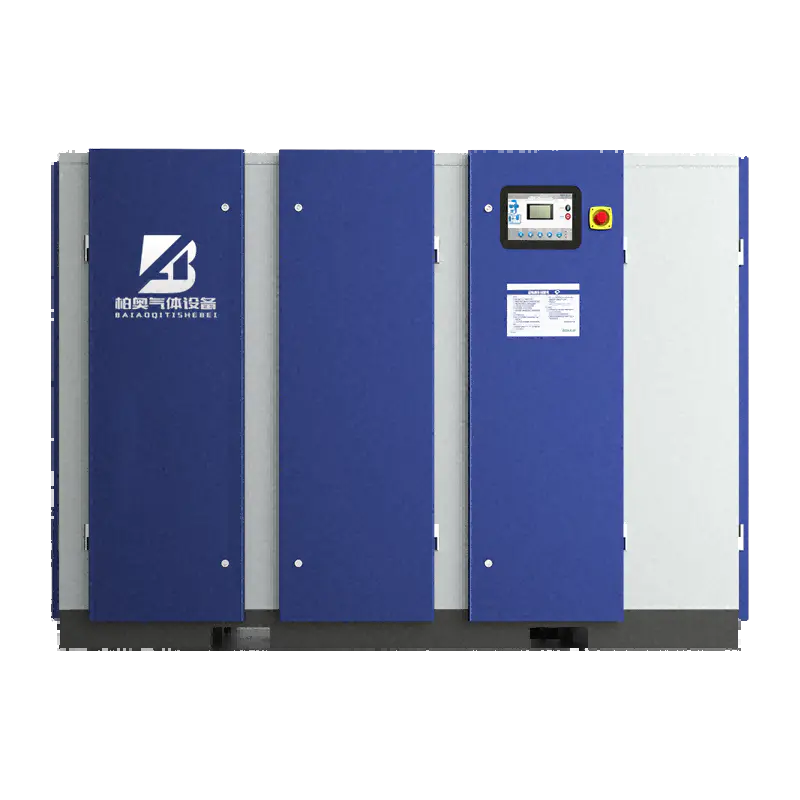
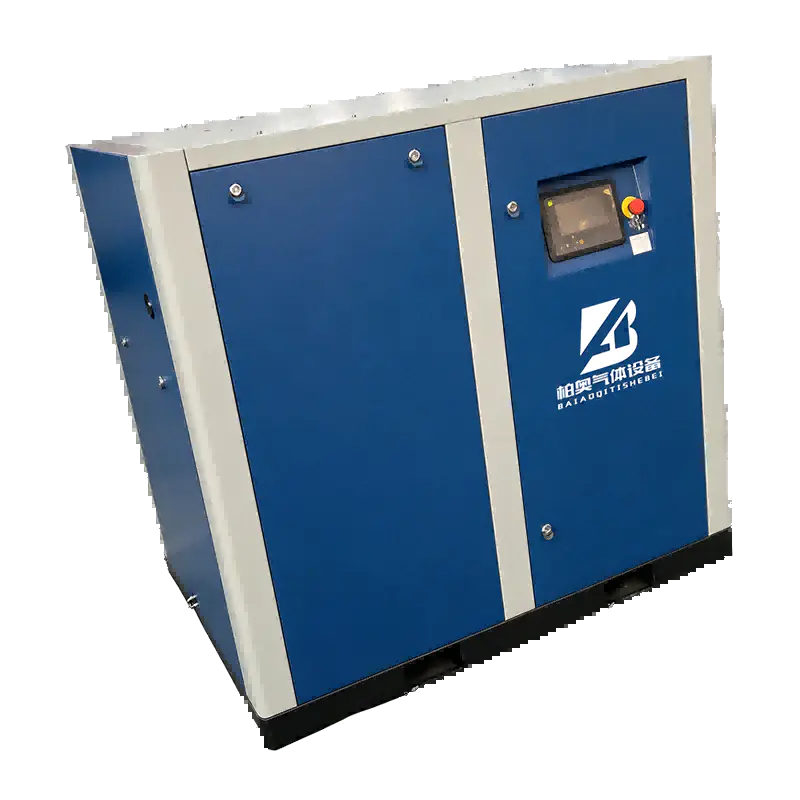
The All-in-One Oil-Injected Rotary Screw Air Compressor is an integrated compressed-air solution based on rotary screw compression. Unlike a basic standalone compressor that may require a separate receiver, control system, and additional installation work, this configuration brings key operating elements together in a single package. The result is a compact system that can reduce installation complexity, conserve floor space, and make the compressed-air station easier to organize.
The product is available in VSD and FSD configurations. VSD refers to variable-speed drive operation, in which the motor speed is adjusted according to air demand. FSD refers to fixed-speed drive operation, in which the motor generally operates at a defined speed when loaded. These two options allow users to select a configuration according to their load profile, operating habits, investment priorities, and energy-saving objectives.
In facilities where air demand changes throughout the day, a variable-speed system can help maintain a more consistent pressure while reducing unnecessary energy consumption. In applications with relatively stable air demand, a fixed-speed configuration may provide a straightforward and economical solution. Offering both operating modes makes the product suitable for a wider range of industrial users.
The integrated 420-liter air receiver tank provides a reserve of compressed air and helps moderate short-term fluctuations in demand. It can reduce the frequency of compressor loading and unloading, support pressure stability, and provide a buffer during brief demand peaks. The receiver also helps the entire system respond more smoothly when downstream equipment starts or stops.
The compressor is equipped with the DHV-A series air compressor, supporting low-noise operation. Reduced operating noise is important in workshops where operators work near the equipment, as well as in facilities where noise control contributes to a safer and more comfortable working environment.
2. Main Technical Specifications
The technical range of this product series allows it to serve different production scales and pressure requirements. The specifications are summarized below.
| Specification | Range | Metric or Imperial Equivalent |
|---|---|---|
| Working pressure | 8 to 16 bar | 116.0 to 232.0 psig |
| Air capacity, FAD | 0.2 to 3.8 m³/min | 7.1 to 134.2 cfm |
| Motor power | 5.5 to 22 kW | 7.5 to 30.0 hp |
| Air receiver capacity | 420 liters | Integrated receiver tank |
| Drive options | VSD or FSD | Variable-speed or fixed-speed operation |
Working pressure describes the pressure range in which the compressor is designed to operate. The available range of 8 to 16 bar makes the equipment suitable for many general industrial applications, including pneumatic tools, control systems, processing equipment, and air supply for gas generation systems. The selected pressure should always correspond to the actual requirements of the downstream equipment and the pressure losses within the distribution network.
Free air delivery, or FAD, indicates the compressor’s air output under defined reference conditions. The range of 0.2 to 3.8 m³/min gives users flexibility when selecting a model for a particular consumption level. Correct sizing is essential. A compressor that is too small may operate continuously and fail to maintain pressure, while an oversized compressor may increase capital and operating costs.
The 5.5 to 22 kW motor range supports applications requiring different levels of compressed-air output. The appropriate model should be selected using actual consumption data, expected production expansion, required pressure, duty cycle, ambient conditions, and the need for future capacity reserves.
3. How the All-in-One Design Simplifies Installation
Traditional compressed-air installations often involve several separate components. A purchaser may need to arrange a compressor, air receiver, piping, control devices, condensate management equipment, and other accessories. Each component requires space, connections, alignment, and commissioning. The work can become more complicated when the installation site is small or when production must start quickly.
The all-in-one design reduces this complexity by integrating essential system elements into one coordinated package. The user’s primary installation tasks are connecting the electrical power supply and the gas piping. This can shorten installation time and reduce the chance of errors associated with multiple independent components.
A compact integrated system is particularly useful for factories with limited floor space. Instead of arranging a separate compressor and receiver in different areas, the operator can use the equipment as a consolidated compressed-air station. This can improve workshop organization and leave more room for production equipment, maintenance access, or material movement.
Integrated equipment also makes responsibility clearer during commissioning. Because the major components are designed to operate together, the user does not need to coordinate as many suppliers or determine whether separate components are correctly matched. This can simplify technical communication, documentation, and troubleshooting.
For export customers and industrial project contractors, the integrated structure may also make logistics and project planning easier. A coordinated package can reduce the number of individual items that must be transported, received, inspected, and installed. Nevertheless, users should still confirm local electrical standards, lifting requirements, ventilation provisions, drainage arrangements, and safety regulations before delivery.
4. Variable-Speed Operation and Energy Management
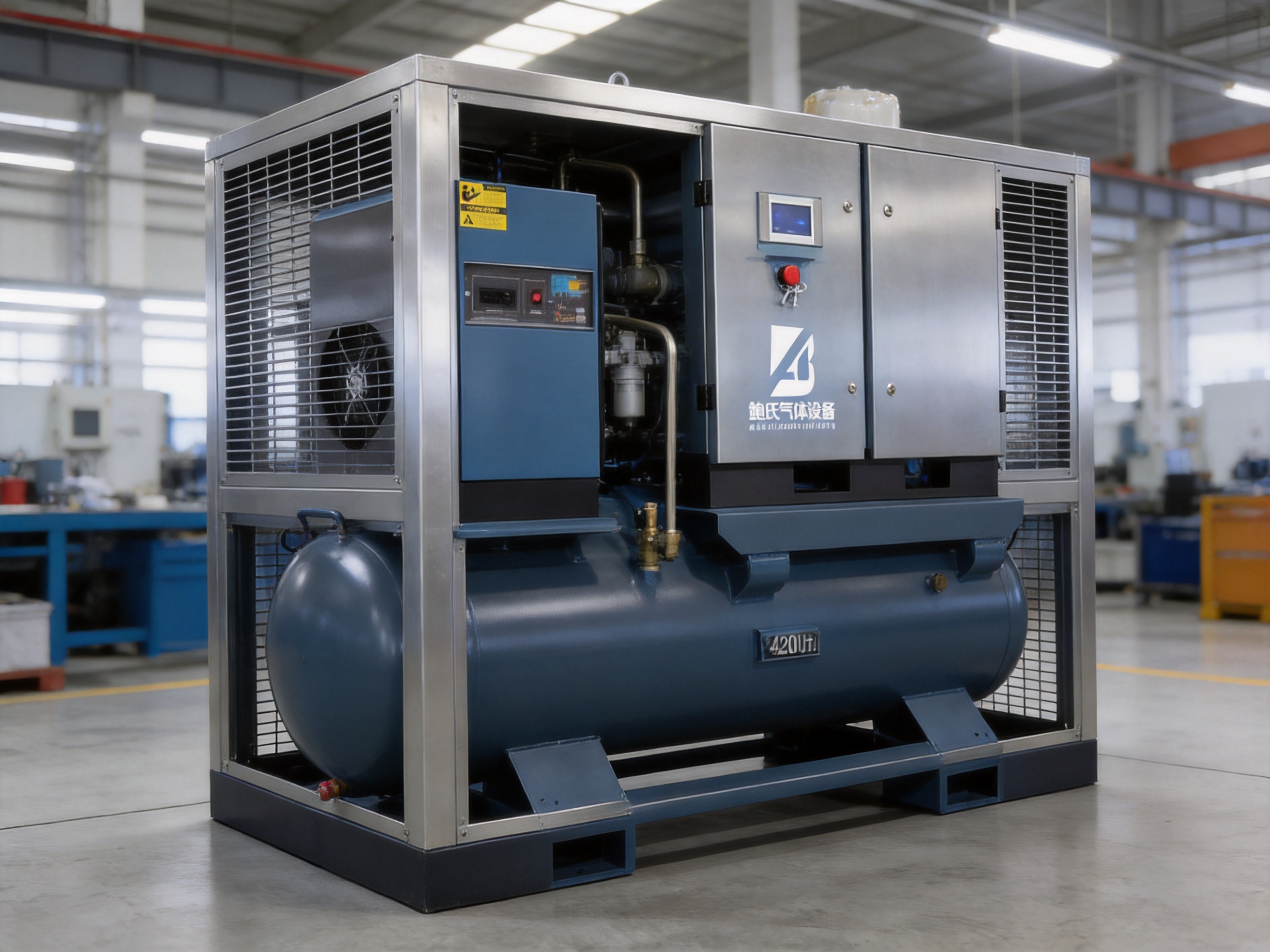
Energy efficiency is one of the most important considerations in compressed-air system design. Compressors often represent a significant share of the electricity consumed by an industrial facility. Since air demand is rarely constant, a compressor that operates at full speed regardless of actual consumption may use more energy than necessary during periods of reduced demand.
The VSD configuration addresses this issue by adjusting motor speed in response to system demand. When air consumption decreases, the compressor can reduce its operating speed. When demand rises, the speed can increase within the designed operating range. This enables the compressor to produce air more closely in line with actual requirements.
Maintaining more stable pressure can also reduce waste. Excessively high pressure may cause unnecessary energy consumption and increase leakage losses. At the same time, insufficient pressure can interrupt production or cause pneumatic equipment to perform poorly. A variable-speed system can help the compressor respond smoothly to changing demand and support a more controlled pressure environment.
The energy-saving potential of VSD operation depends on the user’s load profile. Facilities with changing shifts, intermittent production, multiple pneumatic machines, or varying process requirements may obtain greater benefits than facilities with a nearly constant load. A detailed assessment should consider operating hours, average demand, peak demand, pressure settings, leakage, and the compressor’s control strategy.
VSD does not eliminate the need for proper system design. Leaks, blocked filters, undersized piping, inappropriate pressure settings, and poor maintenance can still increase energy consumption. The greatest results are achieved when variable-speed operation is combined with regular inspection, correct sizing, efficient air distribution, and responsible end-use practices.
The FSD version remains valuable for applications with relatively stable demand. Its operating concept is straightforward, and it can be an economical choice when the compressor is expected to run near a consistent load for extended periods. By offering both VSD and FSD formats, the product series allows users to match the equipment to actual operating conditions instead of adopting a single solution for every application.
5. The Role of the 420-Liter Air Receiver
The integrated 420-liter air receiver tank is an important part of the system design. A receiver stores compressed air after it leaves the compressor and before it is consumed by the production network. This stored volume can help cover short-term demand peaks without requiring the compressor to respond immediately at full capacity.
During periods of reduced consumption, the receiver can accumulate air. When downstream demand rises temporarily, the stored air can be released to support the network. This buffering action may help reduce rapid cycling, stabilize pressure, and improve the operating conditions of the compressor.
The receiver also supports separation of moisture and oil aerosols from compressed air as the air cools. Proper condensate drainage is essential, because collected condensate must be removed safely and regularly. The exact drainage arrangement should comply with applicable environmental and workplace regulations.
A properly sized receiver can improve system responsiveness, but it is not a substitute for a correctly selected compressor. The receiver volume, compressor output, pressure range, demand pattern, and control settings should be considered together. Users should also ensure that the receiver is installed, inspected, and maintained in accordance with relevant pressure-vessel requirements.
Because the receiver is integrated into the all-in-one package, the installation footprint is easier to plan. The user does not need to locate a separate tank and connect it through additional piping. This can reduce potential connection points and help create a cleaner, more organized compressed-air system.
6. Low-Noise Operation for Modern Workshops
Noise is an important factor when compressed-air equipment is installed close to workers or production lines. Continuous mechanical noise can affect comfort, communication, concentration, and the perceived quality of the workplace. In some facilities, high noise levels may also require additional barriers or relocation of the compressor room.
The use of the DHV-A series air compressor supports extremely low noise levels during operation. Low-noise performance can make it easier to install the equipment closer to the point of use, provided that ventilation, maintenance access, and safety requirements are satisfied.
Reduced noise does not mean that hearing protection and workplace noise assessments are unnecessary. Actual sound levels depend on the model, installation location, room acoustics, surrounding equipment, operating load, and maintenance condition. Users should evaluate the complete installation rather than relying only on a general product description.
In practical terms, quieter operation can improve the working environment and reduce the need for expensive acoustic treatment. It may also help companies place the compressor near a production area without significantly disturbing operators. This is especially useful in smaller workshops where a separate compressor room is not available.
7. Advantages Compared with Conventional Standalone Solutions
The most significant advantage of the product is its integrated design. A conventional standalone compressor may be less expensive at the initial equipment level, but the complete installation can require additional accessories, engineering time, piping, and floor space. The all-in-one product is designed to address the complete compressed-air supply requirement in a more coordinated package.
Another advantage is installation simplicity. The need to connect the power supply and gas piping reduces the number of major field tasks. This can be valuable for companies that need to expand production quickly or that have limited access to specialized installation personnel.
The inclusion of a 420-liter receiver provides a functional advantage over a compressor package without an integrated storage tank. The receiver helps accommodate short-term fluctuations and can support smoother pressure management. Users should still confirm that the capacity is appropriate for the application, but the integrated tank provides a ready-made buffer for many industrial operating conditions.
VSD availability offers an advantage over fixed-speed-only systems when air demand varies. By matching output more closely to consumption, the compressor can help reduce wasted power during low-demand periods. A variable-speed option is especially relevant for facilities with multiple shifts, fluctuating production, or processes that do not consume air continuously.
The low-noise design provides an additional advantage over older or less optimized compressor packages. A quieter system can improve operator comfort and expand possible installation locations. This can be important in workshops, maintenance areas, laboratories, electronics facilities, and other environments where noise needs to be controlled.
Compactness is another practical benefit. The system can reduce the total footprint required for compressed-air equipment. More efficient use of floor space can contribute to better plant layout, easier material flow, and lower construction requirements.
Maintenance simplicity also contributes to the product’s competitive position. Integrated equipment reduces the number of separately arranged components that technicians must inspect. While routine maintenance remains essential, the system’s coordinated structure can make service planning easier and reduce confusion about component compatibility.
These advantages do not mean that one configuration is appropriate for every application. Product selection should consider pressure, air demand, air quality, duty cycle, ambient temperature, altitude, electrical supply, ventilation, and required redundancy. The key advantage is that the product provides a practical combination of features in one platform.
8. Manufacturing and Engineering Strengths
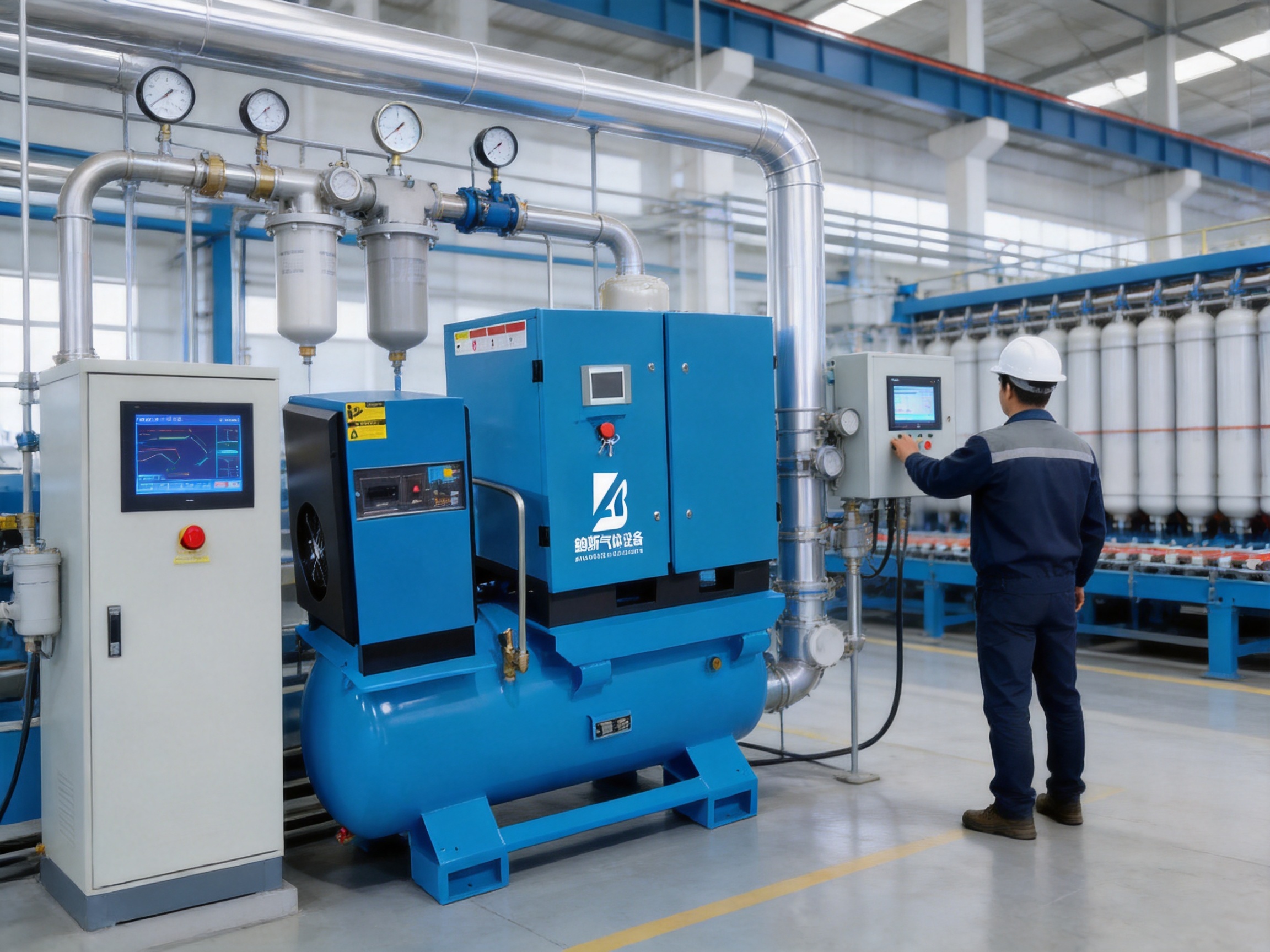
The product is supported by the manufacturing capabilities of Zhejiang Baiao Gas Equipment Co., Ltd. The company integrates research and development, design, production, installation, and after-sales service. This integrated structure is important for industrial equipment because performance depends not only on individual components but also on engineering coordination, assembly quality, commissioning, and service support.
The company operates a 3,000-square-meter standardized workshop, a 500-square-meter office area, and a 500-square-meter warehouse. These facilities provide space for manufacturing activities, engineering work, inventory management, assembly, inspection, and project coordination.
A standardized workshop can support more consistent production procedures. Organized work areas help separate material preparation, component assembly, wiring, testing, and packaging. Standardized production also makes it easier to establish inspection points and identify deviations before equipment reaches the customer.
The office and engineering areas support product development and project communication. Compressed-air and gas purification systems often need to be adapted to different pressure requirements, capacities, installation conditions, and process applications. Engineering support helps connect the product’s technical configuration with the customer’s actual operating environment.
The warehouse contributes to production continuity by supporting component storage and order preparation. Proper inventory management can help reduce delays, protect components from damage, and improve the company’s ability to organize equipment for domestic and export projects.
The company’s experience extends beyond air compressors. Its product portfolio includes PSA nitrogen generators, PSA oxygen generators, membrane nitrogen and oxygen generators, QH/QC series nitrogen purification units, and ammonia decomposition hydrogen purification units. This broader gas equipment background is valuable because compressed air is often closely connected with gas separation and purification processes.
For example, PSA gas generators require a reliable source of compressed air or feed gas, stable pressure, and suitable operating conditions. Experience with gas generation systems gives the manufacturer a practical understanding of how compressor performance affects downstream equipment. This supports a more complete approach to system design and customer consultation.
The company develops products using overseas technologies that are optimized for industrial conditions in China. Technology adaptation is important because equipment must operate reliably under local environmental conditions, production habits, electrical standards, maintenance practices, and customer expectations. The goal is not simply to reproduce a design but to make it practical for industrial use.
9. Quality Control and Production Discipline
Industrial compressors must provide stable operation over long service periods. Quality control therefore needs to cover more than visual appearance. It should include material verification, component inspection, assembly accuracy, electrical connections, control functionality, pressure performance, vibration behavior, noise performance, and final documentation.
A disciplined manufacturing process begins with suitable component selection. The compressor package must use components that are compatible with the required pressure range, motor power, control method, lubrication system, cooling arrangement, and ambient conditions. Proper compatibility helps reduce premature wear and operating instability.
Assembly quality is equally important. Rotary screw compressors contain rotating components that require accurate alignment and careful handling. Electrical panels, sensors, control devices, and protective systems must be installed correctly so that the unit can respond safely to changing operating conditions.
Inspection during production can identify problems before final testing. Checking connections, fasteners, piping, wiring, and protective devices at multiple stages is more effective than relying only on a final visual review. Standardized inspection records can also improve traceability and support future service work.
Final testing should verify that the equipment responds correctly under the intended operating conditions. Depending on the model and project requirements, testing may include start-up behavior, pressure control, load and unload response, motor operation, alarm functions, temperature monitoring, leakage checks, and noise assessment.
Quality control is also connected to after-sales service. Clear documentation, model identification, maintenance instructions, and technical support help customers operate the compressor correctly after installation. A well-manufactured product performs best when it is installed, operated, and maintained according to its design requirements.
10. Application Areas
The All-in-One Oil-Injected Rotary Screw Air Compressor can serve a broad range of industrial applications. Its pressure range and capacity options make it suitable for pneumatic systems in general manufacturing plants, workshops, equipment assembly facilities, and process industries.
In petrochemical operations, compressed air may be used for instruments, control valves, pneumatic tools, and auxiliary equipment. Instrument-air applications require careful attention to air quality and treatment. The compressor should be combined with appropriate filtration, drying, and oil-removal equipment when the process requires clean or dry air.
Textile factories use compressed air for automation, cleaning, control systems, and production machinery. Demand may vary depending on the number of operating machines and production shifts. The VSD configuration can be beneficial where air consumption changes as machines are started, stopped, or adjusted.
Food-processing plants may use compressed air for packaging, conveying, control, cleaning, and pneumatic actuation. In these environments, the required air quality must be carefully defined. Oil-injected compression can be suitable for many general plant-air applications, but processes involving direct product contact may require additional purification stages and a validated air-quality management program.
Automotive manufacturing facilities use compressed air for tools, assembly equipment, robotic systems, paint preparation, material handling, and maintenance. Stable pressure and reliable availability are important because air interruptions can affect multiple production stations.
Heat-treatment facilities may use compressed air for controls, actuators, handling systems, and auxiliary processes. The installation should account for high ambient temperatures, dust, and other environmental conditions that may influence compressor performance.
SMT electronics production and related assembly operations can require compressed air for automation, pick-and-place systems, pneumatic handling, cleaning, and control. Because electronics manufacturing often places greater emphasis on cleanliness and moisture control, the compressor should be paired with suitable downstream air treatment when required.
Gas separation and purification plants are another important application area. PSA nitrogen generators, PSA oxygen generators, membrane systems, and purification units depend on reliable compressed-air or feed-gas conditions. A properly selected compressor can provide the stable pressure and flow required by the gas-generation process.
11. Use with Gas Separation and Purification Equipment
Compressed air is often the starting point for industrial nitrogen and oxygen generation. In a PSA system, compressed air passes through adsorbent beds that selectively retain certain gas components. Stable pressure and sufficient flow are essential for consistent operation, efficient regeneration, and reliable product-gas output.
The All-in-One compressor can support these systems by providing compressed air in a compact package. The integrated receiver helps buffer short-term changes in gas-generation demand, while the pressure range allows the compressor to serve many small and medium-capacity installations. The precise requirements depend on the PSA generator design and should be confirmed through engineering calculations.
For membrane nitrogen or oxygen systems, feed-air quality and pressure are also important. Oil aerosols, liquid water, particulate matter, and excessive temperature can affect membrane performance or shorten service life. Therefore, the compressor should be integrated with appropriate filters, dryers, separators, and monitoring devices.
Oil-injected compressors are widely used for general industrial air supply, but users must distinguish between a compressor’s basic design and the final air quality delivered to the process. If the downstream gas-generation or purification system requires a specific air-quality class, additional treatment equipment should be installed and maintained accordingly.
The manufacturer’s experience in gas separation and purification equipment supports a broader system perspective. Rather than viewing the compressor as an isolated machine, the supplier can consider its relationship with nitrogen generators, oxygen generators, purification units, storage systems, and customer production processes.
12. Maintenance and Operating Recommendations
Simple maintenance is one of the product’s practical features, but simple maintenance does not mean maintenance can be ignored. Regular service helps protect efficiency, pressure stability, and operating reliability. The maintenance schedule should follow the equipment manual, actual operating hours, environmental conditions, and applicable local requirements.
Operators should regularly inspect the compressor for abnormal noise, vibration, temperature, pressure, and leakage. A change in sound or vibration may indicate a mechanical issue, while increased discharge temperature may suggest inadequate ventilation, a blocked cooler, insufficient lubrication, or another operating problem.
Air filters should be inspected and replaced or cleaned according to the manufacturer’s recommendations. A blocked intake filter increases resistance and can reduce compressor efficiency. In dusty environments, filters may require more frequent attention than they would in a clean indoor installation.
Oil level and oil condition should be managed carefully. Oil-injected rotary screw compressors depend on the lubrication and sealing functions of the compressor oil. Using the correct oil and replacing it at the recommended interval helps protect internal components and maintain stable operation.
Oil separators, air filters, and other treatment components should also be serviced according to operating conditions. A neglected separator may increase oil carryover, while blocked filters can reduce flow and increase pressure loss. Maintenance records help operators identify trends and plan service before a failure interrupts production.
The 420-liter receiver should be inspected for corrosion, pressure integrity, valve condition, and condensate accumulation. Automatic or manual drains must function correctly. Any pressure vessel inspection requirements established by local authorities should be followed.
Ventilation is essential. The compressor produces heat during operation, and inadequate ventilation can raise the ambient temperature and reduce service life. The equipment should be installed in a clean, dry, adequately ventilated location with sufficient clearance for maintenance.
Operators should also check the compressed-air distribution system for leaks. Even a well-designed compressor can waste substantial energy if air escapes through damaged hoses, loose fittings, worn valves, or unused open lines. Leak detection and repair are among the most cost-effective ways to improve compressed-air efficiency.
13. Choosing Between VSD and FSD
The choice between VSD and FSD should be based on the facility’s air-demand pattern rather than on general assumptions. VSD is often appropriate where demand fluctuates substantially. The variable-speed drive can adjust compressor output and help maintain pressure with less energy waste during lower-demand periods.
FSD may be appropriate where demand is stable and the compressor operates near a consistent load. It can provide a straightforward operating arrangement and may have a lower initial purchase cost depending on the selected configuration and project requirements.
Facilities with intermittent operation, multiple production shifts, or changing process conditions should evaluate the potential energy benefits of VSD. Facilities with predictable and continuous air consumption should compare the purchase price, operating hours, electricity cost, and maintenance requirements of both alternatives.
It is also important to assess whether the compressor will operate alone or in parallel with other compressors. In a multi-compressor system, the control strategy should coordinate the units to prevent inefficient overlapping operation. A VSD compressor may be used as a trim machine while fixed-speed compressors provide base load, although the best arrangement depends on the demand profile.
14. Installation Considerations
Before installation, the customer should confirm the required electrical voltage, frequency, phase configuration, protection devices, cable size, and grounding arrangements. Electrical work should be performed by qualified personnel and should comply with local regulations.
The gas outlet should be connected to piping that can withstand the operating pressure and provide adequate flow. Piping should be sized to minimize pressure loss. Excessive bends, undersized lines, and poor connections can reduce the effective pressure available to downstream equipment.
The installation area should be clean, dry, and protected from excessive dust, corrosive vapors, water spray, and extreme temperatures. Sufficient clearance should be provided around the compressor for inspection, filter replacement, oil servicing, and component access.
The unit should be placed on a suitable foundation or level surface. Vibration isolation may be considered where required by the building structure or surrounding equipment. The air receiver and connected piping must be supported appropriately and should not impose excessive mechanical stress on the compressor outlet.
After installation, commissioning should include inspection of connections, verification of rotation direction where applicable, confirmation of control settings, examination of leaks, and monitoring during initial operation. The operating pressure should be adjusted to the actual process requirement rather than set higher than necessary.
15. Why Supplier Experience Matters
Purchasing a compressor is not only a decision about motor power and air capacity. The supplier’s ability to understand the customer’s process, configure the equipment, provide documentation, support installation, and respond after delivery can strongly influence the long-term result.
Zhejiang Baiao Gas Equipment Co., Ltd. combines product manufacturing with gas equipment engineering. Its range includes gas generators, purification systems, and compressors, allowing it to approach projects from both the compressed-air and process-gas perspectives.
The company serves industries including petrochemicals, textiles, food processing, automotive manufacturing, heat treatment, and SMT electronics. Experience across these sectors exposes the manufacturer to different pressure requirements, environmental conditions, air-quality expectations, and production schedules.
Its sales network covers more than 30 provinces and cities in China, with products also exported to international markets. This market experience supports familiarity with different customer requirements, documentation expectations, shipping arrangements, and project coordination practices.
The company emphasizes technical improvement, strict quality control, integrity, energy efficiency, and reliable service. These principles are relevant to compressor purchasing because the value of industrial equipment is measured over its operating life, not only at the time of delivery.
16. Total Cost of Ownership
The purchase price is only one part of the total cost of a compressed-air system. Electricity, oil, filters, maintenance labor, downtime, installation, and replacement parts can significantly affect the total cost over the equipment’s service life.
The VSD option may help reduce electricity costs in applications with variable demand. The integrated receiver may support smoother operation, while the compact design can reduce installation expenses and floor-space requirements. Low-noise operation may also lower the need for additional acoustic treatment.
Maintenance costs depend on operating hours, environmental conditions, service quality, and the availability of suitable consumables. Regular maintenance can help prevent larger failures and preserve compressor efficiency. The user should develop a service plan before commissioning the machine.
Downtime can be especially costly in production facilities. A compressor that is easy to monitor and maintain may help reduce unplanned interruptions. Users requiring high availability should consider standby capacity, spare parts planning, preventive maintenance, and alarm response procedures.
Energy management should include the whole compressed-air system. Correct pressure settings, leak control, efficient piping, suitable storage, proper air treatment, and responsible end use can produce greater savings than compressor selection alone. The All-in-One package provides a strong foundation, but the final result depends on system-wide management.
17. Frequently Asked Questions
What is an oil-injected rotary screw air compressor?
An oil-injected rotary screw air compressor uses a pair of rotating screw elements to compress air. Oil is injected into the compression chamber to provide lubrication, sealing, and cooling. The oil is subsequently separated from the compressed air through the compressor’s separation and treatment system.
What does “All-in-One” mean in this product?
All-in-One refers to the integrated configuration that combines the compressor system with a 420-liter air receiver and related operating functions in one compact package. The design reduces the need for separate equipment and simplifies installation.
What are the pressure and capacity ranges?
The working pressure range is 8 to 16 bar, equivalent to approximately 116.0 to 232.0 psig. The free air delivery range is 0.2 to 3.8 m³/min, or approximately 7.1 to 134.2 cfm. The available motor power range is 5.5 to 22 kW, or 7.5 to 30.0 hp.
What is the difference between VSD and FSD?
VSD means variable-speed drive. The compressor adjusts motor speed according to air demand, which can help reduce energy consumption when demand changes. FSD means fixed-speed drive. The compressor operates at a defined speed and is often suitable for applications with relatively stable air demand.
Which version is better for a factory with changing production schedules?
A VSD model is often worth evaluating when production schedules, shifts, or air consumption vary significantly. The final choice should be based on actual demand data, operating hours, pressure requirements, electricity prices, and the expected return on investment.
Can the compressor supply a PSA nitrogen generator?
It may be suitable for PSA nitrogen generation when the compressor’s pressure, flow, and air-quality performance match the requirements of the nitrogen generator. Additional filters, dryers, and oil-removal equipment may be necessary, depending on the required feed-air quality and process design.
Can it be used for oxygen-generation equipment?
The compressor can support certain oxygen-generation systems when the system designer confirms that the pressure, flow, air quality, and duty cycle are appropriate. Oxygen-related equipment requires careful attention to cleanliness, materials, safety, and process requirements.
Does oil-injected compression provide oil-free air?
An oil-injected compressor is not inherently an oil-free compressor. It uses oil during compression, so downstream separation and filtration are important. If the application requires a defined air-quality class or direct product contact, the complete air-treatment system must be designed accordingly.
What is the purpose of the 420-liter receiver?
The receiver stores compressed air, helps buffer short-term demand peaks, supports pressure stability, and can reduce frequent compressor cycling. It also provides storage between compressor output and downstream consumption.
Is the equipment suitable for indoor installation?
It can be suitable for indoor industrial installation when the area is clean, dry, adequately ventilated, and large enough for safe maintenance access. Electrical, pressure-vessel, drainage, temperature, and ventilation requirements must be checked before installation.
How can operating noise be reduced?
The product uses the DHV-A series air compressor to support low-noise operation. Correct installation, regular maintenance, adequate ventilation, and appropriate placement can further support a quieter working environment.
What industries can use this compressor?
Potential applications include petrochemical, textile, food processing, automotive, heat treatment, SMT electronics, general manufacturing, pneumatic automation, gas generation, and industrial purification systems.
What maintenance is required?
Routine maintenance may include checking oil level and condition, replacing filters and oil separators, inspecting the cooler, testing drains, checking for leaks, reviewing electrical connections, monitoring temperature and pressure, and inspecting the receiver. The exact schedule should follow the operating manual and site conditions.
Does the integrated design eliminate installation work?
No. It significantly simplifies installation, but the user must still provide suitable electrical power, gas piping, ventilation, drainage, foundation support, grounding, and safety arrangements. Commissioning should be completed by qualified personnel.
How should the correct model be selected?
Selection should consider required pressure, average and peak air consumption, operating hours, duty cycle, ambient conditions, air quality, electrical supply, future expansion, and whether VSD or FSD operation is more appropriate. Professional sizing is recommended for critical applications.
18. Conclusion
The All-in-One Oil-Injected Rotary Screw Air Compressor with VSD/FSD technology provides a practical approach to industrial compressed-air supply. Its compact four-in-one design simplifies installation, reduces equipment footprint, and combines essential system functions in one package. The 8 to 16 bar working-pressure range, 0.2 to 3.8 m³/min air-capacity range, and 5.5 to 22 kW power range allow the series to serve many small and medium industrial requirements.
The integrated 420-liter receiver supports pressure stability and short-term demand management. VSD models can help reduce energy waste in applications with fluctuating consumption, while FSD models provide a straightforward option for relatively stable loads. The DHV-A series compressor contributes to low-noise operation, which can improve the suitability of the equipment for workshops and production areas.
Beyond the product design, the manufacturer’s strengths include integrated research and development, engineering, production, installation, and after-sales service. Its standardized workshop, warehouse, engineering resources, gas equipment portfolio, and experience across multiple industries support a comprehensive approach to industrial equipment manufacturing.
For customers evaluating a new compressor, the most important step is to match the equipment to actual operating conditions. Pressure, air flow, air quality, duty cycle, energy cost, maintenance practices, and future production requirements should all be considered. When correctly selected and maintained, the All-in-One compressor can provide a compact, efficient, and dependable source of compressed air for industrial production and gas purification applications.
References
1. Compressed Air and Gas Institute. Compressed Air System Fundamentals and Equipment Guidance.
2. International Organization for Standardization. ISO 1217, Displacement Compressors: Acceptance Tests.
3. International Organization for Standardization. ISO 8573, Compressed Air: Contaminants and Purity Classes.
4. U.S. Department of Energy. Improving Compressed Air System Performance: A Sourcebook for Industry.
5. European Committee for Standardization. Guidance on Air Compressors, Pressure Equipment, and Industrial Safety.
6. Manufacturer-provided product specifications for the All-in-One Oil-Injected Rotary Screw Air Compressor with VSD/FSD configuration.
7. Manufacturer-provided company information concerning gas separation equipment, purification systems, manufacturing facilities, and service capabilities.
8. Industrial compressor maintenance principles covering lubrication, filtration, receiver inspection, leak management, ventilation, and preventive service.
Product: All-in-One Oil-Injected Rotary Screw Air Compressor (VSD/FSD)

- Tel: +86-15057127179
+86-13588382771 - Email: huang.yifan0215@gmail.com
- Address: Huanshan Township, Fuyang District, Hangzhou City, Zhejiang Province
Copyright © Zhejiang Baiao Gas Equipment Co., Ltd. All Rights Reserved.
Privacy
Gas Generator Plant Manufacturer, Industrial Purification Equipment Plant
