 en
en русский
 Español
 عربى
عربى
Electric Portable Air Compressor: High-Performance Compressed Air for Mobile Industrial Applications
Industrial operations increasingly require compressed air systems that combine mobility, dependable performance, efficient operation, and straightforward maintenance. Construction sites, manufacturing facilities, maintenance teams, energy projects, and process industries may need high-pressure air in locations where a fixed compressor installation is impractical. An electric portable air compressor provides a practical solution by combining the performance of an industrial rotary screw compressor with a mobile and compact configuration.
The electric portable air compressor described in this article is designed for working pressures from 8 to 24 bar, with the principal product designation covering the 8–18 bar range. Depending on the selected configuration, the unit can deliver an air capacity of approximately 5–30 cubic meters per minute and use an electric motor rated from 30 to 250 kW. This broad operating range enables the equipment to serve applications that require stable compressed air, high flow, and adaptable pressure selection.
Unlike many conventional compressor arrangements that depend on large foundations, complex transmission systems, or frequent wear-part replacement, this type of rotary screw compressor is engineered for smooth operation, compact installation, and long service intervals. Its design is especially suitable for users who need to relocate the compressor between production areas, deploy it at temporary work sites, or integrate it into industrial systems with changing air requirements.
Content
- 1 Industrial Requirements for Portable Compressed Air
- 2 Product Overview and Operating Range
- 3 Rotary Screw Compression for Stable Industrial Performance
- 4 Key Advantage: High Reliability
- 5 Key Advantage: Convenient Operation and Maintenance
- 6 Key Advantage: Excellent Power Balance and Smooth Operation
- 7 Key Advantage: Strong Adaptability Across Pressure and Flow Conditions
- 8 Electric Drive for Industrial Facilities
- 9 Compact Design for Portable Applications
- 10 Applications Across Industrial Sectors
- 11 Manufacturing Strengths and Quality Approach
- 12 Advanced Production and Project Execution Process
- 13 Advantages Over Conventional Alternatives
- 14 Energy and Total Cost Considerations
- 15 Installation and Commissioning Recommendations
- 16 Maintenance and Long-Term Operation
- 17 How to Select the Correct Configuration
- 18 Frequently Asked Questions
- 18.1 What type of compressor is this product?
- 18.2 What pressure range is available?
- 18.3 What air capacity can the compressor provide?
- 18.4 What motor power range is available?
- 18.5 Does the compressor require a permanent concrete foundation?
- 18.6 Is the compressor suitable for unattended operation?
- 18.7 What makes the compressor reliable?
- 18.8 Can one basic model be configured for different applications?
- 18.9 Which industries can use this compressor?
- 18.10 Does the compressor provide clean and dry air automatically?
- 18.11 What information should be supplied when requesting a quotation?
- 18.12 What maintenance does the compressor require?
- 19 Conclusion
- 20 References
- 21 Product: Electric Portable Air Compressor (8-18 Bar)
Industrial Requirements for Portable Compressed Air
Compressed air is widely used as a source of power, control, cleaning, conveying, and process gas. In industrial environments, the compressor must often operate continuously and support demanding equipment. A supply interruption can affect production quality, increase downtime, and create additional labor costs. For this reason, portability cannot come at the expense of reliability or output stability.
Traditional portable compressors may be selected for convenience but can be limited by lower capacity, narrow pressure ranges, high maintenance requirements, or inefficient performance under changing loads. Conversely, large stationary systems can provide significant flow but may require permanent installation, substantial floor space, reinforced foundations, and complicated piping. An electric portable rotary screw compressor addresses the gap between these two categories.
Its compact structure allows it to be moved or positioned where compressed air is required, while its industrial power range supports larger air-consuming equipment. Electric drive also makes the compressor suitable for locations with dependable electrical infrastructure, particularly factories, workshops, service facilities, processing plants, and industrial construction projects.
Portability is not limited to the physical ability to relocate equipment. A genuinely useful portable compressor should also be easy to start, operate, inspect, and connect. The compressor should provide stable output without requiring a long commissioning process. It should also be adaptable to different pressure and flow requirements so that the same basic machine platform can support multiple industrial tasks.
Product Overview and Operating Range
The electric portable air compressor is an industrial rotary screw unit with a power range of 30–250 kW. Its air capacity is listed at approximately 5–30 m³/min, equivalent to about 176.6–1059.4 cubic feet per minute. The working pressure range is approximately 8–24 bar, equivalent to about 116.0–348.1 psig. The exact combination of power, displacement, and discharge pressure can be selected according to the user’s application.
The main product title identifies an 8–18 bar operating range, while the broader technical information indicates that configurations can extend to 24 bar. This reflects the flexibility of the product family rather than a single fixed operating point. A user requiring moderate pressure and high flow may select a different configuration from a user requiring higher discharge pressure and a lower flow rate.
| Technical Item | Available Range | Equivalent or Application Meaning |
|---|---|---|
| Working pressure | 8–24 bar | Approximately 116.0–348.1 psig; selected according to process needs |
| Product title pressure range | 8–18 bar | Typical configuration range for the electric portable compressor |
| Air capacity, FAD | 5–30 m³/min | Approximately 176.6–1059.4 cfm |
| Motor power | 30–250 kW | Approximately 40.2–335.3 hp |
| Compressor type | Electric portable rotary screw | Designed for continuous industrial compressed-air service |
| Configuration approach | Multiple pressure and displacement combinations | Allows the basic model to be adapted to user requirements |
Free air delivery, or FAD, is an important performance indicator because it represents the compressor’s delivered air capacity under specified reference conditions. When comparing compressors, users should evaluate FAD together with pressure, motor power, ambient conditions, cooling conditions, and control strategy. A compressor that provides high flow at a low pressure may not be suitable for a process requiring higher discharge pressure. The modular range of this product family helps users select a more suitable performance combination.
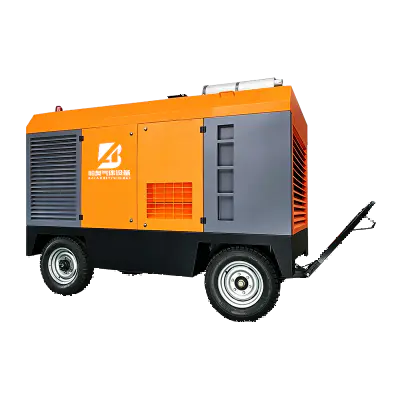
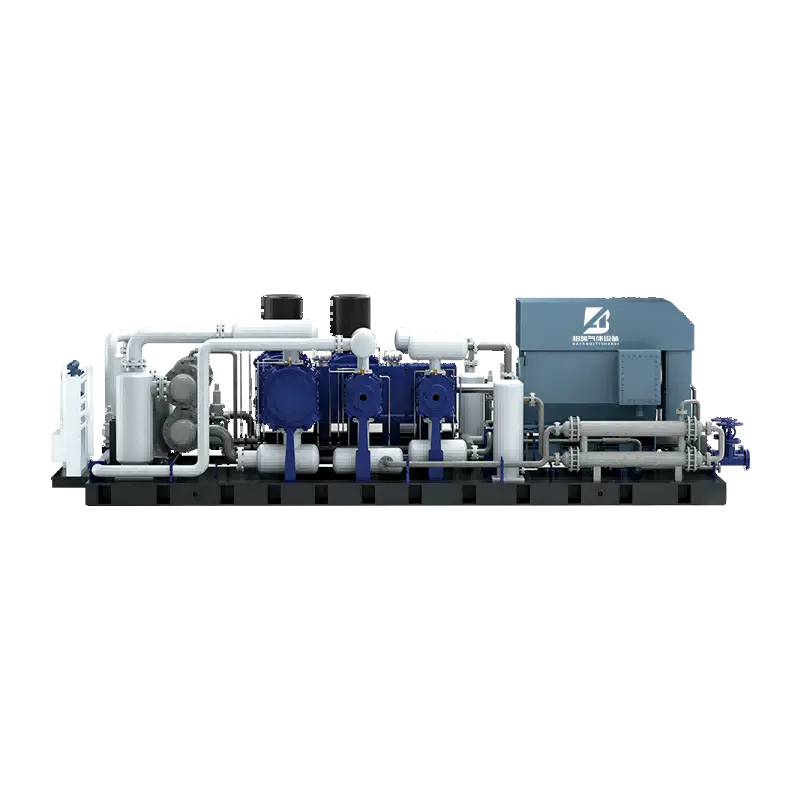
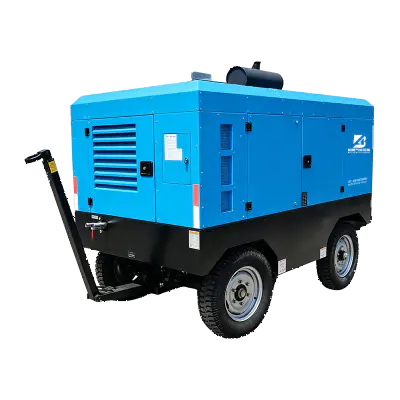
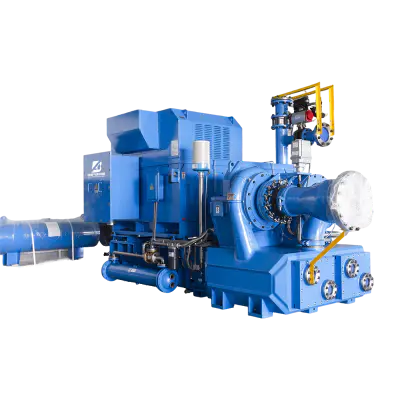
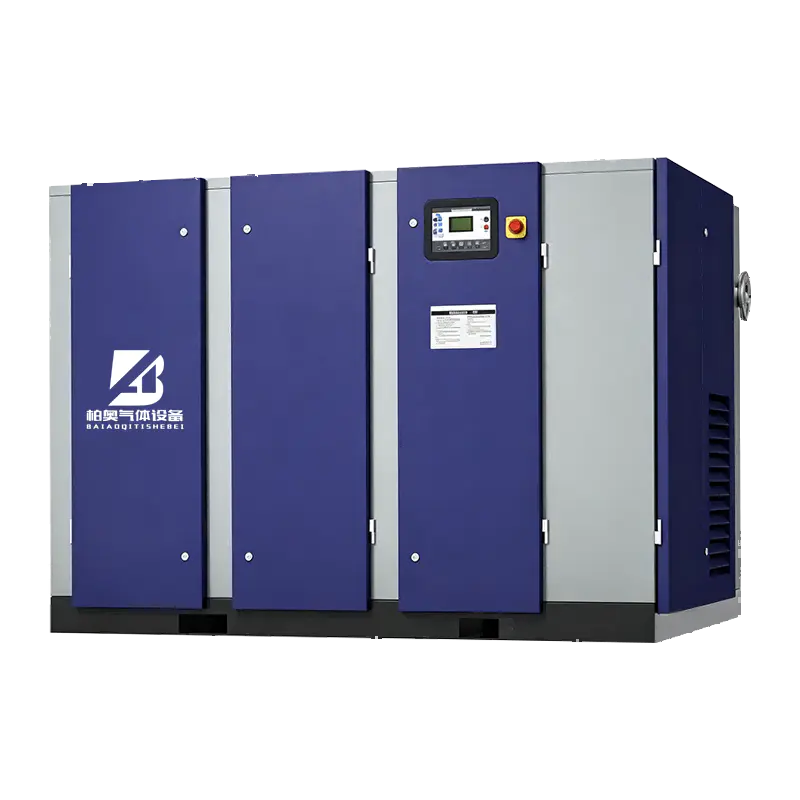
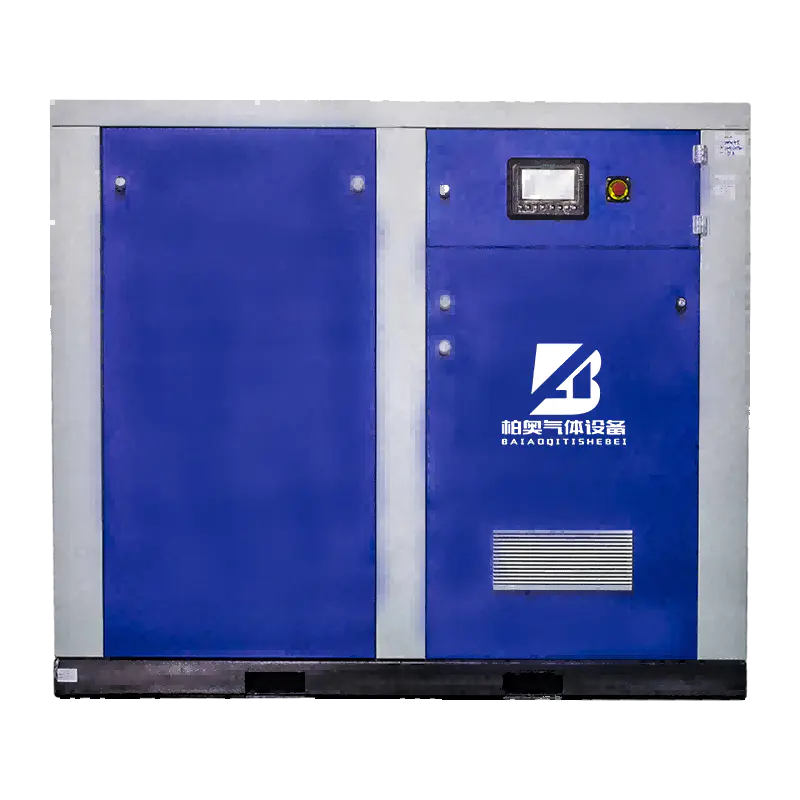
Electric Portable Air Compressor (8-18 Bar)
Rotary Screw Compression for Stable Industrial Performance
The compressor uses a rotary screw operating principle. In a screw compressor, air is drawn into the compression chamber and compressed as the rotating screw elements reduce the available volume. This continuous process creates a steady flow of compressed air rather than the pulsating discharge associated with some reciprocating compressor designs.
Stable airflow is valuable in applications where pressure fluctuation can affect machinery, instruments, or production results. Continuous compression also supports industrial systems that operate for extended periods. The absence of significant reciprocating motion contributes to smooth mechanical behavior and reduces the unbalanced inertial forces that can occur in other compressor types.
Because the compressor has few components and no conventional wearing parts in the core compression mechanism, it is designed for high reliability and an extended service life. The stated overhaul interval can reach approximately 40,000–80,000 operating hours, depending on operating conditions, maintenance practices, configuration, and service requirements. This long interval can help reduce major maintenance frequency and support a lower total cost of ownership.
Long service life does not mean that maintenance can be ignored. Filters, oil systems where applicable, cooling surfaces, electrical components, seals, safety devices, and control systems must still be inspected according to the operating environment. However, a compressor designed with fewer wear-prone components can simplify maintenance planning and reduce the risk of frequent mechanical intervention.
Key Advantage: High Reliability
Reliability is one of the most important selection criteria for a portable industrial compressor. Equipment deployed at different sites may encounter changes in ambient temperature, dust levels, operating schedules, and load conditions. A robust compressor must tolerate these variations while continuing to deliver usable compressed air.
The electric portable rotary screw design supports reliability in several ways. First, the compressor has a relatively simple core structure compared with systems that contain many reciprocating components. Fewer moving and wearing parts can reduce the number of potential failure points. Second, the rotary compression process operates smoothly, which can reduce mechanical vibration and stress. Third, the electric motor provides a controlled drive source suitable for industrial facilities with stable electrical power.
The projected overhaul interval of 40,000–80,000 hours is a significant benefit for users planning long-term operations. Such an interval may help reduce production interruptions caused by major overhauls. It may also make maintenance budgets more predictable, especially when the compressor is used in multi-shift production or other applications where air supply is required for long operating periods.
Reliability also depends on correct sizing. A compressor that is too small may operate continuously at maximum load, while an oversized unit may cycle inefficiently or operate away from its most suitable conditions. Selecting the appropriate pressure and FAD combination is therefore essential. The broad 30–250 kW power range allows users to choose a configuration more closely matched to their air demand.
Key Advantage: Convenient Operation and Maintenance
Industrial equipment must be powerful without being unnecessarily difficult to use. The electric portable air compressor is designed with a high degree of automation, allowing operators to manage routine operation without long-term professional training. This feature is particularly useful for factories and project sites where the compressor may be operated by personnel whose primary responsibilities are not compressor engineering.
Automated operation can support start-up, shutdown, pressure management, alarm handling, and basic protective functions. A suitable control system can help the compressor respond to demand while protecting the motor and compression assembly from abnormal operating conditions. It can also make the equipment easier to monitor during unattended or lightly attended operation.
Convenient operation reduces the learning curve for new personnel. This is valuable for mobile equipment that may be relocated between departments or sites. Instead of requiring a specialist operator at every location, the compressor can be integrated into a standard operating procedure with clear inspection and safety requirements.
Maintenance convenience is supported by the compressor’s limited number of major components and the long service interval of the main compression system. Routine maintenance can be organized around scheduled inspections, filter replacement, cooling-system cleaning, electrical checks, and verification of safety devices. A planned maintenance program is more effective than waiting for a fault to occur, particularly when the compressor is used in critical production or construction applications.
Operators should still receive training in electrical safety, pressure-system safety, emergency shutdown procedures, inspection routines, and the correct connection of air hoses and piping. Automation improves usability, but it does not replace safe operating practices.
Key Advantage: Excellent Power Balance and Smooth Operation
One of the product’s defining technical advantages is its excellent power balance. The machine does not depend on large unbalanced inertial forces, allowing it to run smoothly at high speed. This smooth behavior helps reduce vibration, noise transmission, and mechanical stress when the compressor is installed correctly.
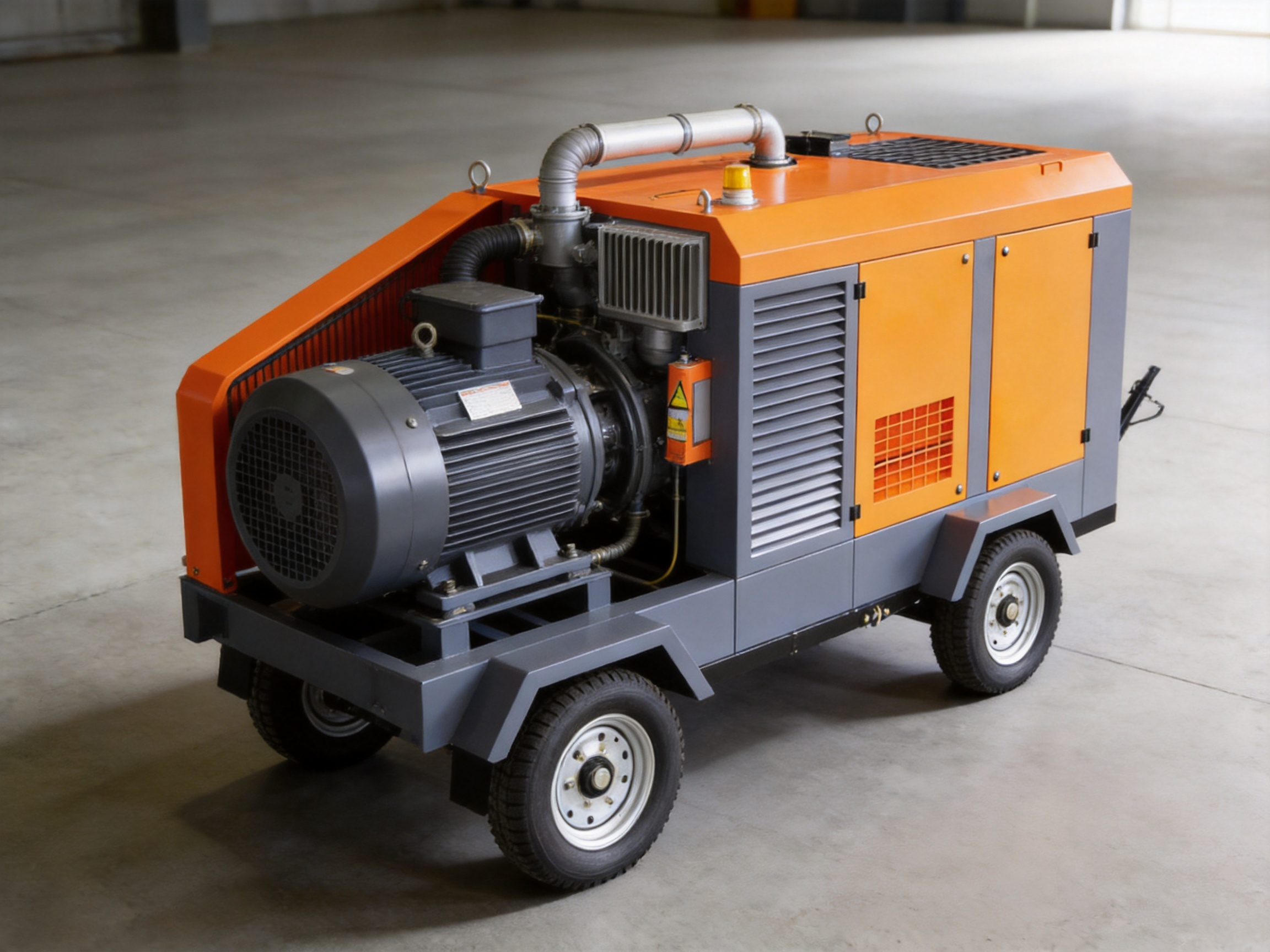
Because the compressor can operate smoothly without requiring a heavy foundation, it is particularly suitable for portable applications. Fixed compressor rooms often use concrete bases, vibration isolation structures, and permanent utility connections. A portable machine that does not require the same type of foundation can be placed more quickly and relocated with less civil work.
The reduced foundation requirement also supports installation in areas where construction work is limited. Examples include temporary workshops, industrial expansion projects, maintenance locations, field production areas, and remote sections of a plant. The compressor can be positioned closer to the air-consuming equipment, potentially reducing the length of temporary piping and simplifying system layout.
Compactness, low weight relative to equivalent fixed systems, and a small footprint are also important. Floor space is often expensive or unavailable in factories. A portable compressor can help users respond to changing production arrangements without building a dedicated compressor room for every new application.
Although the compressor is designed for mobility, the installation surface must still be stable, level, and suitable for the equipment weight. Adequate ventilation, electrical protection, drainage, access for inspection, and protection from severe environmental exposure should be provided. Good installation practice helps preserve the machine’s smooth operating characteristics.
Key Advantage: Strong Adaptability Across Pressure and Flow Conditions
The compressor uses forced gas transmission, meaning that its volumetric flow is comparatively less affected by discharge pressure than some other compression arrangements. This characteristic helps the machine maintain useful efficiency across a broad operating speed range and supports adaptation to different working conditions.
Industrial demand is rarely constant throughout an entire production day. Air consumption may change as tools start and stop, process equipment cycles, production shifts change, or temporary users are connected. A compressor with a flexible operating range can respond more effectively to these variations than a machine designed for only one narrow duty point.
The product family allows each basic model to be converted into a series of products with different displacements and discharge pressures according to user requirements. This configuration approach simplifies product selection. Rather than treating every pressure and capacity combination as an entirely separate machine concept, the manufacturer can adapt the basic platform to the required industrial duty.
Adaptability is especially useful for industries that have several compressed-air applications. A manufacturing plant may use air for pneumatic tools, automation equipment, cleaning, material handling, and process control. A construction or maintenance team may require a different combination of pressure and flow at each project. The ability to select from multiple configurations improves the chance that one compressor platform can serve different operational needs.
Users should define their compressed-air demand carefully before ordering. The required pressure should be measured at the point of use, not only at the compressor outlet. Pressure losses in hoses, filters, dryers, separators, valves, and distribution piping should be considered. Similarly, the required FAD should account for peak demand, average demand, future expansion, and the possibility of simultaneous operation of multiple air-consuming devices.
Electric Drive for Industrial Facilities
Electric drive is a practical choice for sites with reliable power distribution. Compared with fuel-powered portable equipment, an electric compressor can be integrated into an industrial electrical system without on-site fuel storage or routine engine refueling. This can simplify daily operation in factories, workshops, warehouses, processing facilities, and indoor industrial areas.
An electric motor also provides a direct and controllable source of mechanical power. The motor power range from 30 to 250 kW covers a wide selection of industrial applications, from medium-capacity compressed-air requirements to larger systems requiring substantial airflow.
Electrical installation must be planned according to the selected motor rating, voltage, frequency, starting method, protection requirements, and local regulations. The power supply should be capable of supporting the compressor during start-up and full-load operation. Correct cable sizing, grounding, circuit protection, and emergency isolation are essential for safe operation.
The electric configuration is particularly attractive for permanent or semi-permanent industrial sites where grid power is already available. For projects without a reliable electrical supply, an assessment should be made regarding the use of a suitable generator or alternative power source. Such an assessment must include starting current, generator capacity, voltage stability, operating hours, and the effect of other electrical loads.
Compact Design for Portable Applications
A portable compressor must balance output capacity with transportability. Excessive size can eliminate the practical value of portability, while an overly compact machine may lack the power needed for industrial work. The product is designed to provide a small footprint, manageable overall arrangement, and a broad capacity range.
Compact design can improve the utilization of factory space. It may also allow the compressor to be positioned near a temporary production line, maintenance area, or pneumatic tool station. Shorter connections can make temporary installation more convenient, although every installation should still include appropriate filtration, moisture management, pressure regulation, and safety protection for the connected equipment.
For mobile deployment, users should consider access routes, lifting points, transport restraints, surface conditions, and clearance around the compressor. The compressor should not be placed where ventilation openings are blocked or where dust, water, corrosive vapors, or extreme heat could adversely affect operation. Portable does not mean that the machine can be installed without environmental planning.
The product’s compact arrangement can also help reduce the time required to establish an air supply at a new location. This is valuable during equipment installation, plant modification, emergency maintenance, and construction activities. When compressed air can be provided without major civil work, project teams may respond more quickly to changing requirements.
Applications Across Industrial Sectors
Manufacturing and Assembly
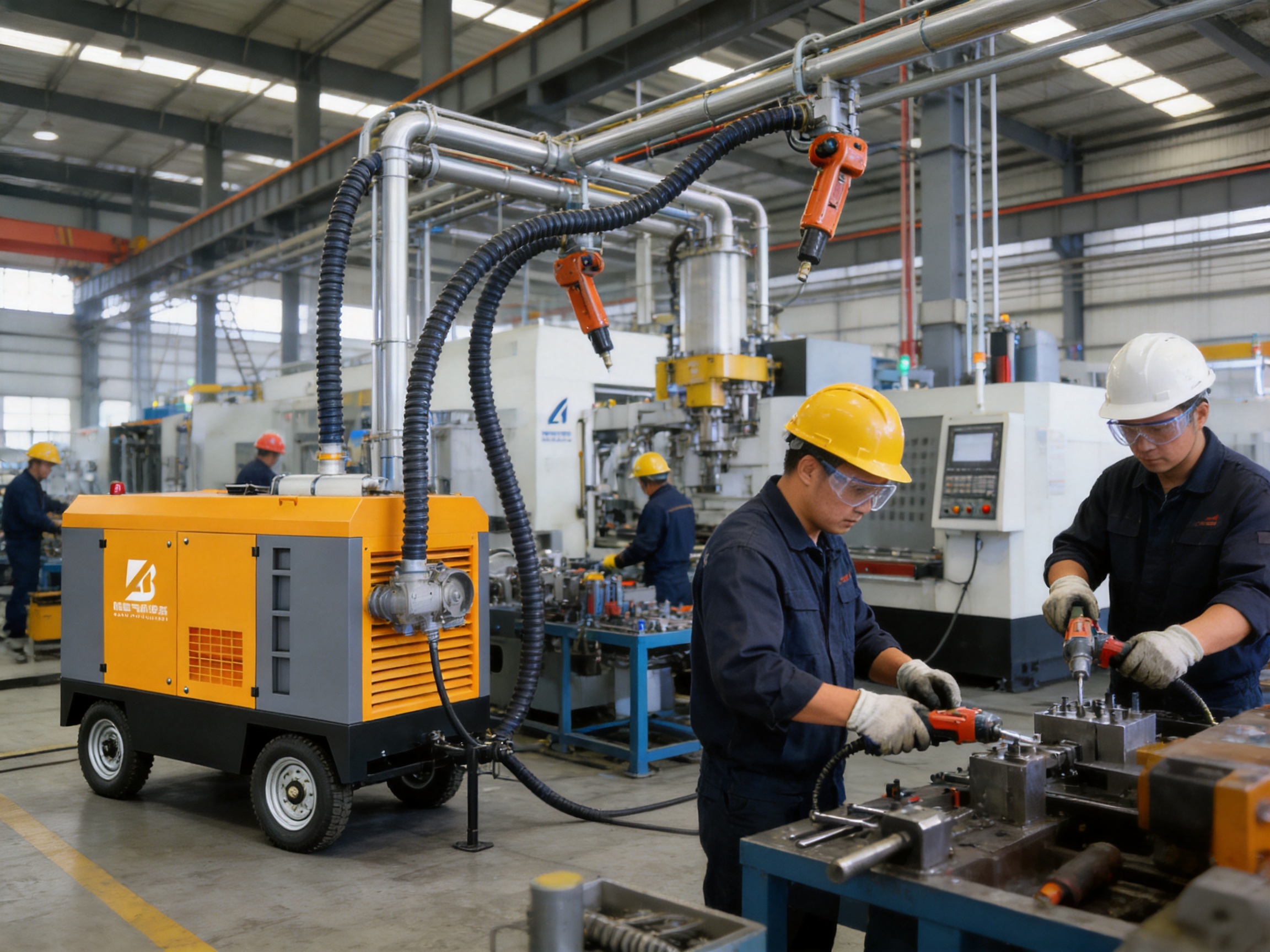
Manufacturing plants use compressed air for pneumatic actuators, assembly tools, automated machinery, air knives, cleaning, and material handling. The stable flow of a rotary screw compressor can support production systems that operate for long periods. A portable configuration allows the compressor to support a temporary line, a new production area, or an isolated machine during maintenance of the main air system.
Petrochemical and Process Industries
Petrochemical facilities and other process plants use compressed air for instrumentation, valve actuation, maintenance tools, and auxiliary operations. In these environments, dependable pressure and appropriate air treatment are important. The compressor can be selected according to the required pressure and capacity, while downstream filtration and drying equipment can be added when the process requires controlled air quality.
Textile Production
Textile facilities may use compressed air in weaving, spinning, control, cleaning, and material movement processes. Air demand can vary between production lines and during different operating stages. A flexible compressor configuration can help support individual lines, auxiliary equipment, or temporary production changes.
Food Processing
Food-processing operations may use compressed air for packaging machinery, pneumatic controls, conveying, cleaning, and automation. Where compressed air comes into direct or indirect contact with products, the air treatment system must be selected to meet the applicable hygiene and quality requirements. The compressor provides the compressed-air source, while filtration, separation, drying, and monitoring determine the final air quality.
Automotive Manufacturing
Automotive plants commonly use compressed air for assembly tools, body-shop equipment, painting-related systems, automation, testing, and maintenance. High and consistent flow can be important when multiple pneumatic devices operate simultaneously. The 30–250 kW power range gives users multiple options for supporting different departments or production stages.
Heat Treatment
Heat-treatment operations may require compressed air for control systems, pneumatic valves, handling systems, and maintenance. A portable compressor can be useful during furnace installation, equipment servicing, or plant expansion. The selected pressure and airflow should be matched to the specific process and any downstream gas-quality requirements.
SMT Electronics and Precision Production
Surface-mount technology and electronics production use compressed air for automation, pick-and-place systems, cleaning, control, and material handling. Stable pressure can support repeatable machine performance. For sensitive electronic processes, users should evaluate air cleanliness, moisture control, oil carryover, filtration, and the requirements of the connected equipment.
Construction and Industrial Maintenance
Construction and maintenance projects often need compressed air away from a permanent compressor room. The portable structure allows the equipment to be moved closer to pneumatic tools, temporary machinery, and installation work. Electric drive is particularly suitable for sites where industrial power is available and where indoor emissions or fuel handling are undesirable.
Manufacturing Strengths and Quality Approach
The supplier is a gas equipment manufacturer located in Fuyang District, Hangzhou, Zhejiang Province, China. Its operations integrate research and development, engineering design, production, installation, and after-sales service. This integrated structure is important because industrial compressor performance depends not only on the individual machine but also on correct configuration, installation, commissioning, and service support.
The company operates a standardized workshop of approximately 3,000 square meters, an office area of approximately 500 square meters, and a warehouse of approximately 500 square meters. These facilities provide space for engineering work, production activities, inventory management, assembly, inspection, and coordination between technical and service teams.
An integrated manufacturing process can support better communication between design personnel and production staff. Product requirements can be reviewed before fabrication and assembly. Equipment can be configured according to the user’s requested pressure, capacity, and power range. Production coordination can also help reduce errors that may occur when design, assembly, installation, and service are handled by unrelated organizations.
The company’s broader expertise includes gas separation and purification equipment, such as PSA nitrogen generators, PSA oxygen generators, membrane nitrogen and oxygen generators, nitrogen purification units, and ammonia decomposition hydrogen purification units. This background is relevant to industrial compressed-air users because compressor systems are often connected to gas-generation and gas-purification processes.
Experience in gas equipment encourages a systems-based approach. Instead of considering the compressor as an isolated machine, engineers can evaluate its role within a complete gas supply system. This may include compressed-air generation, filtration, drying, pressure control, gas separation, purification, storage, distribution, and process integration.
The company states that its products are developed using overseas technologies and optimized for industrial conditions in China. Technology adaptation is important because equipment must operate effectively under actual local conditions, including ambient temperature, dust exposure, power quality, maintenance practices, and industry-specific requirements.
Advanced Production and Project Execution Process
A reliable industrial compressor begins with a clear technical specification. Before production, the required working pressure, FAD, motor power, operating schedule, installation location, ambient conditions, electrical supply, mobility requirements, and downstream air treatment should be identified. This information helps determine the appropriate basic model and configuration.
During the engineering stage, the manufacturer can assess the relationship between displacement, discharge pressure, motor capacity, and expected duty cycle. A correct balance is essential. If the pressure requirement is increased without reviewing flow and motor power, the compressor may not meet the user’s actual process demand. Engineering review helps prevent inappropriate selection.
Production then involves the preparation of the compressor assembly, motor, control elements, pressure-related components, cooling arrangements, structural frame, and associated accessories. The compact portable structure must be arranged so that components remain accessible for inspection while maintaining a protected and stable layout.
Assembly quality is particularly important for rotating machinery. Alignment, fastening, piping connections, electrical termination, sealing, and vibration control must be handled carefully. A well-organized workshop environment can support repeatable assembly procedures and reduce the risk of installation-related faults.
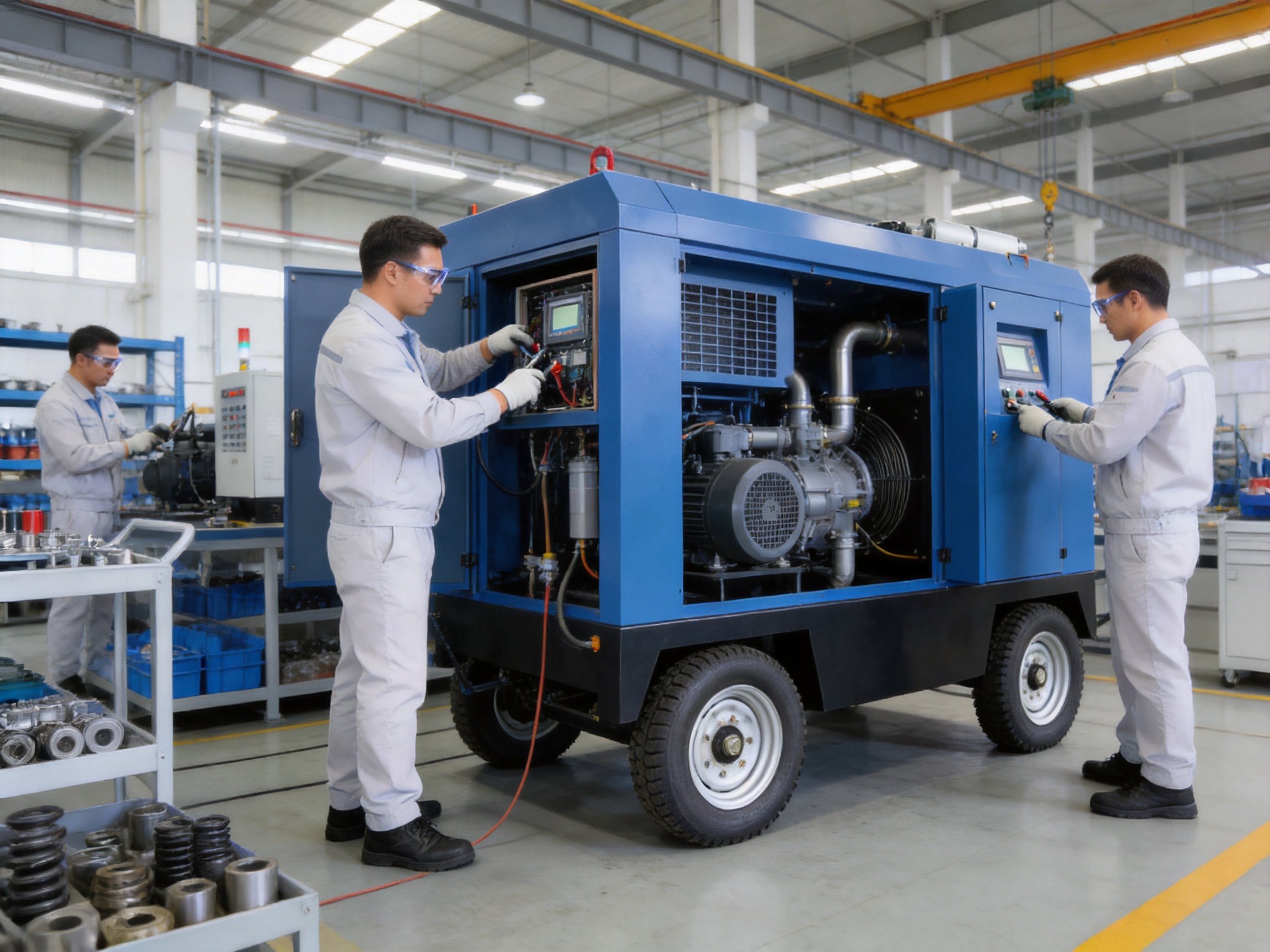
Inspection and testing should verify that the assembled unit operates as intended. Performance checks may include start-up behavior, operating pressure, airflow, motor operation, control response, alarm functions, leakage inspection, vibration observation, and safety shutdown verification. The exact test program should reflect the selected configuration and applicable technical requirements.
Installation and commissioning extend the manufacturing process into the customer’s facility. The supplier’s ability to provide installation and after-sales service can help ensure that the compressor is connected correctly and adjusted for the intended application. Commissioning should confirm electrical parameters, ventilation, piping, pressure settings, rotation, control behavior, and operating documentation.
After commissioning, service support remains important. Operators may need guidance on routine inspection, maintenance intervals, alarm interpretation, filter care, and safe shutdown. A manufacturer that combines production with technical service is better positioned to understand the equipment throughout its operating life.
Advantages Over Conventional Alternatives
The electric portable rotary screw compressor has several advantages when compared with conventional fixed compressor installations or less adaptable portable machines. Its first advantage is installation flexibility. A fixed system may require a dedicated room, foundation, permanent piping, and extensive planning. The portable unit can be positioned where air is needed with less structural work.
Its second advantage is operating smoothness. The absence of unbalanced inertial forces supports high-speed operation with reduced vibration. This can be beneficial where the compressor is installed on a temporary platform or in a location where heavy civil construction is undesirable.
Its third advantage is configuration flexibility. The broad range of motor powers, pressures, and FAD values allows users to select a product that more closely matches their process requirements. Narrow-range machines may force users either to accept insufficient capacity or to purchase an unnecessarily large system.
Its fourth advantage is service life. The stated overhaul interval of 40,000–80,000 hours is designed to reduce the frequency of major intervention. For users operating multiple shifts or remote equipment, long service intervals may reduce maintenance logistics and downtime.
Its fifth advantage is ease of operation. High automation can make the compressor accessible to a wider range of operators. This is useful for organizations that need reliable equipment without assigning a specialist to every operating location.
Its sixth advantage is adaptability to changing air demand. Forced gas transmission and a wide speed range help the compressor maintain useful performance across different operating conditions. This is particularly valuable in facilities where production schedules and air consumption change during the day.
Energy and Total Cost Considerations
Electricity is often the largest operating expense associated with compressed-air generation. For this reason, compressor selection should consider not only the purchase price but also power consumption, operating hours, pressure requirements, maintenance, downtime, and system losses.
A correctly selected compressor can reduce the risk of operating significantly above the required pressure. Excessive pressure increases energy consumption and may place unnecessary stress on downstream equipment. Users should identify the minimum pressure needed at the point of use and include only the pressure losses that are technically necessary.
Efficiency is also affected by leaks, inappropriate piping, blocked filters, poor cooling, and incorrect control settings. A portable compressor can deliver strong performance, but the complete air system must be managed properly. Regular leak inspections, filter maintenance, pressure optimization, and load monitoring can improve overall system efficiency.
The long overhaul interval can contribute to total cost control by reducing the frequency of major maintenance events. The compact configuration may also reduce installation costs where a fixed compressor room or foundation would otherwise be required. However, total cost should be evaluated using the specific operating profile, electricity tariff, expected service life, maintenance plan, and site conditions.
When comparing alternatives, buyers should request comparable data. Pressure, FAD, motor input, reference conditions, cooling requirements, control method, noise, dimensions, weight, maintenance intervals, and warranty terms should be reviewed together. Comparing only motor power or only purchase price may lead to an inaccurate assessment of value.
Installation and Commissioning Recommendations
The installation area should provide sufficient ventilation to dissipate heat generated by the motor and compression process. Air intake openings and cooling surfaces should remain clear. The compressor should be protected from excessive dust, corrosive gases, direct water exposure, and conditions that exceed its design limits.
The foundation or support surface should be stable and level even though a large permanent foundation is not required. The machine should be positioned to prevent movement during operation. Adequate clearance should be left around inspection panels, electrical cabinets, filters, and service points.
Electrical connections should be completed by qualified personnel. The supply voltage, frequency, phase arrangement, cable sizing, grounding, overload protection, and emergency isolation should be checked before start-up. The compressor must not be connected to a power supply that is unstable or unsuitable for the selected motor.
Air piping should be sized to minimize pressure loss. Hoses and pipes must be rated for the operating pressure, and connections should be inspected for leakage. Where the application requires dry or clean air, suitable separators, filters, dryers, receivers, and regulators should be installed downstream.
Commissioning should begin with a visual inspection and confirmation that all transport restraints, protective materials, and temporary covers have been removed. The operator should verify lubricant levels where applicable, check the direction of rotation, inspect electrical connections, and confirm that safety devices are ready for operation.
After start-up, the compressor should be observed for abnormal vibration, unusual noise, leakage, overheating, unstable pressure, or control alarms. Initial operating data should be recorded so that future maintenance teams can identify changes in performance.
Maintenance and Long-Term Operation
Routine maintenance should follow the manufacturer’s instructions and the actual severity of service. A dusty construction site may require more frequent cleaning than a controlled factory environment. High ambient temperature, extended operation, frequent starts, and fluctuating loads may also affect inspection intervals.
Daily or shift-based checks may include operating pressure, temperature indicators, alarm status, visible leakage, unusual sound, and general cleanliness. Periodic maintenance may include filter inspection, cooling-surface cleaning, electrical-terminal checks, hose and piping inspection, safety-device verification, and review of operating records.
Planned service is important even when the main compression mechanism has a long overhaul interval. Small issues can develop into significant failures if they are ignored. For example, a blocked filter can increase pressure losses, poor ventilation can raise operating temperature, and a loose electrical connection can create heat and instability.
Maintenance records should include operating hours, service dates, replaced components, alarm events, pressure readings, and observations from inspections. These records help users predict future service needs and evaluate whether the compressor is operating within its intended conditions.
When the compressor is moved between sites, it should be inspected before and after transport. Connections should be protected, the unit should be secured appropriately, and the new installation should be checked for electrical compatibility, ventilation, surface stability, and air-piping safety.
How to Select the Correct Configuration
The first selection question is the required working pressure. Users should identify the pressure required by the most demanding connected equipment and add a reasonable allowance for distribution losses. The pressure should not be increased unnecessarily because higher pressure can increase energy consumption.
The second question is air capacity. The total demand of all connected devices should be calculated, taking into account which devices operate simultaneously. Peak demand, future production expansion, and short-duration high-flow events should be considered.
The third question is operating pattern. A compressor used continuously in a three-shift factory has different requirements from one used intermittently for maintenance. Continuous-duty applications place greater importance on cooling, service planning, energy management, and long-term reliability.
The fourth question is installation environment. Indoor factories, outdoor construction areas, dusty workshops, food-processing rooms, and remote industrial sites may require different protection, filtration, ventilation, and service arrangements.
The fifth question is electrical infrastructure. The available voltage, frequency, transformer capacity, cable route, and protective equipment must support the selected 30–250 kW motor range. The installation should be reviewed before the compressor is delivered.
The final question is future flexibility. If air demand is expected to increase, the user may select a configuration that allows reasonable expansion or use multiple compressors for staged capacity. Technical consultation with the manufacturer can help determine whether a particular basic model should be adapted for a higher pressure, a greater displacement, or a different duty cycle.
Frequently Asked Questions
What type of compressor is this product?
It is an electric portable rotary screw air compressor designed for industrial compressed-air applications. It combines an electric motor, rotary screw compression system, automated controls, and a portable structural arrangement.
What pressure range is available?
The product title identifies an 8–18 bar range, while the broader technical data lists configurations from 8 to 24 bar. The final pressure should be confirmed according to the selected model and user requirements.
What air capacity can the compressor provide?
The listed free air delivery range is approximately 5–30 m³/min, or about 176.6–1059.4 cfm. Actual output depends on the selected pressure, model, operating conditions, and reference measurement conditions.
What motor power range is available?
The available power range is approximately 30–250 kW, equivalent to about 40.2–335.3 hp. This range allows the compressor family to cover medium and large industrial compressed-air requirements.
Does the compressor require a permanent concrete foundation?
The machine is designed to operate smoothly without requiring the type of heavy permanent foundation commonly associated with some fixed compressor installations. It still requires a stable, level, and suitable support surface.
Is the compressor suitable for unattended operation?
The equipment features a high degree of automation and is intended to support unattended or lightly attended operation. Operators must still follow safety procedures, inspect the machine, respond to alarms, and perform scheduled maintenance.
What makes the compressor reliable?
The rotary screw design has relatively few components and no conventional wearing parts in the main compression mechanism. Smooth operation and the stated overhaul interval of approximately 40,000–80,000 hours also contribute to its long-term reliability potential.
Can one basic model be configured for different applications?
Yes. Each basic model can be converted into a series of products with different displacements and discharge pressures according to user requirements. Technical selection should be based on pressure, FAD, motor power, duty cycle, and site conditions.
Which industries can use this compressor?
Potential applications include petrochemical, textile, food processing, automotive manufacturing, heat treatment, SMT electronics, construction, industrial maintenance, and general manufacturing.
Does the compressor provide clean and dry air automatically?
The compressor provides compressed air, but the required final air quality depends on the application and downstream treatment. Filters, separators, dryers, receivers, and other air-treatment equipment may be required for food processing, electronics, instrumentation, painting, or other sensitive uses.
What information should be supplied when requesting a quotation?
Users should provide the required pressure, air capacity, motor power or electrical supply, operating hours, installation location, ambient conditions, portability requirements, air-quality requirements, and preferred accessories. This information helps the manufacturer recommend a suitable configuration.
What maintenance does the compressor require?
Maintenance normally includes inspection of filters, cooling surfaces, electrical components, connections, safety devices, control functions, and operating conditions. Service intervals should be established according to the manufacturer’s instructions and the actual working environment.
Conclusion
The electric portable air compressor is designed to deliver industrial-grade compressed air in a compact and adaptable package. Its rotary screw compression principle provides stable airflow, while the limited number of major components supports reliability and a long overhaul interval. Smooth high-speed operation reduces the need for a heavy permanent foundation and makes the machine suitable for mobile or semi-permanent industrial installations.
With working pressure configurations from approximately 8 to 24 bar, air capacity from 5 to 30 m³/min, and motor power from 30 to 250 kW, the product family can address a wide range of industrial requirements. Automated operation simplifies use, while forced gas transmission supports adaptability across different speeds, pressures, and flow conditions.
The manufacturer strengthens the product offering through integrated research and development, design, production, installation, and after-sales service. Its standardized workshop, engineering resources, warehouse facilities, and experience with gas separation and purification equipment support a systems-oriented approach to industrial gas equipment.
For users comparing portable compressors, the most important evaluation factors are not limited to purchase price. Reliability, pressure stability, air capacity, electrical compatibility, service life, maintenance access, installation flexibility, energy performance, and technical support should all be considered. When correctly selected and maintained, this electric portable rotary screw compressor can provide a dependable compressed-air source for changing industrial environments.
References
1. Product technical information for electric portable rotary screw air compressors, including working pressure, free air delivery, motor power, and configuration range.
2. Industrial compressed-air system selection and operating-practice principles.
3. General engineering guidance for rotary screw compressor installation, maintenance, air treatment, and energy management.
4. Industrial machinery safety principles for electrical connection, pressure equipment, commissioning, and routine inspection.
5. Technical practices for compressed-air applications in manufacturing, petrochemical, textile, food-processing, automotive, heat-treatment, and electronics industries.
Product: Electric Portable Air Compressor (8-18 Bar)

- Tel: +86-15057127179
+86-13588382771 - Email: huang.yifan0215@gmail.com
- Address: Huanshan Township, Fuyang District, Hangzhou City, Zhejiang Province
Copyright © Zhejiang Baiao Gas Equipment Co., Ltd. All Rights Reserved.
Privacy
Gas Generator Plant Manufacturer, Industrial Purification Equipment Plant
