 en
en русский
 Español
 عربى
عربى
Micro-Heat Regenerative Adsorption Dryer for Efficient Industrial Gas Purification
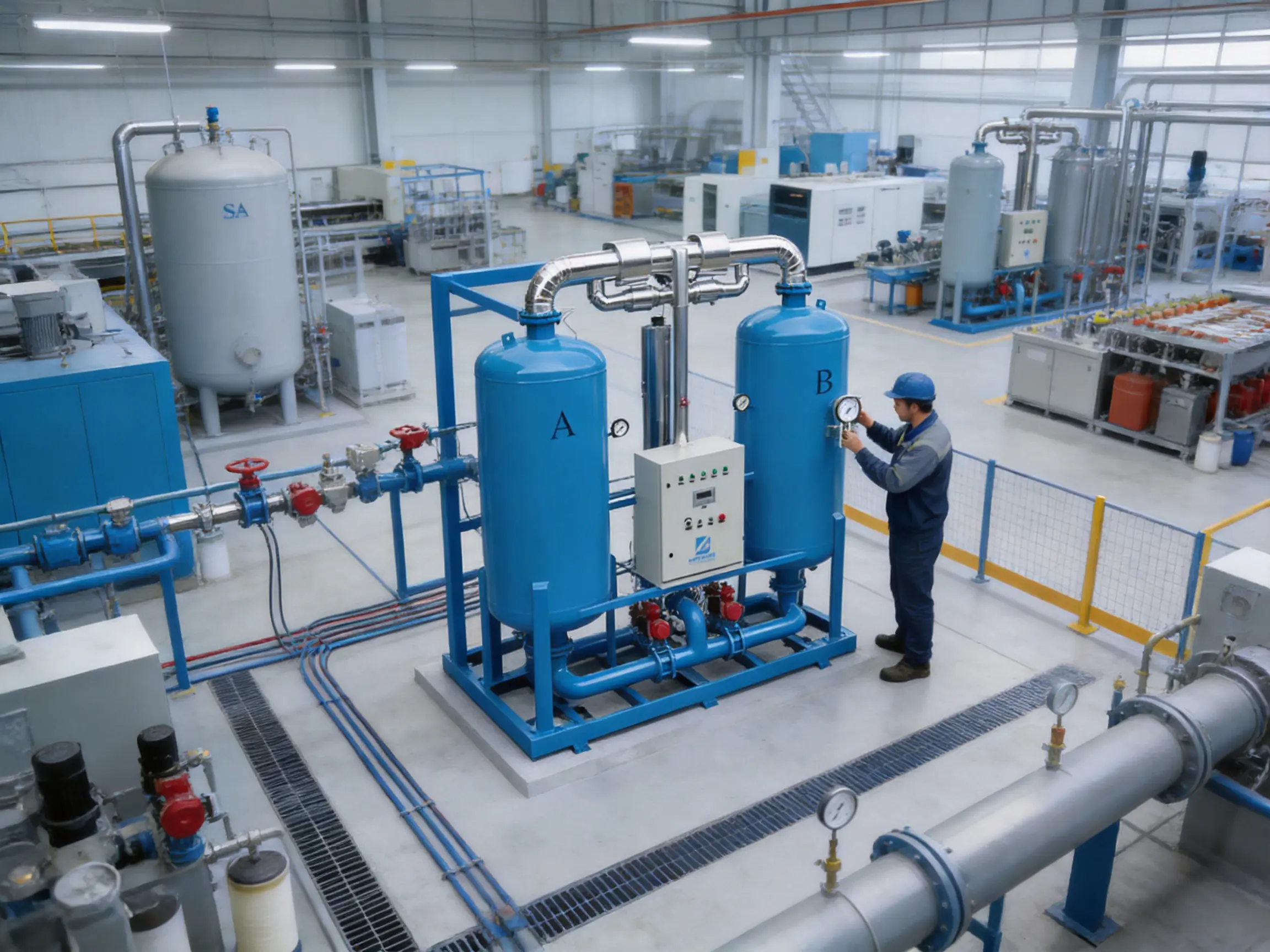
Reliable compressed-air treatment is essential wherever moisture can damage equipment, reduce product quality, or compromise downstream gas-generation and purification processes. In industrial environments, compressed air is rarely used in its untreated form. It may contain water vapor, liquid condensate, oil aerosols, and particulate matter introduced during compression, storage, or distribution. If this contamination is not controlled, it can corrode pipelines, block pneumatic valves, damage instruments, contaminate production materials, and shorten the service life of gas separation equipment.
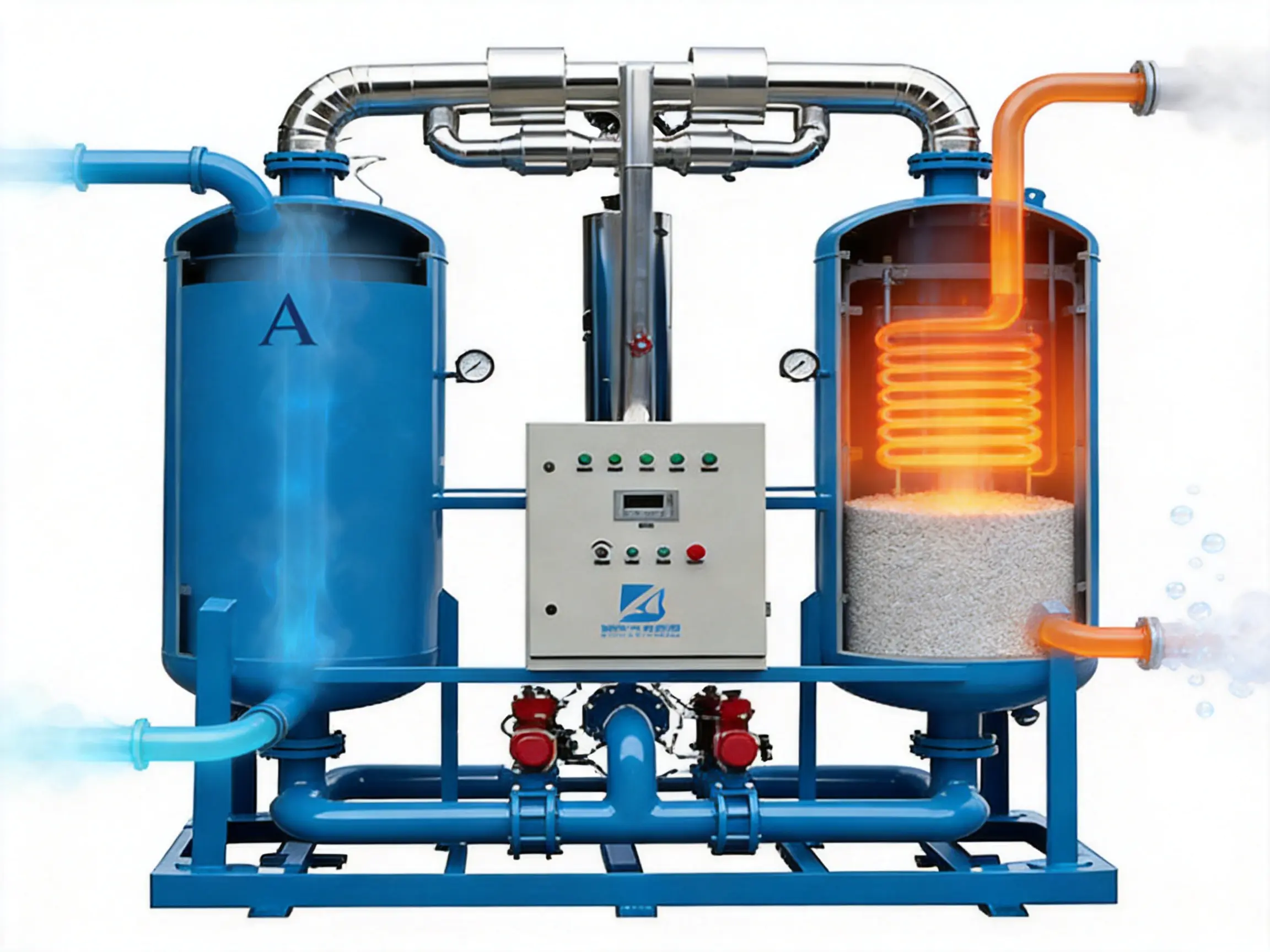
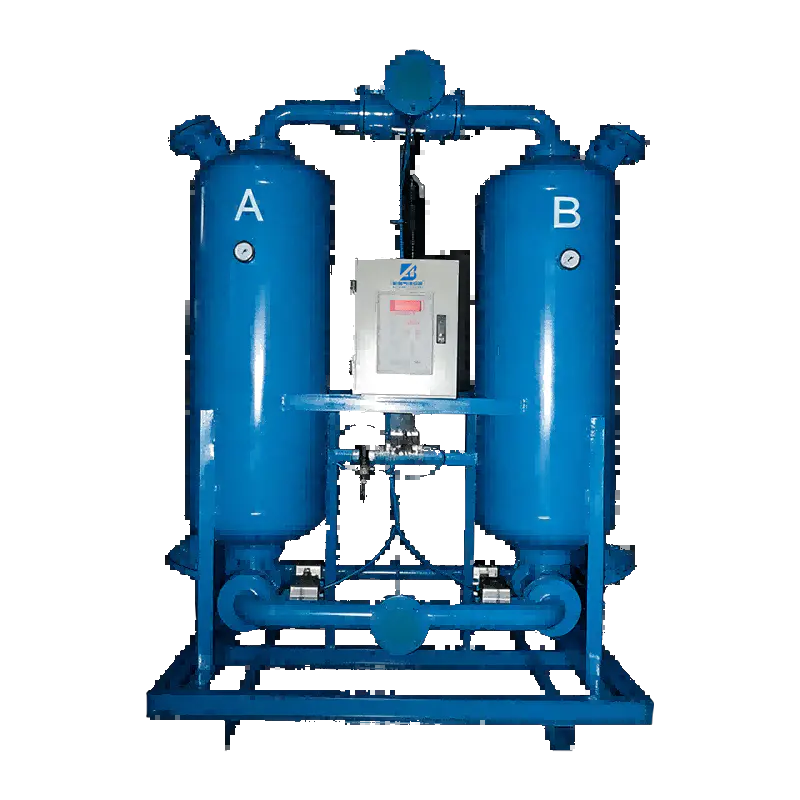
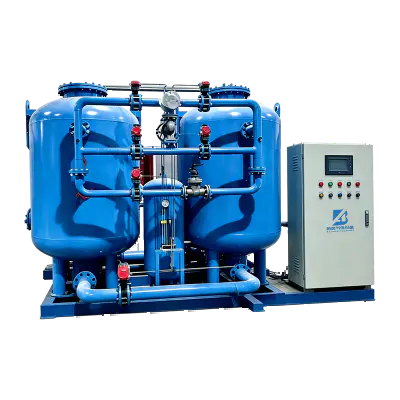
The BEL micro-heat regenerative adsorption dryer is designed to provide stable, low-dew-point compressed air for industrial applications. It combines the operating principles of heatless and heated regeneration dryers. During regeneration, a portion of the processed gas is heated before it passes through the saturated desiccant bed. This approach improves moisture removal while reducing regeneration-gas consumption compared with many conventional heatless arrangements.
The equipment is part of a broader industrial gas purification portfolio that includes gas separation units, gas generators, and compressed-air treatment systems. It is intended for users that require dependable drying performance, controlled operating costs, convenient maintenance, and a flexible range of capacities. Available models cover rated gas processing capacities from approximately 3 to 220 Nm³/h, while customized pressure and dew-point configurations are also available.
Content
- 1 Why Compressed-Air Drying Matters in Industrial Systems
- 2 Operating Principle of the Micro-Heat Regenerative Dryer
- 3 Key Advantages Compared with Conventional Drying Solutions
- 4 Technical Specifications
- 5 Model Range and Capacity Selection
- 6 Intelligent PLC Control and Operating Stability
- 7 Manufacturing Strengths and Engineering Capabilities
- 8 Manufacturing and Quality-Control Considerations
- 9 Installation Requirements
- 10 Commissioning and Daily Operation
- 11 Maintenance and Service Life
- 12 Applications in Industrial Gas Systems
- 13 Product: BEL Micro-heat Regenerative Adsorption Dryer
Why Compressed-Air Drying Matters in Industrial Systems
Atmospheric air naturally contains water vapor. When air is compressed, its temperature and pressure change, and a considerable amount of moisture may condense inside compressors, aftercoolers, receivers, filters, and pipelines. Even after liquid water is removed, compressed air may remain saturated with water vapor. When the air later expands or cools, that vapor can condense in sensitive parts of the system.
Simple water separators and refrigerated dryers can remove liquid water and reduce the air’s moisture content, but they may not achieve the low pressure dew points required by many industrial processes. Adsorption dryers use a porous desiccant to capture water vapor from compressed air. They are therefore suitable for applications requiring a pressure dew point of approximately -40°C or lower.
Dry compressed air is particularly important for:
• Pneumatic control systems that rely on responsive valves and actuators.
• Instrument air networks used in process plants.
• Nitrogen and oxygen generation systems.
• Gas purification and separation equipment.
• Heat-treatment and metal-processing operations.
• Food and beverage production lines.
• Textile machinery and spinning systems.
• Automotive manufacturing and painting operations.
• SMT electronics and other precision production environments.
• Chemical and petrochemical plants where moisture can interfere with process chemistry.
When the dryer is correctly selected and maintained, it helps protect downstream equipment and improves the consistency of the entire compressed-air network.
Operating Principle of the Micro-Heat Regenerative Dryer
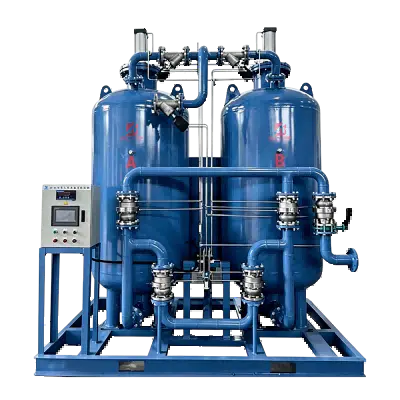
The dryer generally uses two adsorption vessels filled with desiccant. While one vessel is in the adsorption phase, the other vessel is regenerated. The vessels alternate automatically according to the programmed cycle sequence.
During adsorption, wet compressed air enters the active vessel. The desiccant captures water vapor as the air passes through the bed. The dried air then leaves the vessel and continues to the application or downstream purification equipment.
Once the adsorption vessel approaches its moisture-loading limit, the control system changes the flow path. The second vessel becomes the adsorption vessel, while the saturated vessel enters regeneration. A controlled amount of dry product gas is directed through the regeneration circuit and heated. The heated regeneration gas removes moisture retained inside the desiccant pores and carries it out of the vessel.
After the heating stage, the regenerated vessel may be cooled and repressurized before returning to service. This sequencing allows the equipment to maintain a continuous supply of dry compressed air while the desiccant beds alternate between service and regeneration.
The hybrid operating concept is the central feature of the product. A traditional heatless dryer usually depends on a larger quantity of dry purge gas to regenerate the desiccant. A fully heated dryer may require greater heating-system complexity and a longer cooling sequence. The micro-heat design combines controlled heating with a limited regeneration-gas flow, helping achieve a balance among dew-point performance, energy use, cycle stability, and equipment complexity.
Key Advantages Compared with Conventional Drying Solutions
Reduced Regeneration-Gas Consumption
The stated regeneration-air consumption is approximately 4–6 percent, depending on operating conditions and configuration. This is an important advantage for plants where compressed air is generated by energy-intensive compressors. Every percentage point of purge air represents air that must be produced, compressed, cooled, filtered, and distributed without directly contributing to the production process.
By using heating to improve the moisture-removal effect, the dryer can reduce its dependence on large purge volumes. Lower regeneration consumption may help increase the quantity of usable air available to the plant and reduce the indirect energy cost associated with drying.
Actual consumption depends on inlet pressure, flow rate, inlet temperature, ambient conditions, desiccant condition, cycle time, and the required dew point. For this reason, users should evaluate the complete operating profile rather than compare purge percentages in isolation.
Low Pressure Dew Point
The standard dew-point specification is no higher than -40°C, with optional configurations ranging from -40°C to -73°C. These values make the dryer suitable for applications that need more than basic condensate removal.
A low pressure dew point helps prevent moisture condensation in downstream lines under normal operating conditions. It also reduces the risk of ice formation or moisture-related contamination when air is expanded, cooled, or used in a dry production environment.
Stable Performance Across Industrial Applications
The equipment is designed for an operating pressure range of 0.4–1.0 MPa, with higher-pressure options from 1.0–3.0 MPa available. This flexibility allows the system to be matched with different compressor packages, air receivers, gas-generation units, and process-air networks.
The inlet temperature is specified at no more than 50°C. Maintaining the inlet temperature within the recommended range is important because adsorption capacity decreases as the temperature of the incoming air increases. Correct upstream cooling and condensate separation are therefore essential to achieving the specified dew point.
Low Pressure Drop
The specified pressure drop is no more than 0.02 MPa. A low pressure drop helps preserve useful compressed-air pressure for the production process and reduces the pressure differential that the compressor must overcome.
Pressure-drop performance depends on air velocity, filter condition, desiccant loading, vessel design, valve condition, and the cleanliness of the inlet air. The dryer’s internal airflow-diffusion arrangement is intended to distribute air evenly through the desiccant bed, supporting efficient contact while limiting unnecessary resistance.
Long-Life Pneumatic Valve System
The dryer uses advanced pneumatic valves with a stated service life of more than one million cycles. Valve durability is important because the regeneration dryer operates through repeated switching between adsorption, regeneration, cooling, and repressurization steps.
Valve failure can cause cross-flow, pressure loss, dew-point deterioration, excessive purge consumption, or unplanned downtime. Long-cycle-life valves can therefore reduce maintenance frequency and improve availability. Their performance still depends on clean, dry control air, suitable working pressure, correct installation, and regular inspection of seals and actuators.
Improved Desiccant Protection
The specialized airflow-diffusion device helps distribute incoming air across the desiccant bed. Proper distribution reduces localized high-velocity flow, channeling, and mechanical stress on the adsorbent.
Uneven airflow can create preferential paths through the bed. When this happens, some desiccant may be overloaded while other material is underused. Channeling also reduces contact time between the air and the adsorbent, which may cause early dew-point breakthrough. A well-designed diffusion system helps the desiccant work more uniformly and may extend its useful operating life.
Convenient Desiccant Replacement
The flanged filling port is designed to simplify desiccant loading and replacement. Maintenance teams can access the vessel through a dedicated port rather than performing extensive disassembly of the system.
Convenient filling and discharge arrangements are especially valuable for facilities that operate several dryers or gas-purification units. Shorter maintenance procedures can reduce labor requirements and help return the unit to service more quickly.
Clear Operating Visibility
The unique sight-glass design gives operators a direct view of relevant operating conditions. Visual inspection can help maintenance personnel identify abnormal flow behavior, desiccant movement, condensation, or other conditions that may require attention.
Although a sight glass does not replace instrumentation, alarms, or preventive maintenance, it provides an additional source of practical information during routine inspection and troubleshooting.
Technical Specifications
The principal operating specifications are summarized below. The values represent the standard configuration and the available optional ranges stated for the product.
| Item | Specification |
| Product type | Micro-heat regenerative adsorption dryer |
| Standard operating pressure | 0.4–1.0 MPa |
| Optional operating pressure | 1.0–3.0 MPa |
| Standard pressure dew point | ≤ -40°C |
| Optional pressure dew point | -40°C to -73°C |
| Maximum inlet temperature | ≤ 50°C |
| Regeneration-air consumption | Approximately 4–6% |
| Pressure drop | ≤ 0.02 MPa |
| Cycle time | 60–120 minutes |
| Control system | PLC-based intelligent control |
| Valve service life | More than 1 million cycles |
The final selection should be based on the actual operating pressure, required flow, inlet temperature, target dew point, compressor characteristics, and environmental conditions. A model that is too small may produce excessive velocity and premature breakthrough, while an oversized unit may increase capital cost without providing a proportional operating benefit.
Model Range and Capacity Selection
The available model range begins with the BEL-3 and extends to the BEL-200. Rated gas processing capacity increases from approximately 3 Nm³/h to 220 Nm³/h. This range allows the product family to serve small pneumatic systems, laboratory or pilot installations, and larger industrial gas-treatment applications.
| Model | Rated gas processing capacity (Nm³/h) | Inlet and outlet diameter DN (mm) | Power supply | Installed power (kW) | Dimensions L × W × H (mm) | Equipment weight (kg) |
| BEL-3 | 3 | 32 | 220 V / 50 Hz | 1.35 | 1150 × 385 × 1370 | 370 |
| BEL-6 | 7.2 | 40 | Configuration dependent | 3.1 | 1310 × 500 × 1830 | 675 |
| BAL-12 | 13.2 | 50 | 380 V / 50 Hz | 5.8 | 1550 × 625 × 1930 | 1050 |
| BEL-20 | 22 | 65 | Configuration dependent | 9.7 | 1950 × 685 × 2180 | 1050 |
| BEL-30 | 33 | 80 | Configuration dependent | 14.7 | 1950 × 685 × 3600 | 1800 |
| BEL-40 | 44 | 100 | Configuration dependent | 19.5 | 2200 × 775 × 2570 | 2520 |
| BEL-60 | 66 | 125 | Configuration dependent | 29.7 | 2400 × 1000 × 2790 | 3750 |
| BEL-80 | 88 | 150 | Configuration dependent | 41.5 | 2650 × 1100 × 2980 | 4100 |
| BEL-100 | 110 | 150 | Configuration dependent | 52 | 2930 × 1200 × 3200 | 4760 |
| BEL-150 | 165 | 200 | Configuration dependent | 76.5 | 3500 × 1650 × 3560 | 5820 |
| BEL-200 | 220 | 250 | Configuration dependent | 93 | 3600 × 1680 × 3650 | 7280 |
The published model data should be confirmed during the technical quotation stage, particularly for electrical supply, installed power, dimensions, and connection arrangements. Larger systems may require special foundations, lifting equipment, ventilation, electrical protection, and access space for maintenance.
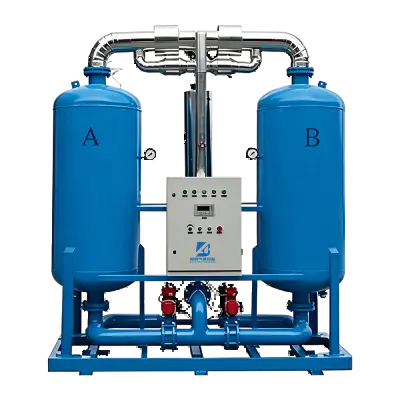
BEL Micro-heat Regenerative Adsorption Dryer
Intelligent PLC Control and Operating Stability
The dryer uses imported PLC intelligent control to coordinate the adsorption and regeneration sequence. The controller manages valve switching, heating operations, regeneration timing, cooling, and pressure equalization according to the configured operating program.
PLC control provides several practical advantages over manually operated or loosely coordinated systems. First, it creates repeatable cycle timing. Consistent timing helps the two vessels alternate correctly and prevents premature switching. Second, it supports automatic sequencing, reducing the need for continuous operator intervention. Third, it allows operating conditions and alarm states to be integrated into the plant’s control and monitoring practices.
The stated cycle time is 60–120 minutes. The appropriate cycle depends on the selected model, gas flow, operating pressure, desiccant condition, inlet moisture load, and required outlet dew point. A longer cycle may be beneficial when the vessel has sufficient adsorption capacity, while a shorter cycle may be used for particular flow or moisture conditions.
A control system should always be commissioned according to the actual installation. The electrical supply, heating elements, valve actuators, sensors, pressure switches, and safety interlocks must be checked before operation. Operators should also be trained to recognize high-temperature alarms, abnormal pressure changes, switching faults, and dew-point deterioration.
Manufacturing Strengths and Engineering Capabilities
The manufacturer is a gas equipment enterprise based in Fuyang District, Hangzhou, Zhejiang Province. Its activities cover research and development, engineering design, production, installation, and after-sales service. This integrated structure is valuable for equipment such as adsorption dryers because performance depends not only on individual components but also on vessel design, airflow distribution, valve sequencing, electrical control, assembly quality, and commissioning.
The company operates a standardized workshop of approximately 3,000 square meters, an office area of approximately 500 square meters, and a warehouse of approximately 500 square meters. These facilities support the production and coordination of gas separation and purification equipment.
An integrated manufacturing operation can provide several advantages to industrial customers:
• Engineering teams can adapt the dryer design to the customer’s pressure, flow, dew-point, and installation requirements.
• Production teams can coordinate vessel fabrication, piping, valve installation, electrical control, and final assembly.
• Quality personnel can inspect the equipment throughout the manufacturing process rather than only at the final stage.
• Installation teams can provide practical feedback to design and production departments.
• After-sales personnel can support troubleshooting, spare-parts planning, and operational improvement.
This type of closed-loop organization is particularly useful for customized gas-treatment systems, where standard catalog selection alone may not be sufficient.
Research and Development Orientation
The company specializes in gas separation and purification equipment, including PSA nitrogen generators, PSA oxygen generators, membrane nitrogen and oxygen generators, nitrogen purification units, and ammonia-decomposition hydrogen purification units. Experience across these product categories supports a broader understanding of gas quality, pressure control, adsorption materials, flow management, and industrial process integration.
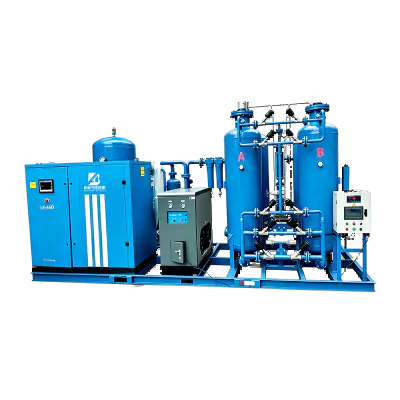
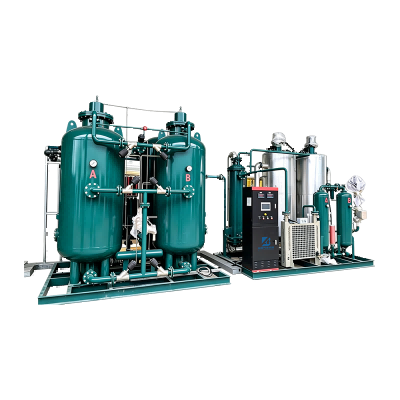
The micro-heat regenerative dryer benefits from this product-system perspective. It can be used as an independent compressed-air dryer or as part of a larger gas-generation and purification package. For example, a nitrogen-generation system may require dry compressed air upstream of the separation stage. Moisture control can protect adsorbent material, stabilize operating conditions, and support consistent product-gas quality.
Process Integration
Gas-treatment systems rarely operate as isolated pieces of equipment. A typical installation may include an air compressor, aftercooler, water separator, air receiver, coalescing filter, adsorption dryer, fine filter, gas generator, storage tank, and distribution network.
The manufacturer’s experience with complete gas equipment allows the dryer to be considered within this wider process. This can help users address issues such as:
• Whether the compressor can provide the required flow at the selected pressure.
• Whether the aftercooler reduces inlet air temperature sufficiently.
• Whether liquid condensate is removed before the desiccant vessel.
• Whether oil carryover could contaminate the desiccant.
• Whether the electrical supply is compatible with the heating and control system.
• Whether the dryer’s pressure drop affects downstream gas-generation performance.
• Whether the installation has adequate space for maintenance and desiccant replacement.
• Whether the storage volume is sufficient to handle demand fluctuations.
Correct system integration often has as much influence on long-term performance as the dryer itself.
Manufacturing and Quality-Control Considerations
Pressure vessels and adsorption towers must be manufactured with careful attention to material selection, welding quality, dimensional accuracy, internal supports, sealing surfaces, and pressure testing. The external finish and structure should protect the equipment from the intended industrial environment, while internal components must support uniform gas distribution and secure desiccant retention.
During assembly, valves should be installed in accordance with the designed flow direction. Pneumatic actuators should be checked for smooth movement, and tubing should be kept clean to prevent particulate contamination from entering control components. Electrical cabinets should be wired according to documented schematics, and terminal connections should be checked before energization.
Functional testing should confirm that:
• The adsorption and regeneration vessels switch correctly.
• The heating function operates within the intended sequence.
• Pressure equalization and repressurization occur safely.
• The PLC recognizes sensor and valve signals.
• Alarm conditions are displayed correctly.
• The regeneration-air path is free from obstruction.
• The equipment does not produce abnormal vibration, leakage, or pressure fluctuation.
• The outlet dew point reaches the required level after stabilization.
These checks help ensure that the delivered unit is not only mechanically complete but also ready for integration into a working plant.
Installation Requirements
The dryer should be installed on a stable, level foundation capable of supporting the equipment weight and dynamic loads. Larger models may weigh several tonnes and require structural review before installation. Adequate clearance should be provided around the vessels, valves, electrical cabinet, and filling ports.
The compressed-air inlet should be connected downstream of effective liquid-water separation and cooling equipment. Hot, wet, or oil-contaminated air can reduce desiccant performance and increase maintenance requirements. A suitable prefilter and coalescing filter may be necessary, especially when the upstream compressor uses oil lubrication.
The inlet piping should be sized and arranged to avoid excessive pressure loss. Pipe interiors should be clean and free from welding slag, rust flakes, sealing materials, and other debris. Temporary strainers or flushing procedures may be used during commissioning to prevent contamination of the dryer.
The outlet should be connected to a dry-air header or downstream gas-generation unit. If the application requires a stable pressure dew point during rapid demand changes, an appropriately sized air receiver may be installed downstream or upstream according to the process design.
Electrical installation should comply with local codes and the confirmed equipment specification. The selected power supply must match the control system and heating system. Grounding, circuit protection, emergency isolation, and cabinet ventilation should be completed before commissioning.
Commissioning and Daily Operation
Before startup, operators should confirm that all valves are correctly installed and that the air circuit is free from leakage. The desiccant should be loaded to the specified level, and the filling ports should be sealed correctly. Filters, drains, pressure gauges, and sensors should be inspected.
The compressor should be started gradually. Sudden pressurization may disturb the desiccant bed or create unnecessary mechanical stress. Once stable pressure and flow are established, the dryer can be placed into automatic operation.
During the initial commissioning period, operators should monitor:
• Inlet and outlet pressure.
• Inlet temperature.
• Dew point after stabilization.
• Regeneration temperature and sequence.
• Valve switching behavior.
• Abnormal noise or vibration.
• Air leakage around flanges and pipe connections.
• PLC alarms and operating status.
• Drain performance upstream of the dryer.
The dryer should not be judged solely by its outlet dew point immediately after startup. Adsorption beds may require a stabilization period before the operating cycle reaches normal performance.
Maintenance and Service Life
Routine maintenance should focus on the parts that directly affect air quality, switching reliability, and heat-transfer performance. Filters should be replaced or cleaned according to differential-pressure readings and operating conditions. Automatic drains should be checked to ensure that condensate is removed effectively.
Pneumatic valves should be inspected for leakage, slow movement, incomplete switching, and seal wear. Because the valves operate repeatedly, even a small internal leak can increase regeneration consumption or cause cross-contamination between the two vessels.
The desiccant should be inspected during scheduled maintenance. Signs of deterioration may include powdering, fragmentation, discoloration, excessive dust, or abnormal pressure drop. If the desiccant is contaminated by oil or liquid water, replacement may be required earlier than the normal service interval.
The sight glass should be kept clean enough to provide useful visibility. Heating components, temperature sensors, electrical terminals, and PLC connections should be checked by qualified personnel. Maintenance records should include cycle hours, dew-point results, filter changes, valve repairs, alarm events, and desiccant replacement dates.
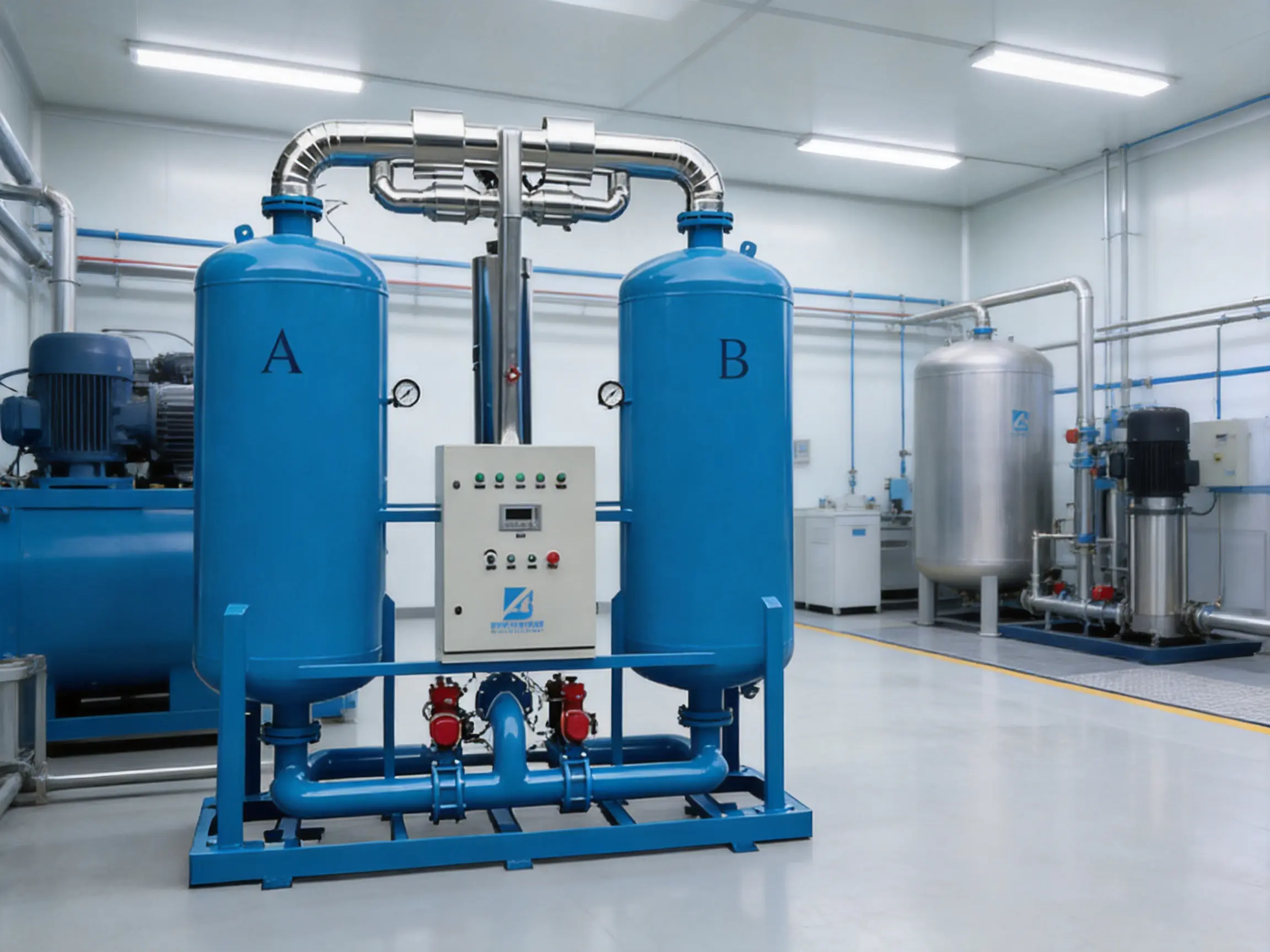
The stated valve service life of more than one million cycles is a design reference, not a substitute for maintenance. Actual service life depends on switching frequency, control-air quality, pressure, temperature, installation conditions, and the quality of replacement components.
Applications in Industrial Gas Systems
Gas Separation and Generation
Dry compressed air is commonly required before PSA nitrogen and oxygen generators. Adsorption-based gas generators rely on carefully controlled pressure cycles and specialized adsorbents. Excessive moisture can compete with the target adsorption process, reduce adsorbent effectiveness, and increase the risk of unstable operation.
Installing a micro-heat regenerative dryer upstream can help provide a more consistent air supply to the generator. Stable air quality also supports more predictable product-gas purity and reduces the moisture burden on downstream equipment.
Petrochemical and Chemical Processing
Petrochemical facilities use compressed air for instruments, pneumatic valves, control systems, and process equipment. Moisture in these systems may cause corrosion, malfunction, or freezing in pressure-reducing devices. Low-dew-point air is therefore important for safe and reliable operation.
Food Processing
Food-processing plants often use compressed air near packaging, conveying, filling, and control equipment. The required air-quality class depends on the specific process and applicable standards, but moisture control is a basic part of a suitable treatment train. The dryer can be combined with filtration and oil-removal equipment selected for the application.
Automotive Manufacturing
Automotive production uses compressed air for robotic tools, painting, assembly, testing, and pneumatic controls. Moisture can influence paint quality, corrode tools, and interrupt automated operations. A stable dry-air supply helps support consistent production conditions.
Heat Treatment and Metal Processing
Heat-treatment facilities may use nitrogen, oxygen, hydrogen, or compressed air in controlled-atmosphere operations. Drying equipment can support the upstream gas system and help reduce moisture entering sensitive process stages.
Text
Product: BEL Micro-heat Regenerative Adsorption Dryer

- Tel: +86-15057127179
+86-13588382771 - Email: huang.yifan0215@gmail.com
- Address: Huanshan Township, Fuyang District, Hangzhou City, Zhejiang Province
Copyright © Zhejiang Baiao Gas Equipment Co., Ltd. All Rights Reserved.
Privacy
Gas Generator Plant Manufacturer, Industrial Purification Equipment Plant
