 en
en русский
 Español
 عربى
عربى
Advanced Activated Carbon Filtration for High-Purity Compressed Air Systems
Compressed air is widely used as a process utility in food and beverage production, pharmaceutical manufacturing, electronics, automotive plants, textile facilities, chemical processing, and general industrial automation. Although compressed air appears clean to the eye, it can contain oil vapor, residual lubricant, odors, moisture, dust, and fine particles. If these contaminants are not removed, they may affect product quality, damage pneumatic equipment, create unpleasant odors, compromise hygienic production, and reduce the reliability of downstream gas-generation or purification systems.
The BPC Activated Carbon Filter is designed to provide a final adsorption stage for compressed-air purification. It uses activated carbon fiber as the primary filter material. This material has a high adsorption capacity for residual oil vapor and odors, helping produce cleaner compressed air for applications where conventional particulate and coalescing filtration alone may not provide the required air quality.
The filter is particularly suitable for compressed-air purification systems used in food, beverage, and pharmaceutical environments. It can also support air preparation systems in other industries where odor control, low residual oil content, and fine particle removal are important. With multiple models covering rated gas processing capacities from 1.2 to 220 Nm³/h, the product family offers a practical range for small, medium, and larger compressed-air installations.
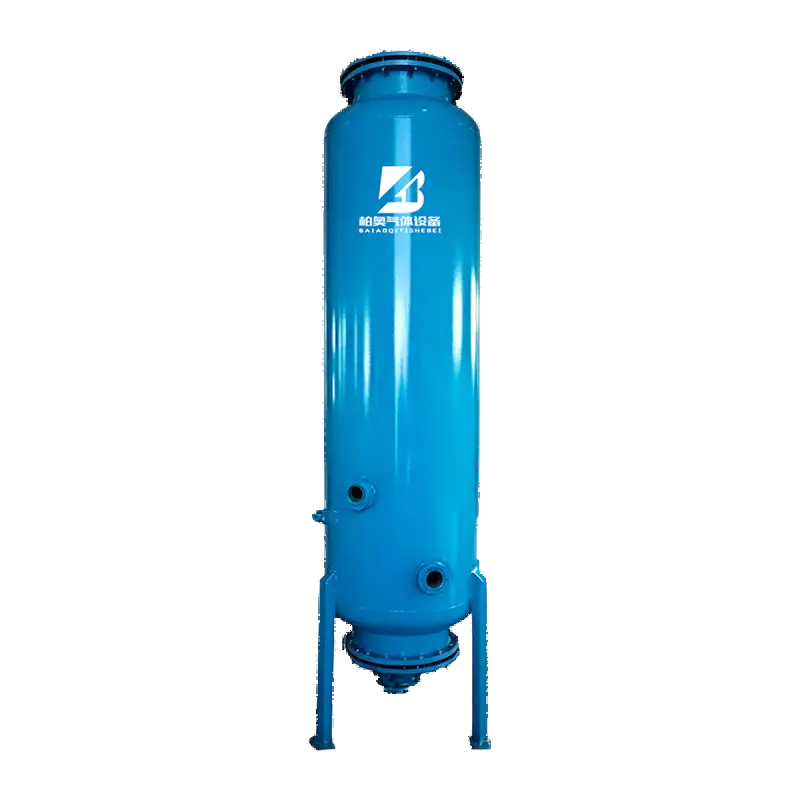
BPC Activated Carbon Filter
Content
- 1 Why Activated Carbon Filtration Matters in Compressed Air
- 2 Product Overview
- 3 Working Principle of Activated Carbon Fiber
- 4 Advantages of the BPC Activated Carbon Filter
- 5 Comparison with Conventional Compressed-Air Filters
- 6 Model Range and Selection Data
- 7 Manufacturing and Engineering Strengths
- 8 Applications Across Industrial Sectors
- 9 System Design and Installation Guidance
- 10 Maintenance and Service Considerations
- 11 Energy Efficiency and Total Cost of Ownership
- 12 Customization and Project Support
- 13 Quality, Reliability, and Customer Value
- 14 Recommended Purchasing Checklist
- 15 Frequently Asked Questions
- 15.1 What is the primary purpose of the BPC Activated Carbon Filter?
- 15.2 Can the filter remove all types of compressed-air contamination?
- 15.3 Why must a prefilter be installed before the carbon filter?
- 15.4 What pressure range is available?
- 15.5 What is the maximum inlet-air temperature?
- 15.6 What outlet oil content is specified?
- 15.7 What capacities are available?
- 15.8 Is the product suitable for food and pharmaceutical applications?
- 15.9 How should the correct model be selected?
- 15.10 How often should the activated carbon material be replaced?
- 15.11 Can the filter be used with gas-generation equipment?
- 15.12 What should be confirmed before installation?
- 16 Conclusion
- 17 References
- 18 Product: BPC Activated Carbon Filter
Why Activated Carbon Filtration Matters in Compressed Air
Industrial air compressors use mechanical components, seals, lubricants, and cooling systems. Even oil-free compressors can experience contamination from ambient air, wear particles, piping systems, installation materials, or downstream equipment. Oil-injected compressors may introduce small quantities of lubricant into the compressed-air stream despite the use of standard separation equipment.
Conventional filters are usually selected according to the type and size of contaminant they must remove. A prefilter may capture larger solid particles and bulk liquid droplets. A coalescing filter may remove fine liquid aerosols and suspended particles. However, oil vapor and odors are gaseous or semi-gaseous contaminants that may not be efficiently removed by ordinary mechanical filtration alone.
Activated carbon filtration addresses this part of the purification challenge through adsorption. Instead of relying only on a mesh or porous barrier, activated carbon provides a large internal surface area where oil vapor and odor-producing molecules can be retained. This makes the technology valuable as a final purification stage after upstream filters have already removed liquid oil, water, and larger particles.
For sensitive applications, the objective is not simply to make compressed air look clean. The air must be suitable for contact with production equipment, packaging systems, instruments, or products. A properly designed purification train can help reduce the risk of contamination while improving the consistency of the compressed-air supply.
Product Overview
The BPC Activated Carbon Filter uses activated carbon fiber as its adsorption medium. Its principal function is to remove residual oil and odors from compressed air after the air has passed through suitable upstream filtration. The product is intended to be integrated into a complete air-treatment system rather than operated as an isolated filter without prefiltration.
The recommended system arrangement includes a Class C, Class T, Class A, or equivalent filter installed before the activated carbon unit. The exact arrangement depends on the compressor type, inlet-air quality, required air purity, operating pressure, flow rate, temperature, and industry requirements.
Upstream filtration is important because activated carbon performs best when it is protected from bulk liquids, heavy oil loading, and excessive particulate contamination. When larger contaminants are removed first, the carbon material can concentrate on adsorption of residual oil vapor and odor molecules. This can improve service life, reduce pressure-drop growth, and make the overall purification system more economical to operate.
Core Technical Specifications
The standard operating pressure range is 0.4–1.0 MPa. Configurations for higher pressure applications from 1.0–3.0 MPa are also available. The permitted inlet-air temperature is no higher than 50°C. The stated outlet oil content is 0.003 ppm, and the stated outlet particle size is no greater than 0.1 μm.
| Specification | Value |
|---|---|
| Filter material | Activated carbon fiber |
| Standard operating pressure | 0.4–1.0 MPa |
| Optional pressure range | 1.0–3.0 MPa |
| Maximum inlet-air temperature | ≤50°C |
| Stated outlet oil content | 0.003 ppm |
| Stated outlet particle size | ≤0.1 μm |
| Recommended installation | Downstream of Class C, Class T, Class A, or equivalent filters |
| Primary application | Compressed-air purification and odor reduction |
Actual performance in operation depends on air quality, pressure, temperature, flow rate, upstream filtration, oil concentration, installation quality, and maintenance. System designers should therefore verify the required air-quality class and operating conditions before final selection.
Working Principle of Activated Carbon Fiber
Activated carbon is a porous carbon material processed to create a very large internal surface area. Activated carbon fiber uses carbon in a fiber-based structure, allowing the adsorption medium to be arranged in a compact and efficient filtration configuration. When compressed air passes through the filter, residual oil vapor and odor-causing compounds come into contact with the carbon surface.
Adsorption occurs when molecules are attracted to and retained on the surface of the carbon. This is different from absorption, in which a substance penetrates into the bulk of another material. In an activated carbon filter, the internal pores and surface characteristics of the carbon provide numerous locations where contaminant molecules can be captured.
The process is especially useful for low concentrations of oil vapor and organic compounds. Mechanical filtration can remove suspended particles, but adsorption is better suited to vapor-phase contaminants and odors. The result is a complementary purification action that strengthens the performance of a complete compressed-air treatment system.
Activated carbon filtration is not a substitute for every other type of filter. It should not be expected to remove bulk water, heavy liquid oil, or large amounts of solid contamination by itself. These contaminants should be removed by appropriately selected upstream equipment. Protecting the activated carbon stage is one of the most important factors in achieving stable performance.
Typical Purification Sequence
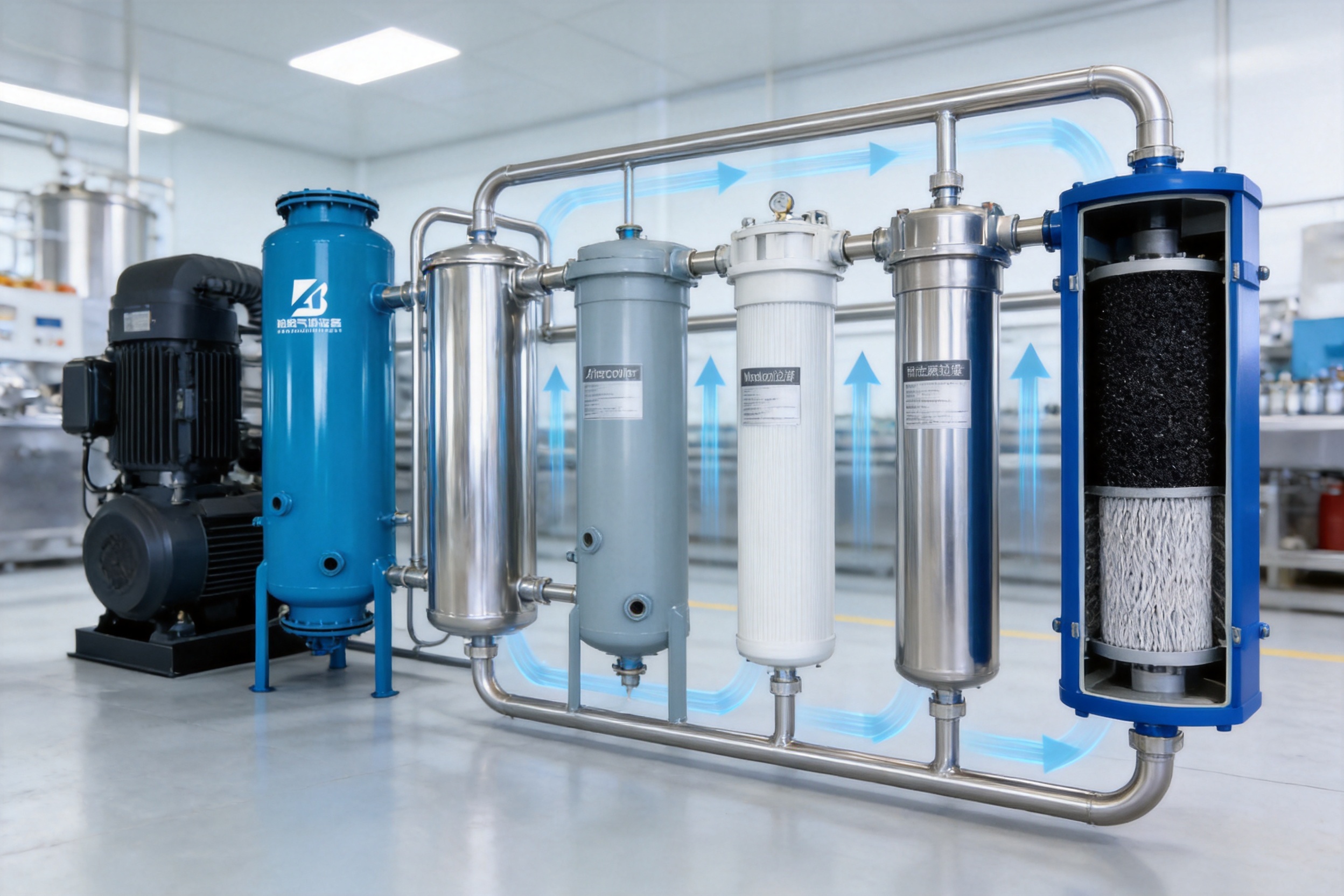
A typical compressed-air purification arrangement may begin with the compressor, followed by an aftercooler and moisture separator. A general-purpose prefilter can then remove larger particles and liquid droplets. A coalescing filter may be installed to reduce fine oil aerosols and water aerosols. The BPC Activated Carbon Filter is then installed as a final adsorption stage for residual oil vapor and odors.
Depending on the system, a fine particulate filter may be placed after the carbon stage to help retain any downstream particles. A sterile filter, membrane filter, dryer, or other specialized component may also be required for critical applications. The final arrangement should be based on the complete process specification rather than on the activated carbon filter alone.
For food, beverage, and pharmaceutical applications, the air-treatment system should be evaluated as part of the plant’s hygiene and quality-management program. Materials, cleaning procedures, drain arrangements, monitoring, replacement intervals, and validation requirements should be defined by the system operator.
Advantages of the BPC Activated Carbon Filter
Effective Residual Oil and Odor Reduction
The main advantage of the product is its focus on residual oil and odor removal. In applications where compressed air may come into contact with packaging, process surfaces, instruments, or products, even low levels of odor can be unacceptable. Activated carbon fiber provides an adsorption surface intended to capture these contaminants and improve the sensory and operational quality of the air.
The stated outlet oil content of 0.003 ppm indicates the product is designed for high-purity compressed-air service. The actual result depends on the complete system, but the specification demonstrates that the filter is positioned as a high-grade final purification unit rather than a basic dust filter.
Compact Adsorption Technology
Activated carbon fiber can offer a compact adsorption structure compared with some traditional granular arrangements. A compact design may help reduce the space required for installation, which is useful in compressor rooms, packaged gas-generation systems, and production areas where floor space is limited.
Compactness also supports modular system design. Multiple air-treatment stages can be assembled in a logical sequence while maintaining a manageable equipment footprint. This can simplify integration into existing compressed-air networks and packaged purification skids.
Broad Capacity Selection
The BPC series includes models for rated gas processing capacities from 1.2 Nm³/h to 220 Nm³/h. This range allows users to select a unit according to actual consumption instead of applying one oversized filter to every installation.
Correct sizing can support better air velocity control, lower unnecessary capital expenditure, and more efficient use of the adsorption medium. Small laboratories, pilot lines, and localized pneumatic systems may use compact models, while larger factories can select high-capacity units for centralized air-treatment systems.
Flexible Pressure Options
The standard pressure range of 0.4–1.0 MPa covers many industrial compressed-air systems. Higher-pressure options from 1.0–3.0 MPa are available for applications requiring elevated operating pressure. This flexibility can reduce the need for a completely different product platform when the operating conditions change.
Pressure selection should always consider the complete system, including piping, valves, safety devices, compressor discharge conditions, and downstream equipment. The filter should be selected with a suitable design margin and operated within its confirmed pressure rating.
Suitability for Sensitive Industries
Food, beverage, and pharmaceutical facilities often require compressed air with low oil content and minimal odor. The BPC filter is specifically positioned for these applications. It can also be considered for packaging lines, filling equipment, clean production areas, laboratory utilities, and pneumatic control systems where air contamination could affect the process.
In food and beverage plants, odors and hydrocarbons may affect packaging or product perception. In pharmaceutical production, compressed air may be used for actuators, cleaning, transport, or process control. In each case, the air-quality target must be defined according to the process and applicable internal standards.
Compatibility with Complete Purification Systems
The unit is designed to work with upstream Class C, Class T, Class A, or similar filters. This makes it a component in a staged treatment strategy. Rather than attempting to perform every purification function in one device, the system assigns different contaminants to different treatment stages.
This staged approach can be more reliable than using a single multifunction filter. Prefilters protect the adsorption stage, coalescing filters handle liquid aerosols, and activated carbon addresses vapor-phase oil and odors. Each stage can be monitored and maintained according to its specific function.
Comparison with Conventional Compressed-Air Filters
Traditional particulate filters are essential in most compressed-air systems, but their main function is usually the removal of solid particles, water droplets, and oil aerosols. Their performance is based primarily on mechanical separation, interception, inertial impaction, or coalescence.
The BPC Activated Carbon Filter adds an adsorption mechanism. This gives it an important functional distinction from a standard particulate filter. A particulate filter may produce clean-looking air while allowing certain vapor-phase contaminants to pass. An activated carbon filter is designed to address the residual contamination that mechanical filters may not capture efficiently.
Compared with a system using only a conventional filter, a properly protected activated carbon stage may provide stronger odor control and lower residual oil vapor. Compared with a system using an oversized carbon bed without appropriate prefiltration, the BPC arrangement can be more practical because it is intended to operate downstream of dedicated protective filters.
| System Type | Primary Function | Typical Limitation | Role of Activated Carbon Filter |
|---|---|---|---|
| General-purpose particulate filter | Removal of larger solid particles | Limited vapor-phase contaminant removal | Provides an additional adsorption stage |
| Coalescing filter | Removal of liquid aerosols and fine particles | Not primarily designed for oil vapor or odors | Receives pretreated air and adsorbs residual vapors |
| Refrigerated dryer | Reduction of compressed-air moisture | Does not replace oil-vapor adsorption | Complements drying equipment |
| Desiccant dryer | Low-dew-point air production | Does not automatically control odors or hydrocarbons | Adds odor and residual oil control |
| Activated carbon filter | Adsorption of residual oil vapor and odors | Requires suitable upstream protection | Acts as the final adsorption stage |
The most appropriate comparison is therefore not whether activated carbon should replace all other filters. Instead, the question is whether the application requires an adsorption stage in addition to normal particulate, liquid, and moisture control. For sensitive production environments, the answer is often yes.
Model Range and Selection Data
The following table presents the supplied main parameter data for the product family. Dimensions are shown as height and width, following the structure of the provided technical table. Rated processing capacity is expressed in normal cubic meters per hour.
| Model | Rated Gas Processing Capacity (Nm³/h) | Inlet and Outlet DN (mm) | Height H (mm) | Width W (mm) | Weight (kg) |
|---|---|---|---|---|---|
| BPC-1 | 1.2 | 25 | 210 | 480 | 20 |
| BPC-2 | 2.4 | 25 | 210 | 530 | 23 |
| BPC-3 | 3.6 | 32 | 240 | 615 | 28 |
| BPC-6 | 7.2 | 40 | 240 | 785 | 56 |
| BPC-12 | 13.2 | 50 | 285 | 780 | 62 |
| BPC-20 | 22 | 65 | 345 | 1150 | 86 |
| BPC-30 | 33 | 80 | 375 | 11 | 98 |
| BPC-40 | 44 | 100 | 430 | 1170 | 110 |
| BPC-60 | 66 | 125 | 460 | 1290 | 130 |
| C-80 | 88 | 150 | 520 | 1340 | 180 |
| BPC-100 | 110 | 150 | 595 | 1645 | 240 |
| BPC-150 | 165 | 200 | 725 | 1820 | 320 |
| BPC-200 | 220 | 250 | 760 | 2015 | 505 |
The source data lists the BPC-30 width as 11 mm. Because this value is unusual in relation to the surrounding models, purchasers should confirm the final dimensional drawing with the manufacturer before fabrication, installation, or transport planning. The same confirmation is recommended for all dimensions, connection details, service clearances, and pressure ratings.
How to Select the Correct Model
Model selection should begin with the actual compressed-air flow rate rather than the nominal compressor motor rating. Users should identify the normal operating flow, peak flow, future expansion requirement, and any simultaneous demand from production equipment.
The rated capacity of the selected model should be sufficient for the required flow under the actual pressure and temperature conditions. Selecting a unit that is too small may increase air velocity, pressure drop, and adsorption loading. Selecting a unit that is excessively large may increase initial cost and occupy unnecessary space. A reasonable engineering margin is normally considered, but it should be based on measured or documented plant demand.
The connection diameter is also important. The inlet and outlet DN sizes must be compatible with the compressed-air piping system or connected through correctly engineered reducers and adapters. Poorly designed transitions can create turbulence, local pressure losses, installation difficulties, or maintenance problems.
Temperature must be controlled because the specified inlet-air temperature is no higher than 50°C. High temperature can reduce adsorption effectiveness and may increase the rate at which contaminants pass through the carbon medium. The compressor aftercooler and upstream air-treatment equipment should be checked to confirm that the air entering the filter remains within the permitted range.
Manufacturing and Engineering Strengths
The product is supplied by Zhejiang Baiao Gas Equipment Co., Ltd., a gas-equipment manufacturer based in Fuyang District, Hangzhou, Zhejiang Province, China. The company integrates research and development, engineering design, production, installation, and after-sales service. This integrated structure is valuable for purification equipment because performance depends not only on the filter element but also on system design, sizing, piping, installation, and maintenance.
The company operates a 3,000-square-meter standardized workshop, a 500-square-meter office area, and a 500-square-meter warehouse. These facilities support the coordinated development of equipment design, manufacturing, component handling, assembly, storage, and customer service.
Research and Development Capability
The company specializes in gas separation and purification equipment, including PSA nitrogen generators, PSA oxygen generators, membrane nitrogen and oxygen generators, QH and QC series nitrogen purification units, and ammonia decomposition hydrogen purification units. Experience across these technologies provides a broader understanding of gas quality, pressure management, adsorption processes, flow control, and industrial operating conditions.
This background is relevant to activated carbon filtration. A filter installed in a gas-generation plant or purification system must be considered in relation to the upstream compressor, receiver, dryer, valves, pressure regulators, generators, and downstream users. A manufacturer familiar with complete gas systems can provide more coordinated advice than a supplier focused only on a standalone filter housing.
Engineering for Industrial Conditions
The company’s products are developed using overseas technologies and optimized for industrial conditions in China. Industrial optimization may involve adapting equipment to local operating practices, climate conditions, plant layouts, maintenance capabilities, utility quality, and customer production requirements.
For an activated carbon filter, practical engineering includes selecting suitable flow capacity, allowing appropriate access for service, protecting the carbon medium from liquid contamination, managing pressure loss, and integrating the unit with existing compressed-air piping. These design factors are essential to reliable operation and can be more important than a single catalog specification.
Integrated Production and Quality Control
Integrating design and production can help reduce communication gaps between engineering drawings and manufacturing operations. It also allows technical feedback from production and installation teams to be incorporated into future designs. For customers, this may support more consistent customization, clearer technical communication, and faster resolution of project-specific questions.
The company emphasizes strict quality control, technical improvement, energy efficiency, and reliable service. These priorities are directly relevant to compressed-air purification because the cost of contaminated air is not limited to the purchase price of the filter. It may include rejected products, equipment cleaning, production interruptions, maintenance labor, and reduced system efficiency.
Quality assurance for a complete filter project should include verification of materials, pressure-bearing components, connections, dimensions, filter-media installation, sealing, cleanliness, and final operating performance. Customers should request the documentation appropriate to their industry and project requirements.
Installation and After-Sales Support
The company provides installation and after-sales service as part of its broader business scope. This is an important strength for industrial customers that require more than equipment delivery. Correct installation affects airflow direction, sealing, support, access, drain arrangements, pressure readings, and maintenance safety.
After-sales support can also help customers establish inspection routines, replacement schedules, troubleshooting procedures, and spare-parts planning. For facilities with continuous production, service responsiveness and technical communication may have a significant influence on the total cost of ownership.
Applications Across Industrial Sectors
Food Processing and Beverage Production
Compressed air is used for bottle blowing, filling machines, packaging equipment, pneumatic valves, product handling, labeling, and process control. In these applications, oil vapor or odor can create quality concerns, particularly where air is used near open products or packaging surfaces.
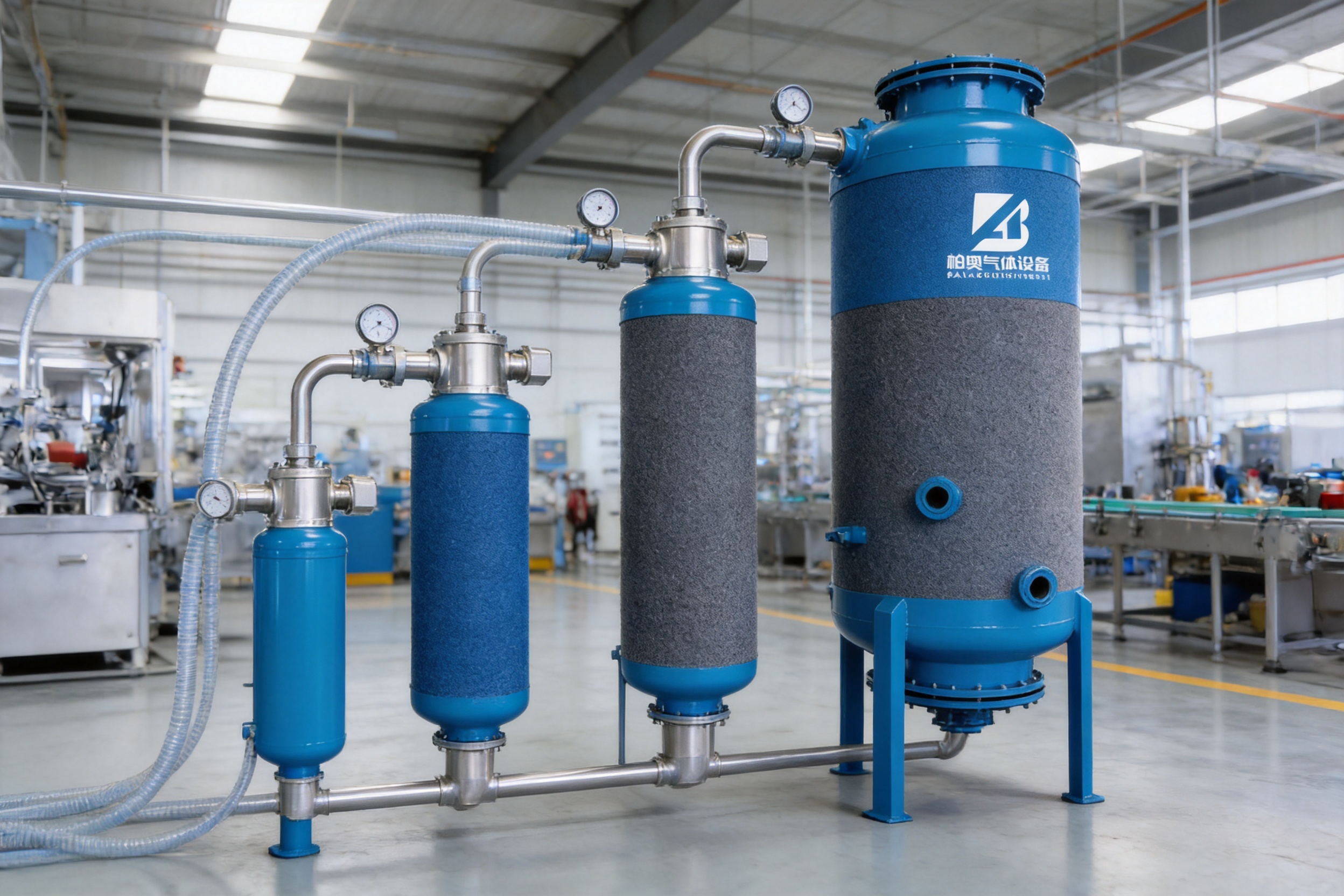
The BPC filter can be installed after suitable coalescing and particulate filters to provide a final adsorption stage. The complete system should be designed according to the required quality level, contact classification, sanitation practices, and plant validation procedures.
Pharmaceutical Manufacturing
Pharmaceutical facilities use compressed air in instruments, conveying systems, packaging equipment, clean utilities, and manufacturing processes. Clean air is important for protecting products, equipment, and controlled environments.
Activated carbon filtration may contribute to the reduction of residual hydrocarbon vapor and odor. Depending on the application, additional sterile filtration, drying, monitoring, and qualification may be required. The BPC filter should be treated as one element within the facility’s validated air-treatment architecture.
Automotive Manufacturing
Automotive plants use compressed air for painting, assembly tools, robotic systems, pneumatic cylinders, cleaning, and control equipment. Paint and finishing processes can be especially sensitive to oil and contamination. While the exact purification requirements differ from those in food or pharmaceutical production, activated carbon filtration may help reduce hydrocarbon-related contamination in appropriate air lines.
Textile Production
Textile machinery often depends on reliable pneumatic control, air jets, actuators, and automation systems. Contamination can affect valves, instruments, sensors, and finished-product quality. Properly treated compressed air can support cleaner operation and reduce maintenance caused by oil or particulate contamination.
SMT Electronics and Precision Assembly
Surface-mount technology and electronic assembly facilities frequently use compressed air for pick-and-place equipment, pneumatic tools, cleaning, and process automation. Fine particles, oil vapor, and odor may be undesirable in precision production environments. An activated carbon stage, combined with suitable particulate filtration and drying, can contribute to a cleaner utility-air supply.
Petrochemical and General Industrial Plants
Industrial plants may use compressed air for instrumentation, valve actuation, control systems, and equipment cleaning. The required air quality depends on the process and environmental conditions. Because the BPC range includes several connection and capacity options, it can be incorporated into localized equipment packages or centralized air-treatment systems.
System Design and Installation Guidance
Install Adequate Prefiltration
The activated carbon filter should be protected by a suitable upstream filter. The supplied product information specifically recommends Class C, Class T, Class A, or other equivalent filters before the unit. The purpose is to reduce liquid oil, water, and solid particles before the air reaches the carbon fiber.
Without adequate prefiltration, bulk contaminants may occupy the adsorption surface, increase pressure drop, shorten service life, and cause unstable outlet quality. In systems with oil-lubricated compressors, upstream separation should be reviewed carefully because the initial contamination load may be higher than expected.
Control Temperature and Pressure
The inlet-air temperature should not exceed 50°C. An aftercooler may be necessary downstream of the compressor, particularly when compressor discharge temperatures are elevated. The system should also include appropriate moisture separation to prevent liquid water from reaching the adsorption unit.
The filter must operate within its rated pressure range. Standard configurations are intended for 0.4–1.0 MPa, while higher-pressure configurations are available from 1.0–3.0 MPa. Pressure rating should be verified for the specific order, particularly when the filter is installed in a high-pressure system or exposed to pressure fluctuations.
Provide Accessible Installation Space
Although the filter is designed for industrial use, it should be installed where operators can inspect connections, observe pressure indicators if fitted, and replace service components safely. Adequate clearance should be provided around the housing. The installation area should be dry, clean, ventilated, and protected from accidental mechanical damage.
Piping should be adequately supported so that the filter housing is not subjected to excessive external loads. The inlet and outlet should be connected according to the specified flow direction. Threaded, flanged, or other connection arrangements should be confirmed before installation.
Consider Bypass and Isolation Arrangements
For continuous-production facilities, isolation valves and a properly engineered bypass may be considered. A bypass can help maintain production during planned maintenance, but it must be controlled carefully. If untreated air can enter a sensitive process without authorization, the bypass should be locked, tagged, monitored, or otherwise managed under the facility’s operating procedures.
Monitor Pressure Drop and Air Quality
Pressure-drop monitoring provides an early indication of filter loading or flow restriction. A gradual increase may indicate particulate accumulation, liquid contamination, carbon loading, or a problem in the upstream system. Operators should establish an acceptable pressure-drop range and investigate abnormal changes rather than waiting for a complete loss of performance.
Where air quality is critical, periodic oil-vapor, particle, moisture, and odor testing should be performed according to the plant’s internal quality plan. Monitoring frequency should reflect the application risk, operating hours, compressor condition, and history of contamination.
Maintenance and Service Considerations
Activated carbon filters require planned maintenance because adsorption capacity is finite. The carbon medium gradually becomes loaded with contaminants. Once the adsorption capacity is approached, outlet contamination may increase even if the filter does not show a dramatic pressure-drop change.
Replacement intervals should not be based only on a fixed calendar period. A more reliable maintenance program considers operating hours, flow rate, inlet oil concentration, temperature, pressure, upstream filter condition, pressure drop, and test results. High contamination, elevated temperature, or inadequate prefiltration can shorten service life.
Upstream filters should be inspected and replaced according to their own service requirements. A blocked or saturated prefilter can create excessive pressure loss and may allow liquid carryover. Protecting the activated carbon filter is usually more economical than allowing it to handle contaminants for which it was not intended.
Before servicing, the unit should be isolated, depressurized, and made safe according to the plant’s lockout and pressure-safety procedures. Operators should use appropriate personal protective equipment and follow the manufacturer’s instructions for opening the housing, handling the filter material, inspecting seals, and returning the unit to service.
After maintenance, the system should be checked for correct flow direction, leakage, secure connections, and stable pressure. Sensitive applications may require a documented restart procedure, air-quality verification, or product-line release approval before normal production resumes.
Energy Efficiency and Total Cost of Ownership
Compressed air is often one of the more expensive utilities in an industrial plant because compressors consume substantial electricity. A purification system should therefore provide the required air quality without creating unnecessary pressure loss.
Correct model selection helps avoid excessive velocity through the filter. Suitable upstream filtration prevents premature blockage and protects the adsorption material. Regular inspection helps operators identify rising pressure drop before it causes unnecessary compressor energy consumption.
The total cost of ownership includes the purchase price, installation, energy use, replacement elements, maintenance labor, downtime, and contamination risk. A filter with an appropriate capacity and a well-designed upstream treatment train may provide better long-term value than the lowest-cost unit selected without considering operating conditions.
Energy efficiency also depends on the whole compressed-air system. Leaks, excessive pressure settings, poorly sized piping, unnecessary open blowing, and uncontrolled demand may cost more than the filter itself. The activated carbon filter should therefore be integrated into a broader compressed-air management program.
Customization and Project Support
Industrial users may have different requirements for pressure, capacity, connection size, installation height, air-quality targets, and control arrangements. The available standard models provide a foundation, while project-specific requirements should be reviewed during the technical selection process.
Customers should provide the manufacturer with compressor type, operating pressure, maximum and average flow, inlet temperature, oil concentration if known, required outlet quality, installation location, pipe size, duty cycle, and applicable industry requirements. This information helps determine whether a standard model is suitable or whether a customized configuration is necessary.
For integrated projects, the filter may be installed with a PSA nitrogen generator, PSA oxygen generator, membrane gas generator, nitrogen purification unit, hydrogen purification unit, dryer, receiver, or other gas-treatment equipment. Coordinating these components can simplify commissioning and help ensure that each stage operates within its intended conditions.
The company’s broader portfolio in gas separation and purification allows it to support customers that need a complete gas solution rather than a single filter. This can be especially valuable for factories planning a new gas-generation plant, expanding a compressed-air network, or upgrading an existing purification system.
Quality, Reliability, and Customer Value
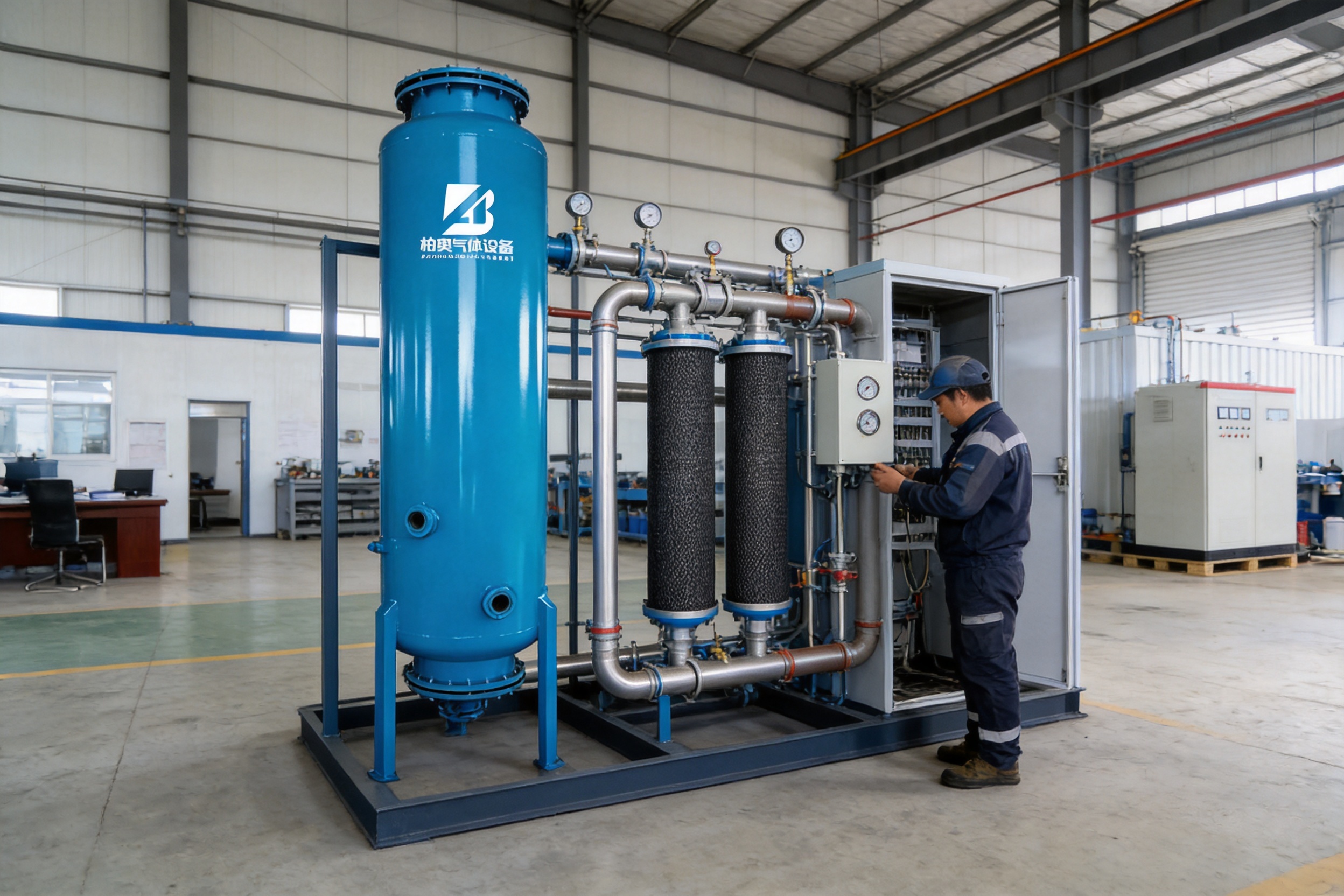
Reliability in gas-treatment equipment is created by several factors working together. The filter media must be appropriate for the contaminant, the housing must withstand the operating conditions, the seals must remain effective, the sizing must match the flow, and the installation must protect the unit from liquid and particulate overload.
The BPC product concept addresses these requirements through activated carbon fiber, multiple capacity options, standard and higher-pressure configurations, and compatibility with staged filtration. Its stated oil and particle specifications position it for applications that require a higher level of compressed-air purification than ordinary general-purpose filtration.
The manufacturer’s integrated capabilities add value beyond the hardware. Research and development, design, production, installation, and after-sales service can be coordinated through one supplier. The company’s experience with gas separation and purification systems also supports a more complete understanding of plant-level requirements.
Baiao serves customers in petrochemical, textile, food processing, automotive, heat treatment, and SMT electronics industries. Its sales network covers more than 30 provinces and cities in China, and its products are also supplied to international markets. This industrial exposure provides experience with different plant layouts, operating conditions, and customer expectations.
The company emphasizes cooperation, integrity, responsibility, innovation, inclusiveness, professional value creation, and customer trust. For industrial purchasers, these values are relevant when equipment must remain in service for years and technical support may be required after commissioning.
Recommended Purchasing Checklist
Before ordering an activated carbon filter, the user should confirm the required air flow under normal and peak conditions. The selected capacity should not be based solely on the compressor’s rated displacement if actual consumption is significantly different.
The operating pressure and possible pressure fluctuations should be reviewed. If the system operates above 1.0 MPa, the customer should specifically request confirmation of the 1.0–3.0 MPa configuration and ensure that all connected components have compatible pressure ratings.
The maximum inlet-air temperature should be confirmed. If the compressor produces air above 50°C, an aftercooler or another temperature-control measure may be required before the filter.
The upstream filter arrangement should be documented. The purchaser should identify the Class C, Class T, Class A, or equivalent filters that will protect the carbon stage. Their rated flow, oil-removal capability, drainage system, and maintenance schedule should be evaluated.
Connection DN, equipment dimensions, weight, service clearance, support requirements, and transport access should be checked against the installation site. In particular, the BPC-30 dimensional entry should be confirmed with the manufacturer before the supporting structure or pipework is finalized.
Finally, the customer should define the required documentation. Depending on the industry, this may include technical drawings, pressure information, material records, inspection documents, operating instructions, maintenance recommendations, and commissioning procedures.
Frequently Asked Questions
What is the primary purpose of the BPC Activated Carbon Filter?
Its primary purpose is to remove residual oil vapor and odors from compressed air. It uses activated carbon fiber as the filter material and is intended to operate as a final adsorption stage in a broader compressed-air purification system.
Can the filter remove all types of compressed-air contamination?
No. Activated carbon filtration is mainly intended for residual oil vapor and odor-related contaminants. Bulk water, liquid oil, and larger solid particles should be removed by suitable upstream equipment. Additional drying, sterile filtration, or specialized treatment may be needed for particular applications.
Why must a prefilter be installed before the carbon filter?
A prefilter protects the activated carbon medium from liquid oil, water, and particulate overload. The supplied product information recommends installing a Class C, Class T, Class A, or equivalent filter before the BPC unit. Proper prefiltration can improve service life and maintain stable performance.
What pressure range is available?
The standard operating pressure range is 0.4–1.0 MPa. Configurations for 1.0–3.0 MPa are available for higher-pressure applications. The exact pressure rating should be confirmed for the selected model and order.
What is the maximum inlet-air temperature?
The stated maximum inlet-air temperature is 50°C. If the air entering the filter is hotter than this, the system should be reviewed and temperature-control equipment should be considered.
What outlet oil content is specified?
The stated outlet oil content is 0.003 ppm. Actual performance depends on flow, pressure, temperature, inlet contamination, upstream filtration, installation, and maintenance.
What capacities are available?
The listed product range covers rated processing capacities from 1.2 Nm³/h for the BPC-1 to 220 Nm³/h for the BPC-200. Intermediate models are available for capacities including 2.4, 3.6, 7.2, 13.2, 22, 33, 44, 66, 88, 110, and 165 Nm³/h.
Is the product suitable for food and pharmaceutical applications?
It is described as suitable for compressed-air purification systems in food, beverage, and pharmaceutical industries. However, the complete installation must meet the customer’s applicable hygiene, validation, material, monitoring, and air-quality requirements. The filter should be evaluated as part of the entire purification train.
How should the correct model be selected?
Selection should consider actual and peak flow, operating pressure, inlet temperature, piping DN, required outlet quality, installation dimensions, and future expansion. A technical review with the manufacturer is recommended when conditions are unusual or when the equipment will serve a critical process.
How often should the activated carbon material be replaced?
The replacement interval depends on inlet contamination, operating hours, flow rate, temperature, pressure, prefilter performance, and air-quality requirements. Operators should use pressure-drop monitoring, service records, and periodic air-quality testing where necessary instead of relying only on a fixed replacement date.
Can the filter be used with gas-generation equipment?
Yes. It can be integrated into compressed-air purification systems supporting PSA nitrogen generators, PSA oxygen generators, membrane systems, purification units, and other industrial gas equipment. The complete process arrangement must be engineered so that each component receives air within its permitted operating conditions.
What should be confirmed before installation?
Users should confirm flow direction, model capacity, operating pressure, inlet temperature, DN connection size, dimensions, weight, service clearance, upstream filtration, pressure-drop monitoring, and maintenance access. Final dimensional drawings should be obtained before fabricating permanent supports or pipework.
Conclusion
The BPC Activated Carbon Filter is a specialized compressed-air purification product designed to address residual oil vapor and odors that may remain after conventional filtration. Its activated carbon fiber medium provides an adsorption-based treatment stage, while its stated outlet oil content of 0.003 ppm and outlet particle size of no greater than 0.1 μm position it for high-purity industrial applications.
The product family offers a broad capacity range from 1.2 to 220 Nm³/h, standard pressure operation from 0.4 to 1.0 MPa, and optional configurations for 1.0 to 3.0 MPa. These options support selection for localized equipment, packaged systems, and centralized compressed-air installations.
Its strongest performance advantage is achieved when the filter is correctly integrated after Class C, Class T, Class A, or equivalent upstream filters. This staged approach protects the carbon medium, assigns different contaminants to appropriate treatment technologies, and supports more stable long-term operation than relying on a single filter type.
Manufactured by a company specializing in gas separation and purification equipment, the product benefits from broader engineering experience in PSA, membrane, and hydrogen purification systems. The manufacturer’s integrated research, design, production, installation, and after-sales capabilities provide additional support for customers developing complete industrial gas and compressed-air solutions.
For food, beverage, pharmaceutical, automotive, textile, electronics, petrochemical, and general industrial users, the filter can be an important part of a cleaner and more reliable compressed-air network. Final selection should always be based on measured operating conditions, applicable air-quality requirements, confirmed dimensions, and a complete system design.
References
1. Product technical information for the BPC Activated Carbon Filter, including operating conditions, filtration performance, model range, dimensions, and rated capacities.
2. Manufacturer information concerning research and development, production facilities, gas separation equipment, industrial applications, and after-sales services.
3. General engineering principles for compressed-air treatment, including particulate filtration, coalescing filtration, drying, adsorption, pressure-drop management, and maintenance planning.
4. Industrial guidance on compressed-air quality management for food, beverage, pharmaceutical, automotive, textile, electronics, and process-manufacturing applications.
5. Standard practices for the installation, inspection, maintenance, and safe servicing of pressurized filtration equipment.
Product: BPC Activated Carbon Filter

- Tel: +86-15057127179
+86-13588382771 - Email: huang.yifan0215@gmail.com
- Address: Huanshan Township, Fuyang District, Hangzhou City, Zhejiang Province
Copyright © Zhejiang Baiao Gas Equipment Co., Ltd. All Rights Reserved.
Privacy
Gas Generator Plant Manufacturer, Industrial Purification Equipment Plant
