 en
en русский
 Español
 عربى
عربى
Medium-to-High Pressure Piston Air Compressor for Reliable Industrial Gas Systems
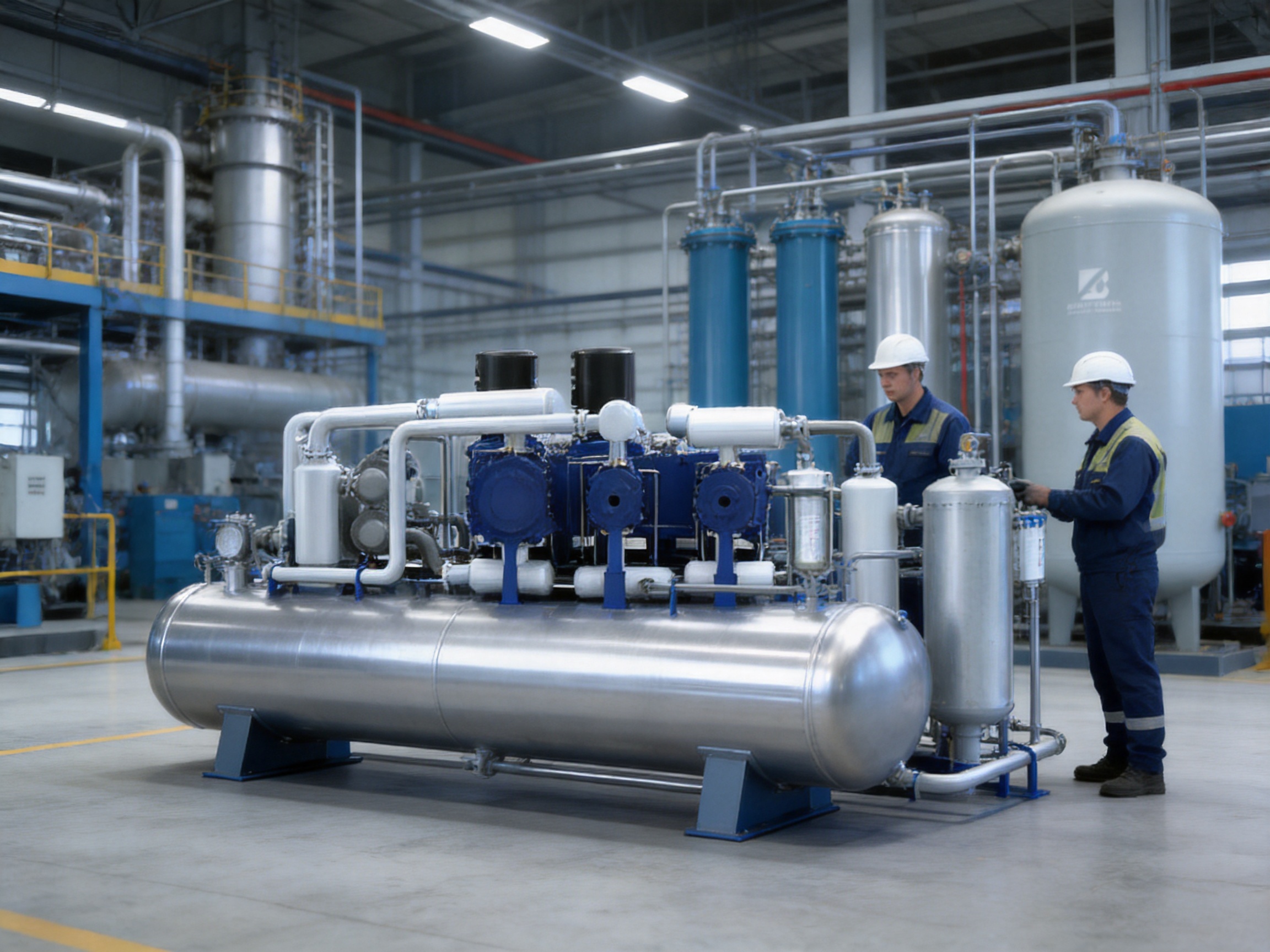
Medium-to-high pressure compressed air is an essential utility in many industrial operations. It supports gas separation, gas purification, pneumatic control, process instrumentation, packaging, pressure testing, petrochemical processing, heat treatment, electronics manufacturing, and a wide range of specialized production activities. In these applications, the compressor must deliver more than basic airflow. It must provide stable pressure, reliable operation, efficient cooling, low oil carryover, controlled energy consumption, and dependable performance under demanding environmental conditions.
The Medium-to-High Pressure Piston Air Compressor is designed for industrial users that require working pressures from 20 to 40 bar and air capacities from 1.6 to 37.7 cubic meters per minute. With a power range of 22 to 315 kW, the product is suitable for compact installations as well as larger production lines. Its design combines a two-stage integrated air end, an IE3 motor, independent air intake, high-efficiency cooling, specialized oil-gas separation, and a dedicated oil supply system.
This combination allows the compressor to serve as a dependable air source for gas generator plants, industrial purification systems, and other equipment that depends on consistent compressed-air quality. Rather than treating the compressor as an isolated machine, the design reflects the requirements of complete industrial systems, where pressure stability, maintenance intervals, energy efficiency, and environmental adaptability directly influence production costs and operating continuity.
Content
- 1 Product Overview and Industrial Positioning
- 2 Two-Stage Integrated Air End
- 3 Performance Advantages Compared with Conventional Alternatives
- 4 IE3 Motor for Industrial Operation
- 5 Independent Air Intake and Starting Performance
- 6 High-Pressure Plate-Fin Cooler and Airflow Management
- 7 Professional Oil-Gas Vessel and Separation System
- 8 Specially Designed Air-End Oil Supply System
- 9 Noise Reduction and Operator Environment
- 10 Manufacturing Strengths and Engineering Capabilities
- 11 Applications in Gas Generation and Industrial Purification
- 12 Applications Across Industrial Sectors
- 13 Installation and System Integration
- 14 Operating and Maintenance Recommendations
- 15 Why Select This Compressor for a New Project?
- 16 Conclusion
- 17 Questions and Answers
- 17.1 What pressure range does the compressor support?
- 17.2 What air capacity is available?
- 17.3 Is the compressor suitable for PSA nitrogen or oxygen generators?
- 17.4 What is the specified oil content in the compressed air?
- 17.5 What motor efficiency class is used?
- 17.6 Can it operate in dusty industrial environments?
- 17.7 How does the compressor reduce noise?
- 17.8 Why is the two-stage air end important?
- 17.9 What should be considered when installing the compressor?
- 17.10 What industries can use this compressor?
- 17.11 What information should a buyer provide when requesting a quotation?
- 18 References
- 19 Product: Medium-to-High Pressure Piston Air Compressor
Product Overview and Industrial Positioning
The compressor is positioned for medium-to-high pressure applications where standard low-pressure air compressors may not provide sufficient pressure or operating stability. Its working pressure range of 20 to 40 bar, equivalent to approximately 290.1 to 580.6 psig, gives industrial users flexibility when selecting a system for process air, high-pressure pneumatic applications, and gas production support.
The available air capacity ranges from 1.6 to 37.7 cubic meters per minute, or approximately 56.5 to 1,331.4 cubic feet per minute. This range enables the equipment to support different plant sizes, from smaller production units to larger continuous industrial operations. The power range of 22 to 315 kW, equivalent to approximately 30.0 to 428.3 horsepower, provides multiple configuration possibilities for users with different demand profiles.
Technical Item |
Specification |
Industrial Significance |
Working pressure |
20–40 bar; 290.1–580.6 psig |
Supports medium-to-high pressure process and utility applications |
Air capacity, FAD |
1.6–37.7 m³/min; 56.5–1,331.4 cfm |
Accommodates different plant scales and air-demand levels |
Motor power |
22–315 kW; 30.0–428.3 hp |
Provides a broad selection for compact and large industrial systems |
Motor efficiency class |
IE3 |
Helps reduce electrical consumption during continuous operation |
Motor protection |
IP54 |
Offers practical protection in dusty industrial environments |
Motor temperature rise |
Class B |
Supports operation under demanding thermal conditions |
Oil content in compressed air |
Not more than 3 ppm after secondary separation |
Helps protect downstream gas purification and process equipment |
A central advantage of this product is that its design focuses on the complete compression process. The air end, motor, intake system, cooling assembly, oil-gas vessel, oil separator, and lubrication circuit are configured to work together. This system-oriented approach can help reduce the performance compromises that sometimes occur when individual components are selected without considering the overall operating pressure and duty cycle.
For gas equipment manufacturers and industrial end users, this is particularly important. A compressor used in a PSA nitrogen generator, PSA oxygen generator, membrane gas system, or purification unit must provide stable air conditions to the downstream equipment. Pressure fluctuations, excessive heat, high oil carryover, or insufficient air volume may reduce the efficiency of the entire plant. The compressor therefore acts as a key foundation for dependable gas production.
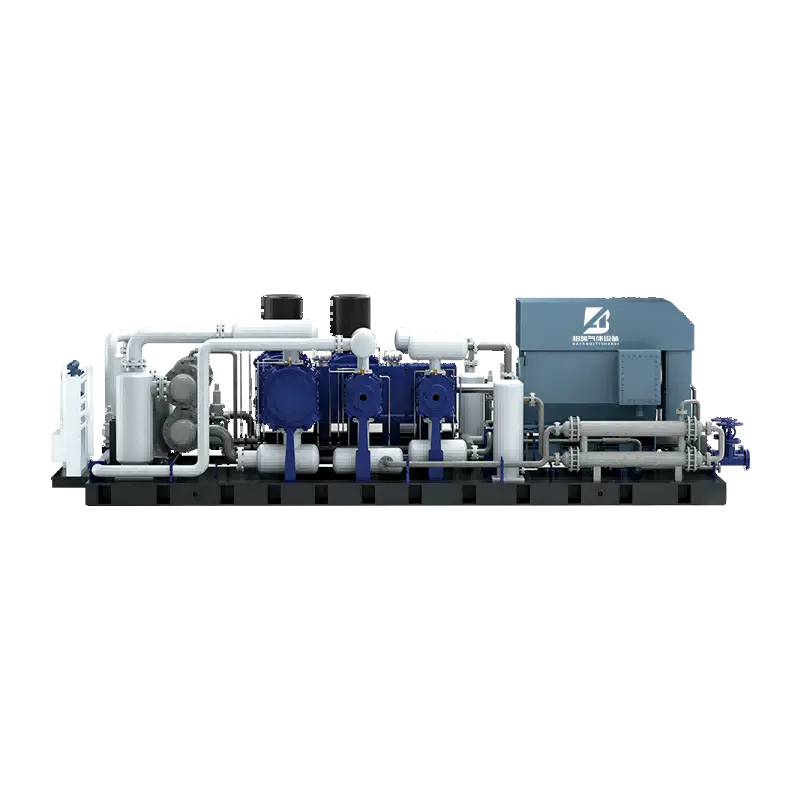
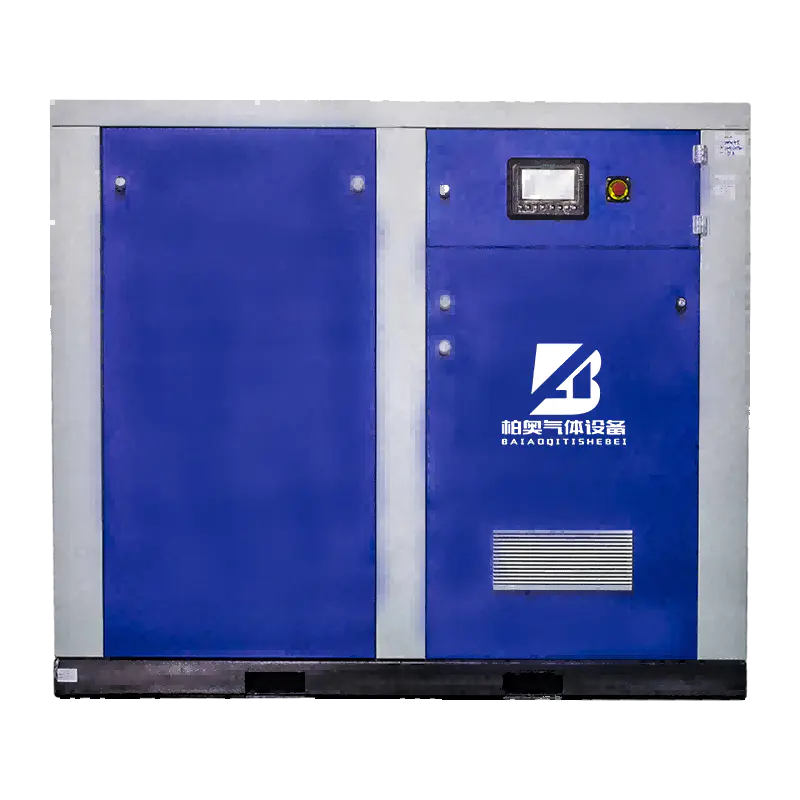
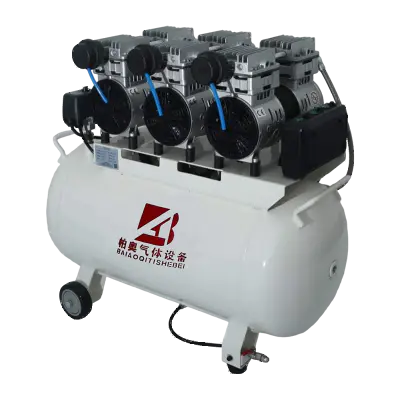
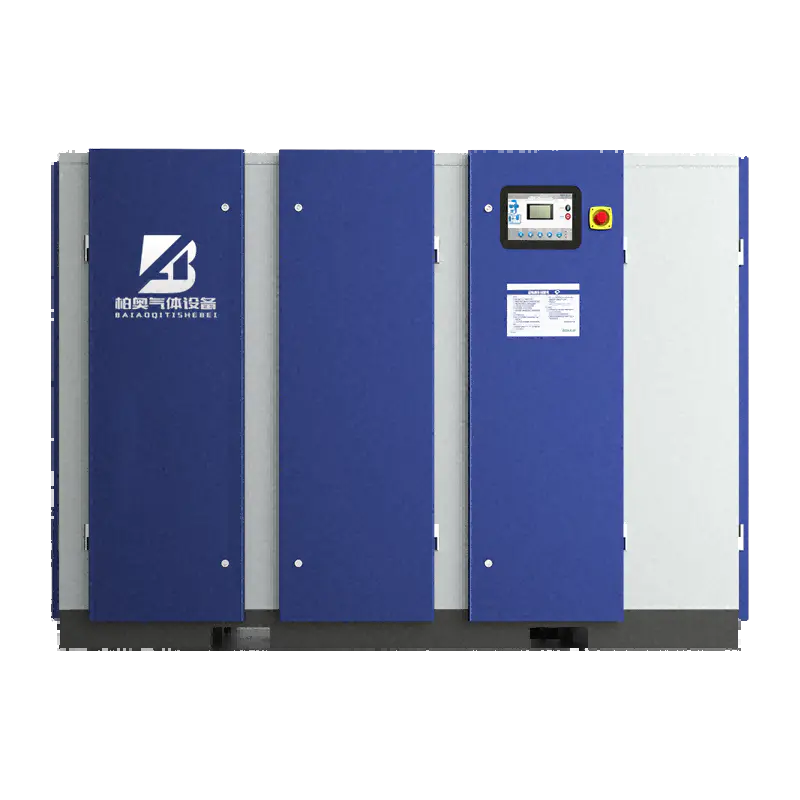
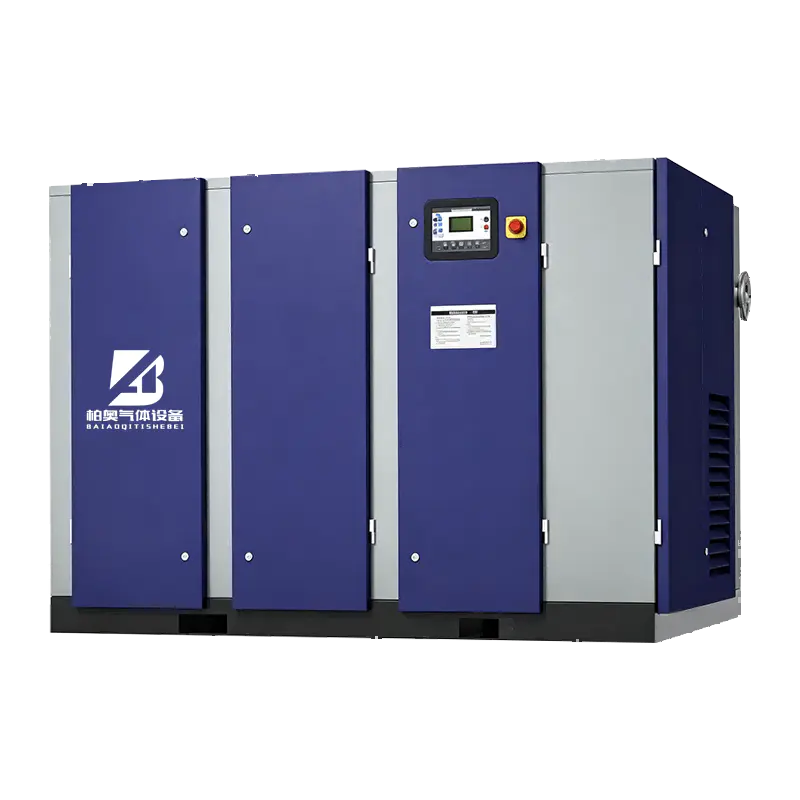
Medium-to-High Pressure Piston Air Compressor
Two-Stage Integrated Air End
The air end is one of the most important components in any industrial compressor. It determines how air is compressed, how efficiently energy is converted into pressure, and how much mechanical stress is placed on the bearings, rotors, gears, and motor. This model uses a two-stage integrated air end incorporating third-generation asymmetric rotor technology.
The two-stage arrangement allows compression to be completed through staged pressure increases rather than attempting to achieve the entire pressure ratio in a single step. This approach is well suited to medium-to-high pressure applications because it can improve compression balance, reduce excessive loading on individual components, and support more controlled thermal performance.
The air end is tailored for medium-pressure compression ratio matching. This means that the internal compression stages are selected and coordinated for the intended operating range instead of being adapted from a low-pressure design. Proper compression ratio matching can contribute to higher volumetric efficiency and more consistent output across the rated working conditions.
Asymmetric Rotor Technology
The third-generation asymmetric rotor technology is designed to improve the interaction between the rotor profiles during compression. Rotor geometry has a direct influence on internal leakage, air movement, compression efficiency, and mechanical loading. An optimized asymmetric profile can help the air end move air effectively while maintaining a suitable balance between sealing and flow performance.
High volumetric efficiency is valuable in industrial applications because it allows the compressor to produce the required air capacity without unnecessary enlargement of the machine. When more of the swept volume is converted into useful compressed air, the system can make better use of motor power and internal space. This can support more compact equipment layouts and improved operating economics.
The rotors are supported by heavy-duty bearings and are designed to remain well balanced under load. Bearing performance is especially important in medium-to-high pressure service because increased compression forces can produce greater radial and axial loads. A robust bearing arrangement helps maintain rotor alignment, reduce wear, and support stable operation over extended running periods.
Individually Geared Rotor Stages
The two rotor stages are individually driven by gears. This arrangement allows each stage to operate at an appropriate linear speed. Instead of forcing both stages to operate at the same speed, the geared design can match each rotor to its specific compression function.
Optimal linear speed is important because excessively high rotor speed may increase noise, vibration, friction, and heat generation. Excessively low speed, on the other hand, may reduce capacity or create inefficient operating conditions. Individual gearing provides a practical method for balancing these requirements within a two-stage system.
The large-rotor, low-speed design further supports the product’s operating stability. Larger rotors can move the required volume of air at a lower rotational speed, helping reduce the intensity of mechanical movement. Lower speed generally contributes to lower noise and vibration, which is beneficial for factories where equipment is installed near operators, inspection areas, control rooms, or other production equipment.
Performance Advantages Compared with Conventional Alternatives
Industrial buyers often compare compressors according to initial purchase price, rated pressure, air delivery, motor power, energy use, service requirements, and expected operating life. A product designed only around the lowest acquisition cost may create higher expenses later if it consumes more electricity, requires frequent maintenance, or causes interruptions in downstream equipment.
The Medium-to-High Pressure Piston Air Compressor offers several advantages over conventional or less specialized alternatives.
Designed for the Intended Pressure Range
A low-pressure compressor may be able to reach a higher pressure for short periods, but that does not necessarily mean it is optimized for continuous medium-to-high pressure operation. The integrated two-stage air end is developed specifically around medium-pressure compression ratio requirements. This makes the product better suited to applications that operate continuously within the 20 to 40 bar range.
Pressure-specific design can help reduce excessive mechanical loading and improve operational consistency. It also gives users a clearer basis for selecting the correct model according to actual plant requirements rather than relying on a nominal maximum-pressure figure.
Lower Noise and Vibration Potential
Noise and vibration are common concerns in industrial compressor rooms. They can affect working conditions, increase structural stress, and make it more difficult for maintenance personnel to identify abnormal sounds. The large-rotor, low-speed air-end design, together with heavy-duty bearings and multiple noise-reduction measures, is intended to create a quieter and more stable machine.
The noise-control system is calculated according to noise theory and includes special flame-retardant muffler cotton inside the unit. This material helps reduce transmitted sound while supporting safer equipment construction. The benefit is not limited to operator comfort. Lower vibration and noise may also help reduce the secondary effects of mechanical resonance and simplify routine inspections.
Improved Energy Management
Electricity is often one of the largest costs over the operating life of a compressor. The IE3 motor is selected to help reduce electrical consumption compared with lower-efficiency motor classes. Although actual savings depend on load profile, operating hours, pressure settings, ambient conditions, and maintenance quality, a higher-efficiency motor provides a stronger foundation for cost-effective operation.
The air end also contributes to energy performance. High volumetric efficiency means that a greater proportion of the machine’s compression volume is converted into useful air delivery. Individually geared rotor stages help each stage operate at an appropriate speed, while the cooling system is designed to limit excessive heat accumulation. These features work together to support efficient conversion of electrical input into compressed air.
Lower Oil Carryover
Oil carryover can be a serious concern in gas generation and purification systems. Excessive oil in compressed air may contaminate filters, adsorbents, membranes, valves, sensors, and process piping. It can also increase maintenance requirements and affect the quality of the final gas product.
The compressor uses a professional oil-gas vessel developed for medium-to-high pressure conditions. The vessel provides coarse separation under different operating states, while a customized oil separator core performs secondary separation. After this process, the final oil content in the compressed air does not exceed 3 ppm according to the supplied product specification.
This low oil-content design is particularly valuable when the compressor supplies air to nitrogen or oxygen generation equipment. Downstream purification systems perform more effectively when the incoming compressed air has already been treated to control oil contamination, moisture, and particulate matter.
IE3 Motor for Industrial Operation
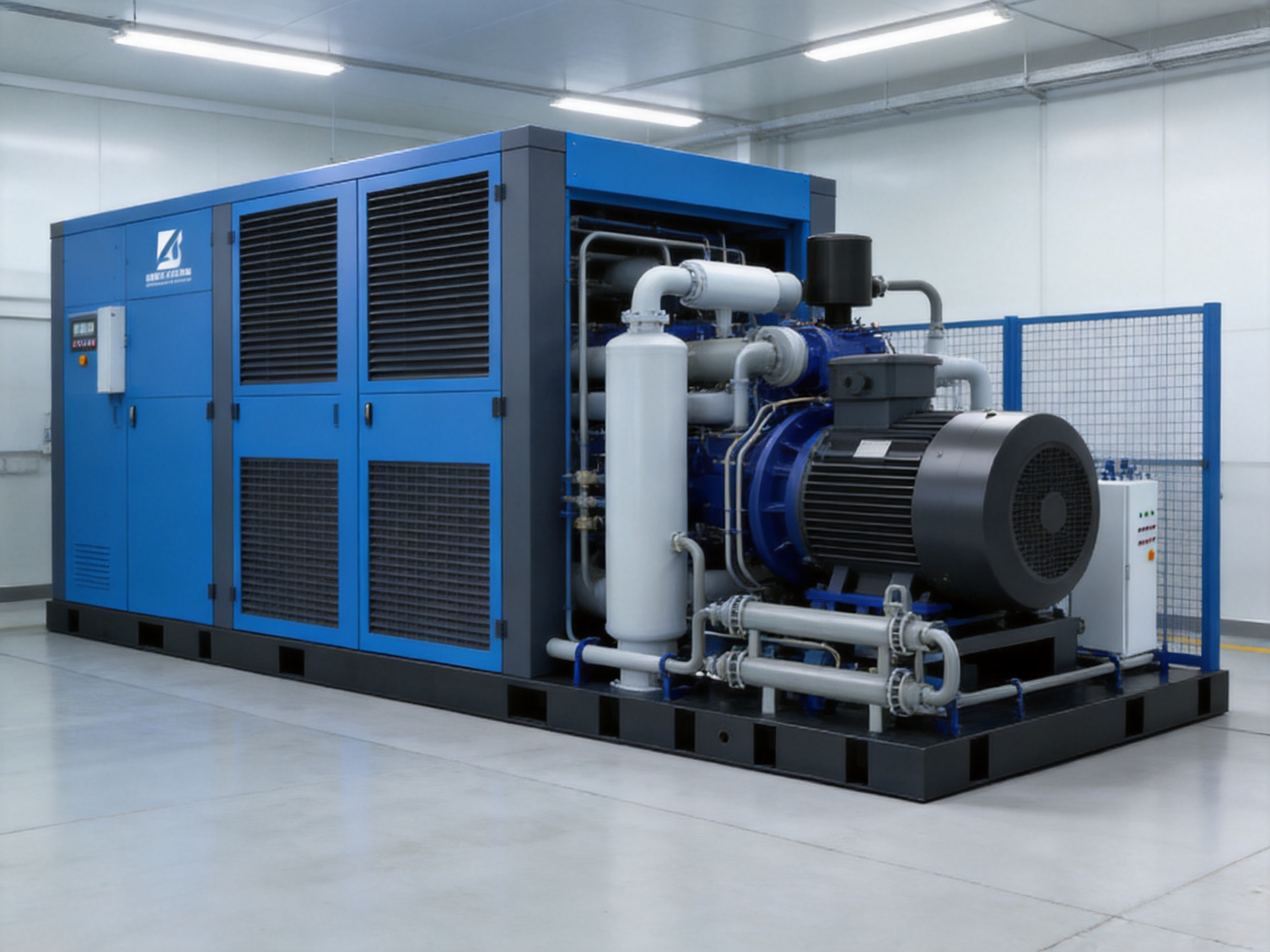
The compressor is equipped with an IE3 motor. Motor efficiency affects both direct electricity consumption and the amount of heat that must be removed from the motor housing. In a compressor operating for long hours, even moderate efficiency differences can accumulate into meaningful annual operating costs.
The IP54 protection rating helps protect the motor against dust ingress and water splashes from limited directions. This rating is suitable for many factory environments where airborne dust, mechanical activity, and elevated temperatures may be present. It is important, however, for users to evaluate the actual site conditions and ensure that installation, ventilation, electrical protection, and maintenance procedures match the motor’s intended environment.
The motor also features Class B temperature rise. This indicates a controlled temperature-rise design that supports operation in demanding industrial conditions when the equipment is correctly installed and operated. Proper airflow around the motor, routine cleaning, correct voltage, and appropriate overload protection remain essential for maintaining long-term performance.
Benefits for Continuous-Duty Users
Many gas production and purification systems operate continuously or for extended shifts. In these applications, motor efficiency and thermal management have a direct effect on production cost. An efficient motor can help limit power consumption, while controlled temperature rise may reduce thermal stress on insulation and electrical components.
For users comparing different compressor suppliers, motor efficiency should be assessed together with air-end efficiency and operating pressure. A highly efficient motor cannot compensate for poor compression performance, and a well-designed air end cannot deliver its full potential if the motor is incorrectly sized. The integrated design of this product addresses both elements as part of one compression package.
Independent Air Intake and Starting Performance
The intake system has an important influence on compressor efficiency. Air that enters through a restrictive or poorly maintained filter creates additional pressure loss. The compressor must then consume more energy to achieve the required discharge pressure. To address this issue, the product uses an independent air intake system designed to reduce intake resistance.
The intake assembly includes a multifunctional intake valve group for no-load starting. During startup, the system can minimize the load applied to the motor, allowing the motor to accelerate more smoothly. Reduced starting load may help lower electrical stress, support more reliable startup, and reduce the likelihood of nuisance trips in appropriately designed electrical systems.
The use of high-efficiency intake filters helps remove particulate matter from incoming air. Industrial environments may contain dust from raw materials, packaging, machining, textiles, combustion, or vehicle movement. If these particles enter the air end, they may contribute to wear, reduce sealing quality, and contaminate the lubrication system.
Filter performance depends on regular inspection and replacement. A blocked filter can increase intake resistance and reduce available capacity even when the compressor itself is mechanically sound. Users should therefore include filter differential-pressure checks and replacement intervals in their maintenance schedules.
Advantages for Dusty Environments
The independent intake arrangement and protected motor design make the compressor suitable for many industrial sites where dust and high ambient temperatures are unavoidable. Examples include metalworking facilities, textile plants, heat-treatment workshops, food-processing plants, and manufacturing areas with significant material handling.
Site-specific engineering remains necessary. The compressor should be installed in a clean, adequately ventilated location whenever possible. If the ambient air contains corrosive gases, oil mist, high humidity, or unusual contaminants, additional intake treatment or room ventilation may be required.
High-Pressure Plate-Fin Cooler and Airflow Management
Heat management is critical in high-pressure compression. As air is compressed, its temperature rises. Lubricating oil also absorbs heat from bearings, gears, rotors, and other moving components. If heat is not removed effectively, oil viscosity may change, component clearances may be affected, and the system may experience reduced efficiency or thermal protection shutdowns.
The compressor uses a centrifugal fan combined with a high-pressure plate-fin cooler. The centrifugal fan provides high wind pressure while maintaining a relatively low noise level. This is useful where the cooling airflow must pass through a heat exchanger and ducting with meaningful resistance.
The cooler uses an independent external air intake and directs exhaust air upward through a specially designed air duct. This arrangement helps prevent hot-air recirculation. Hot air recirculation occurs when air discharged from the cooler is drawn back into the intake area, causing the cooling system to operate with increasingly warm air. Preventing this condition can improve heat rejection and support more stable operation.
Plate-Fin Heat Exchange
The plate-fin cooler is designed for high heat-exchange efficiency and low internal pressure loss. Effective heat transfer allows the oil to release heat more efficiently, while low pressure loss helps reduce the energy required to move oil through the cooling circuit.
The product design aims to prevent hot zones within the cooler. Uneven heat distribution can cause localized temperature increases and reduce the useful life of oil and seals. By supporting more complete oil-to-air heat exchange, the cooler contributes to stable oil temperature and consistent lubrication performance.
Cooling performance is influenced by ambient temperature, installation clearance, fan condition, cooler cleanliness, and airflow direction. Users should keep the cooler surface free from dust and fibers, provide sufficient service space, and avoid installing the unit where exhaust air can be trapped beneath a roof or inside an enclosed room without suitable ventilation.
Professional Oil-Gas Vessel and Separation System
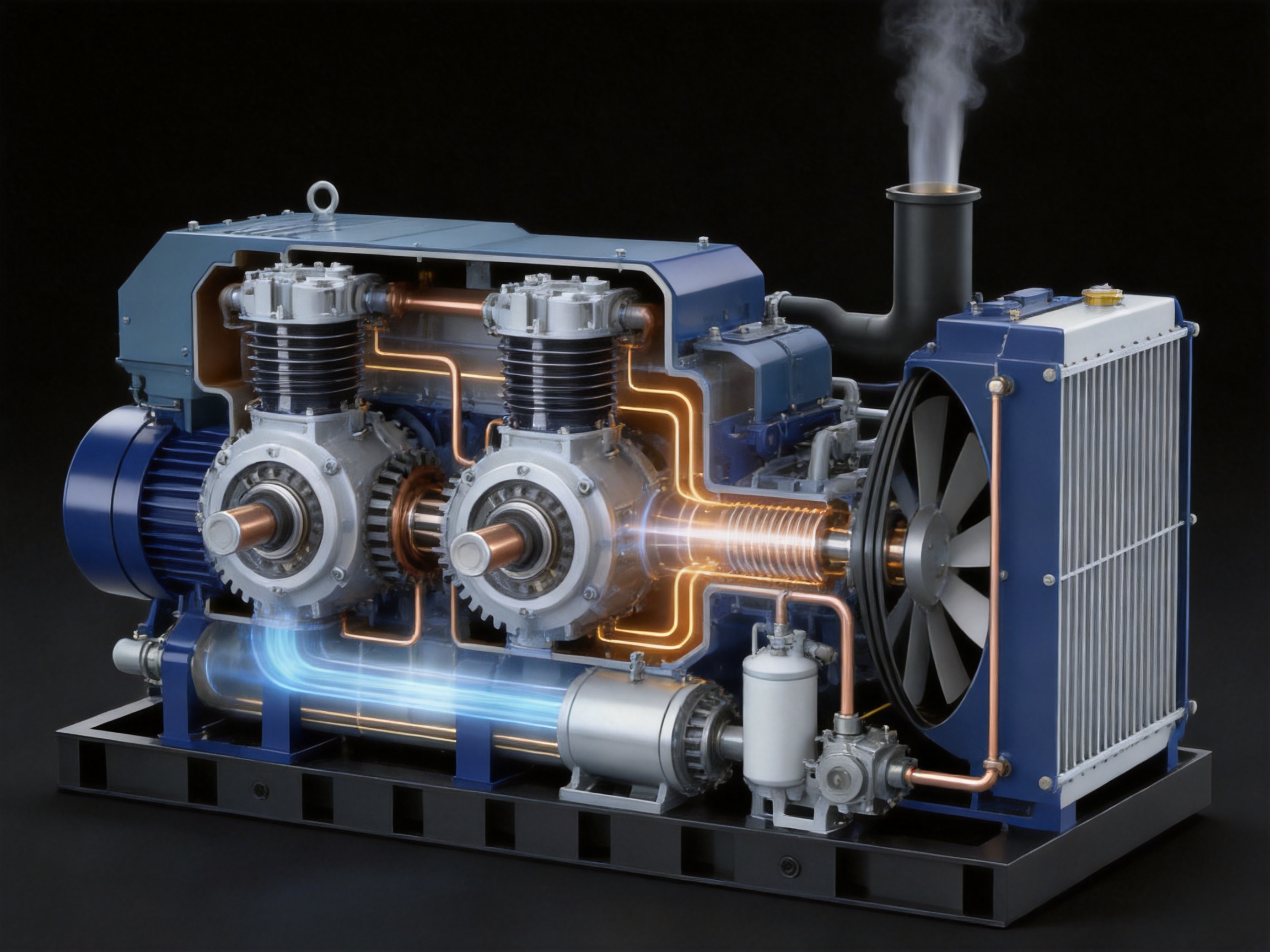
The oil-gas vessel is developed specifically for medium-to-high pressure conditions. Its first function is coarse separation of oil from compressed air under different operating states. The vessel creates conditions that allow larger oil droplets to separate from the air stream before the air reaches the secondary separator.
Secondary separation is performed by a customized oil separator core. This additional stage is essential because fine oil mist can remain suspended in compressed air even after primary separation. The separator core captures these fine droplets and returns separated oil to the lubrication circuit while allowing cleaner air to continue toward the outlet.
The specified final oil content does not exceed 3 ppm. This performance level helps reduce the burden placed on downstream filters and purification equipment. In gas generator applications, cleaner compressed air can support longer service life for adsorbents, membranes, valves, and precision instruments.
Importance in Gas Separation Plants
PSA nitrogen and oxygen generators use compressed air as their feed source. The quality of that feed air directly affects the operating condition of the adsorption system. Oil contamination may foul molecular sieve material or create deposits on internal surfaces. Over time, this can reduce adsorption performance and increase the frequency of maintenance.
Membrane gas separation systems are also sensitive to feed-air quality. Membranes may require careful control of oil aerosols, liquid water, particles, and other contaminants. A compressor with an effective oil-gas separation system provides a stronger starting point for the complete pretreatment package.
For this reason, compressor selection should not be based only on pressure and flow. Oil carryover, separator design, cooling performance, filter compatibility, and service accessibility should also be evaluated. The product’s dedicated oil-gas vessel addresses these considerations within the compressor package.
Specially Designed Air-End Oil Supply System
Lubrication is essential for air-end reliability. Bearings, gears, rotors, and other moving parts require a stable supply of oil to control friction, remove heat, and protect surfaces from wear. In medium-to-high pressure service, lubrication becomes especially important because component loads and operating temperatures may be higher than those found in low-pressure applications.
The compressor uses a specially designed air-end oil supply system. The system stabilizes oil supply pressure so that critical components receive adequate lubrication during long-term operation. The design places particular emphasis on the later stages of extended operation, when oil temperature, viscosity, filter condition, and internal pressure behavior may change.
Stable oil supply supports bearings and other high-value components. If oil delivery becomes insufficient, even a short period of inadequate lubrication can increase wear and raise operating temperature. Consistent oil circulation helps the air end maintain smoother operation and may contribute to a longer service life when combined with proper oil selection and scheduled maintenance.
Maintenance Considerations
Users should use the recommended lubricant, maintain the correct oil level, inspect oil quality, and replace oil and filters according to actual operating conditions. High ambient temperature, heavy dust, frequent starts and stops, and continuous high-load operation may require more frequent service than light-duty operation.
Maintenance personnel should also check for unusual oil pressure, abnormal temperature, unexpected vibration, and changes in compressed-air oil content. These indicators can provide early warning of separator blockage, leakage, cooling problems, filter restriction, or air-end wear.
Noise Reduction and Operator Environment
Compressor noise can affect employee comfort, communication, and workplace safety. In facilities where several machines operate simultaneously, noise from a compressor may also make it harder to detect abnormal mechanical sounds from nearby equipment. The product incorporates multiple noise-reduction measures to address this challenge.
The internal use of special flame-retardant muffler cotton helps absorb sound energy within the enclosure. The large-rotor, low-speed air-end design reduces the intensity of high-speed mechanical movement. The centrifugal fan is selected to provide strong airflow without creating unnecessary noise. Together, these measures are intended to provide a quieter operating environment.
Noise reduction also has practical maintenance value. A quieter machine makes it easier for personnel to recognize changes in sound associated with bearing wear, gear problems, air leakage, or abnormal vibration. Operators should still conduct regular inspections, but the improved acoustic environment may support earlier detection of developing problems.
Manufacturing Strengths and Engineering Capabilities
Zhejiang Baiao Gas Equipment Co., Ltd. is a gas equipment manufacturer located in Fuyang District, Hangzhou, Zhejiang Province, China. The company integrates research and development, design, production, installation, and after-sales service. This integrated structure is important for industrial equipment because successful delivery depends not only on manufacturing a machine but also on selecting the correct configuration, arranging installation, commissioning the system, and supporting the customer throughout its operating life.
The company operates a 3,000-square-meter standardized workshop, a 500-square-meter office area, and a 500-square-meter warehouse. These facilities provide a practical foundation for coordinating engineering work, production activities, component storage, product assembly, and customer service.
Research and Development Orientation
The company specializes in gas separation and purification equipment, including PSA nitrogen generators, PSA oxygen generators, membrane nitrogen and oxygen generators, QH and QC series nitrogen purification units, and ammonia decomposition hydrogen purification units. This product background gives the company a direct understanding of the operating conditions faced by compressed-air users in gas production systems.
Because the compressor may serve as the front-end air source for these systems, experience in gas separation and purification can help inform the selection of pressure, air capacity, oil control, cooling, and pretreatment requirements. The compressor is therefore relevant not only as a standalone industrial machine but also as a component in a broader gas engineering solution.
The company states that its products are developed using overseas technologies and optimized for industrial conditions in China. This approach combines reference to established international engineering concepts with attention to local operating environments, including dust, ambient temperature, energy costs, maintenance practices, and customer production requirements.
Standardized Production and Quality Control
A standardized workshop supports more organized production procedures. Consistent assembly methods, controlled component handling, systematic inspection, and clear workflow management can reduce variation between units. For industrial compressors, production consistency is important because performance depends on the correct relationship between the air end, gears, bearings, motor, cooling system, separator, and control components.
Quality control should cover incoming components, machining or assembly accuracy, sealing condition, electrical connections, oil circuit integrity, cooling performance, pressure behavior, and final system operation. The company emphasizes strict quality control and technical improvement as part of its operating philosophy.
For buyers, this manufacturing capability provides a basis for evaluating supplier reliability. A supplier with in-house engineering, production coordination, installation capability, and after-sales support may offer more consistent project communication than a supplier that only resells standard equipment.
Customized Industrial Solutions
Different users have different air demand patterns. A food-processing facility may prioritize clean compressed air and stable operation. A petrochemical plant may require robust continuous-duty performance. A textile facility may need reliable airflow and manageable noise. An automotive manufacturing plant may have changing demand across production shifts. An SMT electronics facility may require carefully controlled air quality and dependable instrument air.
The company’s experience across petrochemical, textile, food processing, automotive manufacturing, heat treatment, and SMT electronics applications supports a solution-oriented approach. Instead of selecting a compressor solely from a catalog rating, users can evaluate the required pressure, flow, duty cycle, environmental conditions, downstream treatment, installation location, and maintenance resources.
Applications in Gas Generation and Industrial Purification
The compressor is well suited to systems where compressed air serves as the feedstock or operating utility for gas production. Potential applications include PSA nitrogen generation, PSA oxygen generation, membrane nitrogen production, membrane oxygen production, nitrogen purification, and hydrogen purification after ammonia decomposition.
In a PSA system, compressed air passes through adsorption vessels containing specialized molecular sieve material. The compressor must deliver adequate pressure and flow while maintaining stable operation. If the pressure is too low, production capacity or gas purity may decline. If the flow is unstable, the adsorption cycle may not operate as intended. If oil or water contamination is excessive, the adsorbent may age prematurely.
In a membrane system, feed air is separated according to the different permeation rates of gas components through the membrane. The compressor must provide suitable pressure and sufficient pretreatment. The low specified oil content and effective intake filtration can help create a more suitable feed-air condition when combined with downstream drying and particulate filtration.
In purification systems, the compressor can be integrated with air receivers, dryers, coalescing filters, activated-carbon filters, oxygen or nitrogen generators, storage tanks, and final purification units. Proper system design should account for pressure drop across every component, peak demand, standby capacity, and the required gas quality at the point of use.
Applications Across Industrial Sectors
Petrochemical Processing
Petrochemical facilities use compressed air for instrumentation, pneumatic valves, process support, maintenance tools, and gas treatment systems. The compressor’s high-pressure capability, stable cooling, and oil-gas separation are relevant to environments where equipment may operate continuously and where air quality affects sensitive downstream components.
Textile Manufacturing
Textile plants often contain airborne fibers and dust. Independent air intake, efficient filtration, IP54 motor protection, and strong cooling airflow are useful features for this type of environment. Low noise and vibration can also help improve working conditions around production lines.
Food Processing
Food-processing plants commonly require reliable compressed air for packaging, conveying, control systems, and pneumatic actuators. Where compressed air may come into contact with products or packaging, appropriate downstream treatment remains essential. The compressor’s oil separation system can help reduce oil carryover, but users should select filtration and treatment equipment according to applicable food-industry requirements.
Automotive Manufacturing
Automotive plants use compressed air for assembly tools, robotic systems, painting support, testing, and pneumatic control. Stable pressure and air volume are important because interruptions can affect production-line synchronization. The broad power and capacity range allows the compressor to be considered for different plant zones and production scales.
Heat Treatment
Heat-treatment facilities may use nitrogen, oxygen, or purified gases to control furnace atmospheres and reduce unwanted reactions. A dependable compressor can support the gas-generation equipment that supplies these gases. Stable operation, effective cooling, and low oil carryover are particularly valuable where gas quality affects metallurgical results.
SMT Electronics Manufacturing
Surface-mount technology facilities use compressed air for pick-and-place equipment, soldering systems, actuators, cleaning, and process control. Electronics production is sensitive to contamination and interruptions. The compressor’s filtration, oil separation, and stable pressure characteristics can support the requirements of an integrated compressed-air and gas-purification system.
Installation and System Integration
Correct installation is necessary to achieve the advertised performance of any industrial compressor. The machine should be placed on a suitable foundation with enough space for inspection, filter replacement, oil service, cooler cleaning, and electrical access. The room should provide sufficient ventilation and should prevent the intake of excessive dust, corrosive gases, or hot exhaust air.
Discharge piping should be sized to limit pressure drop. Sharp bends, undersized pipes, and poorly arranged valves may reduce the pressure available to downstream equipment. Where demand varies significantly, an appropriately sized air receiver can help stabilize supply and reduce frequent compressor loading and unloading.
The compressor should be connected to suitable air treatment equipment. Depending on the application, this may include an aftercooler, water separator, refrigerated or desiccant dryer, particulate filters, coalescing filters, activated-carbon filters, and final point-of-use filtration. The required treatment level depends on whether the air is used for general machinery, instrumentation, gas generation, food-related processes, or sensitive electronics.
Electrical installation should be completed by qualified personnel. Motor protection, grounding, cable sizing, starting method, overload settings, and emergency shutdown arrangements should be selected according to the motor rating and local regulations. The no-load starting function helps reduce starting load, but it does not replace correct electrical design.
Operating and Maintenance Recommendations
Routine maintenance is one of the most effective ways to preserve compressor efficiency and service life. Operators should monitor discharge pressure, air capacity, oil temperature, operating current, vibration, noise, filter condition, and oil level. Trends are often more useful than isolated readings because gradual changes may reveal developing problems.
The intake filter should be inspected frequently in dusty environments. A restricted filter increases suction resistance and can reduce compressor capacity. The cooler should also be cleaned regularly. Dust, fibers, and oil deposits on the plate-fin surface reduce airflow and heat exchange efficiency, potentially causing elevated oil temperature.
The oil separator should be monitored for pressure drop and oil carryover. An overloaded or blocked separator may increase energy consumption and reduce air quality. If oil content rises above normal levels, the operator should investigate separator condition, oil level, drain function, operating pressure, and possible air-end wear.
Lubricant replacement should follow the recommended maintenance schedule and should be adjusted for actual operating conditions. Oil should not be mixed indiscriminately because different lubricant types may have incompatible additive packages. Used oil should be handled and disposed of according to applicable environmental requirements.
Bearings and gears should be observed for abnormal sound, temperature, and vibration. Because the product uses heavy-duty bearings and geared rotor stages, correct lubrication and alignment are essential. Any unusual change should be investigated promptly rather than allowing the machine to continue operating until a major failure occurs.
Maintenance records should include service dates, oil changes, filter replacements, separator inspections, temperature readings, pressure readings, and any corrective actions. These records help plant managers identify efficiency changes, plan spare-parts inventories, and schedule service during planned production stops.
Why Select This Compressor for a New Project?
For a new gas equipment project, the compressor should be evaluated as part of the complete process rather than as an isolated purchase. The Medium-to-High Pressure Piston Air Compressor offers a broad pressure, flow, and power range, making it adaptable to different project scales. Its two-stage air end is designed for the target pressure range, while the IE3 motor supports energy-conscious operation.
The compressor also addresses several common industrial concerns at the equipment level: intake resistance, motor starting load, operating noise, cooling, hot-air recirculation, oil carryover, and lubrication stability. These features can reduce the risk that a weakness in one subsystem will affect the performance of the complete gas installation.
The manufacturing and engineering strengths of Zhejiang Baiao Gas Equipment Co., Ltd. provide additional value for buyers seeking a complete project partner. The company combines product development, production, installation, and after-sales service. Its experience with gas separation and purification equipment allows it to consider the relationship between compressed air and downstream gas quality.
For international and domestic industrial users, supplier communication is also important. A successful project requires clear confirmation of operating pressure, FAD capacity, motor power, ambient conditions, electrical requirements, delivery scope, installation conditions, commissioning procedures, and maintenance responsibilities. A manufacturer with dedicated technical and service capabilities can help coordinate these details more effectively.
Conclusion
The Medium-to-High Pressure Piston Air Compressor is engineered for industrial users that need reliable compressed air in the 20 to 40 bar range. Its two-stage integrated air end, asymmetric rotor technology, heavy-duty bearings, individually geared rotor stages, and large-rotor low-speed design support stable and efficient compression.
The IE3 motor contributes to energy-conscious operation, while IP54 protection and Class B temperature rise support use in demanding industrial environments. Independent air intake, high-efficiency filtration, and no-load starting help improve intake and startup performance. The centrifugal fan and high-pressure plate-fin cooler provide strong heat dissipation while helping prevent hot-air recirculation.
The professional oil-gas vessel and customized separator core are especially valuable for gas generation and purification applications because the final oil content in compressed air does not exceed 3 ppm according to the product specification. The dedicated air-end oil supply system further supports long-term operating stability by maintaining adequate lubrication pressure for bearings and other critical components.
Supported by Zhejiang Baiao Gas Equipment Co., Ltd.’s experience in gas separation, purification, equipment manufacturing, installation, and after-sales service, the compressor can be considered for petrochemical, textile, food processing, automotive, heat-treatment, SMT electronics, and other industrial applications. When correctly selected, installed, operated, and maintained, it provides a strong compressed-air foundation for modern industrial gas systems.
Questions and Answers
What pressure range does the compressor support?
The compressor supports working pressures from 20 to 40 bar, equivalent to approximately 290.1 to 580.6 psig. The correct pressure model should be selected according to the required downstream operating pressure, pressure losses, peak demand, and safety margin.
What air capacity is available?
The available free air delivery range is 1.6 to 37.7 cubic meters per minute, or approximately 56.5 to 1,331.4 cubic feet per minute. Actual selection should be based on average demand, peak demand, duty cycle, and future production expansion.
Is the compressor suitable for PSA nitrogen or oxygen generators?
Yes. Its pressure and flow range, oil-gas separation system, cooling design, and stable air-end operation make it suitable for consideration as the compressed-air source for PSA nitrogen and oxygen generation systems. The complete installation should also include appropriate dryers, filters, receivers, and final gas purification equipment.
What is the specified oil content in the compressed air?
After coarse separation in the oil-gas vessel and secondary separation through the customized oil separator core, the final oil content in the compressed air does not exceed 3 ppm according to the supplied specification.
What motor efficiency class is used?
The compressor uses an IE3 motor. This efficiency class is intended to help reduce electrical consumption during operation, although actual energy use depends on pressure, load factor, operating hours, installation, and maintenance.
Can it operate in dusty industrial environments?
The IP54 motor protection rating, independent air intake, and high-efficiency intake filter make the compressor suitable for many industrial environments containing dust. However, the installation room should still be kept as clean and well ventilated as possible, and filters and coolers must be maintained regularly.
How does the compressor reduce noise?
Noise reduction is supported by several design features, including the large-rotor low-speed air end, heavy-duty bearing arrangement, centrifugal fan design, and internal flame-retardant muffler cotton. These measures are intended to provide a quieter operating environment and reduce mechanical noise transmission.
Why is the two-stage air end important?
A two-stage air end divides the compression process into two controlled steps. This arrangement is suitable for higher pressure ratios and can help balance compression load, improve volumetric efficiency, control heat generation, and support stable operation.
What should be considered when installing the compressor?
Users should provide a solid foundation, adequate ventilation, sufficient service clearance, correctly sized piping, suitable electrical protection, and appropriate air treatment equipment. The intake and exhaust arrangement should prevent hot-air recirculation, and the installation should allow convenient access for filter, oil, separator, and cooler maintenance.
What industries can use this compressor?
Potential industries include petrochemical processing, textile manufacturing, food processing, automotive production, heat treatment, SMT electronics, industrial gas generation, and gas purification. The final suitability depends on the required pressure, capacity, air quality, duty cycle, and environmental conditions.
What information should a buyer provide when requesting a quotation?
A buyer should provide the required working pressure, air capacity, operating hours, ambient temperature, altitude, electrical voltage and frequency, installation location, air quality requirements, downstream equipment, preferred control method, and expected delivery scope. This information helps the manufacturer recommend the correct model and complete system configuration.
References
1. Product technical information for the Medium-to-High Pressure Piston Air Compressor, including pressure, air capacity, motor power, air-end design, cooling system, and oil separation specifications.
2. Industrial compressed-air system design principles covering compressor selection, pressure loss, air receivers, filtration, drying, and maintenance planning.
3. General guidance on electric motor efficiency classes, motor protection ratings, temperature-rise classifications, and industrial motor application.
4. Engineering principles of two-stage compression, rotor speed matching, bearing lubrication, heat exchange, and oil-gas separation.
5. Industrial gas-generation practices for PSA nitrogen, PSA oxygen, membrane gas separation, and downstream purification systems.
6. Company information and manufacturing profile of Zhejiang Baiao Gas Equipment Co., Ltd., including its research and development, production, installation, and after-sales service capabilities.
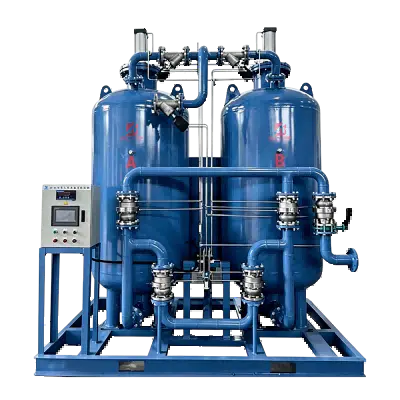
Product: Medium-to-High Pressure Piston Air Compressor

- Tel: +86-15057127179
+86-13588382771 - Email: huang.yifan0215@gmail.com
- Address: Huanshan Township, Fuyang District, Hangzhou City, Zhejiang Province
Copyright © Zhejiang Baiao Gas Equipment Co., Ltd. All Rights Reserved.
Privacy
Gas Generator Plant Manufacturer, Industrial Purification Equipment Plant
