 en
en русский
 Español
 عربى
عربى
Centrifugal Air Compressors for Efficient, Oil-Free Industrial Gas Production
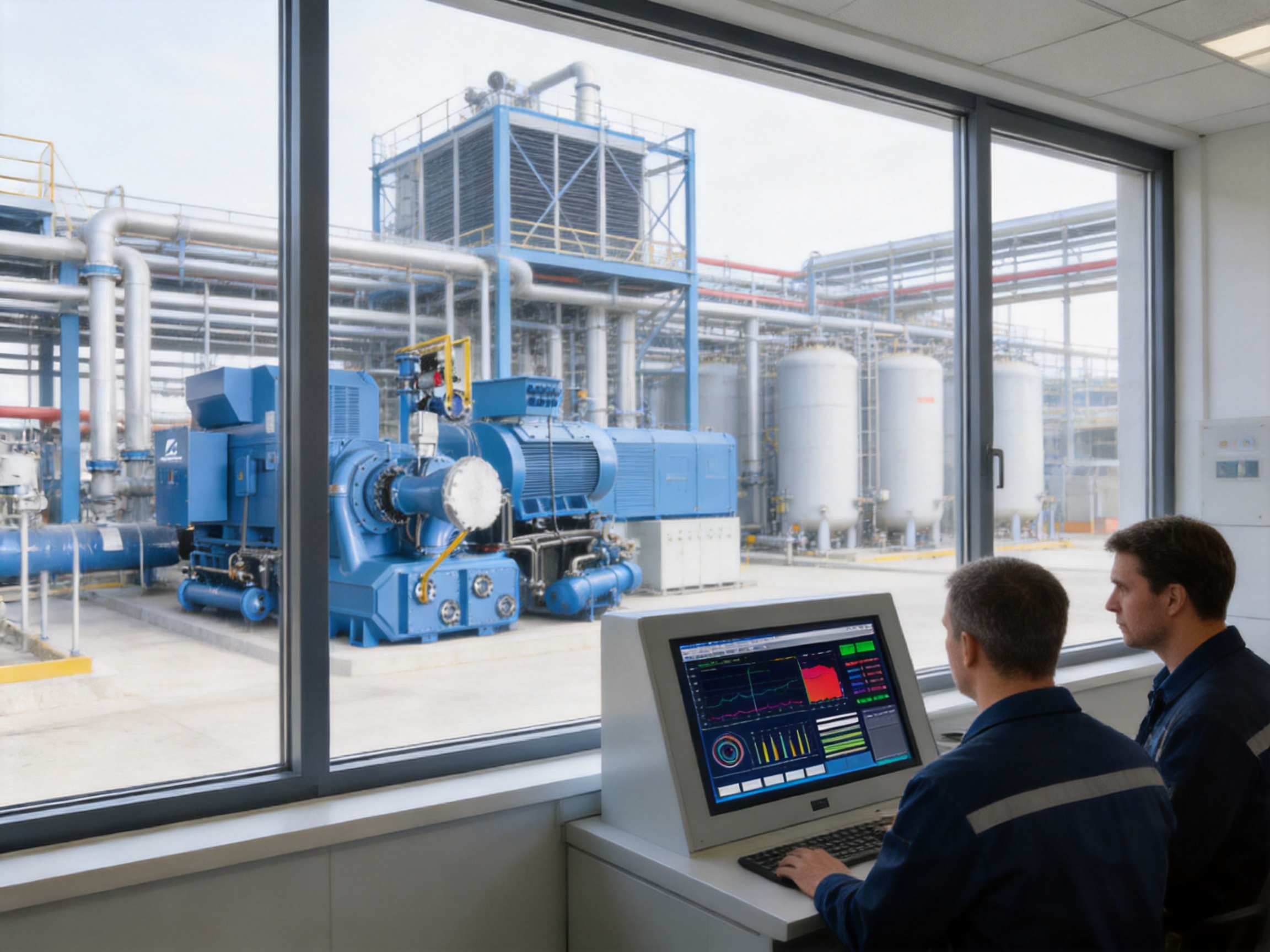
Industrial gas production depends on a stable supply of clean, pressurized air. In air separation units, gas purification systems, nitrogen generators, oxygen generators, and many other process installations, compressed air is not simply a utility. It is a critical operating medium that directly influences product purity, production continuity, energy consumption, maintenance requirements, and the overall cost of ownership. For this reason, selecting the right compressor technology is an important engineering decision.
The centrifugal air compressor is designed for industrial users that require high air capacity, dependable operation, low contamination risk, and efficient integration with gas-generation equipment. With working pressures from 0.8 to 25 bar(g), air capacity from 100 to 1,500 cubic meters per minute, and motor power from 100 to 6,000 kW, this equipment covers a broad range of applications. Its available one-stage to four-stage configurations allow the compressor to be adapted to different pressure and flow requirements.
Compared with many conventional positive-displacement compressors, a centrifugal air compressor can offer important advantages for large and continuous industrial operations. These advantages include oil-free compressed air, low noise, low vibration, reduced mechanical complexity in the air path, simple installation, and convenient centralized control. The design is particularly suitable for facilities that value continuous production, predictable operating costs, and clean air for separation and purification processes.
Content
- 1 1. The Role of Compressed Air in Industrial Gas Systems
- 2 2. Product Overview
- 3 3. Oil-Free Operation for Cleaner Industrial Gas Production
- 4 4. High Capacity for Continuous Industrial Operation
- 5 5. Flexible Pressure and Multi-Stage Configuration
- 6 6. Energy Efficiency and Total Cost of Ownership
- 7 7. Control and Monitoring with a Siemens PLC System
- 8 8. Simple Installation and Practical Maintenance
- 9 9. Low Noise and Low Vibration
- 10 10. Advantages Compared with Competing Compressor Approaches
- 11 11. Manufacturing and Engineering Capabilities
- 12 12. Applications in Gas Separation and Purification
- 13 13. Industry Applications
- 14 14. Project Selection and System Design Guidance
- 15 15. Environmental and Workplace Benefits
- 16 16. After-Sales Service and Long-Term Support
- 17 17. Why This Compressor Is a Competitive Industrial Choice
- 18 18. Frequently Asked Questions
- 18.1 Q1: What is the main purpose of this centrifugal air compressor?
- 18.2 Q2: What pressure range is available?
- 18.3 Q3: What air capacity can the compressor provide?
- 18.4 Q4: How many compression stages are available?
- 18.5 Q5: Is the compressed air oil-free?
- 18.6 Q6: Why is oil-free air important for PSA equipment?
- 18.7 Q7: What type of control system is used?
- 18.8 Q8: Does the compressor require a special foundation?
- 18.9 Q9: What is the power range?
- 18.10 Q10: Which industries can use this compressor?
- 18.11 Q11: Can the compressor be integrated with a complete gas plant?
- 18.12 Q12: What should customers provide when requesting a quotation?
- 19 19. Conclusion
- 20 References
- 21 Product: Centrifugal Air Compressor
1. The Role of Compressed Air in Industrial Gas Systems
Industrial gas equipment often begins with atmospheric air. Air separation units divide air into useful components, while purification systems remove unwanted substances from a gas stream. Nitrogen and oxygen generators, membrane systems, PSA systems, and related treatment units all depend on a correctly designed air supply. If the compressed air is unstable, contaminated, or delivered at an unsuitable pressure, the performance of the complete gas system can be affected.
Compressed air influences several important operating conditions. These include adsorption-cycle timing in pressure swing adsorption equipment, membrane feed pressure, oxygen and nitrogen recovery, gas purity, valve response, cooling load, and the service life of downstream filters and dryers. A compressor must therefore provide more than nominal flow. It must deliver air consistently under changing operating conditions while avoiding unnecessary contamination and excessive energy use.
For small workshops or intermittent applications, a basic compressor may be sufficient. Large industrial plants have different requirements. They may operate continuously for many hours each day, use multiple gas-generation units, or supply air to several production lines at the same time. In such cases, the compressor must be selected according to the complete system demand rather than the requirements of a single machine.
A centrifugal compressor is well suited to this type of duty because it is designed for high-volume air delivery. Instead of compressing a fixed volume through repeated piston or screw movements, it increases air pressure through the dynamic action of rotating impellers and diffusers. This operating principle supports large flow rates and makes the technology an attractive option for centralized industrial air systems.
2. Product Overview
The centrifugal air compressor is an industrial compression solution available in one-stage, two-stage, three-stage, and four-stage configurations. The choice of stages depends on the required discharge pressure, flow, operating conditions, and process integration plan. A multi-stage configuration can achieve higher pressure by compressing the air progressively, with suitable cooling and control between stages.
The specified working pressure range is 0.8 to 25 bar(g). This broad range allows the product family to serve low-pressure air supply duties as well as higher-pressure applications associated with gas production and purification. The air capacity range is 100 to 1,500 cubic meters per minute based on free air delivery. The power range is 100 to 6,000 kW, providing a scale suitable for industrial plants of different production capacities.
The equipment is designed around several practical objectives: dependable operation, safety, environmental responsibility, energy efficiency, economical installation, and simple maintenance. The control system uses a Siemens PLC platform with an operator-friendly interface. This supports clear monitoring and straightforward operation while helping maintenance personnel identify operating conditions and respond to alarms.
| Technical Item | Specified Range or Configuration | Industrial Significance |
|---|---|---|
| Compressor type | Centrifugal air compressor | Suitable for high-volume, continuous industrial air supply |
| Available stages | One to four stages | Allows configuration according to pressure and process demand |
| Working pressure | 0.8 to 25 bar(g) | Covers low-pressure and higher-pressure gas-system duties |
| Air capacity, FAD | 100 to 1,500 m³/min | Supports centralized air supply for large production systems |
| Motor power | 100 to 6,000 kW | Provides a broad selection for different plant capacities |
| Control system | Siemens PLC control system | Enables monitoring, control, alarms, and operator interaction |
| Air quality design | Oil-free air path | Reduces the risk of oil contamination in downstream equipment |
| Installation characteristics | No special foundation or pre-embedding required | Can reduce civil-work complexity and installation time |
The product is intended for integration into complete industrial systems rather than isolated use only. It can be specified as part of an air separation unit, gas purification plant, PSA gas generator, membrane gas-generation system, or other process installation requiring a stable compressed-air source.
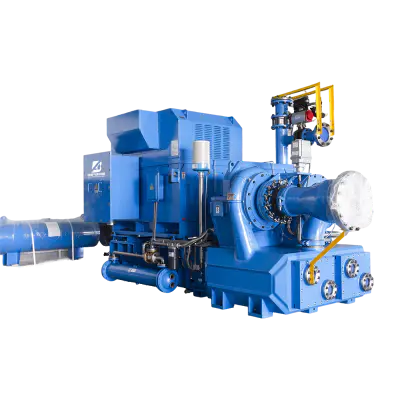
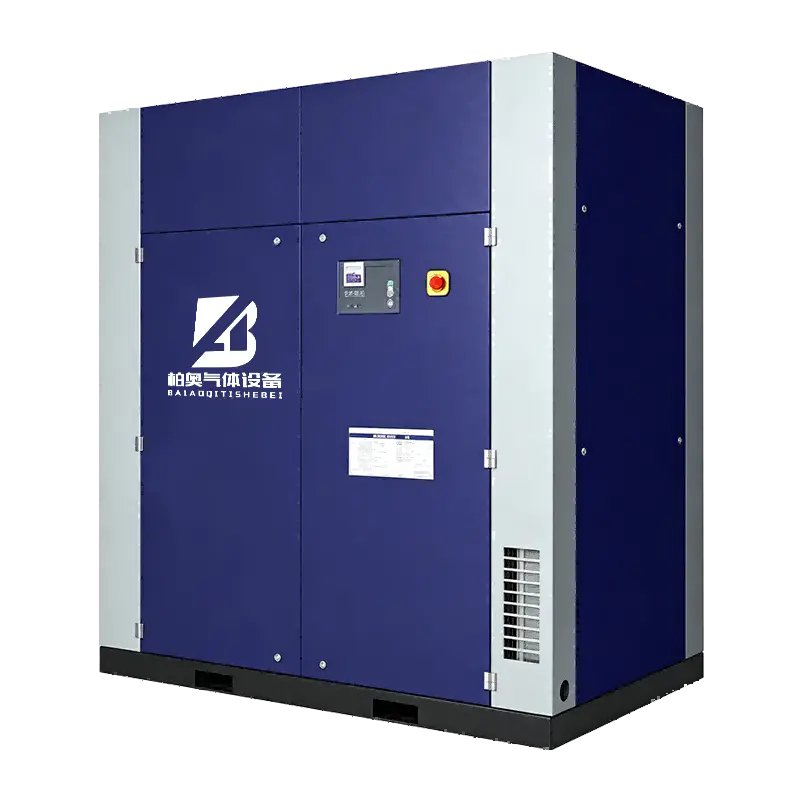
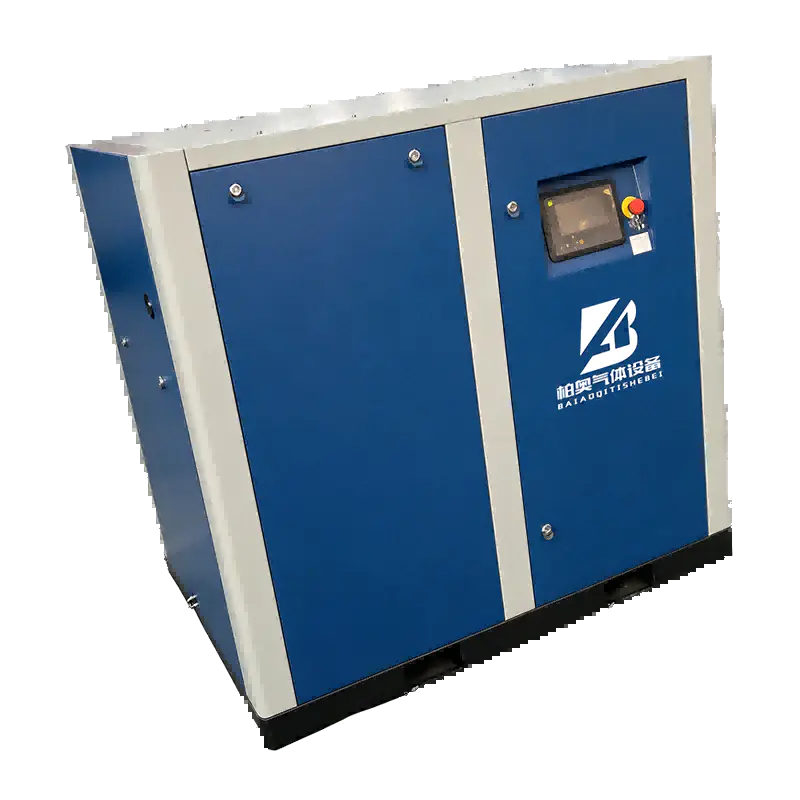
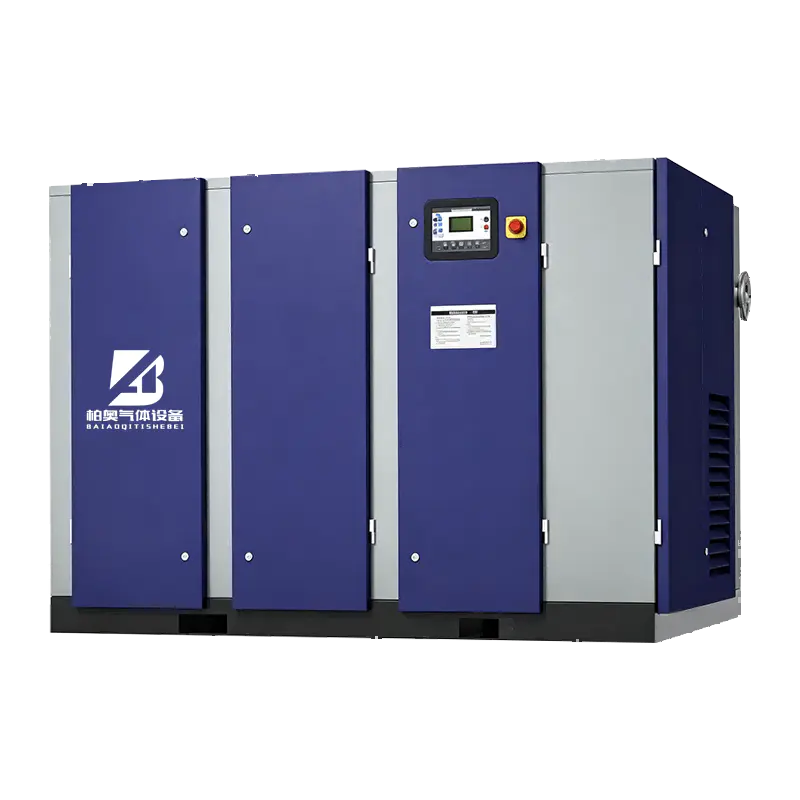
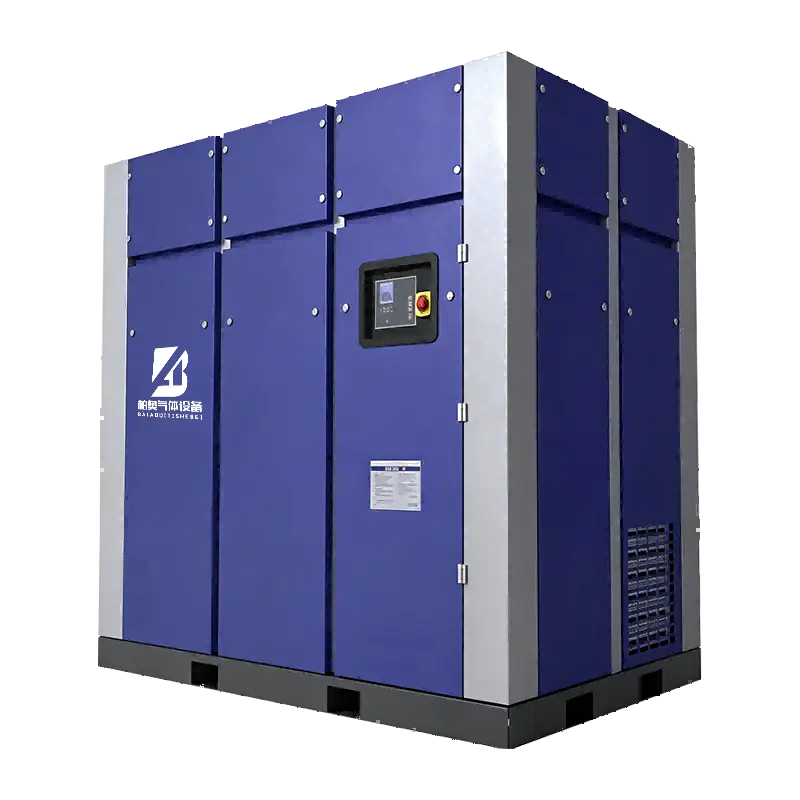
Centrifugal Air Compressor
3. Oil-Free Operation for Cleaner Industrial Gas Production
One of the most important advantages of this centrifugal air compressor is its oil-free design. In gas separation and purification applications, oil contamination can create serious problems. Oil may foul filters, damage adsorbents, reduce membrane performance, affect oxygen or nitrogen purity, and increase the frequency of cleaning or replacement. If contamination enters a process stream, it may also create quality issues for the final gas product.
Traditional lubricated compression systems use oil to lubricate and cool components. Although oil separators and downstream treatment equipment can reduce contamination, they add additional equipment, maintenance duties, pressure loss, and operating cost. There is also a residual risk that oil carryover will increase during abnormal conditions, separator deterioration, poor drainage, or inadequate maintenance.
An oil-free compressor reduces dependence on oil-removal devices in the primary air path. This does not eliminate the need for appropriate filtration, drying, and air-quality management, because industrial compressed air must still be treated according to the process requirements. However, the oil-free configuration provides a cleaner starting point and can simplify the design of the downstream air-treatment system.
For PSA nitrogen and oxygen systems, clean air helps protect adsorbent performance. Adsorbents are selected to separate specific components of air, and their effectiveness can decline when exposed to oil, liquid water, dust, or other contaminants. For membrane systems, clean air helps reduce fouling and supports stable gas permeability. In both cases, a clean compressor discharge contributes to more predictable system operation.
The oil-free characteristic is also valuable in industries where gas quality is especially important. Food processing, electronics manufacturing, heat treatment, automotive production, and petrochemical operations may each have different purity requirements, but all benefit from reducing avoidable contamination sources. The compressor can therefore serve as part of a broader clean-air strategy.
4. High Capacity for Continuous Industrial Operation
The air capacity range of 100 to 1,500 m³/min places this compressor in a class suitable for substantial industrial air demand. Large air separation and purification plants often require high flow rates to maintain production output. A compressor selected for insufficient capacity may operate near its limit, experience unstable conditions, or require several smaller machines operating in parallel. A correctly sized centrifugal unit can provide a more centralized and streamlined arrangement.
Centrifugal compression is particularly effective when the demand is relatively continuous and the required volume is high. The rotating impeller transfers energy to the air, and the diffuser converts velocity into pressure. This dynamic process can provide a large volume of compressed air without the repeated reciprocating motion found in piston equipment.
High-capacity operation may also improve the layout of a plant. Instead of distributing numerous small compressors around the facility, an industrial user may be able to establish a central compressor station. Centralization can simplify air treatment, monitoring, maintenance planning, spare-parts management, and connection to multiple process units.
However, capacity must always be matched to the actual demand profile. A system designer should consider normal demand, peak demand, future expansion, pressure losses, standby requirements, and the influence of air storage. The stated capacity range provides flexibility, but final selection should be based on a complete technical review.
For facilities with variable production schedules, the control system is especially important. A compressor should not be forced to operate inefficiently when the process requires less air than the rated maximum. Control functions can help maintain the required pressure and respond to demand changes while avoiding unnecessary operation outside the preferred range.
5. Flexible Pressure and Multi-Stage Configuration
The working pressure range of 0.8 to 25 bar(g) covers a wide range of industrial requirements. Lower-pressure operation may be appropriate for certain separation, aeration, conveying, or process-air applications. Higher-pressure operation may be needed for specific gas-generation cycles, purification processes, or specialized industrial equipment.
The availability of one to four stages gives users an opportunity to select a configuration that reflects the desired pressure. A single-stage arrangement may be appropriate when the pressure increase is moderate. Multi-stage arrangements are useful when the final pressure is higher or when the process benefits from staged compression and cooling.
Multi-stage compression can improve the thermodynamic efficiency of high-pressure service when the stages are correctly matched. Interstage cooling can reduce the temperature of the compressed air before it enters the next stage. This helps manage discharge temperature and may reduce the energy required for further compression. The exact performance depends on the selected configuration, operating point, ambient conditions, cooling method, and system design.
Flexible staging also supports project customization. Different industries may require different combinations of pressure and capacity. A gas purification system may prioritize stable pressure at a specific flow rate, while an air separation unit may prioritize high-volume delivery and continuous operation. A configurable product family can address these needs more effectively than a single fixed design.
When selecting the number of stages, users should evaluate not only the maximum pressure but also normal operating pressure, turndown requirements, air temperature, cooling-water or ambient-air conditions, and the pressure drop across dryers and filters. Proper engineering ensures that the compressor operates efficiently at the actual plant duty rather than only at a theoretical rated point.
6. Energy Efficiency and Total Cost of Ownership
Energy is often the largest operating expense associated with industrial compressed air. A compressor that runs continuously can consume substantial electrical power, so even a modest improvement in operating efficiency may have a meaningful impact over the service life of the equipment. The power range of this product, from 100 to 6,000 kW, reflects the scale of industrial applications in which energy management is important.
Energy efficiency is influenced by many factors. These include compressor selection, impeller design, pressure ratio, flow rate, inlet conditions, interstage cooling, motor performance, control strategy, air leakage, filter condition, and maintenance quality. The compressor itself is only one part of the energy equation, but a properly selected centrifugal design can provide an efficient foundation for a high-volume air system.
Avoiding excessive discharge pressure is one of the simplest ways to reduce energy waste. If a process requires a specific pressure, operating significantly above that requirement increases compression work and may increase downstream pressure losses. The compressor should therefore be selected and controlled according to the real process demand.
The oil-free configuration can also influence lifecycle cost. It may reduce the need for oil changes, oil separation components, and oil-related servicing. Cleaner air can protect downstream adsorbents, membranes, filters, valves, and instruments, potentially reducing replacement frequency. These benefits should be evaluated together with purchase cost rather than considering the initial equipment price alone.
Installation simplicity contributes to cost control as well. The product is described as requiring no special foundation and no pre-embedding. Where site conditions permit, this may reduce civil construction work and shorten the installation schedule. Fewer installation complications can be especially valuable during plant expansion, equipment replacement, or projects with limited construction time.
Low noise and low vibration may also reduce indirect costs. A quieter and more stable compressor room can improve the working environment and may simplify the need for acoustic treatment. Lower vibration can help protect connected piping and nearby equipment, provided that the complete installation is properly aligned and supported.
7. Control and Monitoring with a Siemens PLC System
Reliable control is essential for a large industrial compressor. The product uses a Siemens PLC control system with a user-friendly interface. The control platform is intended to make operation straightforward while supporting monitoring, alarm management, and maintenance activities.
A PLC-based control system can coordinate important operating functions. Depending on the final configuration, these may include start and stop sequences, pressure control, protection logic, temperature monitoring, vibration-related signals, interlocks, alarm displays, and communication with other plant systems. The exact functions should be confirmed during technical specification and project engineering.
An operator-friendly interface is valuable because compressor operation may involve many process variables. Clear displays can help operators understand whether the equipment is operating normally, approaching a protective limit, or experiencing a condition that requires attention. Simplified operation also reduces the risk of incorrect manual intervention.
Maintenance personnel benefit from accessible operating information. Alarm records and status indications can support troubleshooting before a minor issue becomes a major interruption. When the compressor is integrated into a gas-generation plant, this information can also help operators distinguish between an air-supply problem and a downstream process problem.
The control system should be connected to the overall plant philosophy. A complete installation may include the compressor, air receiver, pre-filters, aftercoolers, dryers, storage vessels, gas generators, product buffers, and plant management systems. Coordinated control can help maintain stable pressure while preventing unnecessary compressor operation when a process unit is offline.
Although automated control simplifies operation, routine inspection remains important. Operators should continue to verify pressure, temperature, vibration, cooling conditions, electrical status, and air quality. Automation works best when supported by a defined maintenance program and properly trained personnel.
8. Simple Installation and Practical Maintenance
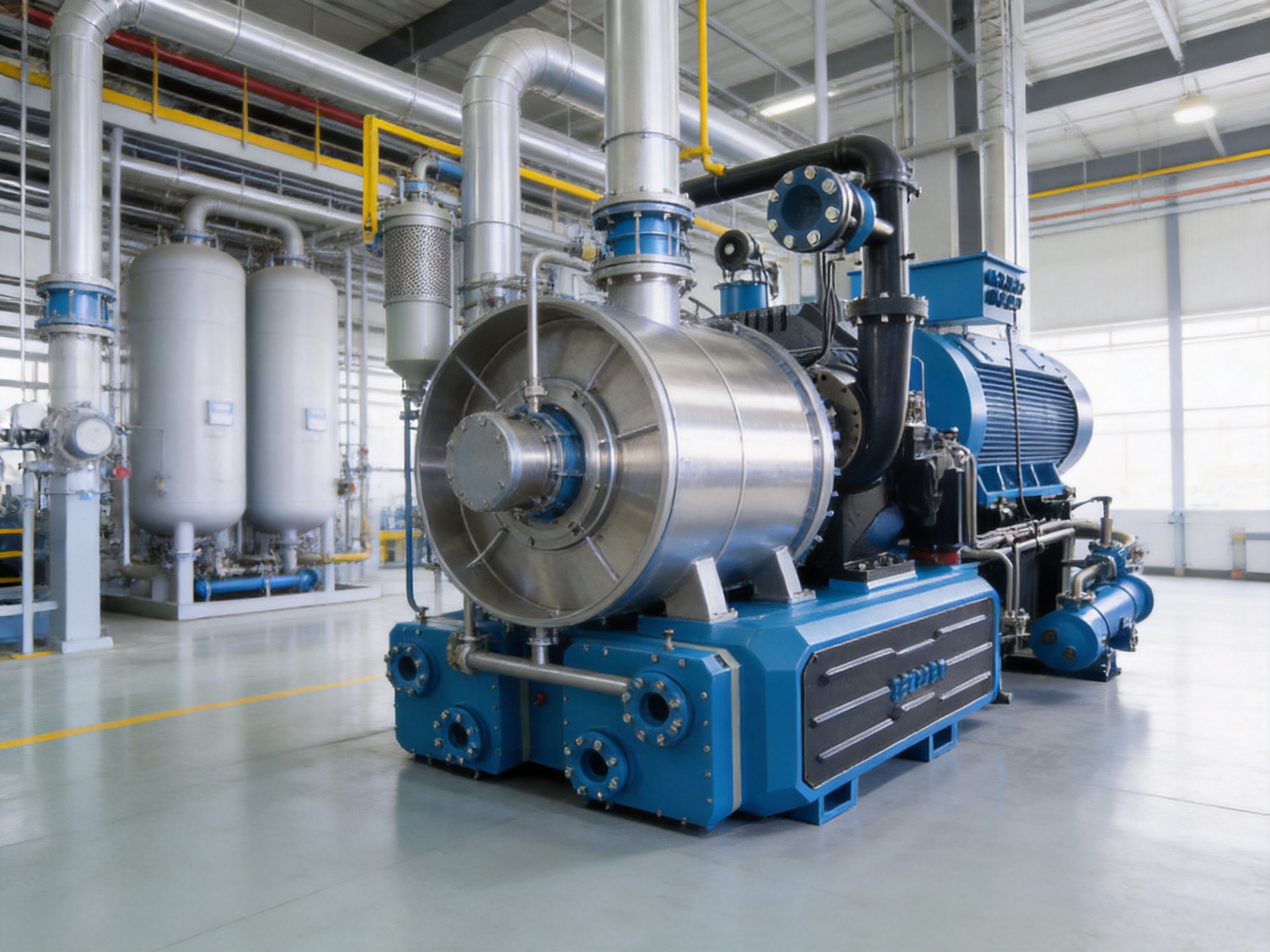
Industrial equipment must be evaluated not only by its technical performance but also by how easily it can be installed and maintained. The centrifugal air compressor is designed to be simple and economical to install. The stated installation characteristics include no special foundation and no pre-embedding requirements.
These features can be advantageous in several situations. A new plant may benefit from reduced civil-work requirements. An existing facility may be able to install the compressor without major modification to the building structure. A replacement project may be completed with less disruption to production, subject to proper planning and site verification.
Before installation, the user should confirm floor loading, access routes, ventilation, electrical supply, cooling requirements, piping layout, drainage, and connection points. The absence of a special foundation does not mean that installation quality is unimportant. The equipment still requires a stable, level, and suitable installation area with adequate clearance for inspection and service.
Air piping should be designed to minimize pressure loss and avoid conditions that could carry liquid water or debris into the compressor or downstream process. Appropriate isolation valves, drains, filters, coolers, receivers, and safety devices should be included according to the project design. Good piping practice helps the compressor achieve its expected operating performance.
Maintenance is simplified when the compressor is oil-free and controlled through a clear PLC interface. There is less need to manage lubricating oil in the compressed-air stream, and operating data can assist technicians during inspections. Nevertheless, maintenance should include cleaning, checking electrical connections, examining cooling systems, inspecting air filters, verifying instrument signals, reviewing vibration conditions, and confirming that safety functions remain effective.
A planned maintenance schedule should be developed according to operating hours, environmental conditions, load profile, and manufacturer recommendations. Preventive maintenance is generally more economical than waiting for an unexpected failure. In a gas-generation plant, compressor downtime may stop the entire production process, so maintenance planning should also consider standby capacity and spare parts.
9. Low Noise and Low Vibration
Noise and vibration are important considerations in industrial compressor rooms. Excessive noise can affect worker comfort and make communication more difficult. Excessive vibration may contribute to mechanical wear, pipe movement, coupling stress, or unreliable operation of connected equipment.
The centrifugal air compressor is designed for low noise and low vibration. These characteristics support a more comfortable working environment and can help protect the equipment installed around the compressor. They are especially useful in facilities where the compressor room is located near production areas, offices, laboratories, or inspection zones.
Low vibration depends on both the compressor design and the quality of installation. Correct alignment, appropriate piping support, proper anchoring where required, and regular inspection are essential. Operators should monitor changes in vibration rather than relying only on an initial measurement. A gradual increase may indicate imbalance, bearing wear, misalignment, fouling, or a change in operating conditions.
Noise levels can also be influenced by inlet and discharge piping, ventilation, building construction, and operating speed. The compressor’s low-noise design provides a favorable starting point, while the complete plant layout determines the final acoustic environment.
10. Advantages Compared with Competing Compressor Approaches
Every compressor technology has an appropriate operating range. The most suitable choice depends on capacity, pressure, duty cycle, air-quality requirements, maintenance resources, and available space. For high-volume continuous service, the centrifugal design offers several advantages compared with common alternatives.
10.1 Comparison with Reciprocating Compressors
Reciprocating compressors are often effective for high-pressure, relatively low-flow applications. They can provide strong pressure capability, but their repeated piston movement may result in higher pulsation, more mechanical wear points, and greater maintenance requirements when used for large continuous air volumes.
A centrifugal compressor is generally better suited to large, steady air demand. Its continuous rotary operating principle can reduce pulsation and provide a smoother flow. It can also avoid some of the oil-management concerns associated with lubricated reciprocating systems. The final choice should still consider the required pressure, turndown range, and plant duty.
10.2 Comparison with Oil-Injected Screw Compressors
Oil-injected screw compressors are widely used and can perform well across many industrial applications. They are often practical for small and medium air demand, variable loads, and applications that require flexible packaged equipment. However, oil injection creates an additional separation and treatment requirement when the process needs very clean air.
For large gas-generation plants, a centrifugal compressor can provide a high-capacity, oil-free air source with fewer concerns about oil carryover in the primary compression path. It may also offer a more suitable solution for centralized systems requiring continuous high-volume operation.
10.3 Comparison with Multiple Small Compressors
Installing several smaller compressors can provide redundancy and operational flexibility. However, multiple machines also mean more motors, control panels, filters, valves, service points, and potential failure sources. The equipment footprint and maintenance workload may increase as the number of units grows.
A high-capacity centrifugal compressor can simplify the central air station by reducing the number of primary compression units. In some projects, a combination of one main centrifugal compressor and a smaller standby or trim compressor may provide a balanced solution. The appropriate arrangement depends on the required availability and production risk.
10.4 Comparison with Conventional Contaminated Air Sources
When compressed air is used directly in separation or purification equipment, contamination control becomes a central issue. A compressor that introduces oil or unstable operating conditions can increase the burden on dryers, filters, separators, and adsorbent protection systems. The oil-free design of this product can reduce that burden and support a cleaner process-air system.
These comparative advantages do not mean that the centrifugal compressor is the correct choice for every application. Very small systems, intermittent duties, or extremely high-pressure low-flow services may require another technology. The strength of this product is its combination of high capacity, broad pressure range, clean air, simple installation, and industrial control.
11. Manufacturing and Engineering Capabilities
The equipment is produced by a gas-equipment manufacturer that integrates research and development, engineering design, production, installation, and after-sales service. This integrated capability is important for compressor projects because successful performance depends on more than the compressor package alone. The air source must be matched with gas-generation equipment, purification components, plant utilities, control philosophy, and site conditions.
The manufacturing operation includes a 3,000-square-meter standardized workshop, a 500-square-meter office area, and a 500-square-meter warehouse. These facilities support the movement from technical design to production, assembly, storage, dispatch, and customer support. A dedicated workshop provides an organized environment for equipment fabrication and assembly, while warehouse capacity helps manage components and project-related materials.
Research and development activities support product improvement and adaptation to industrial operating conditions. The company develops and supplies gas separation and purification equipment, including PSA nitrogen generators, PSA oxygen generators, membrane nitrogen and oxygen generators, nitrogen purification units, and ammonia-decomposition hydrogen purification units. This broader product experience is relevant to the centrifugal air compressor because the compressor is often part of a complete gas system rather than a standalone purchase.
Engineering knowledge in gas separation and purification helps the manufacturer understand the relationship between air pressure, flow, purity, cycle operation, and downstream equipment. This can support more practical compressor selection and system integration. For a customer, working with a supplier familiar with the full gas process may reduce coordination difficulties between separate equipment vendors.
The products are developed using overseas technologies and optimized for industrial conditions in China. This approach combines external technical experience with adaptation to local operating environments, installation practices, service conditions, and customer requirements. Equipment optimization should consider ambient temperature, utility availability, operator experience, maintenance resources, and the actual production profile of the plant.
Quality control is presented as an important part of the company’s operating philosophy. For industrial compressors, quality control should extend across material selection, machining, rotating-component balance, assembly accuracy, electrical wiring, control-panel testing, pressure testing, inspection, packaging, and commissioning support. The exact inspection documents and acceptance procedures should be agreed upon during contract and project engineering.
The company’s experience across petrochemical, textile, food processing, automotive manufacturing, heat treatment, and SMT electronics applications demonstrates exposure to different industrial requirements. These industries may demand different gas purities, operating schedules, pressure levels, and installation conditions. Experience across several sectors can contribute to more adaptable project support.
12. Applications in Gas Separation and Purification
12.1 PSA Nitrogen Generation
Pressure swing adsorption nitrogen generators use compressed air and adsorbent materials to separate nitrogen from oxygen and other components. The compressor must supply air at the required pressure and flow while maintaining stable operation during repeated adsorption and regeneration cycles.
An oil-free centrifugal compressor can help protect the adsorbent and reduce the risk of contamination. High capacity makes the technology suitable for centralized nitrogen production in facilities that require nitrogen for inerting, blanketing, heat treatment, food packaging, electronics production, or process protection.
12.2 PSA Oxygen Generation
PSA oxygen systems also rely on compressed air as their feed source. The compressor must support the operating cycle without excessive fluctuation. Clean and stable air helps protect the adsorbent and contributes to consistent oxygen production.
Oxygen-generation installations may serve industrial cutting, wastewater treatment, metallurgical processes, chemical production, aquaculture, and other applications. The correct compressor configuration depends on oxygen capacity, target purity, operating pressure, duty cycle, and the required level of redundancy.
12.3 Membrane Nitrogen and Oxygen Systems
Membrane separation uses selective permeability to separate gas components. Membrane performance can be sensitive to contaminants, liquid water, and improper operating pressure. An oil-free compressed-air source can support membrane protection when combined with correctly specified filtration and drying.
The compressor capacity should be selected according to membrane feed flow, recovery target, product purity, and pressure requirements. A centrifugal solution may be suitable when the membrane installation serves a large continuous process rather than a small intermittent demand.
12.4 Nitrogen Purification
Some industrial processes require nitrogen with a higher purity than that produced by the initial separation step. Nitrogen purification equipment may use additional treatment to remove residual oxygen or other impurities. Stable compressed-air or process-gas support helps the purification system operate consistently.
12.5 Hydrogen Purification after Ammonia Decomposition
Ammonia decomposition systems can produce hydrogen-rich gas for further purification. Although the exact compressor arrangement depends on the process design, gas-equipment expertise is valuable when integrating compression, purification, storage, and control functions. A supplier experienced in both air separation and gas purification may be better positioned to understand these connections.
13. Industry Applications
In petrochemical plants, compressed air can support nitrogen generation, instrument air, inerting, and process protection. Clean air is particularly important when the gas system is connected to sensitive purification equipment or when the final gas is used in a controlled process environment.
In textile production, nitrogen may be used for atmosphere control, packaging, or specialized manufacturing operations. A centralized high-capacity compressor can support multiple gas-generation points while maintaining a stable supply.
Food-processing facilities may use nitrogen for packaging and product preservation. Oil-free compression helps reduce contamination concerns, although the complete installation must still meet the applicable food and gas-quality requirements established by the end user.
Automotive manufacturing and heat-treatment operations may require nitrogen-rich atmospheres to reduce oxidation during thermal processing. These facilities often operate continuously and value stable pressure, high capacity, low downtime, and predictable maintenance.
SMT electronics and related electronics manufacturing processes may use nitrogen to improve soldering environments and reduce oxidation. The compressor and gas-generation equipment must be selected to support the purity, flow, pressure, and continuity required by the production line.
Other possible applications include metal fabrication, chemical processing, pharmaceutical support systems, wastewater treatment, combustion enhancement, and general plant utilities. In each case, the compressor should be matched to the actual gas quality and operating requirements rather than selected only by nominal motor power.
14. Project Selection and System Design Guidance
Before ordering a centrifugal air compressor, the user should prepare a complete technical data sheet. Important information includes required flow, normal and maximum pressure, inlet air temperature, ambient conditions, operating hours, load variation, air-quality target, cooling utilities, electrical supply, available floor space, and expected expansion.
It is also important to identify whether the compressor will serve a single gas generator or multiple units. A common air header may require an air receiver, pressure-control arrangement, isolation valves, and a clear strategy for starting and stopping individual process units. The design should prevent one process from causing unacceptable pressure fluctuation in another.
Downstream air treatment should be selected as part of the complete system. Depending on the process, the installation may require particulate filtration, coalescing filtration, cooling, condensate removal, drying, activated-carbon treatment, or other purification stages. The oil-free compressor reduces one contamination source but does not remove the need for comprehensive air treatment.
Redundancy should be considered when compressed air is essential to production. A plant may require a standby compressor, emergency shutdown logic, a receiver with sufficient buffer volume, or an alternative air source. The level of redundancy should reflect the cost of production interruption and the time required to restore operation.
Commissioning should include mechanical inspection, electrical checks, control-system verification, no-load testing, loaded operation, pressure and flow confirmation, alarm testing, vibration observation, and integration with the gas-generation equipment. Operators should receive practical instruction on normal operation, shutdown procedures, alarm response, and routine inspection.
15. Environmental and Workplace Benefits
Energy-efficient compression contributes to lower electricity consumption and can reduce the indirect environmental impact associated with plant operation. The exact savings depend on the selected model, operating point, load profile, electricity source, and maintenance condition. Nevertheless, reducing wasted compression energy is a practical part of responsible industrial management.
The oil-free design can reduce the use and disposal of lubricating oil associated with the compressed-air path. It may also reduce the amount of oil-contaminated condensate that requires management. Environmental procedures must still be established for all plant fluids, cleaning materials, and maintenance waste.
Low noise and low vibration support better workplace conditions. A compressor room with controlled noise and stable mechanical operation can be easier to inspect and maintain. Good ventilation, safe access, protective guards, emergency stops, and appropriate personal protective equipment remain necessary components of the overall safety plan.
16. After-Sales Service and Long-Term Support
Industrial compressor performance depends on long-term support as much as initial design. The manufacturer provides installation and after-sales service as part of its integrated business model. This can help customers during equipment delivery, commissioning, troubleshooting, maintenance planning, and future upgrades.
After-sales support should include clear documentation, recommended spare parts, operating instructions, maintenance schedules, electrical diagrams, control-system information, and contact procedures. Customers should confirm the scope of service before purchase, including response time, commissioning responsibilities, training, warranty conditions, and availability of replacement components.
A strong service relationship is particularly valuable when the compressor is connected to a complete gas plant. Problems in the air source can affect nitrogen or oxygen production, purification performance, and downstream users. A supplier with knowledge of the broader gas system may be able to diagnose issues more efficiently than a supplier focused only on the compressor package.
Because the company serves customers across more than 30 provinces and cities in China and also exports to international markets, its experience includes different site conditions and customer operating practices. International projects may require additional attention to electrical standards, documentation, shipping protection, installation supervision, local service arrangements, and communication procedures.
17. Why This Compressor Is a Competitive Industrial Choice
The main competitive strength of this centrifugal air compressor is the combination of several features within one product family. It provides high air capacity, a broad pressure range, one-to-four-stage flexibility, oil-free operation, PLC-based control, low noise, low vibration, and simple installation.
Some competing products may emphasize only high pressure, while others focus on low purchase price or compact size. The centrifugal compressor offers a broader industrial value proposition. It is designed for users who need dependable large-volume air, clean operation, manageable maintenance, and practical integration with gas separation and purification equipment.
The product also benefits from the manufacturer’s wider capabilities. Experience with PSA systems, membrane equipment, nitrogen purification, oxygen generation, and hydrogen purification gives the company a broader understanding of gas projects. Its integrated R&D, design, production, installation, and service structure can simplify technical communication and project coordination.
For customers comparing suppliers, the evaluation should include more than the compressor’s catalog specifications. Important questions include whether the supplier understands the complete process, can customize the system, provides clear technical documentation, supports commissioning, maintains quality control, and offers responsive after-sales service. These factors influence reliability and total cost throughout the equipment’s working life.
The product is therefore a competitive choice for industrial users that require a clean, stable, and efficient compressed-air source for gas production. Its value is strongest in continuous, high-volume applications where oil contamination, energy consumption, installation complexity, and downtime must be controlled.
18. Frequently Asked Questions
Q1: What is the main purpose of this centrifugal air compressor?
Its main purpose is to provide high-volume compressed air for industrial applications, especially air separation units, gas purification systems, nitrogen generators, oxygen generators, membrane systems, and other process equipment.
Q2: What pressure range is available?
The specified working pressure range is 0.8 to 25 bar(g). The appropriate pressure depends on the gas-generation process, downstream equipment, pressure losses, and operating strategy.
Q3: What air capacity can the compressor provide?
The specified free air delivery range is 100 to 1,500 m³/min. Final capacity selection should be based on normal demand, peak demand, future expansion, and required standby capacity.
Q4: How many compression stages are available?
The product is available in one-stage, two-stage, three-stage, and four-stage configurations. The number of stages is selected according to the required pressure, flow, operating conditions, and process design.
Q5: Is the compressed air oil-free?
Yes. The product is designed to provide an oil-free compression path, which helps reduce the risk of oil contamination in gas separation and purification equipment. Downstream filtration and drying should still be specified according to the process requirements.
Q6: Why is oil-free air important for PSA equipment?
Oil contamination can damage or foul adsorbents, filters, valves, and other components. Oil-free compression provides a cleaner feed source and can help protect the performance and service life of the PSA system.
Q7: What type of control system is used?
The compressor uses a Siemens PLC control system with a user-friendly interface. It is intended to simplify operation, display operating conditions, manage alarms, and support maintenance activities.
Q8: Does the compressor require a special foundation?
The product information states that no special foundation and no pre-embedding are required. The installation area must nevertheless be stable, level, accessible, and suitable for the equipment’s weight, ventilation, piping, and electrical requirements.
Q9: What is the power range?
The specified motor power range is 100 to 6,000 kW. The required power depends on the selected pressure, capacity, number of stages, ambient conditions, and operating point.
Q10: Which industries can use this compressor?
Potential industries include petrochemical production, textile manufacturing, food processing, automotive manufacturing, heat treatment, SMT electronics, and other facilities requiring stable compressed air for gas generation or purification.
Q11: Can the compressor be integrated with a complete gas plant?
Yes. It can be integrated with air separation units, PSA nitrogen and oxygen generators, membrane systems, nitrogen purification units, and other gas equipment. Project-specific engineering is needed to match the compressor with the complete process.
Q12: What should customers provide when requesting a quotation?
Customers should provide required flow, working pressure, air-quality target, operating hours, ambient conditions, power supply, cooling conditions, installation location, gas-generation process, redundancy expectations, and any applicable technical or documentation standards.
19. Conclusion
The centrifugal air compressor is a practical solution for industrial facilities that require high-volume, clean, and stable compressed air. Its 0.8 to 25 bar(g) working-pressure range, 100 to 1,500 m³/min air-capacity range, and 100 to 6,000 kW power range support a wide variety of process requirements. One-stage to four-stage configurations provide additional flexibility for project-specific pressure and flow conditions.
Its key advantages include oil-free operation, low noise, low vibration, simple installation, no special foundation requirement, convenient PLC control, and suitability for continuous industrial service. These features can help reduce contamination risk, simplify maintenance, support energy management, and improve the reliability of downstream gas separation and purification systems.
The manufacturer’s integrated capabilities in research and development, design, production, installation, and after-sales service further strengthen the product offering. Its standardized workshop, engineering team, gas-equipment experience, and industrial application knowledge provide a foundation for customized project support.
For customers evaluating compressor technologies, the most important consideration is the complete lifecycle value. A centrifugal compressor should be judged by its capacity, efficiency, air quality, installation requirements, control system, maintenance needs, compatibility with the gas process, and available technical support. When these factors are properly matched to the application, this product can provide a dependable foundation for modern industrial gas production.
References
1. General principles of centrifugal compressor operation, industrial turbomachinery engineering references.
2. Compressed-air system design and energy-efficiency practices, industrial utility engineering references.
3. Pressure swing adsorption technology for nitrogen and oxygen generation, gas separation engineering references.
4. Membrane gas separation and compressed-air pretreatment, industrial membrane process references.
5. Industrial air-quality management, filtration, drying, and contamination-control references.
6. Programmable logic controller applications in industrial compressor control systems.
7. Manufacturer-provided product specifications and company information for centrifugal air compression and gas equipment.
Product: Centrifugal Air Compressor

- Tel: +86-15057127179
+86-13588382771 - Email: huang.yifan0215@gmail.com
- Address: Huanshan Township, Fuyang District, Hangzhou City, Zhejiang Province
Copyright © Zhejiang Baiao Gas Equipment Co., Ltd. All Rights Reserved.
Privacy
Gas Generator Plant Manufacturer, Industrial Purification Equipment Plant
