 en
en русский
 Español
 عربى
عربى
Heatless Regenerative Adsorption Dryers for Reliable Compressed Air Purification
Compressed air is widely used as a power and process medium in manufacturing, energy, chemical processing, food production, electronics, automotive manufacturing, textile production, and heat treatment. Although air appears clean and dry to the human eye, atmospheric air contains water vapor, oil aerosols, dust, and other contaminants. Once air is compressed, its moisture concentration increases significantly. If this moisture is not removed before the air enters downstream equipment, it can cause corrosion, pipeline contamination, instrument failure, product defects, valve malfunction, and unplanned maintenance.
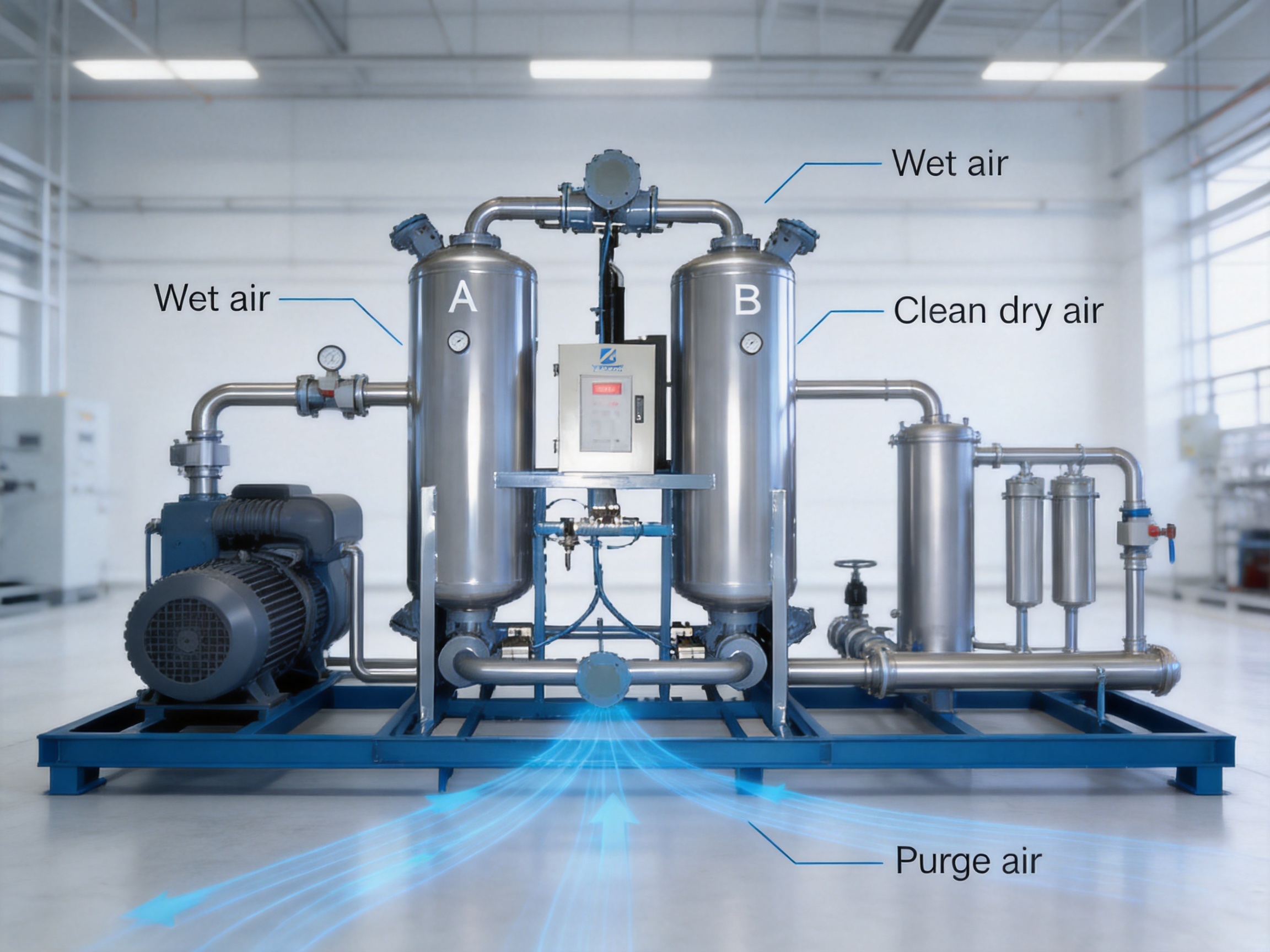
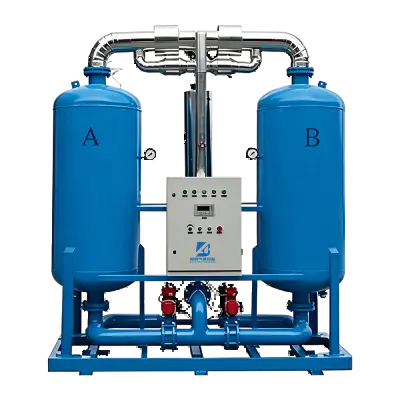
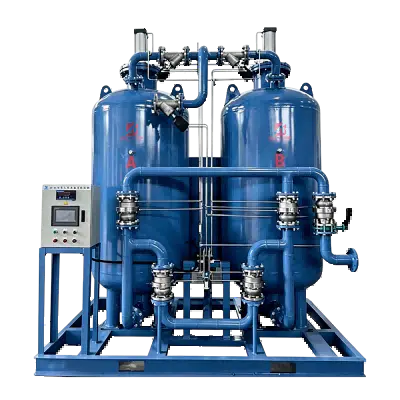
The BAL heatless regenerative adsorption dryer is designed to provide a dependable solution for compressed air drying and moisture control. Based on pressure swing adsorption, the system uses a microporous desiccant to capture water molecules from compressed air. Two adsorption towers operate in alternating cycles: one tower dries the process air while the other is regenerated by depressurization and a controlled portion of dry purge air. After regeneration, the towers switch functions.
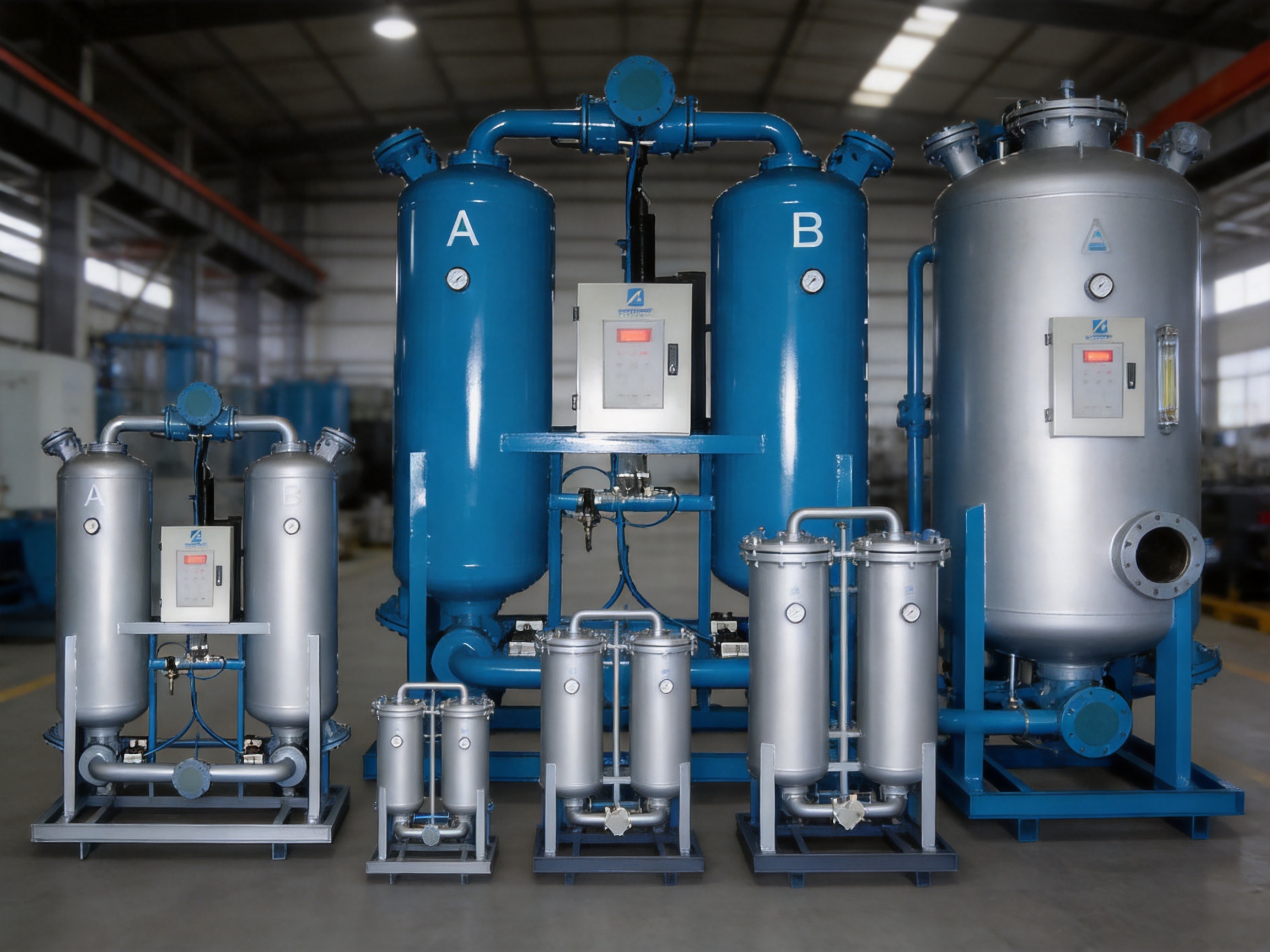
This operating method allows the dryer to produce a low-pressure-dew-point air supply without external heating. It is particularly suitable for applications that require stable drying performance, compact operating principles, simple maintenance, and flexible capacity selection. The product range covers rated gas processing capacities from small laboratory or pilot applications to larger industrial compressed-air systems.
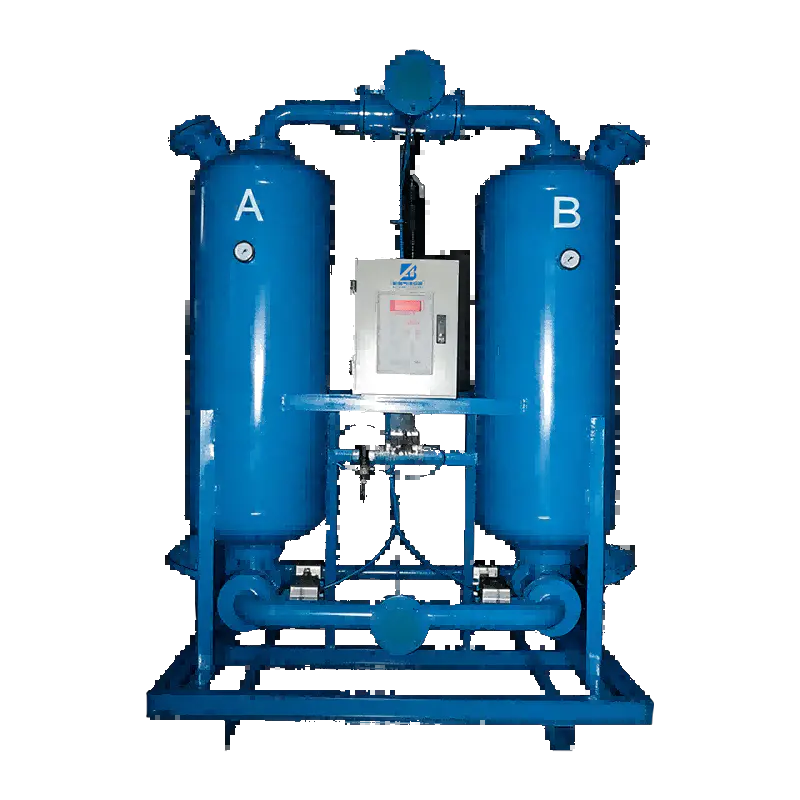
BAL Heatless Regenerative Adsorption Dryer
Content
- 1 Why Compressed Air Drying Is Essential in Industrial Systems
- 2 Working Principle of the Heatless Regenerative Dryer
- 3 Key Technical Advantages
- 4 Design Range and Technical Specifications
- 5 Model Selection Table
- 6 Competitive Positioning in the Compressed-Air Dryer Market
- 7 Manufacturing and Engineering Strengths
- 8 Applications Across Industrial Sectors
- 9 Installation and System Integration
- 10 Operating and Maintenance Recommendations
- 11 Lifecycle and Energy Considerations
- 12 Why the Product Is Suitable for Customized Projects
- 13 Purchasing Checklist for Technical Buyers
- 14 Q&A
- 14.1 What is a heatless regenerative adsorption dryer?
- 14.2 What pressure dew point can the dryer provide?
- 14.3 How much air is used for regeneration?
- 14.4 Does the dryer require an electric heater?
- 14.5 What is the standard operating pressure?
- 14.6 What is the maximum inlet air temperature?
- 14.7 How often should the desiccant be replaced?
- 14.8 Are sight glasses included as standard?
- 14.9 What protects the desiccant from damage?
- 14.10 How should the dryer be selected?
- 14.11 Can the dryer be used with other gas-purification equipment?
- 14.12 What industries can use this type of dryer?
- 14.13 Why is PLC control important?
- 15 Conclusion
- 16 References
- 17 Product: BAL Heatless Regenerative Adsorption Dryer
Why Compressed Air Drying Is Essential in Industrial Systems
Compressed air is generated by drawing ambient air into a compressor and increasing its pressure. During this process, the air retains its moisture content, but the ability of compressed air to hold water vapor changes with pressure and temperature. When the compressed air cools after compression, water vapor condenses into liquid water. This condensate may accumulate in receivers, pipelines, filters, valves, pneumatic cylinders, instruments, and production equipment.
Liquid water and water vapor can create several operational problems. Internal corrosion reduces the service life of carbon-steel piping and pressure components. Moisture can wash away lubricants from pneumatic tools and damage bearings or moving components. In instrument-air systems, water may cause inaccurate readings, sticking control valves, and unstable automated processes. In electronics and precision manufacturing, residual moisture can contribute to contamination and product rejection.
Many production processes also require a defined pressure dew point rather than simply the removal of visible liquid water. A pressure dew point of -40°C means that the compressed air must be cooled to -40°C at its operating pressure before water begins to condense. This is a demanding dryness level that cannot normally be achieved with basic aftercooling and drainage alone. Adsorption drying is therefore used when the process requires deep moisture removal and dependable low-dew-point performance.
The BAL dryer is specified for a pressure dew point of no more than -40°C as a standard performance level. Configurations offering dew points from -40°C to -73°C are available for applications requiring more intensive drying. This makes the system suitable for instrument air, pneumatic controls, sensitive production lines, gas preparation, and other processes where moisture must be tightly controlled.
Working Principle of the Heatless Regenerative Dryer
The dryer operates according to the principle of pressure swing adsorption. Its primary components are two adsorption towers filled with a microporous desiccant, a system of pneumatic valves, a control unit, inlet and outlet connections, and a regeneration air path. The towers are designed to alternate between adsorption and regeneration so that treated air can be supplied continuously.
Adsorption stage
During the adsorption stage, wet compressed air enters one tower under operating pressure. The air passes through the desiccant bed, where water molecules are retained by the microporous material. The dried air then leaves the tower and flows to the downstream compressed-air network.
As adsorption continues, the desiccant gradually approaches its moisture-loading capacity. The system control sequence monitors the cycle timing and changes the airflow route before the desiccant becomes saturated. This allows the dryer to maintain continuous operation without interrupting the treated-air supply.
Regeneration stage
At the same time, the second tower is regenerated. The tower is depressurized, reducing the partial pressure of the water held by the desiccant. A controlled portion of the dry product air is directed through the regenerated tower. This purge air removes accumulated moisture and carries it to the exhaust outlet.
Because the dryer uses dry compressed air rather than an external heater for regeneration, it is classified as a heatless regenerative adsorption dryer. The standard regeneration air consumption is specified at approximately 5%–8%, depending on operating conditions, design selection, and required dew point. This operating characteristic should be considered when evaluating total lifecycle cost, because a portion of the compressed air is used to regenerate the desiccant.
Tower switching
When the regeneration period is complete, the regenerated tower is repressurized and placed into service. The previously operating tower is then depressurized and regenerated. The cycle repeats automatically, creating a continuous process for removing water from compressed air.
The standard cycle time is adjustable within a range of approximately 4–10 minutes. Shorter or longer cycle settings may be selected according to inlet conditions, required dryness, desiccant performance, and system design. Correct cycle selection is important because a cycle that is too short may increase valve activity and purge use, while a cycle that is too long may allow excessive moisture loading in the adsorption bed.
Key Technical Advantages
The product combines a straightforward pressure swing adsorption principle with an industrial control and valve system designed for repeated operation. Its main advantages are related to moisture-removal capability, operating continuity, maintenance access, and configuration flexibility.
Stable low-dew-point performance
The microporous desiccant is selected to adsorb water molecules effectively under compressed-air conditions. With suitable inlet filtration, pressure, temperature, and flow control, the dryer can provide a pressure dew point of no more than -40°C. Optional configurations can reach lower dew points between -40°C and -73°C.
This performance is more appropriate than refrigerated drying for applications requiring very dry air. Refrigerated dryers are generally effective for moderate dew points, but their performance may not satisfy processes exposed to low ambient temperatures, sensitive instruments, or strict moisture specifications. The adsorption design provides a deeper drying capability when the application requires it.
Heatless regeneration
The system does not require an electric heater or steam circuit for desiccant regeneration. Instead, it uses depressurization and a controlled flow of dry purge air. This reduces the number of thermal components and simplifies the basic regeneration arrangement.
Compared with heated systems, a heatless dryer may offer a simpler installation where heating utilities are unavailable or where the operator prefers to avoid heater maintenance. The trade-off is purge-air consumption, which must be included in the compressed-air system design. For plants that already have a reliable compressed-air supply and prioritize mechanical simplicity, the heatless arrangement can be a practical choice.
Automatic operation through PLC control
An imported PLC-based control system manages the switching sequence, regeneration timing, repressurization, and valve operation. Intelligent control helps coordinate the two towers and reduces the need for manual intervention during normal operation.
PLC control also supports repeatable operating cycles. Consistent sequence control is important because adsorption dryers depend on precise timing. If the inlet, outlet, exhaust, and repressurization valves do not open and close in the correct order, the desiccant bed may be exposed to excessive pressure shocks or the outlet air may not meet the required dryness level.
The controller can also provide a structured basis for fault monitoring and service procedures. Depending on the final configuration, operators may use control indications to identify tower status, cycle stage, valve activity, and abnormal operating conditions.
Long-life pneumatic valves
The dryer uses advanced pneumatic valves designed for a service life exceeding one million cycles. Valve durability is a major factor in adsorption-dryer reliability because the valves operate repeatedly throughout the equipment lifecycle.
Valve failure can cause several problems, including air leakage, incomplete regeneration, incorrect tower switching, pressure shock, or loss of dew-point performance. A valve system designed for high cycle counts can reduce the frequency of replacement and help lower maintenance interruptions compared with systems that use less durable switching components.
Actual valve service life depends on air quality, pressure, installation, operating frequency, seal condition, and maintenance. Upstream filtration and proper condensate management remain essential even when high-cycle valves are installed.
Efficient airflow distribution
A specialized airflow diffusion device is incorporated to improve the distribution of air through the desiccant bed. Uniform airflow helps reduce localized high-velocity channels, uneven moisture loading, and excessive mechanical stress on the adsorbent.
Good airflow distribution can extend desiccant service life and support more consistent use of the available adsorption volume. It may also reduce the risk of dusting, bed movement, and premature degradation caused by concentrated airflow paths. This feature is especially relevant in larger vessels and systems operating over long duty cycles.
Convenient desiccant replacement
Flanged filling ports are provided to make desiccant loading and replacement more convenient. A practical filling arrangement is important because desiccant replacement is a routine maintenance activity over the life of an adsorption dryer.
Accessible filling ports can reduce service time, support more controlled handling of the adsorbent, and simplify inspection during scheduled maintenance. Operators should still follow the applicable procedure for depressurization, isolation, removal of old material, internal cleaning, desiccant filling, and reassembly.
Optional sight glasses
Sight glasses for the adsorption towers are available upon request. These provide a direct visual view of operating conditions inside the tower area and can assist with inspections, troubleshooting, or observation of desiccant behavior.
Although a sight glass does not replace pressure, dew-point, or flow instrumentation, it can offer useful supplemental information. Visual access may help maintenance personnel identify unusual bed movement, discoloration, accumulation, or other conditions that require further investigation.
Design Range and Technical Specifications
The dryer is available in multiple models to support different compressed-air flow requirements. Standard operating pressure is 0.4–1.0 MPa, with higher-pressure configurations from 1.0–3.0 MPa available. The inlet air temperature should not exceed 50°C. Maintaining the specified inlet temperature is important because excessive heat increases the moisture burden and can reduce adsorption performance.
| Technical item | Standard specification | Available or optional range |
| Operating pressure | 0.4–1.0 MPa | 1.0–3.0 MPa available |
| Pressure dew point | ≤ -40°C | -40°C to -73°C available |
| Inlet air temperature | ≤ 50°C | Application-dependent confirmation required |
| Regeneration air consumption | Approximately 5%–8% | Depends on operating conditions and configuration |
| Pressure drop | ≤ 0.02 MPa | Subject to flow and installation conditions |
| Cycle time | 4–10 minutes | Adjustable according to application |
| Control system | PLC intelligent control | Final configuration confirmed during engineering |
The pressure-drop specification of no more than 0.02 MPa supports efficient air delivery when the dryer is correctly selected and operated within its rated capacity. Pressure drop should be assessed across the complete treatment train, including prefilters, afterfilters, valves, piping, and other accessories. An apparently low pressure drop across the dryer may not represent the total system pressure loss if upstream or downstream components are undersized.
Rated gas processing capacity is normally expressed in standard cubic meters per hour. The actual usable capacity depends on inlet pressure, temperature, air composition, required dew point, cycle time, and the condition of the desiccant. Therefore, model selection should not be based only on nominal compressor output. A safety margin is recommended to account for peak demand, seasonal conditions, future expansion, and pressure fluctuations.
Model Selection Table
The following table reproduces the supplied model information. Several capacity entries in the source data appear abbreviated or require confirmation before a purchase order is issued. The final technical quotation should verify the rated flow, electrical details, dimensions, connection size, and equipment weight for the selected model.
| Model | Rated gas processing capacity (Nm³/h) | Inlet and outlet diameter DN (mm) | Power supply / installed power | Length L (mm) | Width W (mm) | Height H (mm) | Weight (kg) |
| BAL-1 | 1.2 | 25 | 220V/50Hz, 60W | 970 | 380 | 1100 | 200 |
| BAL-2 | 2. [confirm] | 25 | Not specified | 970 | 380 | 1230 | 250 |
| BAL-3 | 3. [confirm] | 32 | Not specified | 1150 | 385 | 1370 | 310 |
| BAL-6 | 7.2 | 40 | Not specified | 1310 | 500 | 1830 | 605 |
| BAL-12 | 13. [confirm] | 50 | Not specified | 1550 | 625 | 1930 | 1050 |
| BAL-20 | 22 | 65 | Not specified | 1950 | 685 | 2180 | 1050 |
| BAL-30 | 33 | 80 | Not specified | 1950 | 685 | 3600 | 1800 |
| BAL-40 | 44 | 100 | Not specified | 2200 | 775 | 2570 | 2520 |
| BAL-60 | 6. [confirm] | 125 | Not specified | 2400 | 1000 | 2400 | 3150 |
| BAL-80 | 8B [confirm] | 150 | Not specified | 2650 | 1100 | 2980 | 3980 |
| BAL-100 | 110 | 100 | Not specified | 2930 | 1200 | 3200 | 4460 |
| BAL-150 | 165 | 200 | Not specified | 3500 | 1650 | 3560 | 5260 |
| BAL-200 | 220 | 200 | Not specified | 3600 | 1680 | 3660 | 6550 |
The model range demonstrates that the same basic adsorption technology can be applied to small and large air-treatment requirements. Smaller models may be suitable for localized instrument-air systems, test facilities, compact production equipment, and pilot installations. Larger models can support plant-wide compressed-air distribution or dedicated high-flow process lines.
Competitive Positioning in the Compressed-Air Dryer Market
Industrial buyers often compare adsorption dryers according to dew point, air consumption, pressure drop, service life, controls, maintenance access, footprint, delivery requirements, and lifecycle cost. The BAL design offers several characteristics that can be advantageous when compared with basic or less-flexible alternatives.
Compared with refrigerated dryers
Refrigerated dryers cool compressed air to condense and remove liquid water. They are often economical for general-purpose applications, but they normally provide a higher pressure dew point than adsorption dryers. When the process requires air that remains dry in cold environments or in sensitive instrument systems, a heatless adsorption dryer can provide a more suitable technical solution.
The BAL dryer is therefore positioned for applications where a -40°C pressure dew point or lower is required. It should not be selected solely because adsorption drying sounds more advanced; the correct choice depends on process requirements. Where a moderate dew point is acceptable, a refrigerated dryer may have lower operating cost. Where deep drying is essential, adsorption technology provides a stronger performance basis.
Compared with heated adsorption dryers
Heated regenerative dryers use electric heaters, steam, or other heat sources to reduce purge-air consumption. They may be advantageous in large systems where compressed-air losses are particularly costly. However, heated systems add heating elements, temperature controls, thermal insulation, and additional safety or maintenance requirements.
The heatless configuration avoids these heating components. Its main advantage is a relatively direct and compact regeneration method that can be installed where heating utilities are not available. The expected purge-air consumption of 5%–8% must be included in the operating-cost calculation, but the design may reduce mechanical and thermal complexity.
Compared with basic low-cost adsorption units
Some entry-level adsorption dryers use simple timers, standard valves, limited access ports, and minimal monitoring. Such equipment may be appropriate for small or noncritical applications, but long-term reliability can be affected by valve quality, uneven airflow, difficult desiccant replacement, or limited troubleshooting access.
The BAL dryer emphasizes PLC control, high-cycle pneumatic valves, airflow diffusion, flanged filling ports, and optional sight glasses. These features can improve maintainability and operational consistency. They also give plant operators more options when configuring equipment for critical production or continuous-duty service.
Compared with single-vessel drying systems
A two-tower regenerative design provides continuous drying because one tower remains in adsorption service while the other is regenerated. A single-vessel system may require periodic shutdown or a separate backup arrangement. For facilities that cannot tolerate interruptions in dry-air supply, alternating towers offer a more practical operating architecture.
The dual-tower approach also allows maintenance planning around a structured sequence. Although the dryer remains a pressure vessel system requiring appropriate safety management, its alternating design supports continuous process integration more effectively than intermittent batch drying arrangements.
Manufacturing and Engineering Strengths
The manufacturer integrates research and development, engineering design, production, installation, and after-sales service. This integrated structure is important for gas-treatment equipment because performance depends not only on the vessel and desiccant but also on controls, valves, piping, assembly, testing, installation, and commissioning.
Standardized production facilities
The company operates a standardized workshop of approximately 3,000 square meters, an office area of approximately 500 square meters, and a warehouse of approximately 500 square meters. These facilities provide space for fabrication, assembly, component storage, engineering work, packaging, and dispatch.
A dedicated warehouse can help separate incoming components, work-in-progress materials, finished equipment, and service parts. Organized material control is especially useful for equipment assembled from multiple valve, instrumentation, control, pressure-vessel, and piping components.
Research and development capability
The manufacturer specializes in gas separation and purification equipment, including PSA nitrogen generators, PSA oxygen generators, membrane nitrogen and oxygen generators, nitrogen purification units, and ammonia-decomposition hydrogen purification units. Experience across these product categories supports a broader understanding of adsorption, gas flow, pressure control, purification media, and industrial process integration.
For an adsorption dryer, this technical background can support product development in areas such as vessel sizing, gas distribution, valve sequencing, desiccant selection, purge management, control logic, and compatibility with other gas-treatment equipment. A manufacturer with experience across several gas technologies can also be better positioned to design combined treatment systems rather than isolated components.
Application-oriented design
Industrial compressed-air requirements vary considerably. A textile facility may prioritize continuous operation and low maintenance. An electronics manufacturer may require strict moisture control and clean air. A chemical plant may require material compatibility and special pressure ratings. A food-processing site may focus on hygiene, oil removal, and documentation.
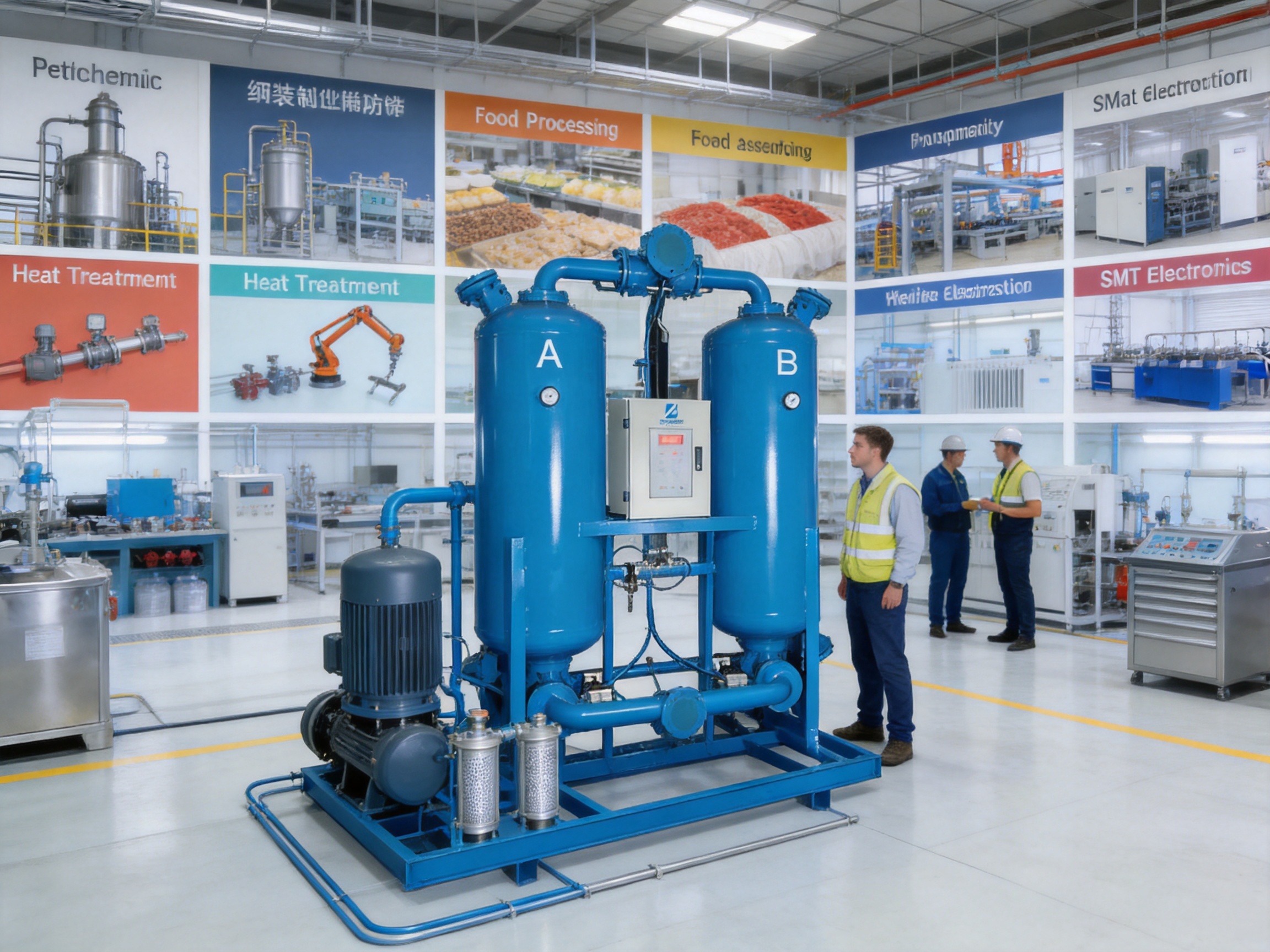
The manufacturer’s involvement in petrochemical, textile, food-processing, automotive, heat-treatment, and SMT electronics applications provides an application-oriented basis for equipment selection. The dryer can be configured according to pressure, flow, dew point, inlet temperature, connection size, cycle requirements, and installation environment.
Quality-control emphasis
Adsorption dryers must be assembled and tested with attention to pressure containment, valve sealing, pipe cleanliness, control sequence, desiccant retention, and airflow direction. The company states that it emphasizes strict quality control, technical improvement, energy efficiency, and reliable service.
For buyers, quality control should be verified through project documentation and acceptance procedures. Useful documents may include pressure-test records, electrical inspection records, control-panel test reports, valve specifications, desiccant certificates, operating manuals, spare-parts lists, and factory-acceptance test results.
Installation and after-sales support
Because the company provides installation and after-sales service, customers can seek support beyond the initial equipment supply. Proper installation affects the performance of every compressed-air dryer. Incorrect pipe sizing, insufficient prefiltration, high inlet temperature, poor drainage, vibration, and improper exhaust routing can all reduce service life or impair drying performance.
Commissioning should include leak inspection, valve-sequence verification, pressure stabilization, dew-point confirmation, purge-flow assessment, and operator training. A clear service plan should also identify recommended inspection intervals for filters, valves, pressure gauges, electrical components, and desiccant condition.
Applications Across Industrial Sectors
Petrochemical and chemical processing
Chemical and petrochemical facilities use compressed air for control valves, pneumatic instruments, process actuators, and general plant services. Moisture can corrode control systems and affect the reliability of automated equipment. A low-dew-point adsorption dryer helps protect critical instruments and can be integrated into a dedicated instrument-air system.
Textile manufacturing
Textile machines rely on pneumatic controls, air jets, actuators, and automated handling systems. Moisture in compressed air may affect fabric processing, pneumatic response, and equipment cleanliness. A stable dry-air supply can support consistent machine operation and reduce moisture-related maintenance.
Food processing
Food-processing equipment may use compressed air for packaging, conveying, filling, cleaning, and control. The required treatment arrangement depends on whether compressed air contacts the product directly or indirectly. The dryer should be installed with suitable filtration and oil-removal equipment selected according to the applicable plant and product requirements.
Automotive manufacturing
Automotive plants use compressed air for robotics, assembly tools, painting, surface treatment, testing, and pneumatic automation. Moisture can interfere with coating quality, damage tools, or disrupt assembly equipment. Adsorption drying is particularly useful where low dew point is required for sensitive process areas.
Heat treatment
Heat-treatment facilities use compressed air for furnace controls, actuators, valves, and supporting equipment. Temperature-sensitive industrial environments may also experience variations in ambient conditions. A low-dew-point compressed-air system can help protect instrumentation and maintain reliable pneumatic operation.
SMT electronics and precision manufacturing
Surface-mount technology lines and electronics manufacturing require stable utilities, clean operating conditions, and reliable automated control. Moisture can affect pneumatic components, instrument response, and production consistency. The dryer can be used as part of a broader air-treatment system that includes particulate filtration, coalescing filtration, oil removal, and appropriate distribution piping.
Installation and System Integration
A heatless adsorption dryer should normally be installed downstream of an air compressor, aftercooler, moisture separator, receiver, and suitable prefilters. The prefilters protect the desiccant from liquid water, oil, and solid particles. If liquid water or oil reaches the adsorbent bed, its capacity may decline rapidly and the material may become difficult to regenerate.
The inlet air temperature should remain at or below 50°C. If compressor discharge air is too hot, an aftercooler or additional cooling arrangement may be required. Condensate must be removed effectively before the air enters the dryer. Automatic drains should be selected and maintained so that accumulated liquid does not bypass into the adsorption towers.
The dryer should be installed on a stable foundation with adequate access for valve inspection, control-panel operation, desiccant replacement, and maintenance. The exhaust outlet should be routed safely because regeneration releases moisture and may generate noise during depressurization. The surrounding area should have sufficient ventilation and clearance for service activities.
Downstream filtration may be required depending on the application. Although the dryer removes water vapor, the overall compressed-air system may still need particulate, oil, or dust filtration. In critical applications, a final filter can protect the distribution network and process equipment from desiccant dust or upstream contamination.
When sizing the dryer, engineers should evaluate maximum flow rather than average flow alone. The selected model should account for compressor capacity, demand peaks, pressure variation, ambient temperature, required dew point, future expansion, and the purge-air requirement. A dryer that is too small may experience excessive loading and fail to reach the specified dew point.
Operating and Maintenance Recommendations
Routine maintenance begins with protecting the dryer from contamination. Prefilters should be inspected according to pressure drop and operating hours. Drains should be checked for proper discharge. Oil carryover should be monitored where lubricated compressors are used. The dryer should not be operated with bypassed or failed filters unless the system has been specifically engineered for that condition.
Operators should monitor outlet dew point, inlet and outlet pressure, pressure drop, valve behavior, exhaust flow, and control alarms. A gradual increase in pressure drop may indicate filter blockage, desiccant dusting, bed compaction, or a flow-distribution issue. A deterioration in dew point may indicate desiccant saturation, high inlet temperature, excessive flow, valve leakage, incorrect sequencing, or contamination.
Valve maintenance should follow the manufacturer’s recommended inspection and replacement schedule. Even though the pneumatic valves are designed for more than one million cycles, service life depends on the cleanliness and quality of the actuating air, the pressure environment, and the number of daily cycles. Seal wear, leakage, and slow actuation should be addressed promptly.
Desiccant replacement should be carried out only after the towers have been fully isolated and depressurized. The filling ports should be kept clean, and the new adsorbent should be protected from atmospheric moisture before installation. After replacement, the tower should be checked for correct fill level, internal screens, distributors, and retaining components.
Control-system maintenance should include inspection of electrical connections, PLC status, sequence settings, pressure switches, sensors, and alarm functions. Backup copies of control parameters and program settings should be retained where applicable. Operators should be trained to recognize the difference between normal regeneration exhaust and abnormal leakage or valve failure.
Lifecycle and Energy Considerations
Energy consumption is an important part of dryer selection. A heatless dryer uses purge air for regeneration, and the specified regeneration air consumption is approximately 5%–8%. This means that the compressor must produce additional air beyond the net process requirement. The economic impact depends on compressor efficiency, electricity prices, operating hours, pressure level, and the value of the treated air.
At the same time, a low pressure drop can help limit energy losses in the distribution system. The stated pressure drop of no more than 0.02 MPa is favorable when the dryer is operated within its rated conditions. Proper model sizing, clean filters, leak-free valves, and suitable piping are necessary to preserve this benefit throughout the equipment lifecycle.
Some customers may compare a heatless design with heated or blower-purge alternatives. The best choice depends on the plant’s energy profile. A heated system may save compressed air but consume electrical or thermal energy. A heatless unit may use more purge air but require fewer heating components. A complete lifecycle assessment should include capital cost, utilities, maintenance, replacement parts, downtime risk, and the cost of moisture-related product or equipment failures.
The company’s broader emphasis on energy efficiency supports an application-based approach rather than a single solution for every site. Engineers can compare different configurations according to actual duty conditions and select the most suitable arrangement for flow, pressure, dew point, and operating schedule.
Why the Product Is Suitable for Customized Projects
Industrial compressed-air systems are rarely identical. Customers may need special pressures, nonstandard connection sizes, different electrical requirements, modified cycle sequences, remote monitoring, special materials, or integration with existing gas-purification equipment. The availability of operating pressures from 0.4–1.0 MPa and optional configurations from 1.0–3.0 MPa provides a starting point for customized design.
Optional dew points from -40°C to -73°C allow the dryer to be matched to different process requirements. Sight glasses, flanged filling ports, PLC control, and a broad model range provide additional flexibility. A technical review should confirm the actual gas composition, flow profile, operating pressure, ambient temperature, installation altitude, required dew point, and applicable electrical and pressure-vessel standards.
The manufacturer’s experience with nitrogen generators, oxygen generators, membrane systems, purification units, and hydrogen-related equipment also allows the dryer to be considered within a larger gas-treatment project. For example, a customer may require compressed-air drying before a PSA system, air pretreatment for a membrane gas generator, or integrated purification equipment for a production plant.
Purchasing Checklist for Technical Buyers
Before ordering, the buyer should provide the maximum and normal compressed-air flow, inlet pressure, inlet temperature, required pressure dew point, ambient temperature, available electrical supply, connection standard, installation location, and desired control functions.
The buyer should also confirm whether the compressed air contains compressor oil, whether a refrigerated aftercooler is installed, what prefilters are available, and how condensate will be discharged. The dryer should not be treated as an isolated device; its performance depends on the condition of the entire upstream air-treatment system.
Model dimensions and weights should be checked against the available foundation, access route, lifting equipment, and maintenance clearance. The supplied model table includes several entries whose capacity or electrical information is abbreviated. These values should be confirmed in the final quotation and technical drawing.
Documentation requirements should be agreed before production. They may include general arrangement drawings, process and instrumentation diagrams, electrical drawings, operating instructions, maintenance schedules, spare-parts lists, pressure-test records, factory-test reports, and packing details.
Q&A
What is a heatless regenerative adsorption dryer?
It is a compressed-air dryer that removes water vapor with a desiccant. Two adsorption towers alternate between drying and regeneration. Regeneration is performed by depressurizing one tower and passing a portion of dry air through it, without using an external heater.
What pressure dew point can the dryer provide?
The standard specification is a pressure dew point of no more than -40°C. Configurations with a pressure dew point from -40°C to -73°C are available for applications requiring deeper drying. Actual performance depends on flow, pressure, inlet temperature, filtration, desiccant condition, and correct operation.
How much air is used for regeneration?
The specified regeneration air consumption is approximately 5%–8%. The exact value depends on operating pressure, required dew point, cycle time, inlet conditions, and final equipment configuration.
Does the dryer require an electric heater?
No. The heatless design uses pressure swing regeneration and dry purge air rather than an external heating element. Electrical power is still required for the control system and installed components, but the regeneration process itself does not depend on a heater.
What is the standard operating pressure?
The standard operating pressure range is 0.4–1.0 MPa. Higher-pressure configurations from 1.0–3.0 MPa are available subject to engineering confirmation.
What is the maximum inlet air temperature?
The specified inlet air temperature is no more than 50°C. An aftercooler and moisture separator should be used where compressor discharge temperature or condensate conditions could exceed the permitted operating range.
How often should the desiccant be replaced?
Replacement frequency depends on inlet air quality, oil carryover, liquid-water protection, operating hours, flow, pressure, and dew-point requirements. Instead of relying only on a fixed calendar interval, operators should monitor dew point, pressure drop, and desiccant condition and follow the manufacturer’s maintenance recommendations.
Are sight glasses included as standard?
Sight glasses for the adsorption towers are available upon request. They should be specified during the technical clarification stage if visual inspection is important for the application.
What protects the desiccant from damage?
Suitable upstream filtration protects the desiccant from oil, liquid water, and solid particles. The specialized airflow diffusion device also helps distribute air more evenly and can reduce localized stress on the adsorbent bed.
How should the dryer be selected?
Selection should consider maximum flow, operating pressure, inlet temperature, required dew point, compressed-air quality, cycle conditions, connection size, electrical supply, installation space, and future capacity requirements. The rated model capacity should be confirmed against actual operating conditions rather than average demand alone.
Can the dryer be used with other gas-purification equipment?
Yes. It can be used as part of a broader gas-treatment arrangement, provided that the pressure, flow, air quality, controls, and connection requirements are compatible. Technical integration should be reviewed before final selection.
What industries can use this type of dryer?
Potential applications include petrochemical processing, textile manufacturing, food processing, automotive production, heat treatment, SMT electronics, instrument air, pneumatic automation, and other industrial processes requiring dry compressed air.
Why is PLC control important?
PLC control coordinates the adsorption, depressurization, regeneration, repressurization, and tower-switching sequence. It supports repeatable automatic operation and provides a platform for status indication, alarms, and troubleshooting.
Conclusion
The BAL heatless regenerative adsorption dryer provides a practical solution for industrial compressed-air systems that require low moisture content and reliable continuous operation. Its pressure swing adsorption principle, two-tower arrangement, PLC control, high-cycle pneumatic valves, airflow diffusion device, accessible filling ports, and optional sight glasses address the main performance and maintenance requirements of modern air-treatment systems.
With a standard pressure dew point of no more than -40°C, optional performance down to -73°C, operating pressure configurations up to 3.0 MPa, pressure drop of no more than 0.02 MPa, and a model range extending from small to high-capacity installations, the product can serve diverse industrial requirements. Its principal competitive strength is the combination of deep drying capability and a relatively direct heatless regeneration design.
The manufacturer’s integrated capabilities in research and development, engineering, production, installation, and after-sales service provide an additional foundation for customized projects. Experience with gas separation and purification equipment supports the design of complete industrial gas-treatment solutions rather than isolated equipment supply.
For the best result, customers should evaluate the dryer together with compressors, aftercoolers, separators, prefilters, downstream filters, piping, drains, controls, and maintenance procedures. Correct sizing and installation are essential to achieving the specified dew point, protecting the desiccant, controlling purge-air consumption, and securing long-term operating reliability.
References
1. Supplied product specification for the BAL heatless regenerative adsorption dryer.
2. Supplied model and dimensional data for BAL-series compressed-air dryers.
3. General principles of pressure swing adsorption and desiccant-based compressed-air drying.
4. Industrial compressed-air treatment and pressure-dew-point engineering practices.
5. Manufacturer-provided company and application information for gas separation and purification equipment.
Product: BAL Heatless Regenerative Adsorption Dryer

- Tel: +86-15057127179
+86-13588382771 - Email: huang.yifan0215@gmail.com
- Address: Huanshan Township, Fuyang District, Hangzhou City, Zhejiang Province
Copyright © Zhejiang Baiao Gas Equipment Co., Ltd. All Rights Reserved.
Privacy
Gas Generator Plant Manufacturer, Industrial Purification Equipment Plant
